Lobivia with Special Flowers Care Guide
Lobivia with selected or hybridized flowers are grown not just for the cactus body, but for the blooms. These plants are often…
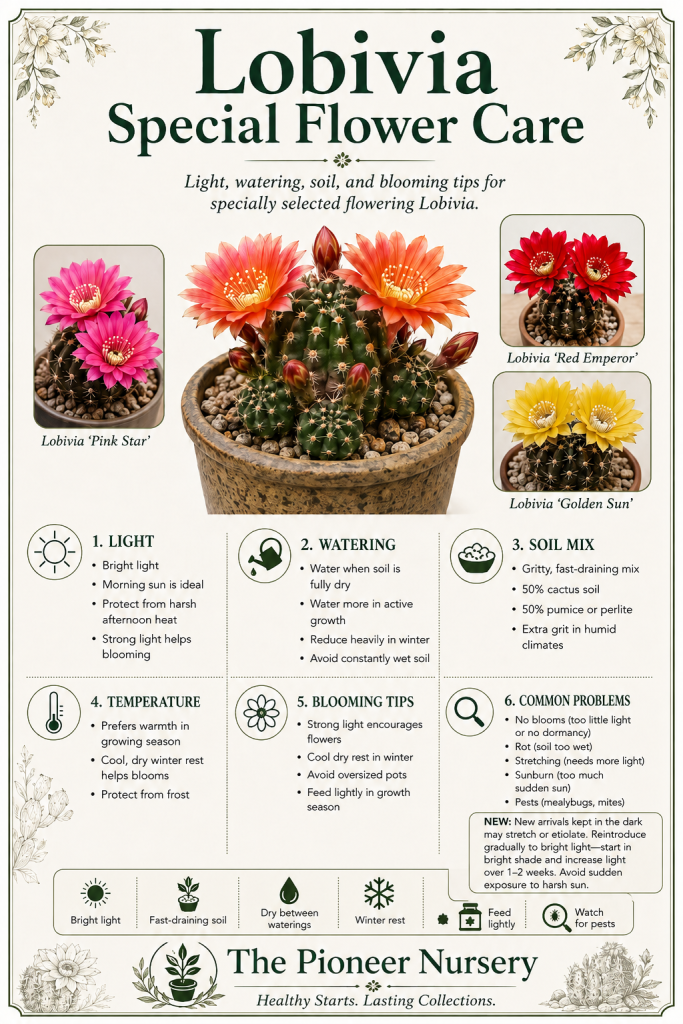
Lobivia with selected or hybridized flowers are grown not just for the cactus body, but for the blooms. These plants are often bred to produce larger, brighter, more unusual flowers and to bloom more often than more traditional forms. You may see intense pinks, oranges, reds, yellows, bi-colors, striped blooms, or oversized flowers compared with the plant body.
The good news is that these special-flowering Lobivia are usually not difficult to grow. In most cases, they still want the same basic conditions as other Lobivia: bright light, fast drainage, careful watering, and a cool dry rest period to support future blooming.
Light
Lobivia with improved flowers need strong light to bloom well.
Best light conditions include:
Bright filtered light
Morning sun
Several hours of direct sun in mild conditions
A bright greenhouse bench
A strong grow light setup
Too little light often leads to weak growth and fewer flowers. Too much harsh sun, especially after shipping or during extreme heat, can scorch the plant body.
A good balance is bright light with protection from the harshest afternoon sun in very hot climates.
Watering
During active growth, water thoroughly when the soil is dry, then allow it to dry again before watering.
Helpful watering guidelines:
Water when the soil is fully dry
Water more during warm active growth
Reduce watering in very hot stagnant weather if roots are stressed
Reduce heavily in cool weather
Keep almost dry during winter dormancy
Do not keep the plant constantly wet. Lobivia can rot if the roots stay damp too long, especially in cool weather.
Soil
Use a fast-draining cactus mix.
A simple mix:
50% cactus soil
50% pumice, perlite, lava rock, or other gritty mineral material
In humid climates or for growers who tend to overwater, go even grittier.
The roots should get moisture when watered, but the mix should dry quickly and stay airy.
Potting
Use a pot with drainage holes and avoid oversized pots.
Best practices:
Choose a snug pot
Use a fast-draining mix
Do not let the plant sit in a deep mass of wet soil
Repot when the soil breaks down or the clump outgrows the pot
Many Lobivia stay happier slightly snug rather than overpotted.
Temperature
Lobivia generally enjoy warm growing conditions, but one of the keys to strong flowering is a cool, dry winter rest.
During the growing season:
- warm days are fine
- good airflow helps
- regular watering can be used when actively growing
During winter:
- keep much drier
- keep cool but protected from frost
- avoid cold wet soil
That winter rest is often what helps trigger heavier blooming the next season.
How to Encourage More Flowers
Because these are selected for bloom performance, you can usually get excellent flowering if you support the cycle properly.
To encourage blooming:
Give strong light
Do not overpot
Feed lightly during active growth
Allow a cool, dry winter rest
Avoid heavy nitrogen feeding
Keep the plant healthy and compact
If a Lobivia grows well but never flowers, the most common causes are:
- not enough light
- no winter rest
- too much nitrogen
- pot too large
- plant still immature
Fertilizer
Use a diluted cactus fertilizer during active growth.
For better blooming:
- use light feeding
- avoid overdoing nitrogen
- a bloom-supportive fertilizer with lower nitrogen can help during the growing season
Do not fertilize dormant, stressed, or freshly repotted plants.
Growth Habit
Some special-flowering Lobivia stay solitary, while others offset and form clumps. Both are normal. Clumping plants can become even more impressive when multiple heads flower at once.
Do not separate offsets unless needed. A mature clump often gives a better floral display.
Common Problems
No flowers
Usually caused by low light, no dormancy, too much fertilizer, or immaturity.
Rot
Usually caused by wet soil, poor drainage, or watering in cool weather.
Stretching
A sign the plant needs more light.
Sunburn
Can happen if moved too quickly into intense sun.
Pest issues
Watch for mealybugs, spider mites, and root pests.
After Shipping
When a special-flowering Lobivia arrives:
Unpack carefully
Inspect the roots and body
Pot into dry, gritty soil if bare root
Keep in bright shade first
Wait a few days before watering if roots were disturbed
Acclimate gradually to stronger light
Do not rush to water heavily right after shipping.
- Do not blast them with full High Desert sun immediately. Gradually acclimate them to brighter light over 1–2 weeks to avoid sunburn; cactus care sources commonly recommend increasing light gradually after etiolation or low-light stress.
- Start with bright shade / filtered sun, then move to morning sun, then stronger light if they are responding well.
- Hold off heavy watering until they are stable, especially if they were imported bare-root or recently repotted. Once roots are active, water normally but let them dry well between watering.
- Watch the new growth point. If new areoles/ribs come in tighter, wider, and more compact, the plant is correcting itself.
- If the tip stays thin, weak, or keeps stretching even in good light, then it is not just shipping stress — it is continuing etiolation, and the light level is still too low.
For resale, I would be comfortable saying something like:
These Lobivia experienced minor shipping/low-light stress during import. Existing stretched areas may not fully reverse, but with gradual bright-light acclimation, new growth should return to a normal compact form.
Quick Care Checklist
Bright light for flowering
Fast-draining soil
Pot with drainage holes
Water when dry in active growth
Reduce water heavily in winter
Keep cool and dry in dormancy
Feed lightly during growth
Avoid oversized pots
Watch for pests and rot
Final Thoughts
Special-flowering Lobivia are some of the most rewarding blooming cactus to grow. Even though they are bred for larger, brighter, or more frequent flowers, their care is still straightforward. Give them strong light, fast drainage, careful watering, and a proper winter rest, and they can reward you with repeated, showy blooms far beyond what many traditional cactus offer.
If you want, I can also turn this into a matching infographic-style care guide next.