Aeonium Care Guide
Learn how to grow Aeonium, a diverse genus of tree houseleeks with rosettes, branching forms, and seasonal growth often centered on cooler months.
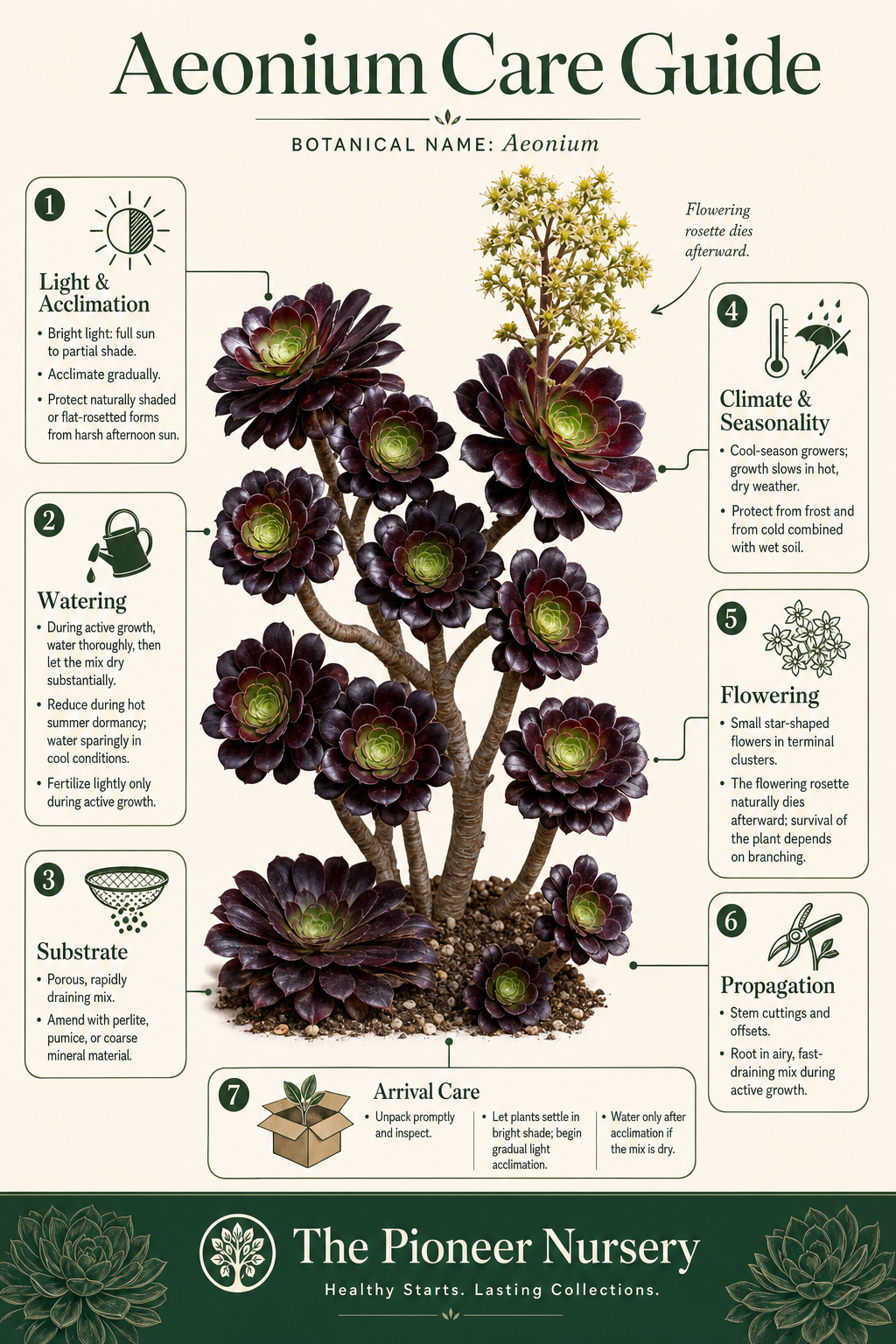
Aeonium is an accepted genus in the Crassulaceae family, commonly known as tree houseleeks. The genus includes substantial variation in size, branching, rosette shape, coloration, flowering behavior, and seasonal growth. In general, provide bright light, porous drainage, thorough watering during active growth, and protection from frost and cold, wet conditions. Because many Aeonium grow most actively during cooler seasons, do not treat them exactly like hot-climate desert cacti.
Quick Care Summary
- Provide bright light, from full sun to partial shade, with gradual acclimation.
- Protect naturally shaded or flat-rosetted forms from harsh afternoon sun.
- Water thoroughly during active growth, then let the substrate dry substantially.
- Reduce watering during hot summer dormancy and water sparingly in cool conditions.
- Use a porous, rapidly draining mix amended with perlite, pumice, or coarse mineral material.
- Protect most plants from frost and cold conditions combined with wet soil.
- Fertilize lightly only during active growth.
- Remember that flowering rosettes naturally die, while the rest of the plant may or may not survive depending on its branching habit.
About Aeonium
Aeonium includes diverse succulents ranging from compact, flat-rosetted plants to tall, branching forms. Some tolerate partial shade or protection from intense afternoon sun, while strongly colored or upright forms usually need high light to stay compact and retain pigmentation. Nursery labels may vary, and commonly sold plants can include hybrids or selected cultivars, so individual plants may differ meaningfully in growth rhythm and appearance.
Light
Provide bright light, generally from full sun to partial shade. High light helps many species and strongly colored cultivars maintain compact growth and coloration. Flat-rosetted or naturally shaded forms may need protection from intense afternoon sun. Acclimate plants gradually when moving them from indoor, greenhouse, or lower-light conditions into stronger outdoor light to reduce sunscald. Insufficient light can cause stretching, weak stems, and loss of coloration.
Watering
Water thoroughly during active growth, then allow the substrate to dry substantially before watering again. Avoid keeping the roots constantly wet. Many Aeonium grow primarily during cooler, wetter seasons and slow or become semi-dormant during hot, dry summer conditions, so reduce watering during heat-related dormancy. In cool winter conditions, water sparingly and only as needed to prevent excessive shriveling. Adjust watering for temperature, light, pot size, substrate, and airflow.
Soil and substrate
Use a porous, highly aerated, rapidly draining substrate. A commercial cactus or succulent mix amended with substantial perlite, pumice, or other coarse mineral material is appropriate. The mix should retain some moisture during active growth but must not remain saturated after watering.
Potting and roots
Choose containers with drainage holes and avoid oversized pots that hold moisture for too long. A slightly heavier pot can help support tall, top-heavy, branching plants. Repot when active growth resumes or when the plant becomes root-bound, disturbing the roots as little as practical. Outdoors, raised beds or mounded planting areas can improve drainage where soil is marginal.
Temperature and seasonal growth
Aeonium are generally mild-climate succulents rather than hard-freezing plants. Protect most plants from frost, prolonged temperatures near or below 40°F (4°C), and especially cold combined with wet soil. Tolerance varies by species and acclimation; a few plants may tolerate brief lower temperatures when kept dry, but no single cold limit should be applied to the entire genus. Many species grow during cooler parts of the year and reduce growth or become summer-dormant during hot, dry weather. Indoor, coastal, and greenhouse conditions may produce a less pronounced dormancy.
Fertilizer
Fertilize conservatively during active growth with a dilute, balanced fertilizer made for succulents or container plants. Do not fertilize dormant, recently shipped, recently root-disturbed, or visibly stressed plants. No universal fertilizer rate is established for the genus, so avoid heavy feeding.
Flowering
Aeonium flowers are usually produced in terminal panicles or cymes of small, star-shaped flowers. Color and timing vary by species and cultivar; reported colors include white, yellow, pink, and red. Flowering rosettes die afterward. In branching plants, other rosettes and stems may survive, while solitary or unbranched plants may die after flowering and generally must be continued from seed. This natural post-flowering decline can be mistaken for generalized plant failure.
Propagation
Tip or rosette cuttings are widely useful for branching and multi-headed forms. Allow cut surfaces to dry and callus before placing cuttings into a dry, porous rooting medium. Offsets or division can be used when side rosettes are produced. Seed is important for unbranched or monocarpic plants that do not produce offsets. Leaf propagation is reported but is less universally dependable than stem or rosette cuttings.
Common problems
Root or stem rot usually relates to saturated substrate, poor drainage, or cold, wet conditions. Sunburn can follow an abrupt move into intense outdoor light. Low light may cause stretching, weak stems, and fading coloration. Monitor for aphids, mealybugs, scale, spider mites, and occasionally vine weevils or ants associated with honeydew-producing pests. Tall branching plants can become top-heavy and suffer stem breakage. A flowering rosette may naturally die after blooming.
Shipping and arrival care
Receive and ship Aeonium on the dry side, especially during cool weather. Protect plants from freezing temperatures and prolonged enclosure in cold, wet packaging. After arrival, inspect for mechanical damage or rot, provide bright but initially filtered light, and acclimate gradually to stronger sun. If roots have been substantially disturbed or a cutting has been made, allow damaged tissue to dry before watering. Avoid immediate heavy irrigation after shipping.
Frequently Asked Questions
How often should I water Aeonium?
Water thoroughly during active growth, then allow the substrate to dry substantially. Reduce watering during hot, dry dormancy and water sparingly in cool conditions. Frequency depends on temperature, light, pot size, substrate, and airflow.
Does Aeonium need full sun?
Many Aeonium perform well in full sun to partial shade, but tolerance varies. Strongly colored forms often need high light, while flat-rosetted or naturally shaded forms may require protection from intense afternoon sun. Acclimate gradually.
Does Aeonium go dormant?
Many species reduce growth or become semi-dormant during hot, dry summer conditions. Cool-season growth is common, although indoor, coastal, and greenhouse plants may show a less pronounced dormancy.
Why did one Aeonium rosette die after flowering?
Flowering rosettes naturally die afterward. Branching plants may continue through other rosettes and stems, while solitary or unbranched plants may die after flowering and generally must be continued from seed.
How can I propagate Aeonium?
Use tip or rosette cuttings for many branching and multi-headed forms. Let cut surfaces callus before placing them in dry, porous medium. Offsets, division, and seed may also be useful depending on the plant.
How should I care for Aeonium after shipping?
Inspect it, keep it protected from freezing and cold wet conditions, provide bright filtered light initially, and acclimate gradually. Avoid immediate heavy watering, especially if roots or cut surfaces were disturbed.
Aeonium reward growers who match watering and light to the season and to the individual plant. Keep the substrate porous, watch for cold wet conditions, and remember that the genus includes both branching survivors and plants whose flowering rosette completes its life cycle.