Tephrocactus geometricus Care Guide
Learn how to grow Tephrocactus geometricus with bright light, mineral soil, careful watering, a deep pot, and a cool, dry winter rest.
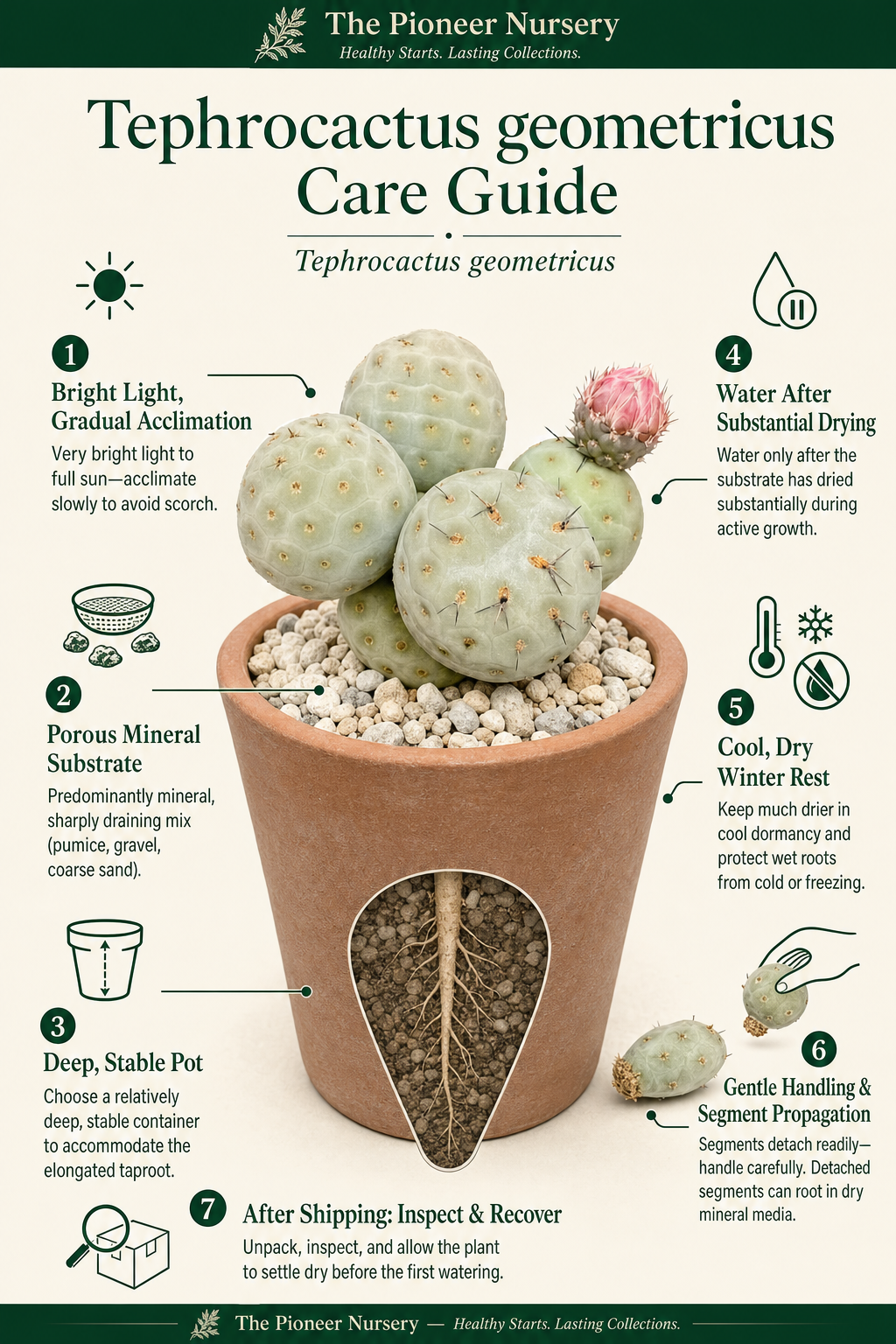
Tephrocactus geometricus is a globular, segmented cactus native to Catamarca, Argentina. Its rounded cladodes detach readily, while an elongated taproot and geophytic growth habit make careful potting especially important. Give it very bright light, a sharply draining mineral substrate, cautious watering during active growth, and a distinctly cool, dry winter rest.
Quick Care Summary
- Very bright light to full sun after gradual acclimation.
- Use a predominantly mineral, sharply draining substrate.
- Choose a relatively deep, stable pot for the elongated taproot.
- Water only after the substrate has dried substantially or completely during active growth.
- Keep substantially drier during cool winter dormancy.
- Protect wet roots from cold and freezing conditions.
- Handle gently because the rounded segments detach readily.
About Tephrocactus geometricus
Tephrocactus geometricus is an extremely drought-adapted, rocky-habitat opuntioid cactus. Its rounded segments may detach during handling or shipment, but those pieces can also be used for propagation. Some horticultural references have connected this plant with Tephrocactus alexanderi, while Plants of the World Online currently accepts Tephrocactus geometricus at species rank. This naming difference does not change its practical care.
Light
Provide very bright light to full sun after gradual acclimation. Newly shipped or previously sheltered plants should begin in bright, filtered light and transition slowly toward stronger direct sun. In exceptionally intense heat, especially in hot, humid climates, filtered or lightly shaded protection can help reduce sunburn.
Watering
Water during active growth only after the substrate has dried substantially or completely. Then water thoroughly enough for excess to drain freely. Reduce watering as temperatures and light decline, and keep the plant distinctly drier during its cool winter rest. Cold, wet roots create a significant rot risk, so avoid watering while the plant is cold or the substrate remains damp.
Soil and substrate
Use a very porous, sharply draining cactus mix made predominantly from mineral materials. Abundant pumice, gravel, perlite, or another coarse inert component helps maintain aeration. Avoid fine, compacting sand and moisture-retentive mixes.
Potting and roots
Tephrocactus geometricus has an elongated taproot and benefits from a relatively deep pot with excellent drainage. Choose a stable container with enough depth and weight to support the root system and reduce unnecessary movement. Repot near the beginning of active growth, disturbing the roots as little as practical. After substantial root disturbance, keep the plant dry until wounds have callused and recovery has begun.
Temperature and winter rest
Give the plant warm, well-ventilated growing conditions during active growth and a cool, dry winter rest. Specialist guidance reports brief tolerance near 20°F (-7°C), but freezing temperatures should not coincide with wet roots or wet substrate. A conservative nursery approach is to protect the plant from frost and prolonged cold.
Seasonal growth and dormancy
Growth and watering should decrease as light and temperatures decline. During winter dormancy, keep the plant substantially drier, particularly in cool or low-light conditions. A cool, dry rest is also associated with improved bud formation.
Fertilizer
Fertilize sparingly during active growth using a dilute, balanced or relatively low-nitrogen cactus fertilizer applied to already-moist substrate. Do not fertilize during winter dormancy. Use a substantially weaker concentration than standard houseplant fertilizer.
Flowering
Mature, established plants can flower, although flowering may be infrequent in cultivation. Easily detached segments can keep plants from reaching substantial flowering size. Strong light and a cool, dry winter rest may help support bud formation.
Propagation
Propagation is primarily by detached segments or offsets. Allow a detached piece to dry and callus before placing it on or into a very well-drained medium. Delay heavy watering until rooting is evident. Seed propagation is possible, but it is generally slower and less dependable for maintaining mature form than vegetative propagation.
Shipping and arrival care
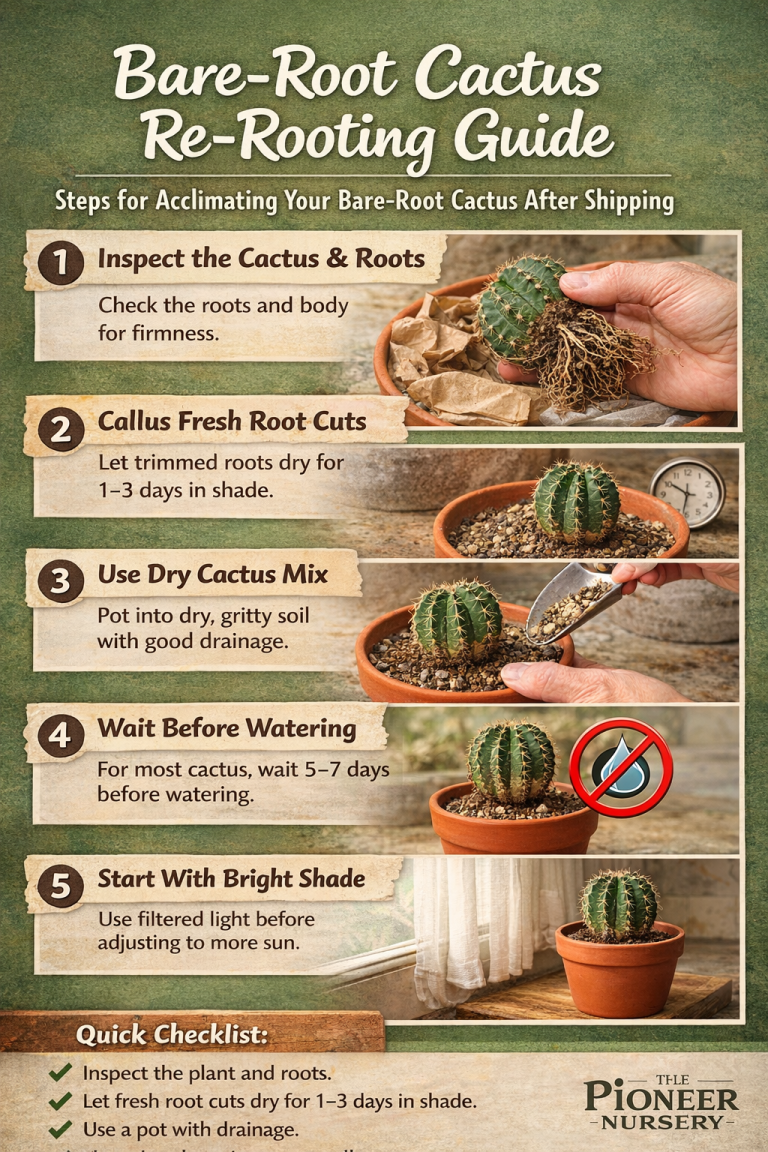
Segments may detach during handling and shipment. On arrival, inspect the taproot and segment joints for damage or rot. Allow fresh wounds to callus before potting or watering. If the roots were disturbed, do not water immediately. Start the plant in bright but filtered light and acclimate it gradually to direct sun. Keep it dry while cold.
Common Problems
- Root or basal rot: Usually associated with cold, wet substrate or poor aeration.
- Sunburn: Can follow an abrupt move from protected conditions into intense direct sun.
- Segment detachment: Rounded segments may drop during handling, repotting, or shipment.
- Poor flowering: May result when plants are immature, receive inadequate light, or lack a cool, dry winter rest.
- Slow recovery: Excessive root disturbance can cause root loss and delay recovery.
- Collection pests: Mealybugs or scale may occur in collections; monitor the plant during routine care.
Frequently Asked Questions
How often should I water Tephrocactus geometricus?
Do not use a fixed calendar. During active growth, wait until the substrate has dried substantially or completely, then allow excess water to drain. Water less as light and temperatures decline, and keep the plant distinctly drier during winter rest.
Does Tephrocactus geometricus need full sun?
Very bright light to full sun is appropriate after gradual acclimation. Use initially filtered light for shipped or sheltered plants, and provide some protection during exceptionally intense heat if needed.
What kind of pot does it need?
Because it has an elongated taproot and a geophytic growth habit, a relatively deep pot with excellent drainage is preferable to a shallow container. A stable, heavier container also helps limit unnecessary movement.
Why are the segments falling off?
The rounded segments detach readily, including during handling, repotting, or shipment. Avoid unnecessary handling, inspect detached pieces for damage, and allow fresh wounds to callus before potting or watering.
Can Tephrocactus geometricus flower indoors?
Mature, established plants can flower, but flowering may be infrequent in cultivation. Strong light and a cool, dry winter rest may help promote buds.
How can I propagate it?
Use detached segments or offsets. Let the piece dry and callus, place it in a very well-drained medium, and delay heavy watering until rooting is evident. Seed propagation is possible but slower and less dependable for maintaining mature form.
Tephrocactus geometricus rewards a hands-off approach: strong light, fast drainage, a deep pot, restrained watering, and a cool, dry winter rest. Handle the segments gently, keep wet roots away from cold, and give the plant time to recover after shipping or repotting.