Mammillaria elongata ‘Cristata’ Care Guide
Learn how to grow Mammillaria elongata ‘Cristata’, the crested form of the ladyfinger cactus, with guidance on light, watering, soil, dormancy, flowering, propagation, and shipping recovery.
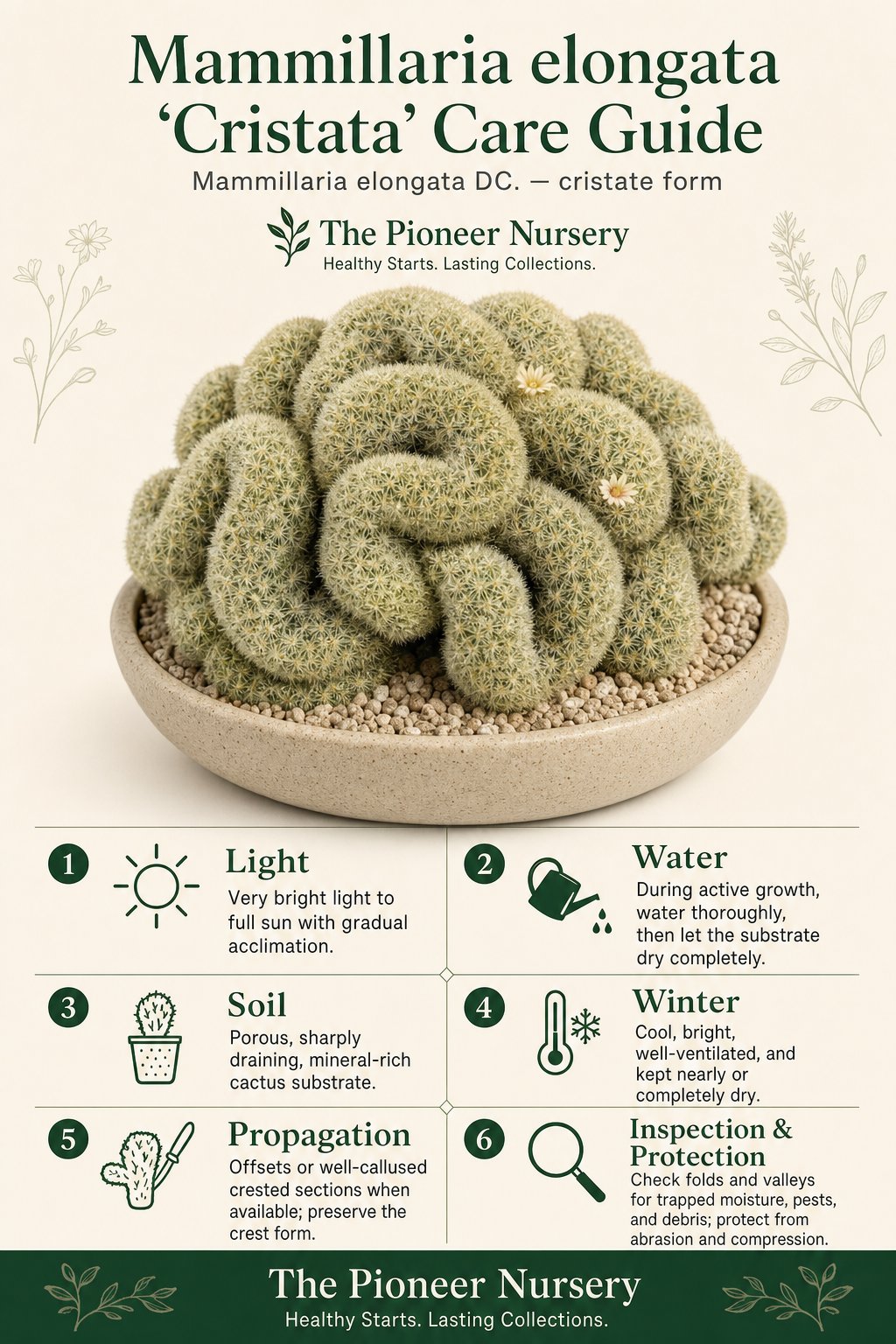
Mammillaria elongata 'Cristata' is the crested horticultural form of Mammillaria elongata DC., commonly called the brain cactus or crested ladyfinger cactus. Instead of producing only ordinary cylindrical stems, it develops convoluted, laterally expanding growth. That irregular surface means moisture, pests, and damage can be harder to spot. Provide very bright light, use a sharply draining substrate, water only when the mix is completely dry during active growth, and keep the plant nearly or completely dry during its cool winter rest.
Quick Care Summary
- Provide very bright light to full sun with gradual acclimation.
- Use a porous, sharply draining, mineral-rich cactus substrate.
- Water thoroughly during active growth, then let the substrate dry completely.
- Keep the plant nearly or completely dry during cool winter dormancy.
- Protect the convoluted crest from trapped moisture, abrasion, and compression.
- Inspect folds and valleys regularly for pests, debris, and localized moisture.
- Use offsets or prepared sections when preserving crested growth is important.
About the Plant
Mammillaria elongata DC. is an accepted species, while “Cristata” describes its crested horticultural form rather than a separate species. The crest is a fasciated growth pattern that expands laterally into folded and convoluted tissue. Some plants may occasionally produce ordinary cylindrical shoots. These can be removed to maintain a predominantly crested specimen or rooted separately as normal-form growth.
Light
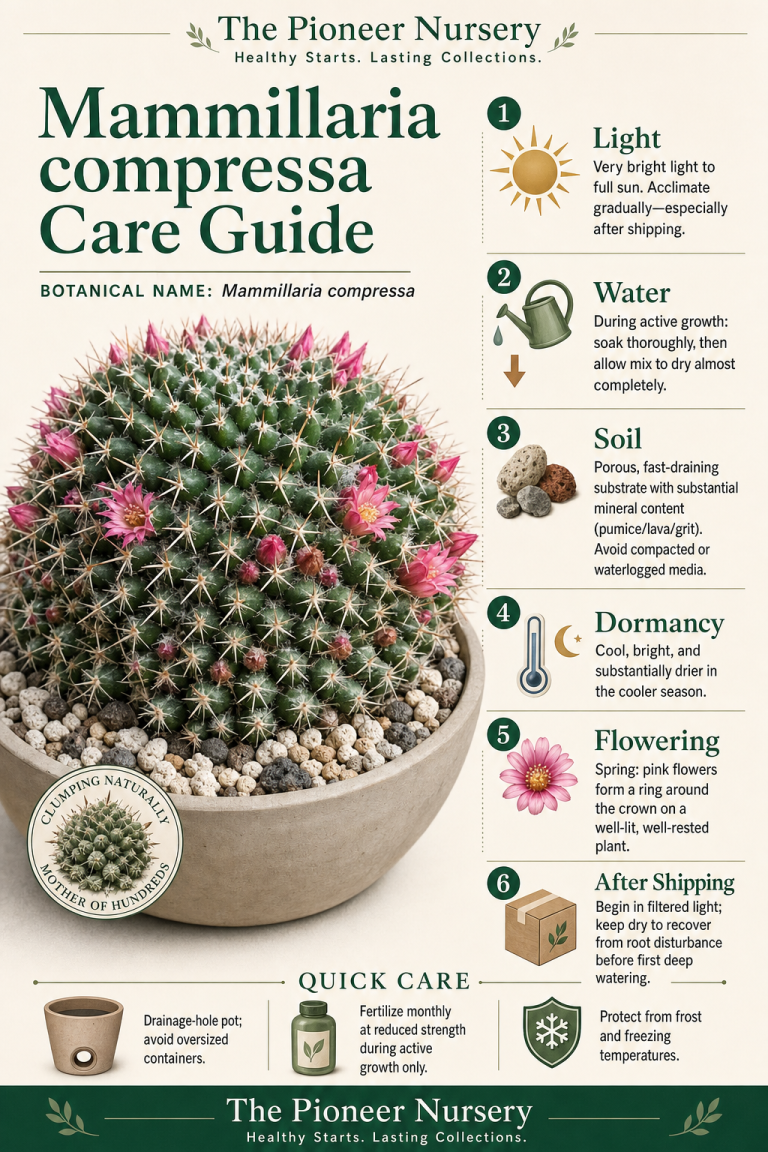
Provide very bright light to full sun, but acclimate gradually after shipping or after moving the plant from shade. In extremely hot climates or behind intense glass, light afternoon shade can help reduce sunscald. Rotate the container periodically when practical so the uneven crest receives more balanced exposure.
Watering
During active growth, water thoroughly and then allow the substrate to dry completely before watering again. Frequency depends on temperature, light, pot size, substrate, and airflow, so a fixed calendar is not appropriate. Reduce watering sharply in cool conditions and keep the plant nearly or completely dry during winter dormancy. Cold, wet conditions create a significant risk of rot. Avoid overhead watering that leaves moisture in the folds and valleys of the crest.
Soil and Substrate
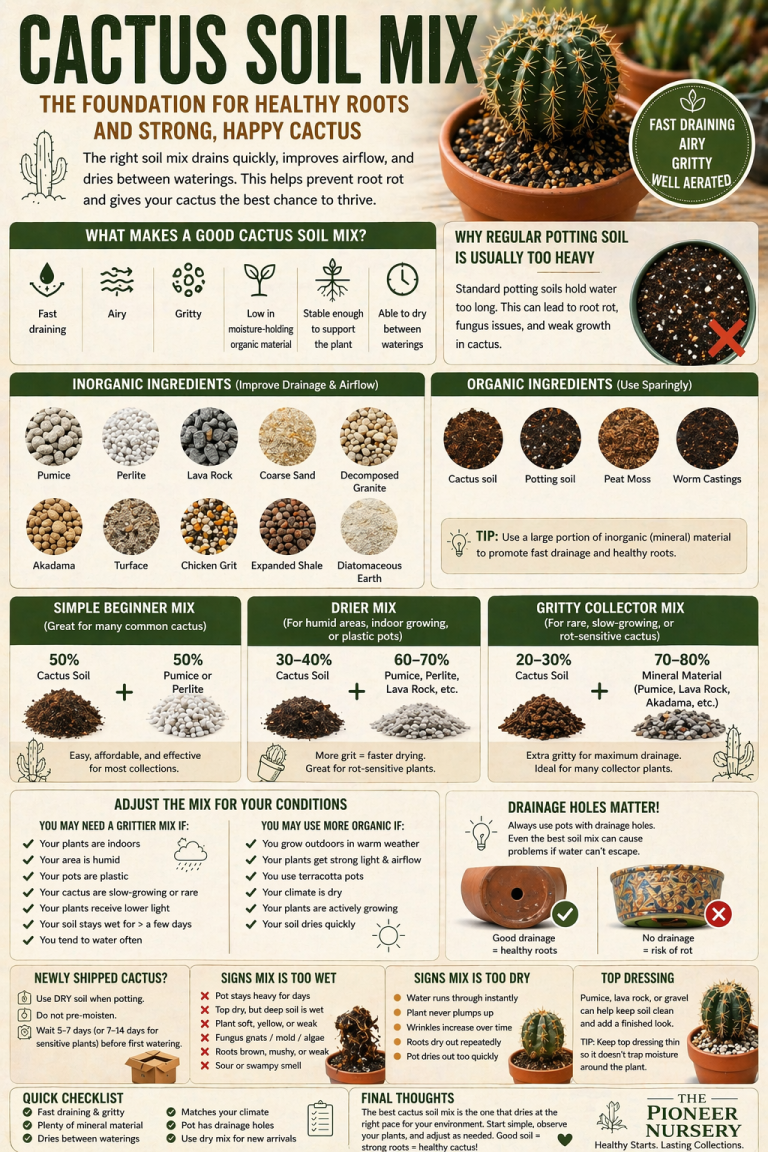
Use a porous, sharply draining cactus substrate containing substantial mineral grit, pumice, perlite, coarse sand, or similar aerating material. Avoid dense, water-retentive mixes that remain wet around the roots.
Potting and Roots
Choose a container with an unobstructed drainage hole and avoid an unnecessarily oversized pot. Repot approximately every 2–3 years or when the substrate has degraded, preferably during active growth. Handle the crested tissue carefully: its convoluted surface can be fragile and can trap moisture, making the plant more difficult to inspect than normal cylindrical stems.
Temperature and Winter Rest
Warm growing conditions are suitable, but protect the plant from prolonged freezing and frost. A cool winter rest around 45–55°F (7–13°C) can support dormancy and spring flowering when the plant remains dry. Container plants should be brought indoors before freezing conditions, particularly when wet weather is expected. During the cooler, darker part of the year, maintain bright light, good ventilation, and a dry root zone. Resume watering gradually only when temperatures and light support active growth.
Fertilizer
During active growth, occasionally use a dilute, balanced cactus fertilizer or another low-strength complete fertilizer. Do not fertilize a dry, dormant, recently repotted, or severely stressed plant.
Flowering
Mature plants may produce a ring of small, pale yellow to cream flowers, sometimes flushed or striped with pink, around the upper growth. Bright light, active-season growth, and a cool, dry winter rest improve flowering potential.
Propagation
Offsets or carefully prepared stem sections can be used for vegetative propagation when available. Allow cut surfaces to dry and callus before placing the material in a dry, porous rooting medium. Vegetative propagation is the practical approach when preserving the crested growth pattern matters. Scientific tissue-culture studies have also documented regeneration of both normal and cristate shoots from Mammillaria elongata material.
Shipping and Arrival Care
Receive and ship the plant dry whenever possible. Protect the irregular crest from compression and abrasion, provide ventilation, and avoid sealing a recently watered plant in packaging. After arrival, inspect for mechanical damage, hidden moisture, pests, or debris in the folds. Acclimate gradually to stronger light and delay watering until the plant has stabilized and the substrate is dry.
Common Problems
- Root or basal rot can result from frequent watering, poor drainage, or cold wet conditions.
- Sunscald may occur after an abrupt move from indoor or shaded conditions into intense sun.
- Inadequate light can cause etiolation and weak, elongated growth.
- Mealybugs may hide in crevices and among dense crested growth.
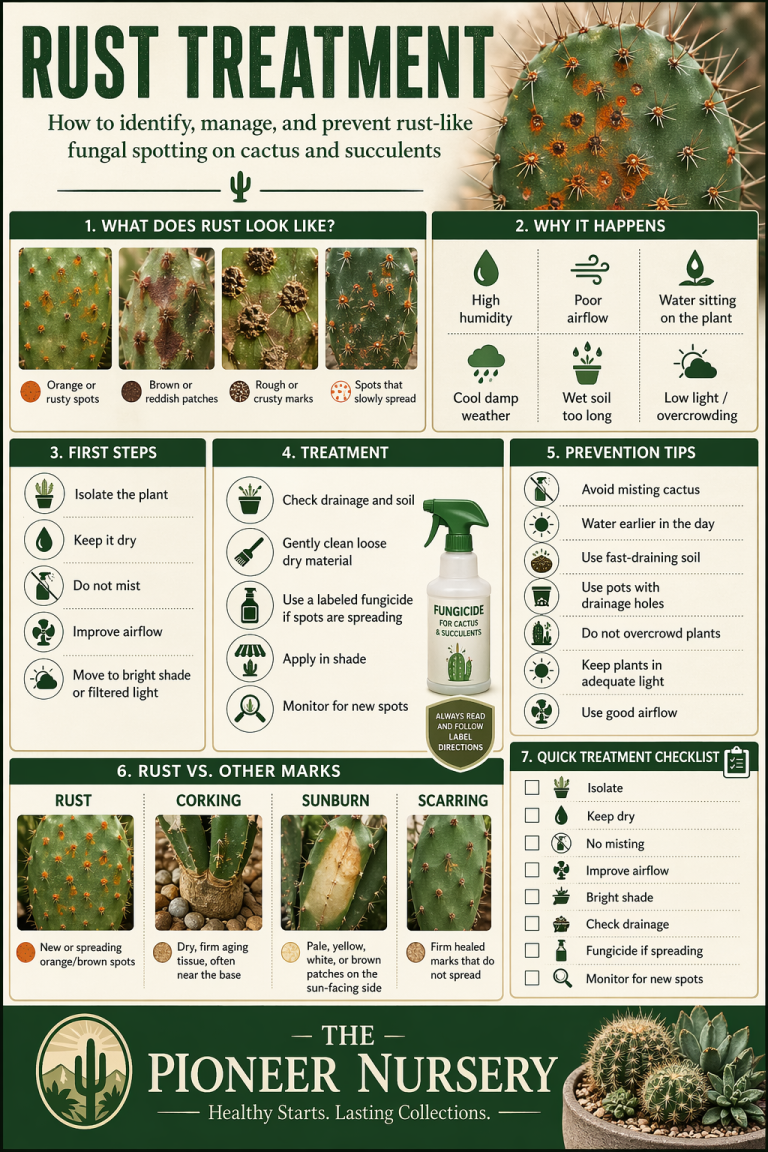
- Moisture retained in the crest after overhead watering can encourage localized rot or fungal problems.
- The fragile crest can be damaged by handling, packing, or contact with hard surfaces.
Frequently Asked Questions
How often should I water Mammillaria elongata 'Cristata'?
Water thoroughly during active growth, then wait until the substrate has dried completely. Adjust frequency for temperature, light, pot size, substrate, and airflow rather than following a fixed schedule. Keep it nearly or completely dry during cool winter dormancy.
Does the crested form need full sun?
It can grow in very bright light to full sun, but acclimate gradually after shipping or shade. Light afternoon shade may help prevent sunscald in extremely hot conditions or behind intense glass.
Why should I inspect the crest?
The folds and valleys can retain moisture and conceal mealybugs, debris, or damage. Regular inspection helps identify problems before they spread.
Can I propagate the crested form?
Yes. Offsets or carefully prepared stem sections can be propagated vegetatively. Let cut surfaces dry and callus before placing them in a dry, porous rooting medium.
What winter conditions support flowering?
Bright light, a cool winter rest around 45–55°F (7–13°C), and dry conditions can support dormancy and spring flowering. Resume watering gradually when temperatures and light support active growth.
Mammillaria elongata 'Cristata' is best managed by balancing strong light and thorough active-season watering with excellent drainage and a distinctly dry winter rest. Give the crest careful handling and inspect its folds regularly, especially after shipping or watering.