Mammillaria compressa Care Guide: Growing the Mother of Hundreds Cactus
Learn how to grow Mammillaria compressa, the clump-forming Mother of Hundreds cactus, with practical guidance on light, watering, soil, dormancy, flowering, and propagation.
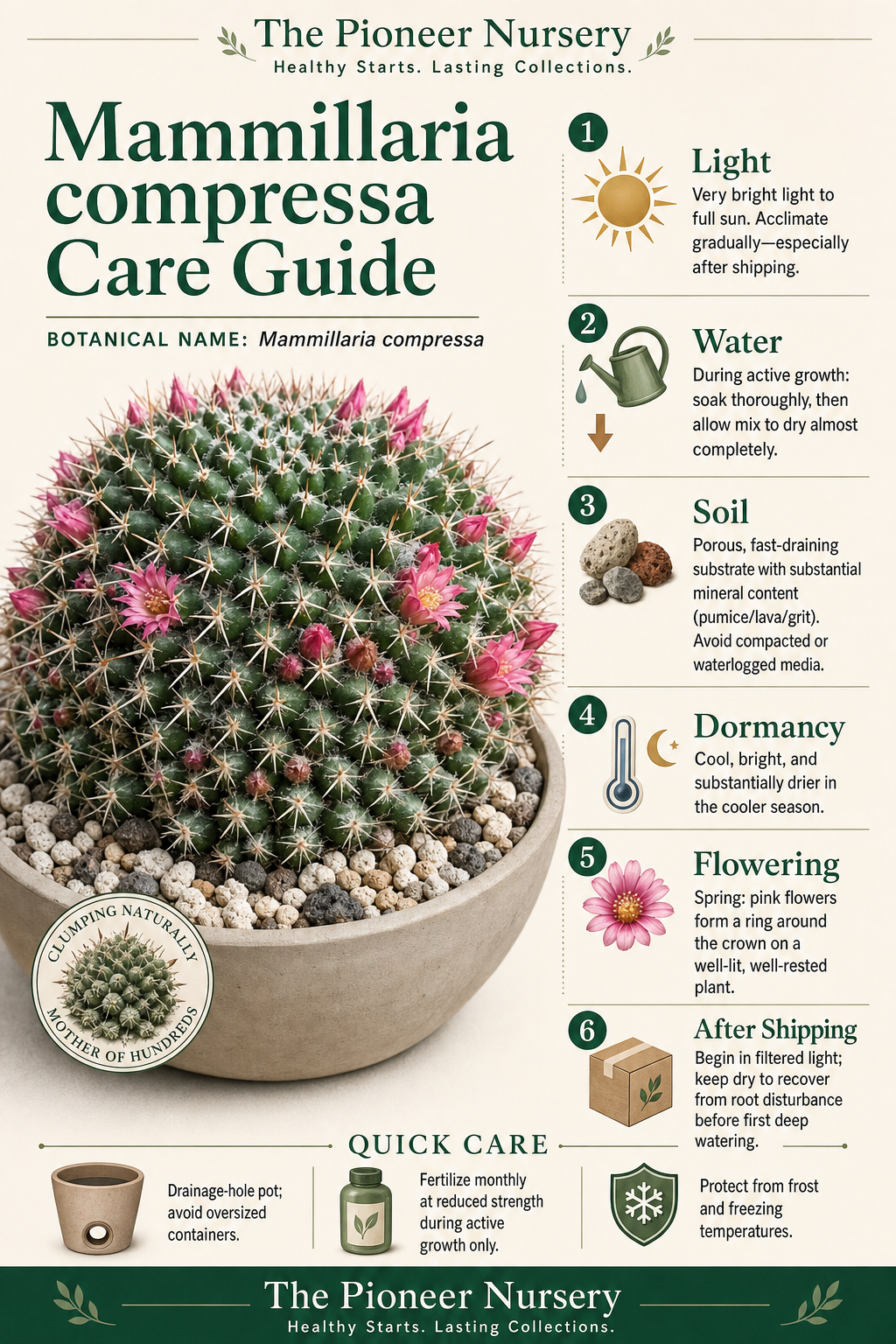
Mammillaria compressa, commonly called Mother of Hundreds or Compressed Pincushion Cactus, is a clump-forming cactus native to eastern and central Mexico. It produces numerous offsets over time and may form a ring of pink flowers around the crown in spring. The main care priorities are strong light, a porous mineral-rich substrate, thorough watering during active growth followed by near-complete drying, and a much drier cool-season rest.
Quick Care Summary
- Provide very bright light to full sun, with gradual acclimation after shipping.
- Use a porous, fast-draining substrate with substantial mineral content.
- Water thoroughly during active growth, then allow the substrate to dry almost completely.
- Reduce watering substantially during the cool-season dormancy.
- Keep the plant protected from frost and freezing temperatures.
- Use a drainage-hole container and avoid oversized pots.
- Fertilize monthly at reduced strength during active growth only.
About Mammillaria compressa
Mammillaria compressa is an accepted species in the genus Mammillaria. Its clump-forming habit is reflected in the common name Mother of Hundreds. The plant grows best when its roots have excellent aeration and the substrate does not remain wet, particularly during cool or dormant conditions.
Light
Provide very bright light to full sun. After shipping or a move from greenhouse shade, acclimate the plant gradually to stronger direct light. In extremely hot, intense conditions, light afternoon shade can help prevent sunburn while maintaining compact growth.
Watering
During active growth, water thoroughly and then allow the substrate to dry almost completely before watering again. Reduce watering substantially in fall and winter dormancy. Avoid repeated watering when the plant is cool, dormant, or the substrate remains damp. Excess moisture combined with poor aeration or low temperature is a greater risk than ordinary underwatering.
Soil and substrate
Use a fast-draining, porous cactus substrate with substantial mineral content, such as pumice, perlite, lava rock, or coarse sand. The mix should retain enough moisture for active growth without becoming compacted or remaining wet.
Potting and roots
Choose a container with a drainage hole and avoid an oversized pot. Repot only when necessary and handle the clump carefully. After repotting or significant root disturbance, keep the plant dry for an appropriate recovery period before resuming thorough watering. Good airflow supports recovery and helps reduce moisture-related problems.
Temperature and seasonal rest
Grow Mammillaria compressa warm and brightly lit during its active season. Protect it from frost and freezing temperatures, especially when the plant or substrate is wet. Growth generally slows during the cooler, darker part of the year; provide a cool, bright, dry rest with little or no water unless substantial shriveling indicates an exceptional need.
Fertilizer
During active growth from approximately mid-spring through late summer, apply a balanced liquid fertilizer at reduced strength about monthly. Do not fertilize during dormancy, while the plant is stressed, or soon after repotting.
Flowering
A mature Mammillaria compressa can produce a ring of pink flowers around the crown in spring. Strong light, seasonal dryness, and a cooler dry rest can support flowering.
Propagation
Propagation is possible from seed or offsets. Seeds are generally sown at approximately 19–24°C in late winter or early spring. Offsets can be removed in early spring. If an offset or root tissue is damaged, allow it to dry and callus before potting.
Shipping and arrival care
Receive and keep the plant as dry as practical during shipping and arrival, particularly in cool weather. Inspect it for damage or pests, provide bright but initially filtered light, and acclimate gradually to stronger sun. If the plant arrives bare-rooted or substantially disturbed, delay watering until damaged roots have dried and begun recovery.
Common Problems
- Root or basal rot: Usually associated with overwatering, poor drainage, or cold, wet conditions.
- Sunburn: Can occur after abrupt exposure to intense direct sun; acclimate gradually and provide light afternoon shade in extreme heat.
- Mealybugs and root mealybugs: Inspect the plant and root area when checking for pests.
- Weak, elongated growth: Often indicates insufficient light.
- Frost or freeze damage: Protect the plant from freezing temperatures, particularly when wet.
Frequently Asked Questions
How often should I water Mammillaria compressa?
Water thoroughly during active growth, then wait until the substrate is almost completely dry before watering again. Water much less during fall and winter dormancy, and avoid watering while the plant is cool or the substrate remains damp.
Can Mammillaria compressa grow in full sun?
Yes. It can be grown in very bright light to full sun, but acclimate gradually after shipping or a move from shade. Light afternoon shade can help during extremely hot, intense conditions.
Does Mammillaria compressa need a winter rest?
Growth generally slows during the cooler, darker part of the year. A cool, bright, dry rest with little or no water supports its seasonal cycle.
Why is a mineral substrate important?
A porous, mineral-rich mix improves drainage and aeration, helping prevent the wet, compacted conditions that can lead to root or basal rot.
How can I propagate Mammillaria compressa?
You can propagate it from seed or offsets. Sow seed at approximately 19–24°C in late winter or early spring, or remove offsets in early spring. Let damaged offset or root tissue dry and callus before potting.
What should I do when my plant arrives?
Inspect it for damage or pests, provide bright but initially filtered light, and acclimate it gradually to stronger sun. If it is bare-rooted or has significant root disturbance, delay watering until damaged roots have dried and begun recovery.
Mammillaria compressa is well suited to growers who can provide strong light, excellent drainage, and a dry cool-season rest. Watch most carefully for wet, poorly aerated soil in cool conditions, and acclimate the plant whenever its light exposure changes.