Mammillaria compressa Cristata Care Guide
Learn how to grow Mammillaria compressa Cristata, a crested form that needs bright light, sharply draining soil, careful watering, and good airflow around its folded crown.
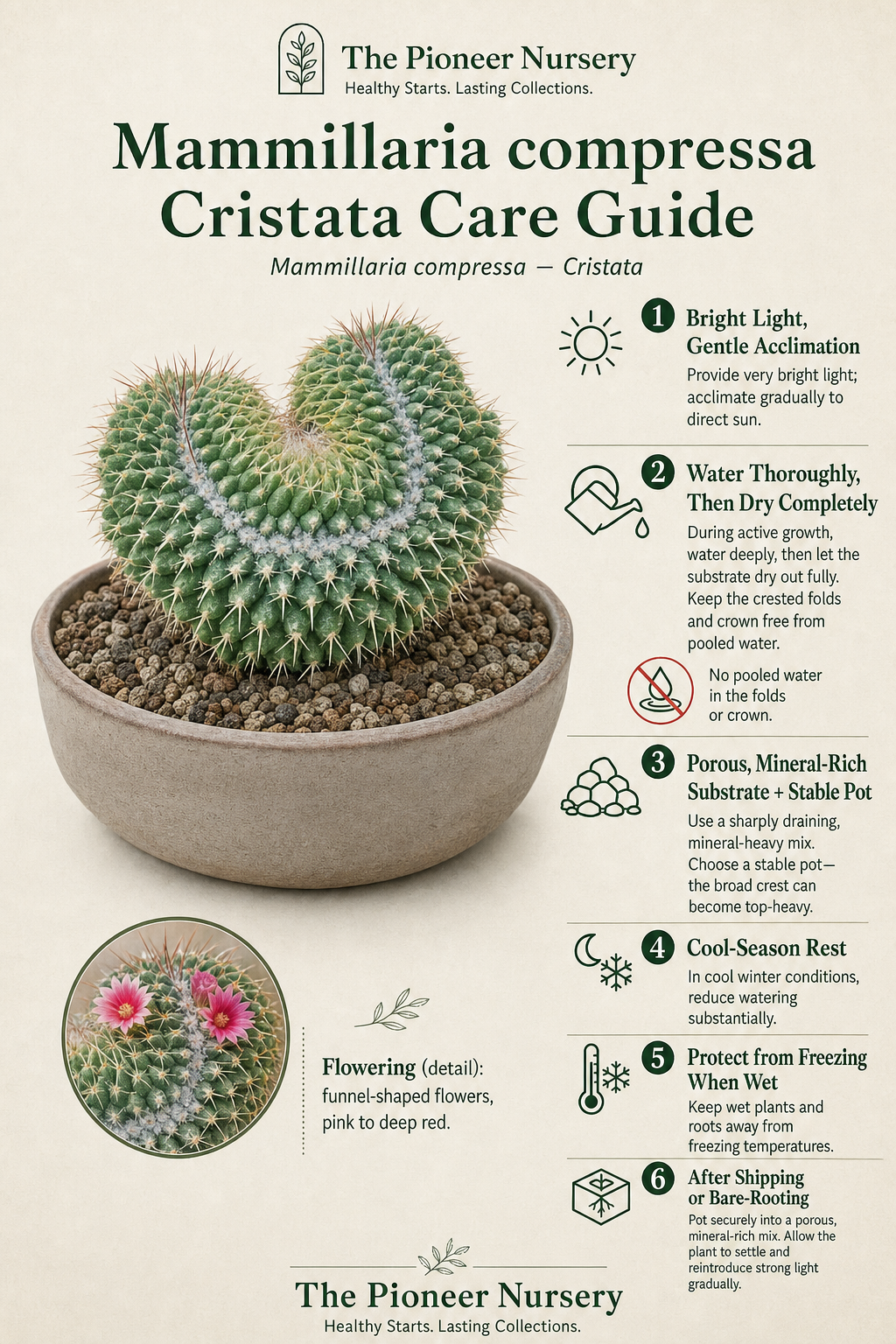
Mammillaria compressa Cristata is the crested horticultural form of Mammillaria compressa, a cactus from eastern and central Mexico. Its broad, fan-shaped or brain-like growth needs the same basic conditions as the species, but the irregular folds can retain moisture and conceal rot. Provide very bright light, a porous mineral-rich substrate, thorough watering during active growth, and a cooler, substantially drier winter rest.
Quick Care Summary
- Provide very bright light with gradual acclimation to direct sun.
- Use a porous, sharply draining substrate with substantial mineral content.
- Water thoroughly during active growth, then let the substrate dry completely.
- Keep the crested folds and crown free from pooled water.
- Reduce watering substantially during cool winter conditions.
- Protect wet plants and roots from freezing temperatures.
- Use a stable pot because the broad crest may become top-heavy.
About the plant
The accepted species name is Mammillaria compressa DC.; “Cristata” describes its crested growth form rather than a separate species. Cresting creates a broad, folded surface that may dry less evenly than ordinary clustered stems. The plant can produce funnel-shaped flowers in pink, purplish-pink, or deep red near the upper part of the growth.
Light
Provide very bright light, including several hours of direct sun once acclimated. In strong outdoor or greenhouse sun, light afternoon shade or protection during the hottest hours can reduce scorch. After shipping or a move from low light, increase exposure gradually.
Watering
During active growth, water thoroughly until excess drains from the pot, then allow the substrate to dry completely before watering again. Avoid repeated shallow watering and never leave the container standing in water. Keep water from pooling in the crested folds or on the crown. Reduce watering substantially during cool, darker periods.
Soil and substrate
Use a sharply draining, porous cactus substrate with substantial mineral content and good root aeration. Avoid mixes that remain compact or wet for extended periods, since they increase the risk of root and basal rot.
Potting and roots
Choose a container with drainage holes and avoid an unnecessarily oversized pot. Handle the plant’s shallow, fibrous roots gently during repotting, removing damaged or rotting material. After major root disturbance, keep the plant dry until damaged roots have callused, then resume cautious watering. Because the crest may become broad and top-heavy, use a stable container.
Winter rest
Growth commonly slows during the cool, darker season. In winter, maintain bright light, cool conditions, and a substantially drier substrate to support compact growth and flowering. Water only sparingly if the plant begins to shrivel significantly. Brief temperatures near -5 °C may be tolerated by dry, established plants, but freezing is risky when the plant or roots are wet, so provide frost protection.
Fertilizer
Fertilize sparingly during active growth, approximately once or twice in late spring and summer, using a diluted cactus or balanced fertilizer. Do not fertilize dry, dormant, recently repotted, or stressed plants.
Flowering
Mammillaria compressa can produce funnel-shaped flowers in a ring near the upper part of the plant. Flowers may be pink, purplish-pink, or deep red and generally appear in winter or early spring when the plant receives strong light and a cooler, dry rest.
Propagation
The species may be propagated from seed or offsets. To preserve the crested form, vegetative methods such as carefully rooted cuttings or grafting are more appropriate; seed-grown offspring should not be assumed to remain crested. Allow cut surfaces to dry and callus before rooting, and keep prepared material relatively dry until rooting begins.
Common problems
Root or basal rot is associated with wet, poorly aerated substrate, especially in cool conditions. Water trapped in the folds may contribute to localized rot or fungal damage, so keep the crown well ventilated and inspect folds carefully. Sudden exposure to strong sun can cause sunburn. Mealybugs and root mealybugs may occur. Insufficient light or excessive moisture can produce weak, elongated growth.
Shipping and arrival care
Inspect the crested tissue after arrival, taking particular care to identify bruising or trapped moisture in the folds. Protect the broad growth from compression. If the plant is bare-root or recently disturbed, pot it into a dry, porous medium, provide bright but initially filtered light, and delay heavy watering until the roots have recovered. Acclimate gradually to stronger light.
Frequently Asked Questions
How often should I water Mammillaria compressa Cristata?
During active growth, water thoroughly and wait until the substrate has dried completely before watering again. Water much less during cool, low-light winter conditions rather than following a fixed calendar.
Can this crested cactus take full sun?
It can receive several hours of direct sun after acclimation. Increase exposure gradually, and provide light afternoon shade or protection during the hottest hours in strong outdoor or greenhouse conditions.
Why must I keep water out of the folds?
The irregular crested surface can retain moisture, which may contribute to localized rot or fungal damage. Avoid pooling water on the crown and maintain good ventilation.
Will seedlings remain crested?
They should not be assumed to. To preserve the crested growth form, vegetative propagation such as carefully rooted cuttings or grafting is more appropriate.
What should I check first if the crest develops a soft or damaged area?
Inspect the folds for trapped moisture and review watering and ventilation. Wet, poorly aerated conditions can contribute to localized or basal rot.
Mammillaria compressa Cristata is best kept bright, dry between waterings, and well ventilated around its folded crown. Careful acclimation, porous soil, and a cool, drier winter rest help protect the crest from scorch and rot.