Mammillaria hahniana Cristata Care Guide
Learn how to grow Mammillaria hahniana Cristata, the crested old lady cactus, with guidance on light, watering, drainage, winter rest, flowering, and safe handling.
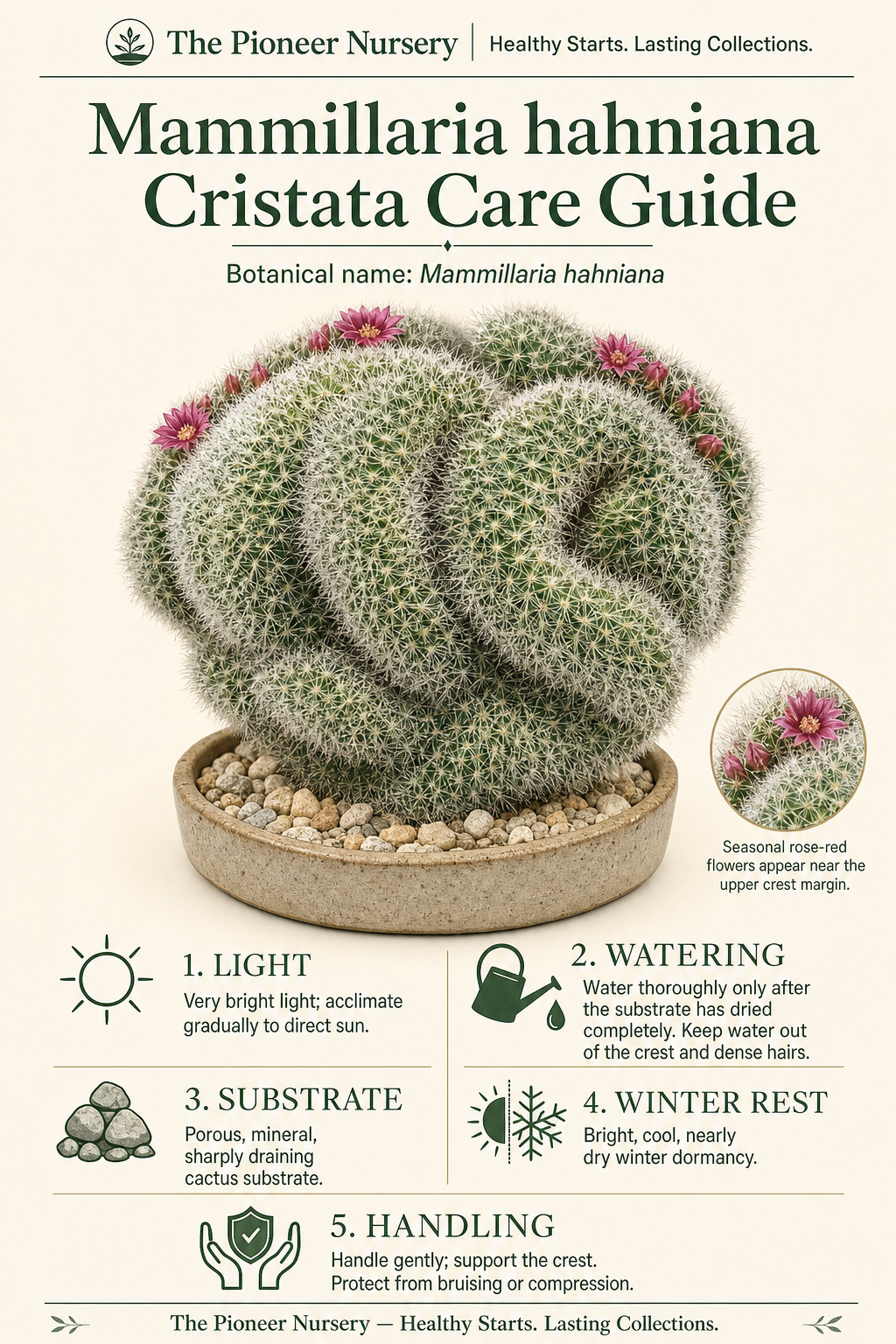
Mammillaria hahniana Cristata is the crested form of the accepted species Mammillaria hahniana, commonly called the old lady cactus. Instead of developing a typical rounded stem, this form produces a broad, irregular, wavy crest. Its dense white hairs can conceal discoloration, bruising, mealybugs, or moisture, so careful inspection is important. The main priorities are very bright light, sharply draining soil, thorough watering only after complete drying, and a bright, cool, dry winter rest.
Quick Care Summary
- Provide very bright light and acclimate gradually to direct sun.
- Water thoroughly only after the substrate has dried completely.
- Use a porous, mineral, sharply draining cactus substrate.
- Keep water from collecting in the crest or dense hairs.
- Keep the plant nearly dry during cool winter dormancy.
About the Plant
The submitted name refers to Mammillaria hahniana with a cristate, or crested, growth form. “Cristata” describes the plant’s broadened, fan-shaped growing tissue rather than a separate species, variety, cultivar, or hybrid. The crest may change shape over time and requires gentler handling than a normal-stemmed cactus. The related name Neomammillaria hahniana is a homotypic synonym, while Mammillaria hahniana is the accepted species name.
Light
Provide very bright light, including several hours of direct sun once the plant is acclimated. Increase light gradually after shipping or when moving the plant to a brighter location to reduce sunscald. In very hot climates, light afternoon protection may be useful if intense reflected heat causes scorching. Because the dense hairs can hide stress, inspect the green tissue and crest regularly.
Watering
Water thoroughly only after the substrate has dried completely, and let excess water drain freely. During active growth, adjust watering to temperature, light, pot size, and how quickly the mix dries rather than following a fixed calendar. Keep the plant nearly dry during cool winter dormancy. Avoid allowing water to collect in the dense hairs or folds of the crest, where prolonged moisture can encourage localized decay.
Soil and Substrate
Use a porous, sharply draining cactus substrate with substantial mineral content and good root aeration. Avoid heavy mixes and containers that stay wet for long periods. Fast drying is especially important during cool conditions or winter rest.
Potting and Roots
Choose a pot with a drainage hole and make it only moderately larger than the root system. A shallow-to-moderate container is generally suitable if the substrate dries promptly. Handle the irregular crest carefully because it bruises easily and may retain moisture. After repotting or major root disturbance, keep the plant dry until damaged roots have healed, then resume cautious watering.
Temperature and Winter Rest
Protect the plant from frost and keep roots dry in cold conditions, since cold combined with wet roots creates a significant rot risk. Growth usually slows in winter, so provide a bright, cool, low-humidity rest and greatly reduce or withhold water while the plant is cool and inactive. Resume watering gradually as light and temperatures increase in spring. The RHS rates the species H2 in United Kingdom conditions, meaning it tolerates low temperatures but not freezing.
Fertilizer
During active growth, apply a dilute, balanced cactus fertilizer occasionally, or use a low-dose feeding program suited to the potting medium. Do not fertilize a dry, dormant, recently repotted, or visibly stressed plant.
Flowering
Mammillaria hahniana produces small rose-red to purple-red flowers, generally in a ring near the upper part of the stem during the growing season. Strong light, maturity, and a cool, dry winter rest can support flowering. Crested specimens may flower less predictably because their growth tissue is irregular.
Propagation
The species can be propagated from seed or offsets. For a crested specimen, vegetative propagation is generally more dependable for retaining the crested growth pattern; seed does not reliably reproduce a particular crest. Reliable species-level propagation details specific to the cristate form are limited.
Maintaining the Crest
If maintaining the crested form is desired, remove or isolate any reverting normal-growth shoots when appropriate, using sterile tools. Keep any cut surface dry until healed. Because the crest is easily bruised, avoid compression during handling, potting, and transport.
Shipping and Arrival Care
Inspect the plant after arrival for concealed bruising, trapped moisture, or damage to the crest. Place it in bright filtered light while it recovers, then acclimate gradually to stronger sun. Keep it dry until damaged roots or tissues have healed, especially after substantial root disturbance. The crest should be protected from compression and abrasion during shipping.
Common Problems
- Root or stem rot from wet substrate, poor drainage, or cool conditions.
- Sunscald after abrupt exposure to strong direct light.
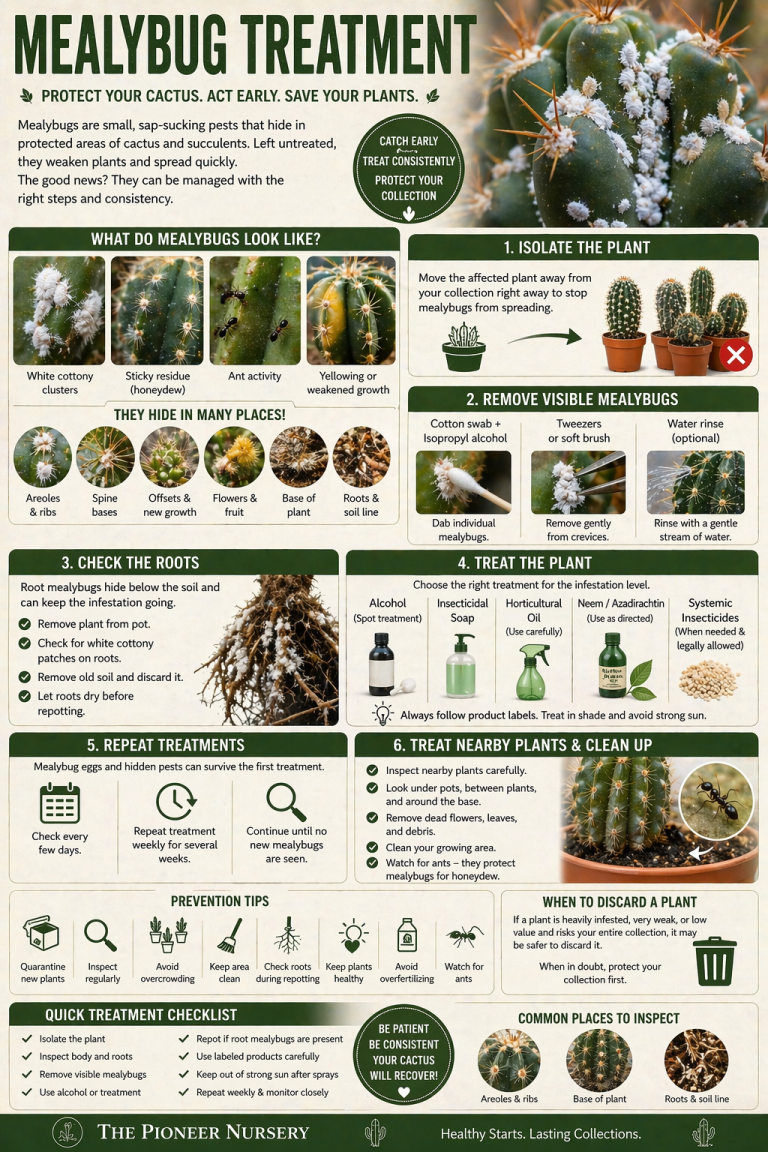
- Mealybugs concealed among the dense white hairs.
- Localized decay caused by moisture trapped in the crest or woolly surface.
- Weak, stretched growth from insufficient light.
- Physical damage to the crest during handling, potting, or shipping.
Frequently Asked Questions
How can I tell when to water Mammillaria hahniana Cristata?
Check that the substrate has dried completely rather than relying on a calendar. Then water thoroughly and let excess drain; keep the plant nearly dry during cool winter dormancy.
How should I introduce direct sun after delivery?
Begin in bright filtered light while the plant recovers, then increase exposure gradually. This reduces sunscald after shipping or a change in location.
What should I do if water collects in the crest?
Remove the source of moisture and inspect the folds and dense hairs regularly, since prolonged trapped moisture may encourage localized decay.
Will seed-grown plants keep the crest?
Not reliably. Vegetative propagation is generally more dependable when retaining a particular crested growth pattern is important.
With strong light, fast drainage, careful watering, and a cool, dry winter rest, Mammillaria hahniana Cristata can maintain its distinctive fan-shaped growth. Give the crest extra protection from moisture, bruising, and compression, and inspect beneath the dense hairs regularly.