Uebelmannia pectinifera Care Guide
Learn how to grow Uebelmannia pectinifera with bright light, warm frost-free conditions, fast drainage, and carefully controlled watering.
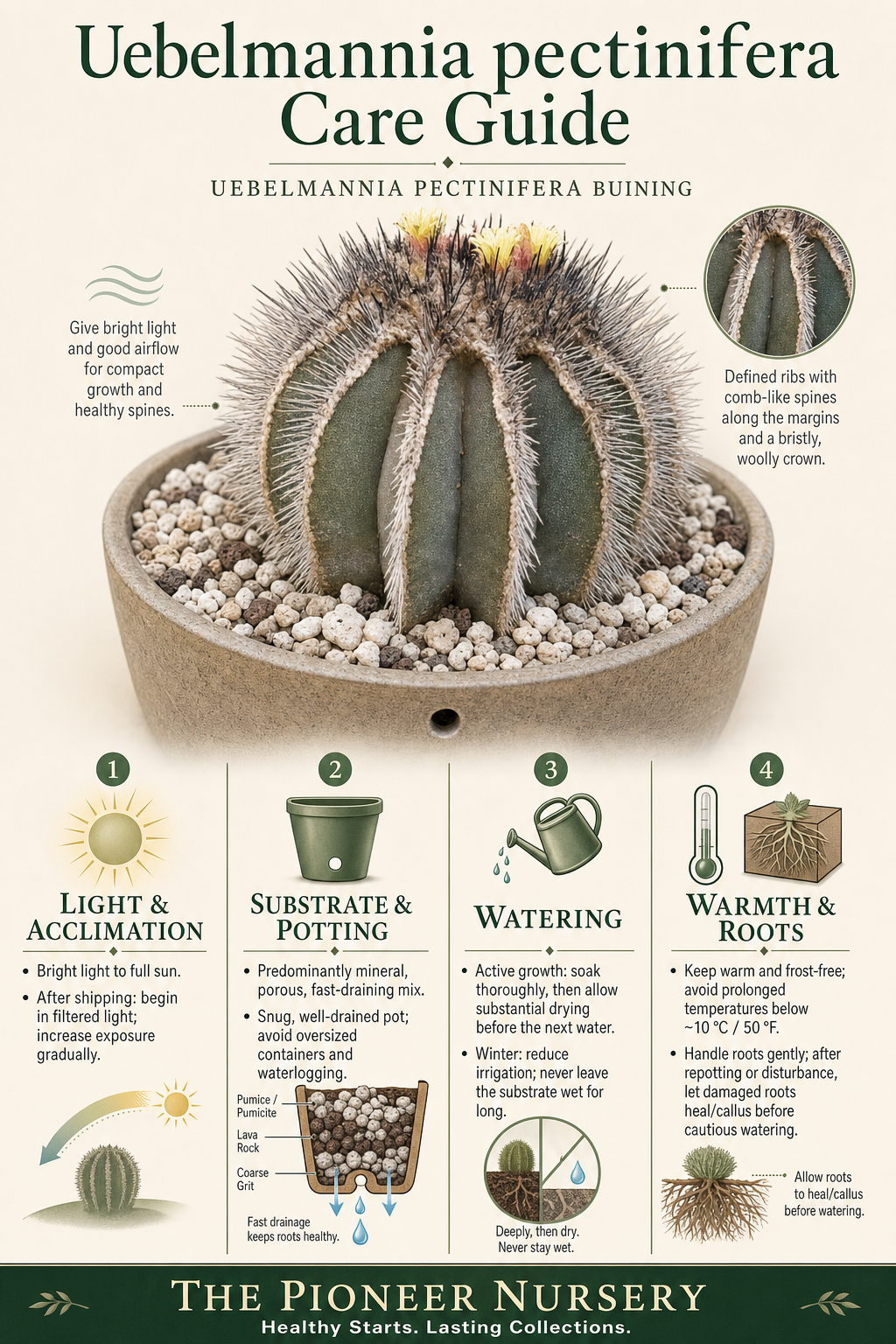
Uebelmannia pectinifera, also called Comb-spined Uebelmannia or Pectinate Uebelmannia, is a specialized Brazilian cactus from Minas Gerais. It appreciates bright light, warmth, and a porous mineral substrate. Its roots are especially vulnerable to prolonged wetness, so successful cultivation depends on active-growth watering, substantial drying, and cautious winter irrigation.
Quick Care Summary
- Use bright light to full sun, with gradual acclimation after shipping.
- Keep the plant warm and frost-free; avoid prolonged temperatures below approximately 10 °C / 50 °F.
- Use a predominantly mineral, porous, fast-draining substrate and a well-drained, non-oversized pot.
- Water thoroughly during active growth, then allow substantial drying; reduce winter irrigation.
- Handle roots carefully and allow damaged roots to heal before cautious watering after disturbance.
About Uebelmannia pectinifera
This accepted cactus species is native to Minas Gerais, Brazil. It is not best treated as a conventional cold, dry desert cactus. Warm seasonal humidity can be beneficial when paired with rapid drainage and good airflow. Mature plants can produce small yellow flowers under sufficiently warm and bright conditions.
Light
Provide bright light to full sun. Increase exposure gradually after shipping or a change in conditions to reduce sunburn risk. In very hot climates, some afternoon shade and good airflow can help protect the plant while maintaining strong light.
Watering
During active growth, water thoroughly. Then allow the porous substrate to dry substantially before watering again. Do not follow a fixed calendar; needs vary with temperature, light, substrate, pot size, and root condition. Reduce irrigation during winter. Avoid prolonged wetness, especially in low light or cool conditions. If winter conditions remain warm and bright, occasional cautious watering may be appropriate instead of complete drought.
Soil and substrate
Use a very porous, fast-draining, strongly aerated cactus substrate with a predominantly mineral component. A slightly acidic medium is reported as suitable. Avoid dense, water-retentive potting soil.
Potting and roots
Choose a well-drained pot that is not oversized. Handle the root system carefully because cultivated Uebelmannias are prone to root loss. After repotting or major root disturbance, allow damaged roots to heal. Resume watering cautiously once the plant is established in the new porous medium.
Temperature and seasonal growth
Keep the plant warm and frost-free. Specialist cultivation guidance recommends avoiding prolonged temperatures below approximately 10 °C / 50 °F, particularly when the substrate is wet. Growth may slow in winter, but this is not a reliably cold-dry dormant cactus. Provide bright light, additional warmth, and markedly reduced irrigation.
Fertilizer
If needed, fertilize only during active growth and at low concentration with a balanced or low-nitrogen cactus fertilizer. Do not fertilize stressed, recently repotted, dormant, or root-compromised plants.
Flowering
Mature plants can produce small yellow flowers reported as less than approximately 1 inch wide. Warm conditions, bright light, and healthy growth support flowering.
Propagation
Uebelmannia pectinifera is primarily propagated from seed. Grafting is also widely used because plants can be slow and vulnerable to root loss or rot. Own-root and grafted plants are both legitimate cultivation forms; care should account for the condition of the rootstock and scion.
Shipping and arrival care
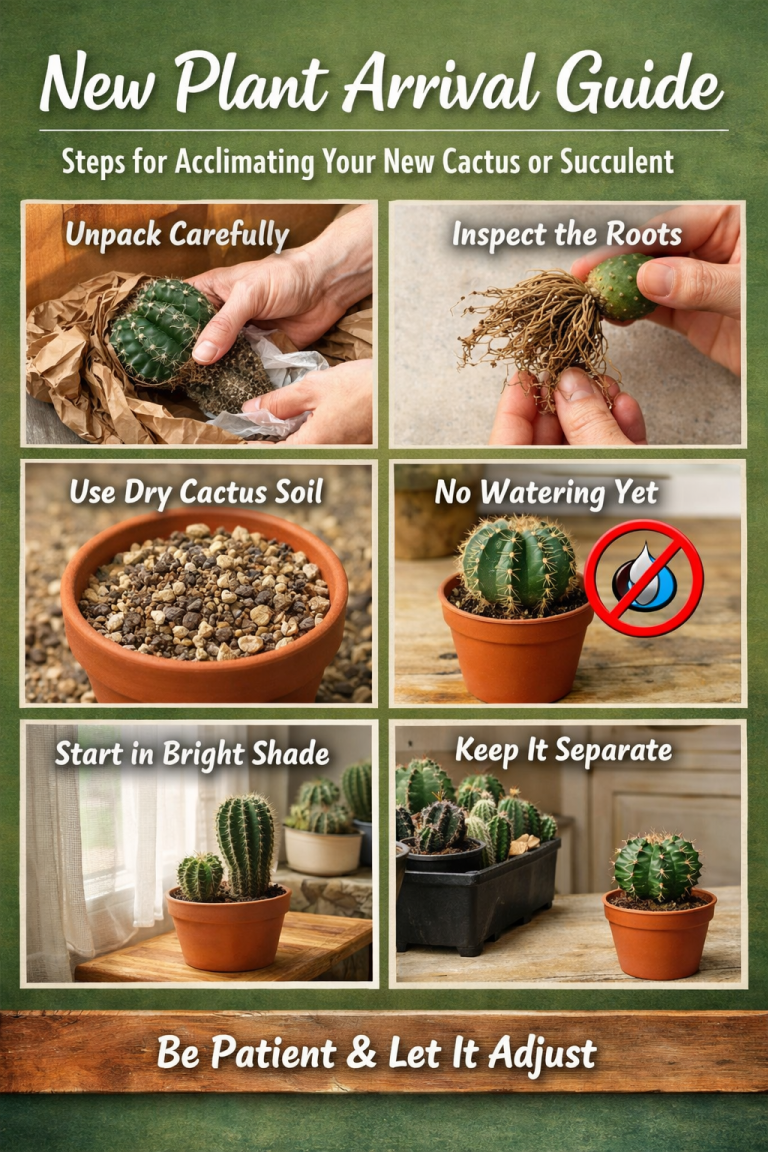
Inspect the plant for damage after arrival. Begin with bright, filtered light and increase exposure gradually. For bare-root or recently disturbed plants, pot into a dry, porous medium and allow damaged roots to heal. Resume thorough watering cautiously when recovery conditions are warm and bright.
Common Problems
- Root loss or rot: avoid cold, wet, or poorly aerated substrate.
- Failure to re-establish: allow damaged roots from repotting or shipping to heal before cautious watering.
- Sunburn: increase intense-light exposure gradually.
- Weak growth or shrinkage: review winter warmth, light, and irrigation.
- Overwatering: especially risky when the plant is not actively growing.
Frequently Asked Questions
How often should I water Uebelmannia pectinifera?
Do not use a fixed schedule. Water thoroughly during active growth, then wait for the porous substrate to dry substantially. Reduce watering in winter and adjust for temperature, light, pot size, substrate, and root condition.
Can Uebelmannia pectinifera take full sun?
Yes, bright light to full sun is suitable, but acclimate gradually after shipping or a change in conditions. In very hot climates, some afternoon shade and good airflow may help.
Does this cactus need a cold, dry winter rest?
Not reliably. Growth may slow in winter, but warm conditions, bright light, and carefully reduced irrigation are preferred over cold, wet dormancy.
Should I grow it in a mineral substrate?
Yes. Use a very porous, strongly aerated cactus medium with a predominantly mineral component and excellent drainage. A slightly acidic medium is reported as suitable.
Can Uebelmannia pectinifera be grafted?
Yes. Grafting is widely used because plants can be slow and vulnerable to root loss or rot. Both own-root and grafted plants are valid cultivation forms.
What should I do after bare-root shipping?
Inspect the roots, pot the plant into a dry porous medium, provide warm bright recovery conditions, and allow damaged roots to heal before resuming thorough watering.
Uebelmannia pectinifera rewards careful attention to warmth, light, drainage, and root health. Keep it bright and frost-free, let the substrate dry substantially between active-growth waterings, and treat winter moisture with particular caution.