Astrophytum asterias ‘Shinshowa’ Care Guide
Learn how to grow Astrophytum asterias ‘Shinshowa’ with bright acclimated light, mineral soil, careful watering, and a cool, dry winter rest.
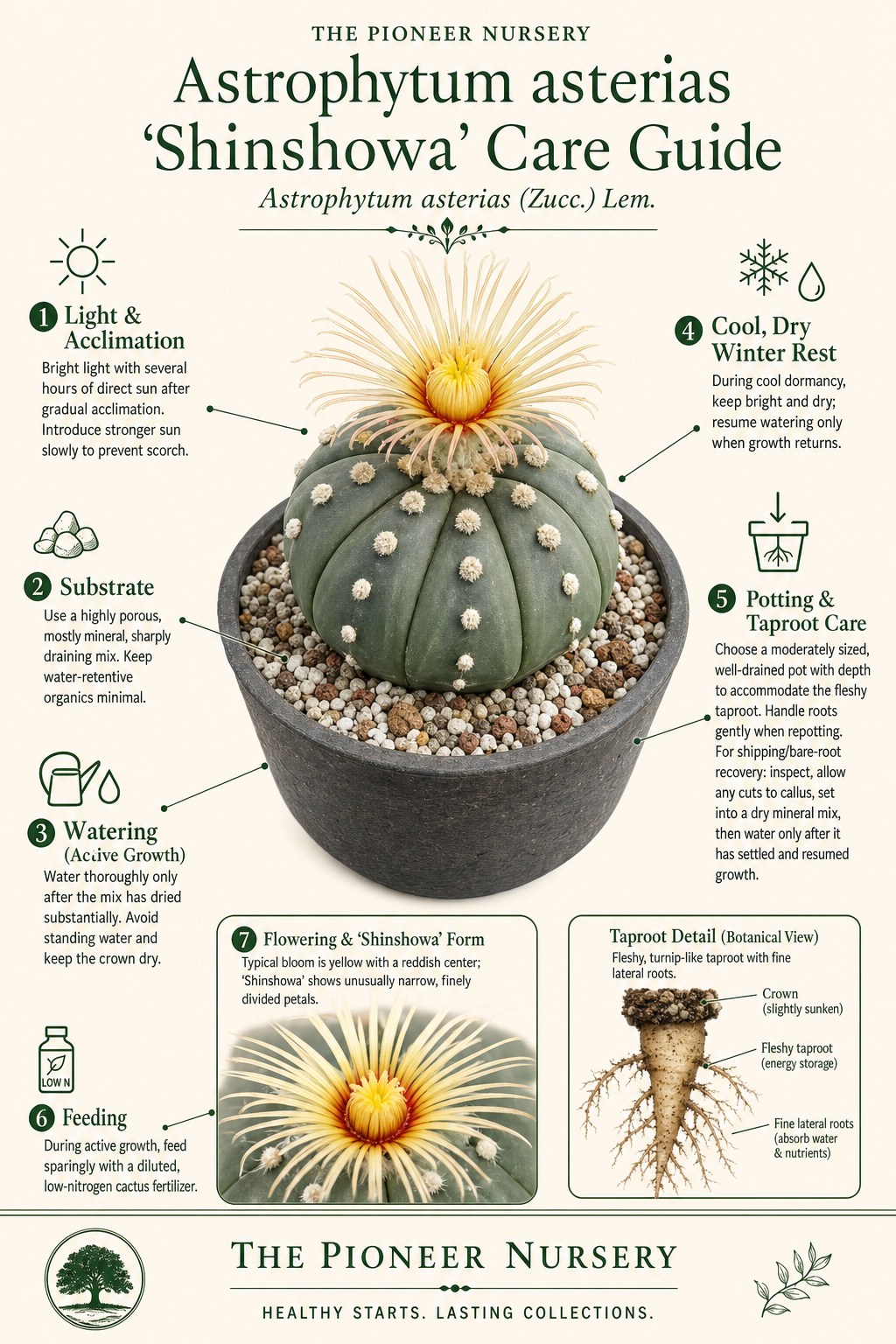
Astrophytum asterias, commonly called star cactus or sand dollar cactus, is a flattened cactus with a fleshy, turnip-like root system. ‘Shinshowa’ is a horticultural designation associated with unusually narrow, finely divided flowers; related clones may vary in exact flower form. Successful cultivation depends on strong but gradually introduced light, sharply draining mineral soil, careful watering during active growth, and keeping the plant dry during cool winter dormancy.
Quick Care Summary
- Bright light with several hours of direct sun after gradual acclimation.
- Use a highly porous, mostly mineral substrate.
- Water thoroughly during active growth only after the mix has dried substantially.
- Keep the plant dry during cool winter dormancy.
- Use a moderately sized, well-drained pot that accommodates the fleshy taproot.
- Handle roots gently during repotting.
- Feed sparingly with diluted, low-nitrogen cactus fertilizer during active growth.
About the Plant
Astrophytum asterias is an accepted species; ‘Shinshowa’ is best treated as a horticultural or collector designation rather than a formal botanical rank. The designation is associated with a selected flower form, while ordinary species-level care remains the same. Plants may be grown own-root or grafted. Grafting is a legitimate horticultural technique, though grafted plants can have a taller shape and different watering or temperature responses depending on the rootstock.
Light
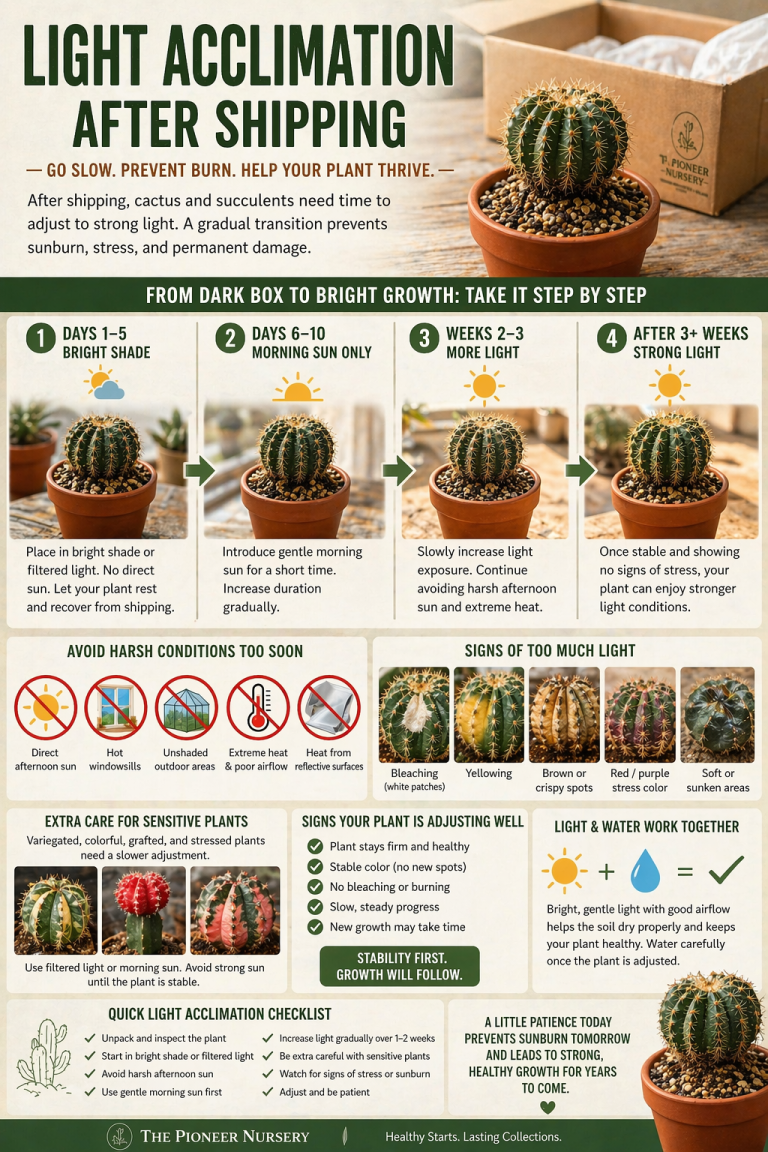
Provide bright light with several hours of direct sun after gradual acclimation. Increase exposure carefully after shipping, repotting, or moving a plant from a greenhouse to outdoors. In very hot climates, bright filtered light or afternoon protection can help prevent scorch, especially when airflow is limited.
Watering
Water thoroughly during active growth, generally from spring through early autumn, but wait until the substrate has dried substantially. Let excess water drain completely. Reduce watering as growth slows and keep the plant dry during cool winter dormancy. Cold, wet substrate is a major rot risk. Plants with damaged roots should remain dry until injuries have dried and healed.
Soil and Substrate
Use a sharply draining, porous substrate made mostly from mineral components such as pumice, lava, coarse grit, or perlite. Limit organic matter and avoid dense, moisture-retentive mixes. A neutral to mildly alkaline mineral mix is appropriate.
Potting and Roots
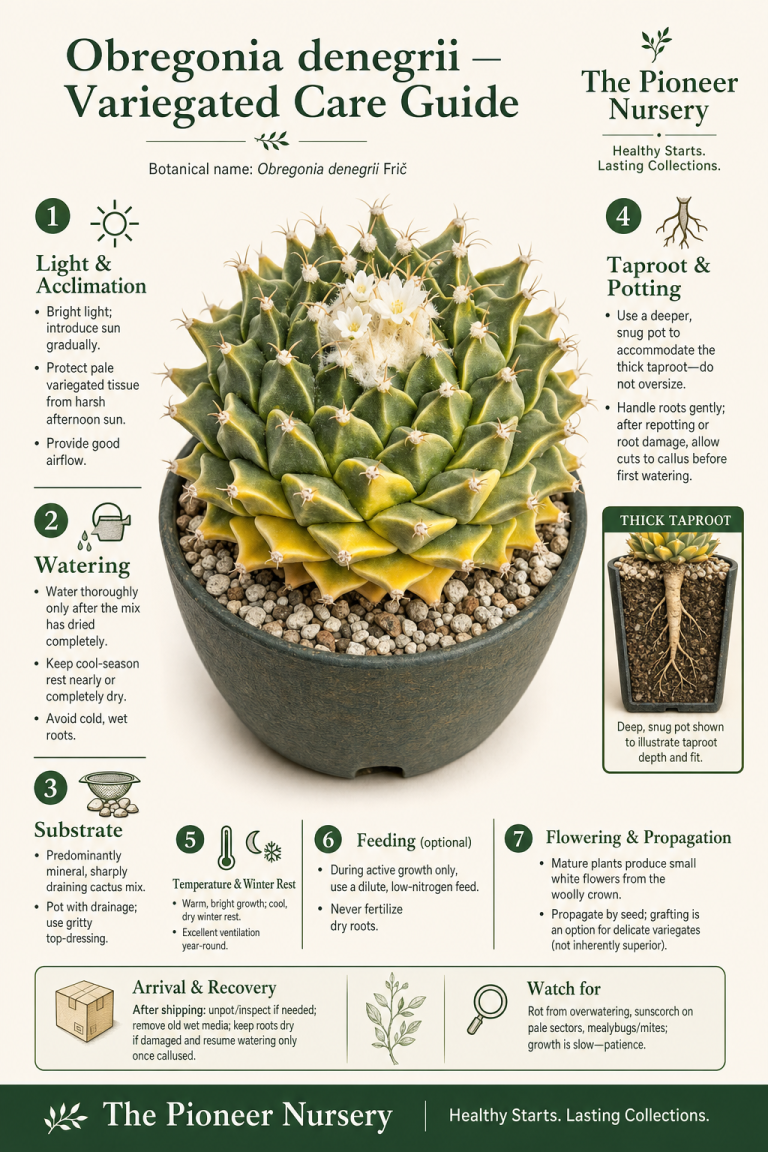
The fleshy, turnip-like taproot and finer lateral roots need adequate depth, but the pot should be only moderately larger than the root system. A large volume of unused wet substrate increases risk. Use excellent drainage, keep the plant neck above the mix, and consider a dry mineral top dressing. Handle the roots gently because rough repotting and prolonged overwatering can slow recovery or cause root loss.
Temperature and Dormancy
Keep the plant warm and well ventilated during active growth. In winter, provide bright, cool conditions and keep the plant completely dry; approximately 5–15 °C (41–59 °F) is a practical dormancy range. Avoid prolonged freezing temperatures and especially avoid cold combined with moisture. Resume watering gradually only when warmth and light support renewed growth.
Fertilizer
Feed sparingly during active growth with diluted, low-nitrogen cactus fertilizer. Do not fertilize dry, dormant, recently repotted, or root-damaged plants. Excess nitrogen or insufficient light can contribute to elongated, weak growth.
Flowering
Mature plants produce yellow flowers, commonly with reddish centers. ‘Shinshowa’ is associated with unusually fine, narrow, shredded-looking petals, although exact flower form and color may vary among related clones. Strong light, warm active growth, a dry winter rest, and maturity support flowering.
Propagation
Propagation is primarily by seed. Grafting is also used to accelerate growth or maintain selected forms. Grafted plants may develop a taller or less naturally flattened appearance and may respond differently to watering and temperature because of the rootstock. Use documented cultivated sources rather than collecting plants from wild populations.
Shipping and Arrival Care
Inspect the plant after arrival, including the body, root crown, and graft union if present. Keep it as dry as practical during shipping and recovery. Pot bare-root plants into dry, porous substrate and delay watering until any root injuries have dried and healed; allow longer recovery after substantial root damage or pruning. Acclimate gradually to stronger light and avoid immediate full sun or cold, wet conditions.
Common Problems
- Root or basal rot from wet, poorly aerated substrate, especially in cool conditions.
- Root mealybugs hidden below the soil line.
- Aerial mealybugs among woolly areoles.
- Spider mites under hot, dry, stagnant conditions.
- Sun scorch after sudden intense-light exposure.
- Elongated growth from insufficient light or excessive nitrogen.
- Slow recovery or root loss after rough repotting or prolonged overwatering.
Frequently Asked Questions
How often should I water Astrophytum asterias ‘Shinshowa’?
Water thoroughly during active growth only after the substrate has dried substantially. Reduce watering as growth slows and keep the plant dry during cool winter dormancy rather than following a fixed calendar.
Does this cactus need direct sun?
Bright light and several hours of direct sun are appropriate after gradual acclimation. Protect it from abrupt exposure, particularly after shipping or repotting.
Why is a mineral substrate important?
Astrophytum asterias has fleshy roots that are sensitive to prolonged wetness. A porous, sharply draining mineral mix reduces the risk of poorly aerated, wet conditions.
Can Astrophytum asterias ‘Shinshowa’ be grown grafted?
Yes. Grafting is a legitimate horticultural technique used for selected forms and faster growth. Grafted plants may have a taller shape and different watering or temperature responses depending on the rootstock.
What flowers should I expect?
Mature plants produce yellow flowers, commonly with reddish centers. The ‘Shinshowa’ designation is associated with narrow, finely divided or shredded-looking petals, but exact traits can vary among related clones.
How should I care for a bare-root plant after shipping?
Pot it into dry, porous substrate and delay watering until damaged roots have dried and healed. Acclimate gradually to stronger light and avoid cold, wet conditions.
Give Astrophytum asterias ‘Shinshowa’ strong acclimated light, fast drainage, gentle root handling, and a genuinely dry winter rest. Those practices help protect its fleshy root system while supporting compact growth and flowering.