Gymnocalycium ochoterenae — vatteri Single-Spine Care Guide
Learn how to grow this slow-growing, summer-active chin cactus with bright acclimated light, excellent drainage, careful summer watering, and a dry winter rest.
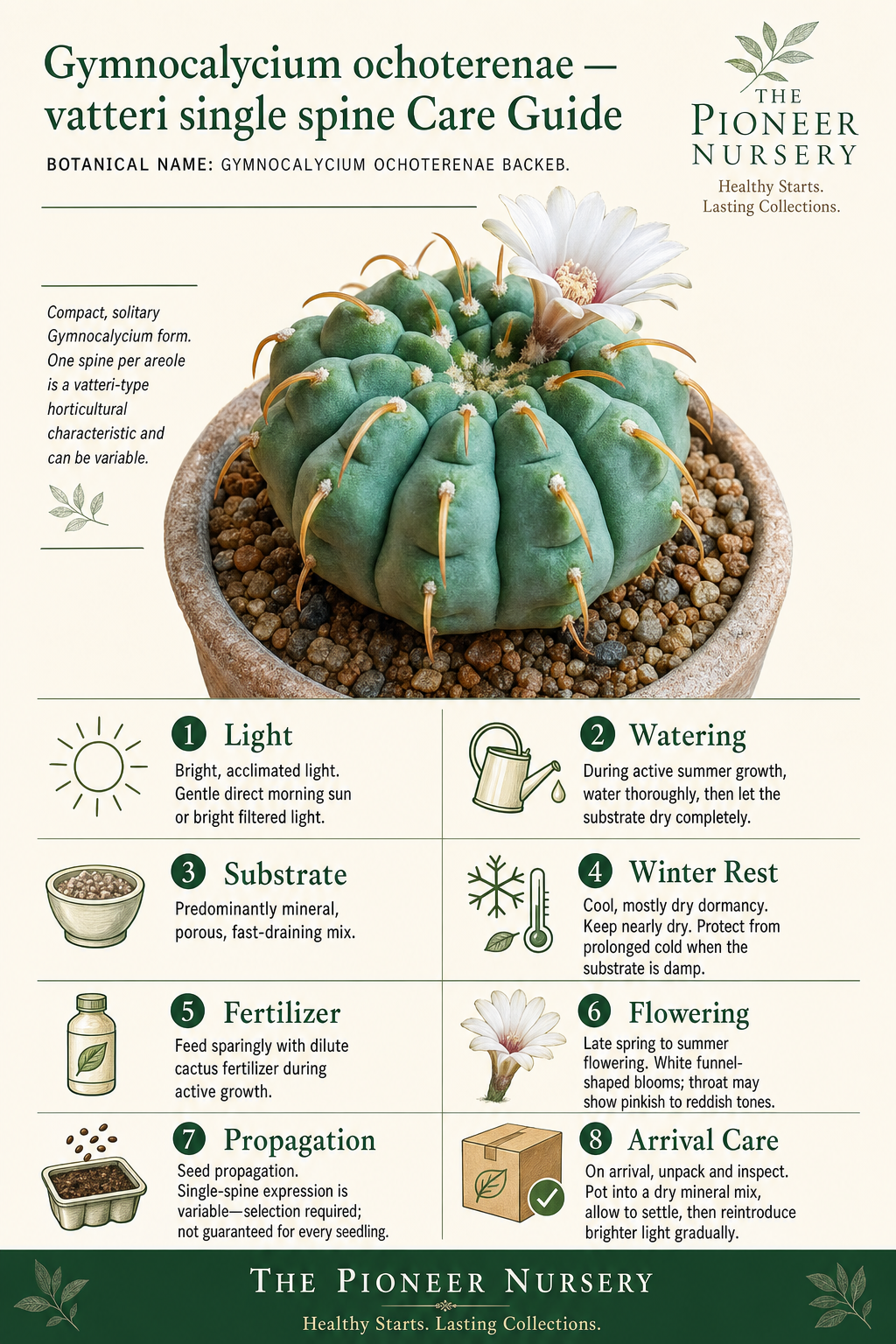
Gymnocalycium ochoterenae — vatteri single spine is a slow-growing, compact chin cactus commonly cultivated as a solitary plant. The “vatteri single spine” wording describes a horticultural or collector form with one spine per areole, not a formally established cultivar, and the trait may not reproduce consistently from seed. Its main care priorities are bright but acclimated light, porous soil, thorough watering during active summer growth, and a cool, mostly dry winter rest.
Quick Care Summary
- Bright light with gentle direct morning sun or bright filtered light.
- Acclimate gradually after shipping or winter dormancy.
- Water thoroughly in active summer growth, then let the substrate dry completely.
- Use a predominantly mineral, porous, fast-draining substrate.
- Keep nearly dry during cool winter dormancy.
- Protect from prolonged cold when the substrate is damp.
- Feed sparingly with dilute cactus fertilizer during active growth.
Light
Provide bright light with several hours of gentle direct sun, preferably morning sun, or bright filtered greenhouse light. Acclimate gradually after shipping or winter dormancy. In very hot climates, protect the plant from intense afternoon sun to reduce epidermal scorching. Too little light can cause etiolation and weaker growth.
Watering
Water thoroughly during active growth in spring and summer, then allow the substrate to dry completely before watering again. Reduce watering as temperatures and light decline. During cool winter dormancy, keep the plant nearly dry. Cold, wet conditions substantially increase the risk of rot.
Soil and substrate
Use a porous, fast-draining cactus substrate with strong root aeration. A predominantly mineral mix containing materials such as pumice, perlite, coarse sand, or lava, together with a modest organic component, is appropriate. Avoid dense, peat-heavy, poorly aerated soil.
Potting and roots
Choose a pot with an unobstructed drainage hole and avoid oversized containers that remain wet for too long. A moderately deep pot suits the compact, branched root system, but excessive depth is unnecessary. Repot during active growth when the plant has outgrown its container or the substrate has degraded. After significant root disturbance, allow damaged roots to dry and heal before resuming cautious watering.
Temperature and winter rest
Keep the plant warm during active growth. It may tolerate brief, light frost when completely dry, but routine freezing is not recommended. Protect it from prolonged cold, especially when the substrate is damp. This is primarily a summer-growing cactus, so provide a cool-to-mild, bright, dry winter rest with little or no water. Resume watering gradually in spring as temperatures and growth activity increase.
Fertilizer
Feed sparingly during active growth with a dilute cactus fertilizer. A balanced or moderately low-nitrogen formulation with adequate potassium is suitable. Do not fertilize during winter dormancy or when roots are dry, damaged, or unhealthy.
Flowering
Mature plants can produce relatively large, funnel-shaped white flowers with pinkish to reddish coloration in the throat, generally from late spring into summer. Strong light, warm active growth, a dry winter rest, and healthy roots support flowering. Abrupt changes in temperature, light, or watering can contribute to flower-bud abortion or reduced flowering.
Propagation
Propagation is primarily by seed. Sow during warm growing conditions in a sterile, porous medium and maintain careful moisture without waterlogging. Offsets are uncommon. Because the single-spine trait may not reproduce consistently from seed, seedlings should not automatically be represented as the same single-spine form.
Understanding the name
Gymnocalycium vatteri and Gymnocalycium ochoterenae subsp. vatteri are treated as synonyms of Gymnocalycium ochoterenae by the cited taxonomic sources. The submitted “vatteri single spine” designation is best understood as a horticultural or collector description of a one-spine form. One spine alone is not sufficient evidence for precise taxonomic identification.
Shipping and arrival care
Inspect the plant after arrival and protect its body and delicate areoles from compression. Keep it ventilated and out of intense direct sun immediately after shipping, then acclimate gradually to stronger light. Receive and ship the plant dry whenever possible. If transit or handling has disturbed or damaged the roots, delay heavy watering and allow damaged roots to dry and heal before resuming cautious irrigation.
Common Problems
- Root or stem rot: Usually associated with cold, wet conditions or poorly aerated substrate.
- Sunburn: Can follow sudden exposure to intense direct light; acclimate gradually.
- Etiolation: Inadequate light can produce stretched, weaker growth.
- Mealybugs or scale: Monitor especially in protected greenhouse or indoor conditions.
- Flower-bud abortion: Abrupt changes in temperature, light, or watering may reduce flowering.
Frequently Asked Questions
How often should I water Gymnocalycium ochoterenae?
Water thoroughly during active spring and summer growth, then wait until the substrate has dried completely. Reduce watering as light and temperatures decline, and keep the plant nearly dry during cool winter dormancy.
Does this cactus need full sun?
Provide bright light with several hours of gentle direct sun, preferably morning sun, or bright filtered light. Acclimate gradually and offer protection from intense afternoon sun in very hot climates.
What does “vatteri single spine” mean?
It describes a horticultural or collector form associated with one spine per areole. It is not a verified formal cultivar, and the characteristic may not reproduce consistently from seed.
Can it tolerate frost?
The plant may tolerate brief, light frost when completely dry, but routine freezing is not recommended. Protect it from prolonged cold, especially when the substrate is damp.
How can I encourage flowering?
Provide strong acclimated light, warm active growth, healthy roots, and a dry winter rest. Mature plants can flower from late spring into summer.
Can I grow the single-spine form from seed?
Propagation is primarily by seed, but the single-spine characteristic may not reproduce consistently. Seedlings should not automatically be labeled as the same form.
With bright acclimated light, sharply draining soil, careful summer watering, and a predominantly dry winter rest, Gymnocalycium ochoterenae — vatteri single spine can remain a compact, rewarding collector cactus. Handle the distinctive spine form as a horticultural characteristic rather than a guarantee of seedling identity.