Mammillaria schiedeana giselae Cristata Care Guide
Learn how to grow this crested Mammillaria with bright light, careful watering, excellent drainage, and a cool, dry winter rest.
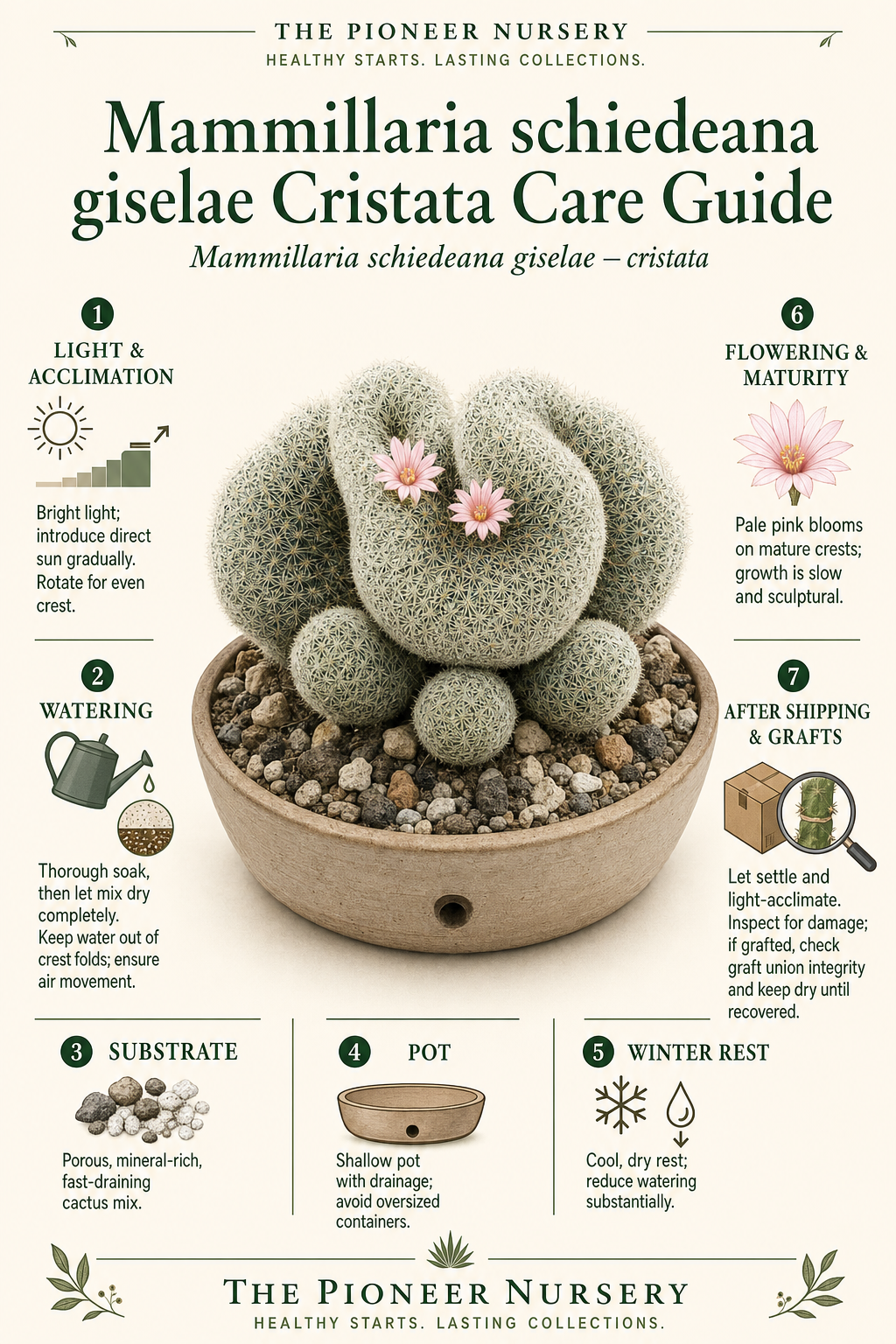
Mammillaria schiedeana giselae cristata is the crested growth form of Mammillaria schiedeana subsp. giselae. Its fan-shaped or irregularly cresting stem needs the same basic care as the underlying taxon, with extra attention to water collecting in convoluted growth and to any graft union. Bright light, a porous substrate, thorough drying between waterings, and a cool winter rest are the foundations of healthy growth.
Quick Care Summary
- Bright light with gradual acclimation to direct sun.
- Use a porous, mineral-rich, fast-draining cactus substrate.
- Water thoroughly during active growth, then let the mix dry completely.
- Keep the convoluted crest from retaining water and provide good air movement.
- Reduce watering substantially during cool winter rest.
- Use a shallow pot with drainage and avoid oversized containers.
- Inspect graft unions when present, especially after shipping or repotting.
About the plant
The accepted taxonomic treatment is Mammillaria schiedeana subsp. giselae; Mammillaria giselae is documented as a synonym. “Cristata” describes the plant’s crested horticultural form, not a separate species, cultivar, hybrid, or formal botanical rank. Cristation produces a fan-shaped or irregular stem through abnormal apical growth. Specimens may be grown on their own roots or grafted, so check the plant before applying graft-specific care.
Light
Provide bright light with several hours of direct sun once the plant is acclimated. After shipping or greenhouse cultivation, increase sun exposure gradually to reduce the risk of scorching. In very hot climates, protect the plant from intense afternoon sun while maintaining bright morning light. Strong light supports flowering and good spine development.
Watering
During active growth, water thoroughly, then allow the substrate to dry completely before watering again. Avoid frequent light watering and never leave the pot standing in water. Keep water from remaining trapped in the folded surfaces of the crest, and provide good air movement. Reduce watering substantially during the cool winter rest, keeping the plant dry or nearly dry when temperatures are low.
Soil and substrate
Use a very porous, fast-draining cactus mix with strong aeration and a substantial mineral component. Excess water should leave the pot quickly, and the mix should dry fully between waterings. Limestone or other calcareous mineral amendments may be appropriate for this species group. Avoid excessive organic material.
Potting and roots
Choose a pot with a drainage hole that is only slightly larger than the plant or root system. Specialist cultivation guidance considers a shallow pot suitable. Repot during active growth only when necessary, handling the crest carefully. After root disturbance or damage, allow the roots to dry and heal before watering. On grafted specimens, inspect the graft union and rootstock for movement, cracking, or rot.
Temperature and winter rest
Provide warm conditions during active growth and a cooler, dry winter rest. Protect the plant from freezing when wet. A dry, established plant may tolerate temperatures near -5 °C, but this should not be treated as a universal minimum for recently shipped, stressed, root-disturbed, or grafted plants. Resume watering gradually as temperatures rise and new growth begins.
Fertilizer
Feed sparingly during active growth with a dilute, low-nitrogen cactus fertilizer. A relatively higher-potassium fertilizer may be used during the growing season. Do not fertilize during winter rest or while the plant is dehydrated, recently repotted, or recovering from shipping.
Flowering
The underlying taxon produces pale pink to pink flowers, often with a darker central stripe, generally in a ring near the apex. Crested specimens can flower from the crest. Mature growth, strong light, and a cool, dry winter rest support flowering.
Propagation
The underlying taxon can be propagated from seed and offsets. To preserve the cristate form, carefully rooted offsets or cuttings are more practical because seedlings are not expected to reproduce the crest reliably. Grafting is also used for some crested specimens. Allow cut surfaces to callus before rooting, and keep newly propagated material dry until roots begin to form.
Shipping and arrival care
Inspect the plant after arrival, especially if it is grafted. Provide bright but filtered light initially, then acclimate gradually to direct sun. Keep the plant as dry as practical during shipping and do not water immediately after bare-root shipping or major root disturbance. Allow damaged roots and callused cutting surfaces to dry before the first irrigation. Watch grafted plants for movement, cracking, or rot at the union.
Common problems
Root or stem rot can result from wet substrate, poor drainage, or watering during cold conditions. Sunburn may occur when a plant moves abruptly from shade or greenhouse conditions into strong sun. Insufficient light can cause weak, elongated growth and reduced flowering. On crested or grafted specimens, a compromised root system or graft union can lead to instability or decline.
Frequently Asked Questions
How often should I water Mammillaria schiedeana giselae cristata?
Water thoroughly during active growth only after the substrate has dried completely. Water much less, or nearly not at all, during the cool winter rest, especially when temperatures are low.
Does this crested Mammillaria need direct sun?
Yes, bright light and several hours of direct sun are appropriate once acclimated. Increase exposure gradually after shipping or greenhouse cultivation, and provide afternoon protection in very hot climates.
Should this plant be grown in a shallow pot?
Specialist cultivation guidance considers a shallow pot suitable. Use a container with drainage that is only slightly larger than the plant or its root system.
Can the cristate form be grown from seed?
The underlying taxon can be grown from seed, but seedlings are not expected to reproduce the crest reliably. Carefully rooted offsets or cuttings are more practical for preserving cristate growth.
How can I tell whether my plant is grafted?
Look for a visible graft union and rootstock beneath the crested top, or confirm with the seller. Do not assume every specimen is grafted; care around the union is relevant only when a graft is present.
Give this crested Mammillaria bright light, excellent drainage, and a clear dry period between waterings. The most important seasonal adjustment is a cool, dry winter rest, while the most important crested-form precaution is preventing water from lingering in the folded growth.