Obregonia denegrii — Variegated Care Guide
Learn how to grow variegated Obregonia denegrii, the artichoke cactus, with guidance on light, mineral soil, careful watering, taproot care, dormancy, and rot prevention.
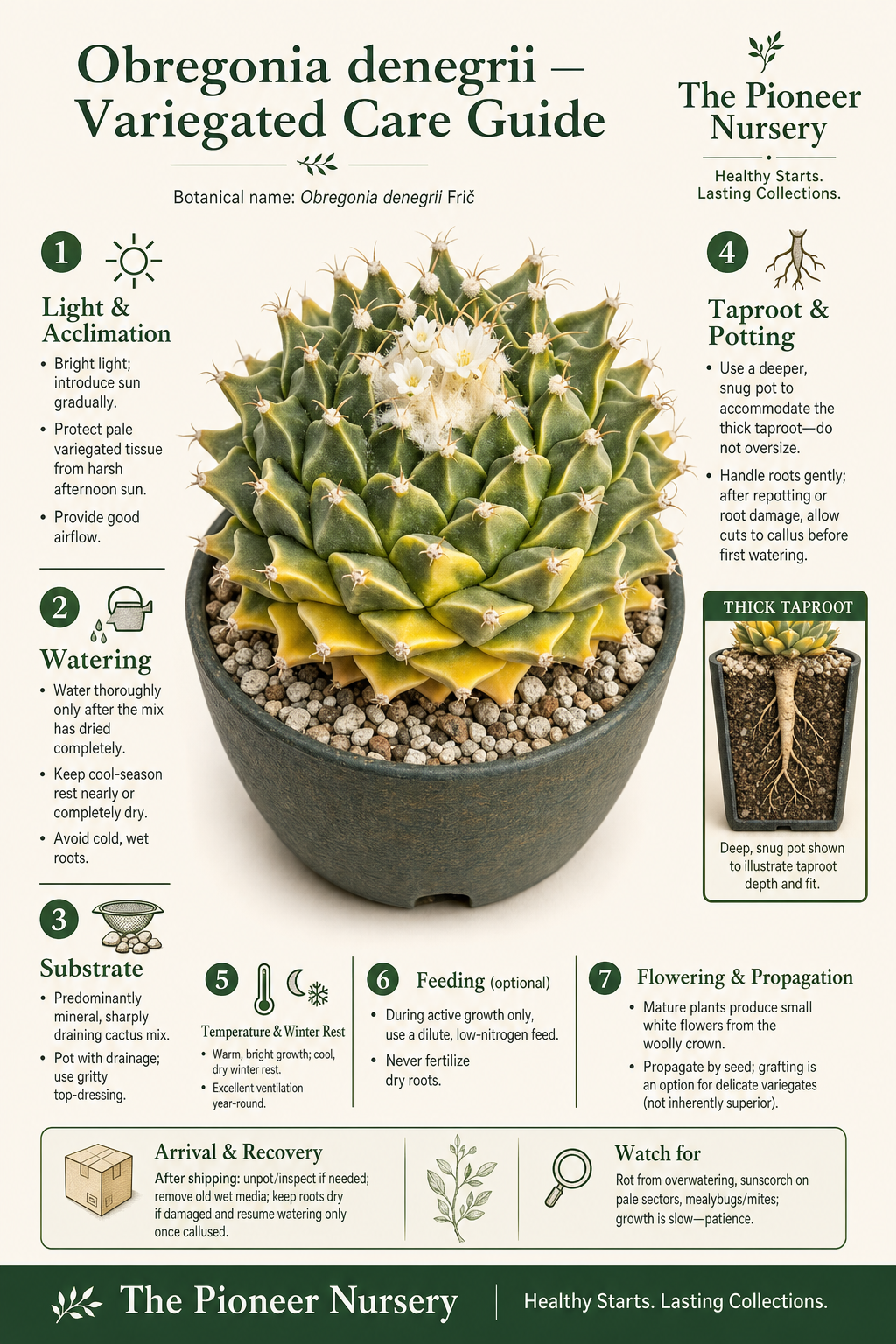
Obregonia denegrii, commonly called the artichoke cactus, is a very slow-growing Mexican cactus with a thick taproot and a compact form. The “Variegated” designation describes a horticultural form with reduced green tissue, so it deserves especially careful acclimation to strong light. The main priorities are a sharply draining mineral substrate, thorough drying between waterings, excellent ventilation, and a cool, dry winter rest.
Quick Care Summary
- Bright light with gradual acclimation; protect pale variegated tissue from harsh afternoon sun.
- Use a predominantly mineral, sharply draining cactus substrate.
- Water thoroughly only after the substrate has dried completely.
- Keep the plant nearly or completely dry during the cool winter rest.
- Use a deeper pot that accommodates the thick taproot without being oversized.
- Provide good ventilation and avoid cold, wet roots.
- Handle roots carefully after shipping or repotting, and delay watering if they are damaged.
About the Plant
Obregonia denegrii is the accepted species name for the artichoke cactus and is the sole currently recognized species in the genus Obregonia. “Variegated” is best understood as a horticultural designation rather than a formal botanical variety or independently verified cultivar. Specialist cactus literature uses Obregonia denegrii f. aurata (hort.) for a predominantly yellow or nearly chlorophyll-free form, but that name should not automatically be applied to every plant sold as variegated. Variegated tissue may grow more slowly and can be more vulnerable to sunscorch.
Light
Provide bright light, but acclimate the plant gradually. Morning sun, filtered sun, or light shade during the strongest part of the day is safer than abrupt exposure to intense midday or afternoon sun. The pale variegated tissue is especially prone to scorching. Adequate light supports compact growth, while insufficient light can contribute to elongated or atypical growth.
Watering
Water thoroughly only when the mineral substrate has dried completely, then let excess water drain away. Water more during warm active growth and sparingly during the cooler season. Keep the plant nearly or completely dry during winter, particularly when nights are below approximately 10°C. Avoid frequent shallow watering and never leave the roots in persistently wet conditions, as this species is prone to rot.
Soil and Substrate
Use a very porous, fast-draining cactus mix made predominantly from stable mineral materials. Coarse sand, pumice, perlite, quartz, and lava are suitable components. Keep organic matter low and avoid dense, peat-heavy mixes that remain wet around the taproot.
Potting and Roots
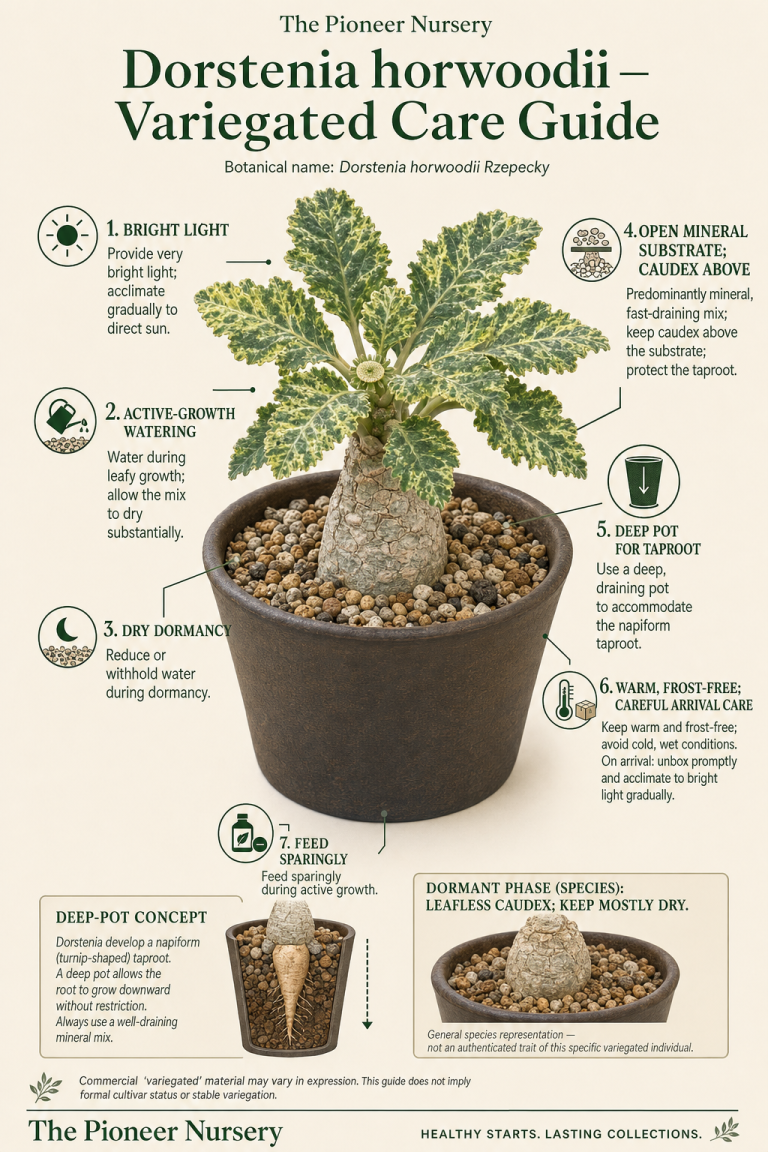
Obregonia denegrii develops a thick taproot, so choose a pot with enough depth for the root system without using an excessively oversized container. Handle the roots carefully during repotting and, when possible, repot during active growth. Remove only clearly damaged or rotting tissue. If roots are injured, keep the plant dry while wounds callus before resuming cautious watering.
Temperature and Ventilation
Give the plant warm conditions and good air movement during active growth. Cool, dry winter conditions are beneficial, but cold combined with wet roots can cause rot. Specialist references give approximately 7–9°C as a conservative winter threshold; some references report greater brief cold tolerance only when the plant is completely dry.
Seasonal Growth and Dormancy
Growth slows during the cooler, darker season. Maintain a dry winter rest with good ventilation and low atmospheric humidity. In spring, resume watering gradually as temperatures, light, and active growth increase rather than moving immediately to a heavy watering routine.
Fertilizer
Fertilizer is optional when the plant is growing in a fresh, mineral-rich substrate. If you fertilize, use a dilute, low-nitrogen cactus fertilizer only during warm active growth. Stop well before the cool winter rest so the plant is not encouraged to produce soft, lush growth late in the season.
Flowering
Mature plants produce small white flowers from the woolly apical area, generally in spring or summer depending on growing conditions. Strong light, a dry winter rest, and sufficient maturity support flowering.
Propagation
Propagation is primarily by seed. Seedlings are extremely slow-growing and delicate. Grafting may be used to accelerate establishment or preserve difficult material. Variegated tissue may have reduced vigor, and portions with very little chlorophyll may require grafting or support from greener tissue. Both own-root and grafted plants are used in cultivation.
Shipping and Arrival Care
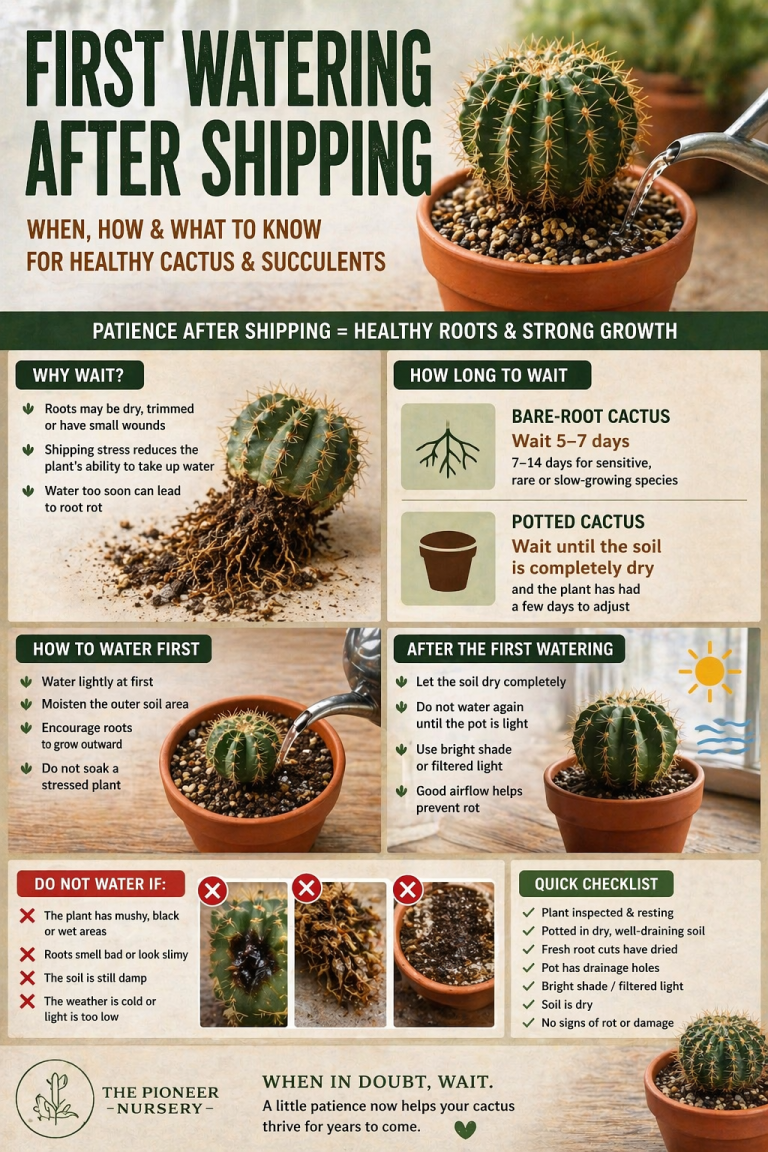
Inspect the plant after arrival for bruising, soft tissue, or root damage. Because of its thick, root-sensitive taproot and rot susceptibility, keep it as dry as practical during shipping and recovery. After bare-root shipment or major root disturbance, provide bright but filtered light, good ventilation, and gradual acclimation. Do not water immediately if roots or damaged areas are present; wait until those areas are dry and callused, then resume cautiously.
Common Problems
Rot: Excess moisture, stagnant air, or watering during cold conditions can damage the stem or roots. Let the mineral substrate dry completely and keep winter conditions dry.
Sunscorch: Abrupt exposure to intense direct sun can burn the plant, especially pale variegated tissue. Acclimate gradually and use filtered or morning sun when needed.
Elongated growth: Insufficient light or overly frequent watering can produce elongated or atypical growth.
Pests: Mealybugs and aphids may occur.
Slow establishment: Very slow growth and a sensitive root system can make seedlings and recently disturbed plants difficult to establish.
Frequently Asked Questions
How often should I water variegated Obregonia denegrii?
Do not use a fixed calendar. Water thoroughly only after the mineral substrate has dried completely, watering more during warm active growth and sparingly during the cooler season. Keep it nearly or completely dry in winter.
Can this plant receive direct sun?
Yes, but exposure should be gradual. Morning sun or filtered light is safer than abrupt intense midday or afternoon sun because the pale variegated tissue is more prone to scorching.
Why does Obregonia denegrii need a deeper pot?
The species develops a thick taproot, so it benefits from adequate depth. Avoid an excessively oversized container.
Should I water after bare-root shipping?
Not immediately if the roots or plant have been damaged. Provide bright filtered light and good ventilation, allow damaged areas to dry and callus, and then resume watering cautiously.
Can a variegated plant flower?
Mature plants can produce small white flowers from the woolly apical area, generally in spring or summer depending on conditions. Strong light and a dry winter rest support flowering.
Is grafting necessary?
Not always. Obregonia denegrii can grow on its own roots, while grafting may help accelerate establishment or support highly chlorophyll-deficient variegated material.
With a dry mineral substrate, carefully managed light, excellent ventilation, and a genuine cool-season rest, variegated Obregonia denegrii can be grown successfully. Its slow growth and sensitive taproot reward patience, especially after shipping or repotting.