Mammillaria bocasana ‘Fred’ Care Guide
Learn how to grow Mammillaria bocasana ‘Fred’, a variable monstrose powder puff cactus that needs bright light, sharply draining soil, careful watering, and a dry winter rest.
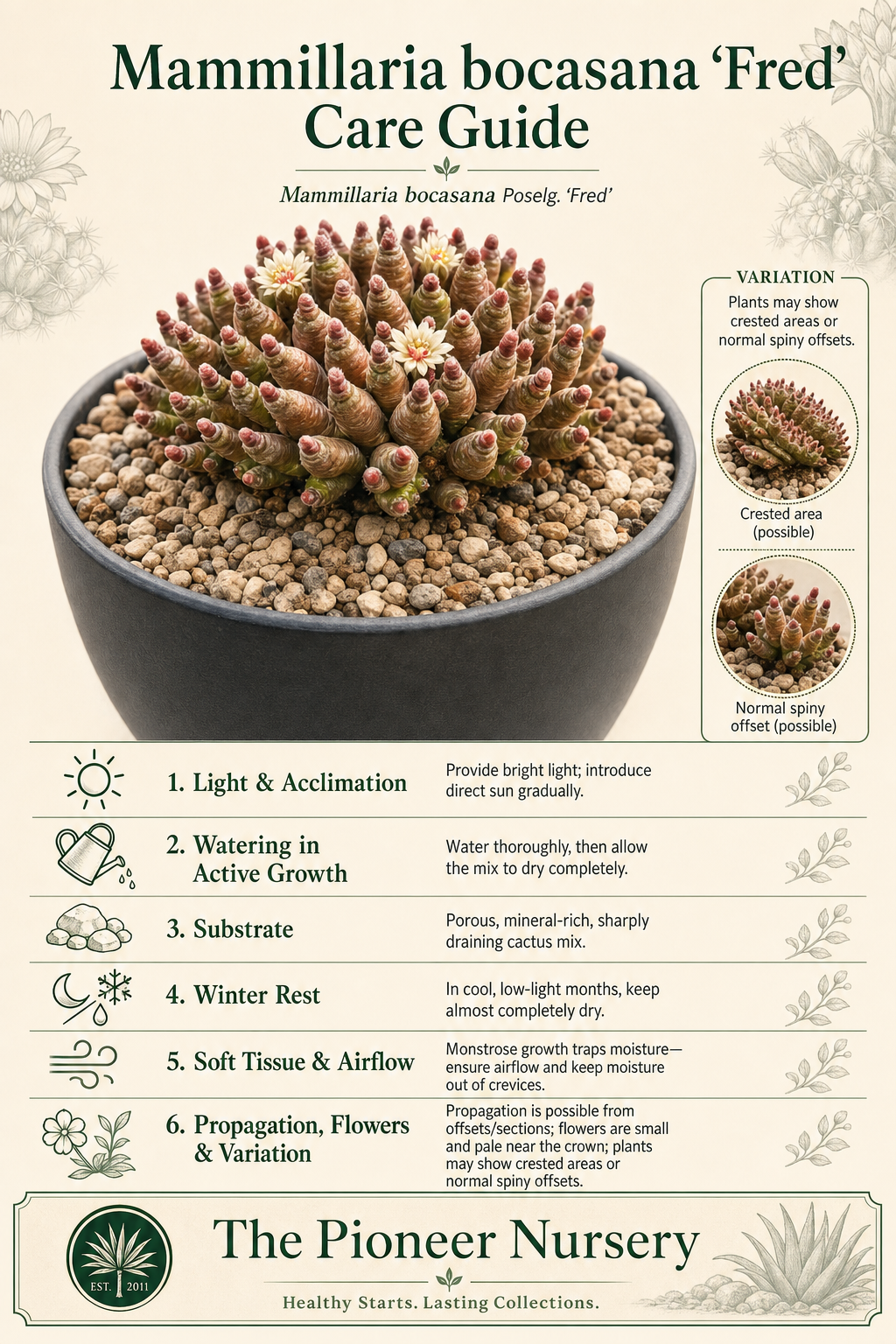
Mammillaria bocasana ‘Fred’ is a distinctive horticultural monstrose clone associated with the powder puff cactus. Its soft, irregular growth may occasionally produce normal offsets or revert toward normal spiny growth, so individual plants can vary. The main care priorities are bright, gradually introduced light, fast-draining substrate, thorough drying between waterings, and extra caution around moisture in the plant’s crevices and during cool weather.
Quick Care Summary
- Provide bright light and acclimate gradually to direct sun.
- Use a porous, mineral-rich, sharply draining substrate.
- Water thoroughly during active growth, then let the mix dry completely.
- Keep almost completely dry during cool, low-light winter conditions.
- Keep moisture away from soft tissue and growth crevices.
About the plant
The accepted species is Mammillaria bocasana Poselg.; ‘Fred’ is a horticultural and collector name for a variable monstrose clone, not a separate species. Some plants may also show crested growth. Its irregular tissue can be soft and difficult to inspect internally, so good airflow and careful moisture management are important.
Light
Provide bright light with several hours of direct sun once the plant is acclimated. In very intense summer conditions or behind glass, bright filtered light can be appropriate. Increase exposure gradually after shipping or moving the plant to reduce sunburn. Too little light can cause elongated, weak growth.
Watering
During active growth, water thoroughly and allow the substrate to dry completely before watering again. Adjust watering for temperature, light, pot size, substrate, and airflow rather than following a fixed calendar. In cool, low-light winter conditions, keep the plant almost completely dry and prevent water from collecting in crevices.
Soil and substrate
Use a porous, fast-draining cactus mix with substantial mineral material such as pumice, perlite, coarse grit, or similar aggregate, combined with a limited amount of organic potting material. The mix should drain freely and dry promptly after watering.
Potting and roots
Choose a container with drainage holes and avoid an unnecessarily large pot. Repot when needed, preferably during active growth. Handle the roots gently, remove damaged or rotten material, and allow significant root breaks to dry before rewatering. Do not bury the soft, irregular stem or let it rest against persistently damp media. Grafted plants may require different care based on their rootstock.
Temperature and winter rest
Warm growing conditions suit the plant during spring and summer. Protect it from frost and prolonged cold combined with moisture. A cool, bright, dry winter rest is useful when practical. Reduce or suspend watering as temperatures and light levels fall, then resume gradually as warmer conditions and active growth return.
Fertilizer
During active growth, apply a dilute balanced cactus fertilizer or another mild, low-strength fertilizer every two to three weeks, following the product’s directions. Do not fertilize during winter rest.
Flowering
Normal Mammillaria bocasana produces small pale or off-white flowers, often tinged with yellow or red, in a ring near the upper part of the stem. Monstrose or crested ‘Fred’ plants may flower less reliably, and flowers or normal offsets can be sporadic.
Propagation
The normal species can be grown from seed or offsets. To preserve the distinctive ‘Fred’ growth form, use vegetative methods such as offsets or cuttings when suitable; monstrose characteristics are not reliably reproduced from seed. Specialist cultivation also uses grafting. Allow cut surfaces to callus before rooting, and keep newly propagated material relatively dry until rooting begins.
Common problems
Root or stem rot is associated with frequent watering, poor drainage, or cold, wet conditions. Sunburn can follow abrupt exposure to strong direct light, especially behind glass. Inadequate light may produce weak, elongated growth. Mealybugs can hide in dense wool or crested areas. Some plants may revert to normal spiny growth or produce normal offsets.
Shipping and arrival care
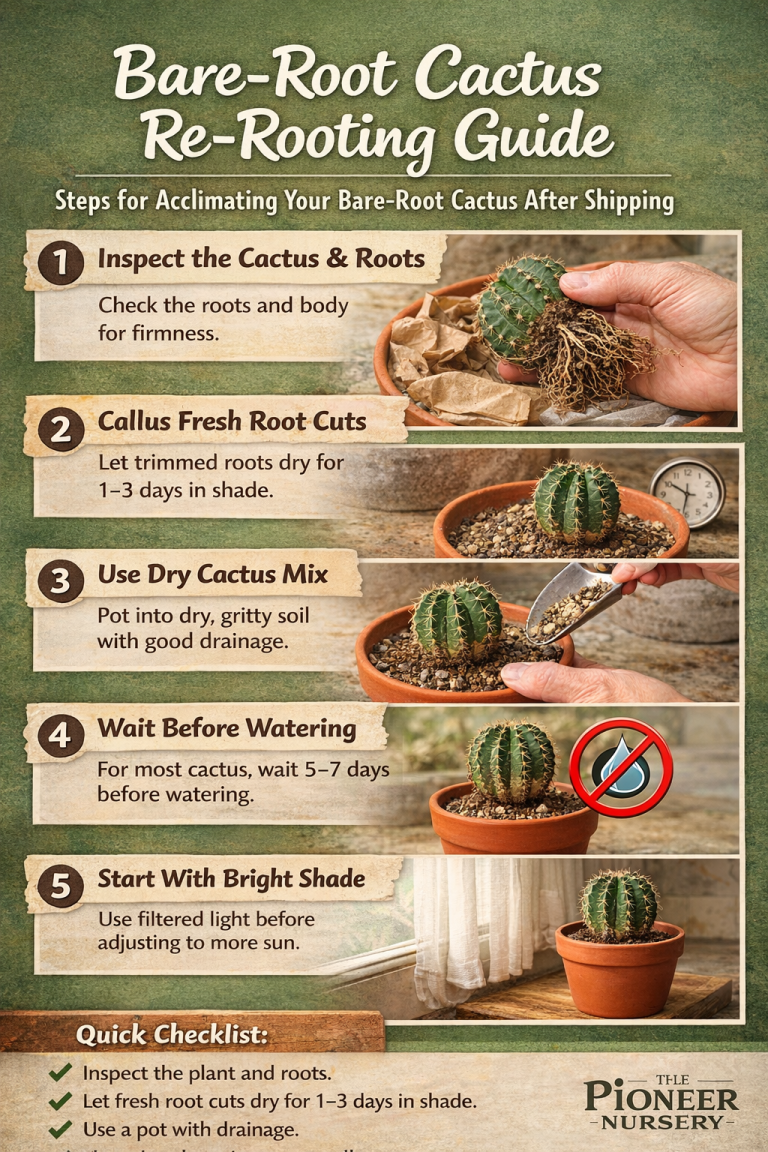
Inspect the plant on arrival for damage or rot and protect its soft, irregular growth from compression. After bare-root shipping or substantial root disturbance, allow damaged roots or cut surfaces to dry and let the plant settle before watering. Begin with bright but filtered light, then acclimate gradually to stronger sun.
Frequently Asked Questions
How often should I water Mammillaria bocasana ‘Fred’?
There is no fixed schedule. During active growth, water thoroughly and wait until the substrate is completely dry before watering again; keep it almost completely dry in cool, low-light winter conditions.
Can ‘Fred’ take direct sun?
Yes, after gradual acclimation. Use bright filtered light initially after shipping or a location change, then increase direct exposure as appropriate.
Why is this plant’s shape irregular?
‘Fred’ is a variable monstrose horticultural clone associated with Mammillaria bocasana. Some plants may express crested growth, produce normal offsets, or partially revert to normal spiny growth.
How can I preserve the ‘Fred’ form when propagating?
Use suitable vegetative methods such as offsets or cuttings. Seed does not reliably reproduce the distinctive monstrose characteristics.
Should I water immediately after the plant arrives?
Not after bare-root shipping or substantial root disturbance. Allow damaged roots or cut surfaces to dry and let the plant settle first.
With bright, carefully acclimated light, a mineral, fast-draining mix, and a dry winter rest, Mammillaria bocasana ‘Fred’ can be a rewarding collector plant. Its variable, soft growth rewards careful handling and restrained moisture.