Mammillaria bocasana Care Guide: Growing the Powder Puff Cactus
Learn how to grow Mammillaria bocasana, the clump-forming powder puff cactus, with bright light, sharply draining soil, careful watering, and a cool, dry winter rest.
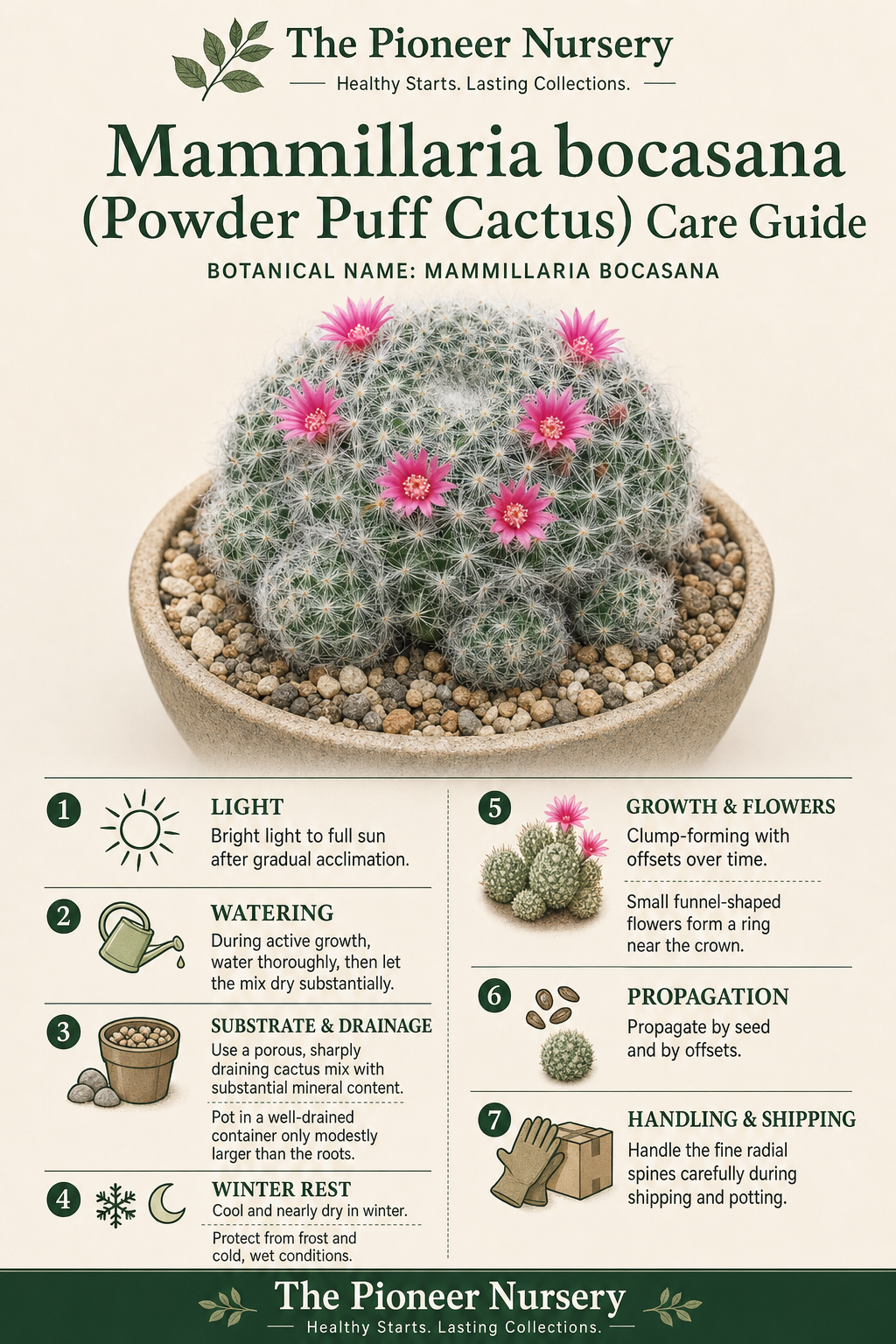
Mammillaria bocasana, commonly called the powder puff cactus, is a clump-forming cactus from northeastern Mexico. Its soft-looking radial spines, compact growth, and potential to form larger mounds make it appealing to both new growers and collectors. The main care priorities are strong light, a porous mineral-rich substrate, thorough watering only after the mix has substantially dried, and an almost dry winter rest.
Quick Care Summary
- Bright light to full sun after gradual acclimation.
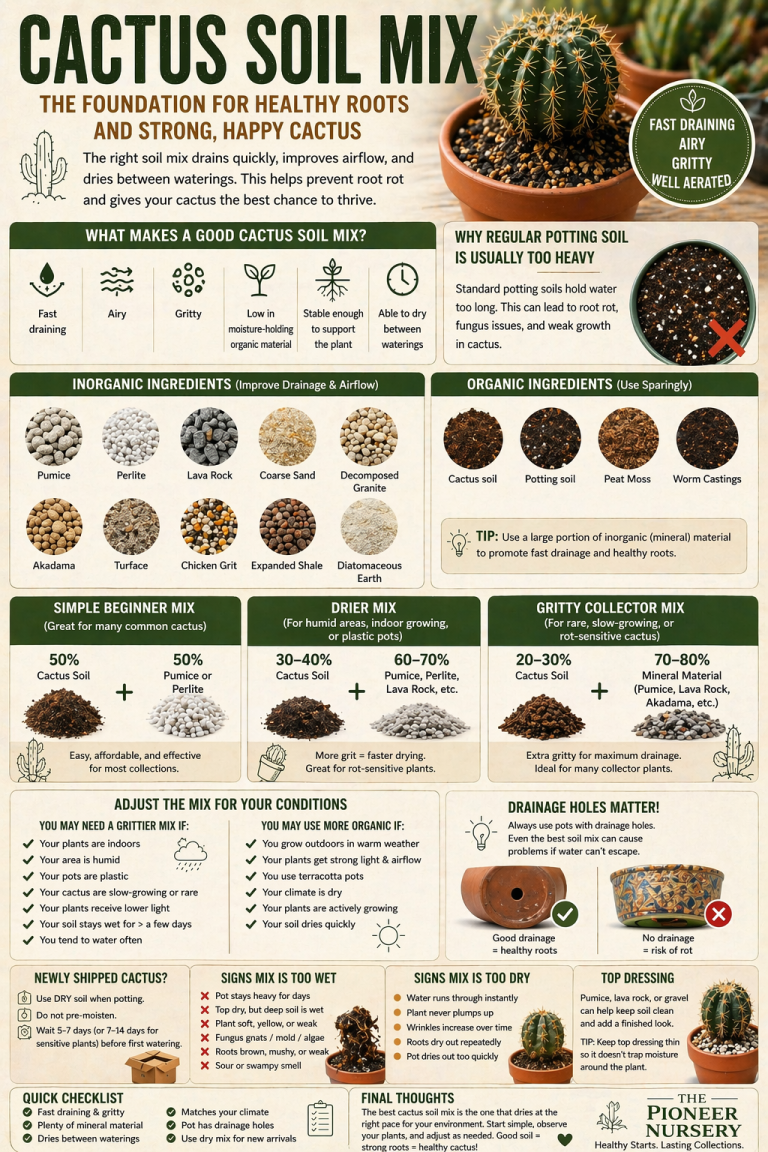
- Use a porous, sharply draining cactus mix with substantial mineral content.
- Water thoroughly during active growth, then let the substrate dry substantially.
- Keep the plant almost completely dry during a cool winter rest.
- Protect it from frost and cold, wet conditions.
- Repot in a well-drained container only modestly larger than the root system.
- Handle the fine radial spines carefully during shipping and potting.
About Mammillaria bocasana
Mammillaria bocasana grows in dry shrubland or desert environments and may eventually produce offsets, forming a larger clump or mound. The species is also known as the powder-puff pincushion. Its fine radial spines should be protected from crushing and rough handling.
Light
Provide bright light to full sun after gradual acclimation. Indoors, place the plant in the brightest available window or under equivalent strong grow lighting. After shipping, or when moving a plant from low light, begin with bright filtered light and increase direct sun gradually to reduce the risk of sunburn. Inadequate light can cause weak, elongated growth.
Watering
During active growth, water thoroughly, then allow the substrate to dry substantially before watering again. Do not keep the roots continuously wet. As growth slows, reduce watering, and keep the plant almost completely dry during a cool winter rest. Cold, wet conditions create a significant rot risk. Resume watering gradually when warmer conditions and visible growth return.
Soil and substrate
Use a porous, sharply draining cactus substrate with substantial mineral content and good root aeration. Avoid dense, water-retentive composts. Every container must have a drainage hole.
Potting and roots
Choose a container with excellent drainage and only modestly more volume than the root system requires. Repot during active growth when possible. No specialized deep pot is specifically required by the available guidance. Handle the fine spines carefully. After major root disturbance, allow damaged roots to dry and recover before resuming cautious watering.
Temperature and winter rest
Grow the plant warm during active growth and provide a cool, sheltered winter rest. The RHS rates it H2 in the United Kingdom, indicating tolerance of low temperatures but not reliable survival of freezing. Protect Mammillaria bocasana from frost and especially from cold, wet exposure. During winter, maintain bright light, low humidity, and little or no water while the plant is cool and not actively growing.
Fertilizer
During active growth, use a dilute, balanced liquid fertilizer at intervals appropriate to the product label. RHS guidance gives feeding every two to three weeks while growing. Avoid heavy fertilization during dormancy.
Flowering
A mature, healthy plant may produce small, funnel-shaped flowers in a ring near the upper part of the stem, generally during the spring or summer growing season. Strong light, adequate summer growth, and a cool, dry winter rest support flowering.
Propagation
Mammillaria bocasana can be propagated from seed or offsets. Allow separated offsets or cut surfaces to dry and callus before planting them in a dry, porous medium. For seed propagation, sow in a clean, well-drained medium with warmth and bright but filtered light during germination. Increase ventilation gradually as seedlings develop.
Shipping and arrival care
Inspect the plant after arrival for rot or mechanical damage. When practical, plants should be shipped and received dry. Provide bright filtered light first, then acclimate gradually to stronger sun. Do not water immediately after bare-root shipment or significant root damage; wait until damaged roots have dried and the plant has had time to re-establish. Pack and handle the plant carefully because its soft-looking radial spines can become matted or broken.
Common Problems
- Root or stem rot: Usually associated with excessive moisture, poor drainage, or watering while the plant is cold.
- Sunburn: Can occur after abrupt movement from shade or low indoor light into strong direct sun.
- Etiolation: Weak, elongated growth indicates inadequate light.
- Mealybugs: This species is reported as potentially susceptible; inspect the plant regularly.
- Winter overwatering: Keep the plant nearly dry during its cool rest.
- Spine breakage or matting: Rough handling or tight shipping can damage the fine radial spines.
Frequently Asked Questions
How often should I water Mammillaria bocasana?
There is no fixed calendar. During active growth, water thoroughly and wait until the substrate has substantially dried before watering again. Reduce watering as growth slows and keep the plant almost completely dry during a cool winter rest.
Can Mammillaria bocasana grow in full sun?
Yes, bright light to full sun is appropriate after gradual acclimation. Protect newly shipped plants and plants coming from low light with bright filtered light first.
Does this cactus need a deep pot?
No specialized deep pot is specifically required. Use excellent drainage and only modestly more container volume than the root system needs.
How can I encourage flowering?
A mature, healthy plant benefits from strong light, adequate summer growth, and a cool, dry winter rest. Flowers may appear in spring or summer.
Can I propagate powder puff cactus from offsets?
Yes. Separate offsets, allow them to dry and callus, then plant them in a dry, porous medium. It can also be grown from seed.
Should I water immediately after receiving a bare-root plant?
No. After bare-root shipping or significant root damage, allow damaged roots to dry and recover before cautious watering. Begin with bright filtered light and acclimate gradually.
Mammillaria bocasana is best approached as a bright-light cactus with excellent drainage and a clear seasonal rhythm: thorough watering during active growth, followed by a cool and nearly dry winter rest. Protect its fine spines, avoid cold wet conditions, and acclimate gradually whenever light or conditions change.