Ariocarpus Hintonii Care Guide
Learn how to grow Ariocarpus Hintonii, a slow-growing living rock cactus that needs bright light, mineral soil, careful watering, and a dry cool season.
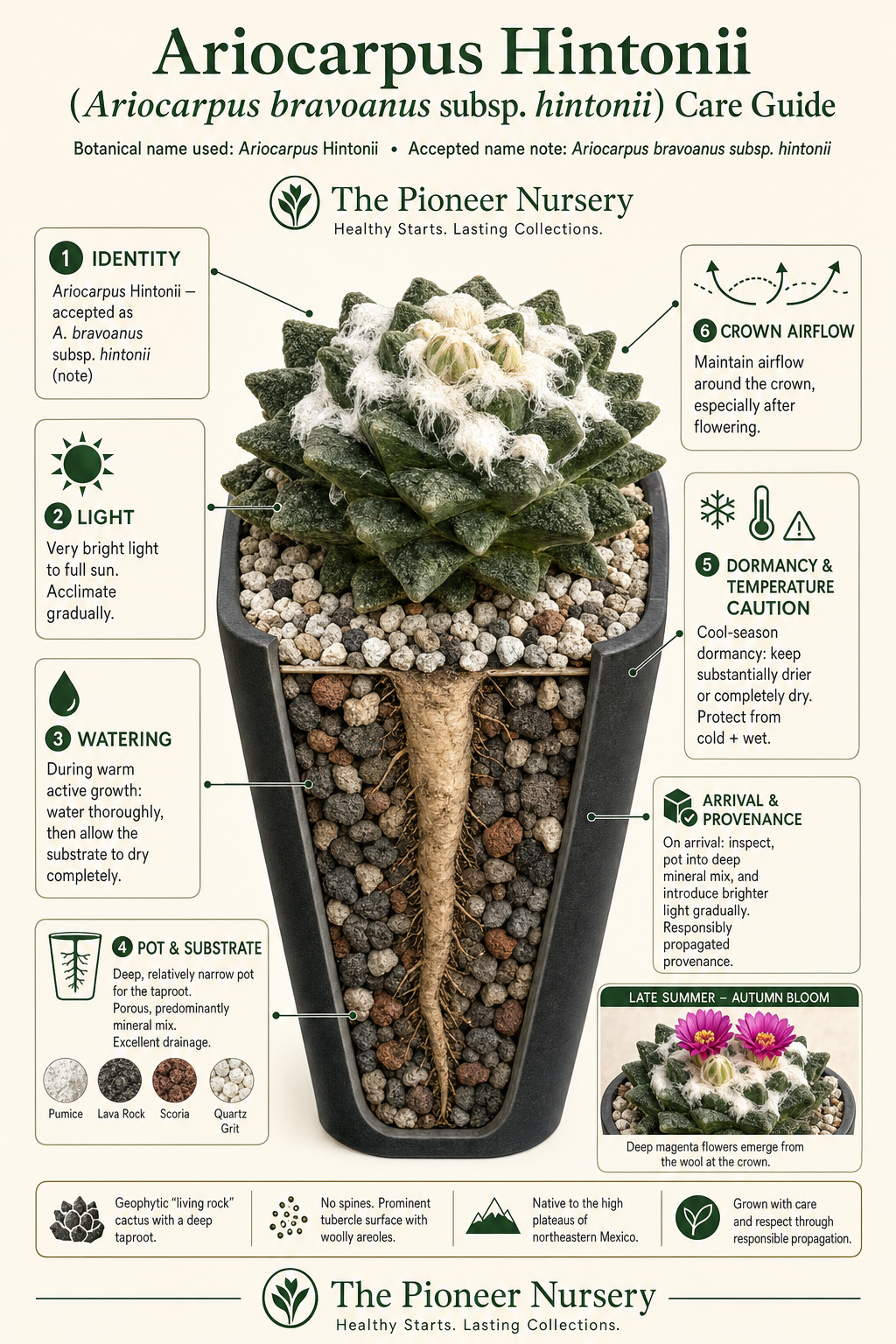
Ariocarpus Hintonii, or Hinton’s living rock, is a slow-growing cactus with a substantial taproot. Give it very bright light, a deep well-drained pot, and a predominantly mineral substrate. Water only during warm active growth, allowing the substrate to dry completely, and keep the plant dry in cool winter conditions.
Quick Care Summary
- Provide very bright light to full sun after gradual acclimation.
- Use a deep, relatively narrow pot and a porous, predominantly mineral substrate.
- Water thoroughly only during warm active growth, then let the substrate dry completely.
- Keep the plant substantially drier or completely dry during cool winter conditions.
- Maintain airflow around the crown, especially after flowering.
About the plant
This low-growing living rock cactus develops a thick taproot and is associated with limestone terrain. The nursery and collector name Ariocarpus Hintonii is commonly used; the accepted botanical treatment is Ariocarpus bravoanus subsp. hintonii. Earlier documented names include Ariocarpus fissuratus var. hintonii and A. fissuratus subsp. hintonii. Artificially propagated plants with reliable provenance should be preferred.
Light
Provide very bright light to full sun after gradual acclimation. Plants moved from indoor, shaded, or transported conditions can sunburn if exposed abruptly. During extreme summer heat, light afternoon shade or moderate shade cloth can protect the plant while maintaining strong illumination. Insufficient light may produce weaker coloration and less compact growth.
Watering
Water only during warm active growth. Apply water thoroughly, then allow the substrate to dry completely before watering again. Let temperature, light, airflow, pot size, and drying time determine frequency rather than using a calendar. Reduce watering as growth slows in autumn, and keep the plant substantially drier or completely dry through cool winter conditions. Cold, wet roots create a serious taproot-rot risk.
Soil and substrate
Use a fast-draining, porous substrate with very little organic matter. Suitable stable mineral components include pumice, lava rock, granite grit, and zeolite. A modest calcareous, or limestone-based, component may suit this limestone-associated taxon, but avoid excessive fine material and moisture-retentive mixes.
Potting and roots
Use a deep, relatively narrow container with excellent drainage to accommodate the substantial taproot. Handle roots carefully during repotting. If roots are significantly disturbed or damaged, keep the plant dry in warm, ventilated conditions until damaged tissue has healed, then resume cautious watering.
Temperature and dormancy
Maintain warm, well-ventilated conditions during active growth. The plant may tolerate brief light frost only when completely dry, but winter protection above approximately 5 °C is a conservative cultivation target. Growth is seasonal, with a pronounced cool-season dry period; resume watering gradually in spring once conditions are reliably warm.
Fertilizer
Feed sparingly and only during active growth. A weak fertilizer containing calcium may be used once or twice during the growing season. Avoid frequent feeding and high-nitrogen fertilizer, particularly when light and warmth are inadequate.
Flowering
Flowers are typically produced from late summer into autumn and are described as deep magenta. Maintain good airflow during and after flowering because moisture or spent flowers retained in the crown can contribute to rot. A gradual autumn dry-down may support flowering.
Propagation
Propagation is primarily by exceptionally slow seed. Seed-grown plants develop the characteristic taproot naturally. Grafting can accelerate production, although grafted plants may become larger and less compact than seed-grown specimens. Degrafting and re-rooting are possible but slow and unreliable.
Shipping and arrival care
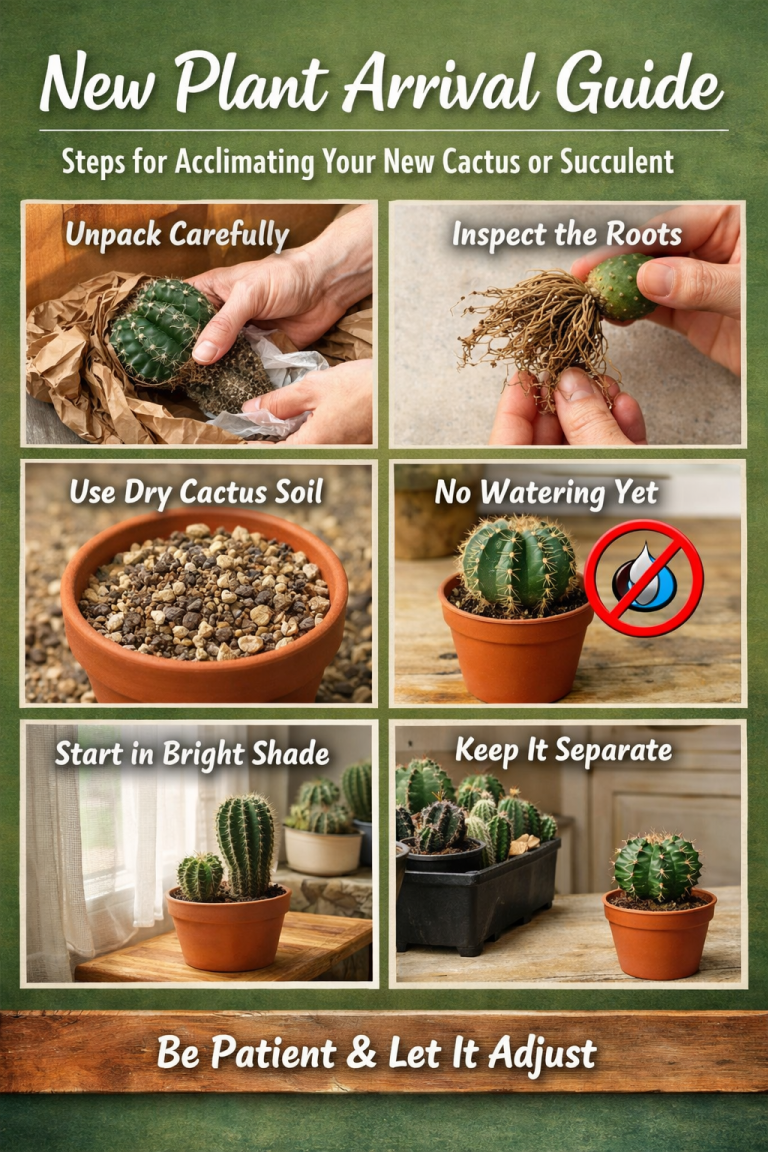
Inspect the plant on arrival and protect the taproot from crushing, prolonged cold, and moisture. After bare-root shipping or major root disturbance, allow damaged tissue to heal in warm, ventilated conditions before cautious watering. Introduce strong light gradually after shipping. Use only legally propagated material with reliable provenance; Ariocarpus is subject to CITES controls.
Common Problems
- Taproot rot: Wet substrate, poor aeration, or cool conditions can cause decay; keep roots dry in cold conditions.
- Root rot after repotting or shipping: Watering before damaged roots heal can lead to decay.
- Sunburn: Abrupt exposure to intense light can scorch plants coming from shade or transport; acclimate gradually.
- Weak growth: Insufficient light may cause elongated growth, weaker coloration, and loss of compact form.
- Crown rot: Stagnant air or moisture retained around spent flowers can damage the crown; maintain airflow.
Frequently Asked Questions
How often should Ariocarpus Hintonii be watered?
Do not use a fixed calendar. Water thoroughly during warm active growth only after the mineral substrate has dried completely, then reduce or stop watering as growth slows and winter conditions become cool.
Does Ariocarpus Hintonii need full sun?
It can receive full sun after gradual acclimation. In extreme summer heat, light afternoon shade or moderate shade cloth can protect it while maintaining strong overall light.
What kind of pot does it need?
Use a deep, relatively narrow container with excellent drainage to accommodate its substantial taproot.
Can I water after repotting or bare-root shipping?
If roots were significantly disturbed or damaged, keep the plant dry in warm, ventilated conditions until wounds heal, then resume cautious watering. Introduce strong light gradually after shipping.
How is Ariocarpus Hintonii propagated?
Propagation is primarily by exceptionally slow seed. Grafting can accelerate production, but grafted plants may become larger and less compact; degrafting and re-rooting are slow and unreliable.
When does it flower?
Flowers are typically produced from late summer into autumn and are described as deep magenta. Good airflow is important during and after flowering.
Ariocarpus Hintonii rewards patience and careful seasonal judgment. Prioritize bright light, fast drainage, warm active growth, cautious watering, and a dry cool season. Choose legally propagated plants with reliable provenance.