Gymnocalycium ochoterenae — Vatteri Single Spine Care Guide
Learn how to grow Gymnocalycium ochoterenae ‘Vatteri Single Spine’ with guidance on light, watering, drainage, winter rest, flowering, propagation, and arrival care.
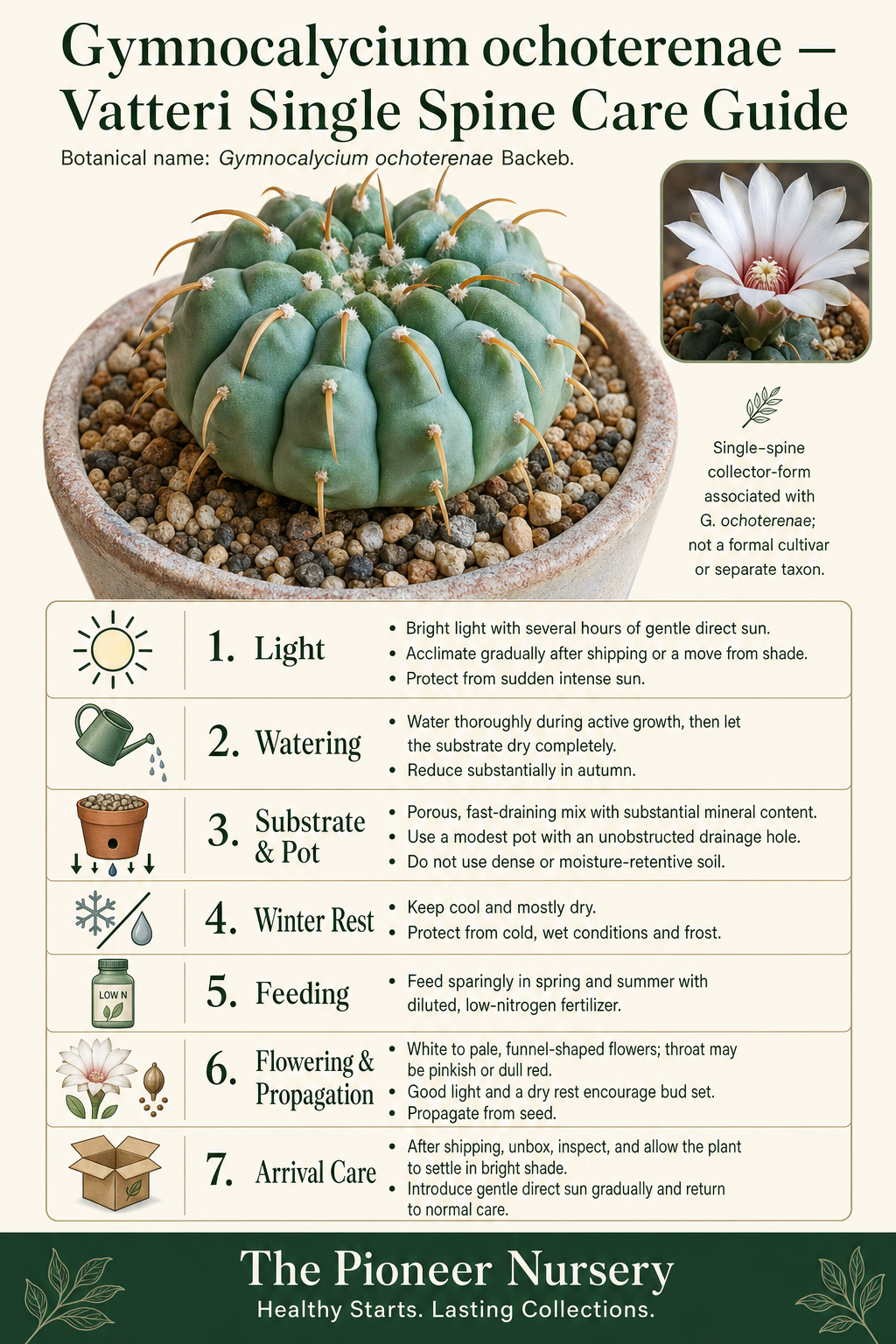
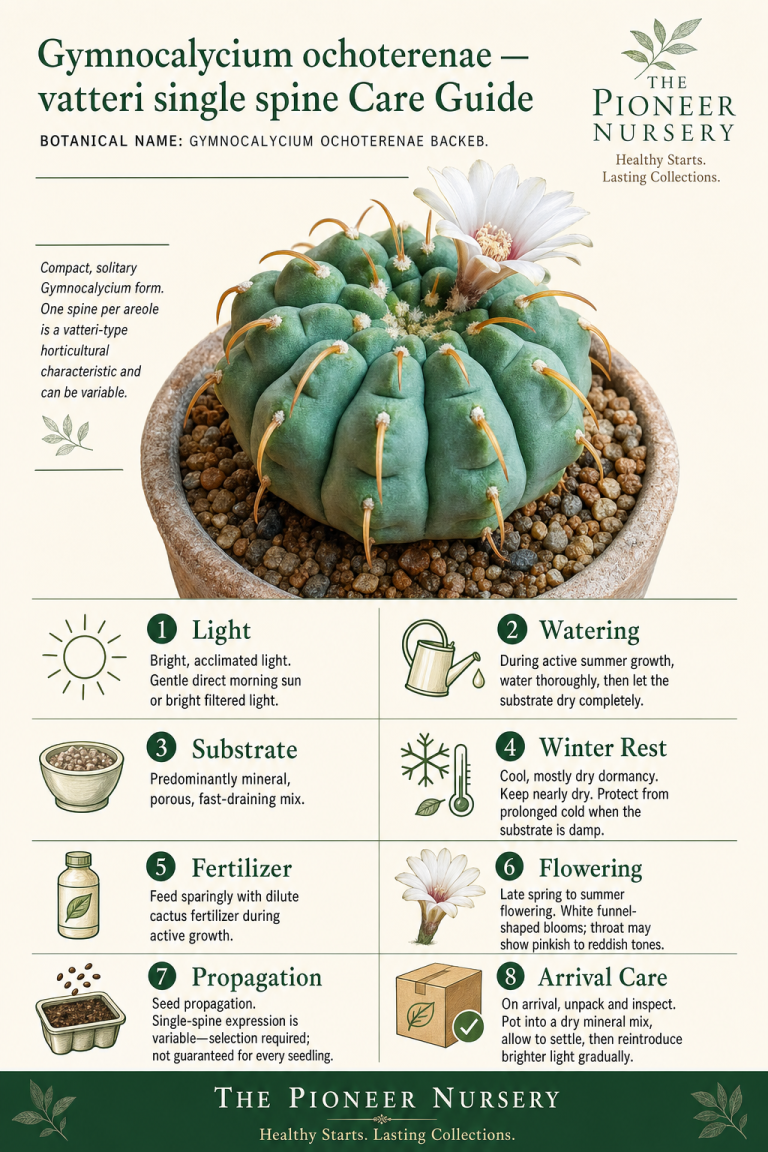
Gymnocalycium ochoterenae — Vatteri Single Spine is a compact, summer-growing cactus recognized in collector and nursery use for its distinctive single-spine characteristic. That feature is a horticultural or collector form rather than a separately verified botanical variety or cultivar. Give it bright light with gradual sun acclimation, a porous mineral-leaning substrate, thorough watering during active growth, and a cool, mostly dry winter rest.
Quick Care Summary
- Bright light with several hours of gentle direct sun.
- Acclimate gradually after shipping or a move from shade.
- Use a porous, fast-draining substrate with substantial mineral content.
- Water thoroughly during active growth, then let the substrate dry completely.
- Reduce watering substantially in autumn and keep nearly dry during cool winter conditions.
- Use a modestly sized pot with an unobstructed drainage hole.
- Feed sparingly with diluted, low-nitrogen fertilizer during spring and summer.
- Protect from cold wet conditions, frost, and sudden intense sun.
About the plant
Gymnocalycium ochoterenae is the accepted species identity used for this plant. Gymnocalycium vatteri is treated as a synonym by major taxonomic databases, while some specialist sources retain it at subspecies rank. “Vatteri Single Spine” describes a collector or horticultural form associated with that treatment; the single-spine trait should not be presented as a formal cultivar or botanical rank.
Light
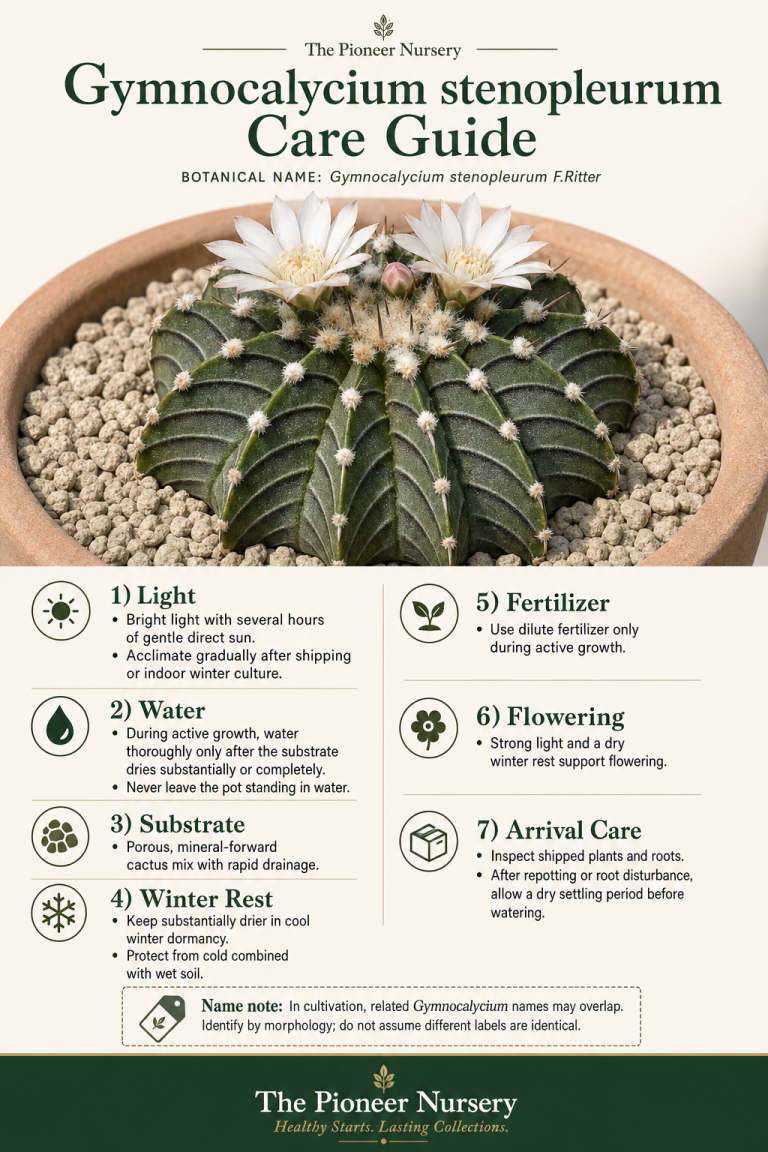
Provide bright light with several hours of gentle direct sun, such as morning sun. In hotter climates or behind glass, filtered afternoon light can reduce scorch risk. Acclimate gradually after shipping or whenever the plant moves from shaded nursery conditions. Insufficient light can cause etiolation and weak growth, while sudden intense sun may cause sunburn.
Watering
During active growth, water thoroughly until excess drains from the container, then allow the substrate to dry completely before watering again. The interval varies with light, temperature, pot size, substrate, and airflow, so use those conditions rather than a fixed calendar. Reduce watering substantially in autumn and keep the plant nearly dry during cool, low-light winter conditions. Water during winter only if severe shriveling indicates it is needed.
Soil and substrate
Use a very porous, fast-draining cactus mix with substantial mineral material such as pumice, perlite, lava rock, coarse grit, or coarse sand, combined with a limited amount of organic potting material. Avoid dense mixes that remain wet around the roots. Good airflow and rapid drainage are especially important when summer watering is more frequent.
Potting and roots
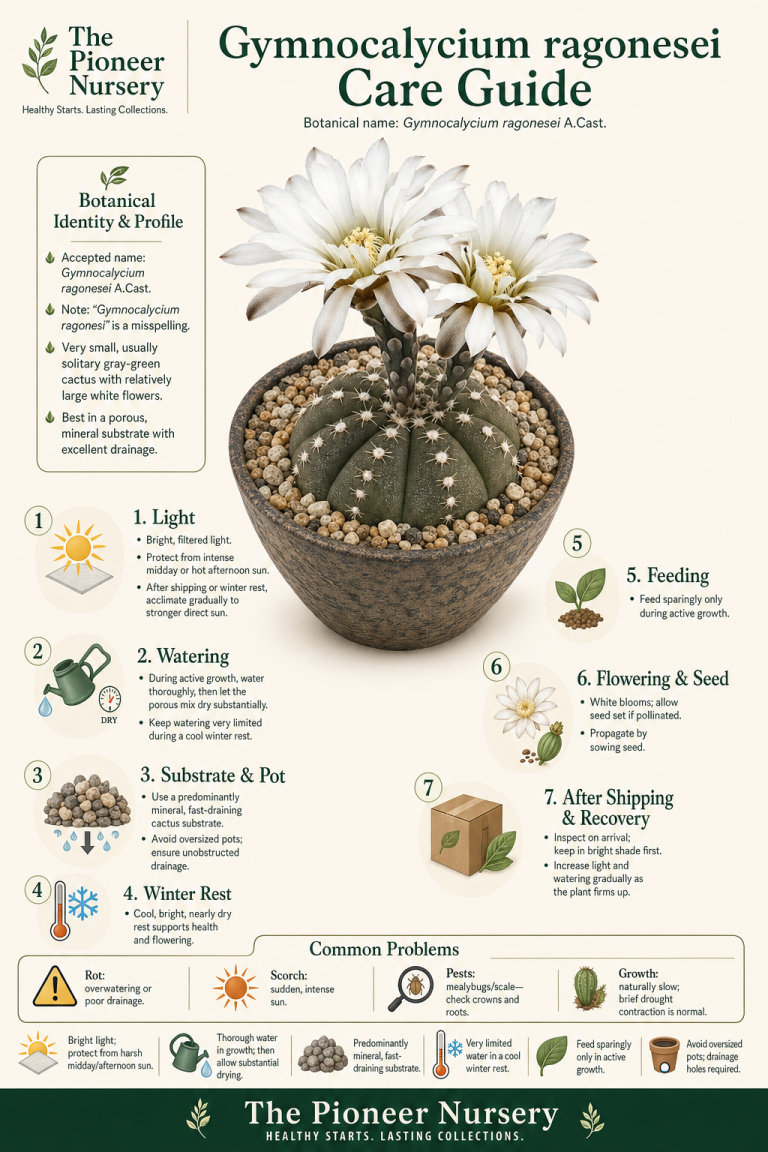
Choose a container with an unobstructed drainage hole and a pot only modestly larger than the root system. An oversized, wet container increases the risk of root problems. Repot during active growth when the medium has degraded or the plant has outgrown its container. After significant root disturbance, allow damaged roots to dry and heal before resuming cautious watering.
Temperature and winter rest
Provide warm growing conditions in spring and summer with good ventilation. This is primarily a summer-growing cactus: growth and water use decline in autumn and winter, especially under short days and cool temperatures. A bright, cool, dry rest supports compact growth and flowering. Protect the plant from prolonged freezing, frost combined with moisture, and cold wet substrate. A precise minimum temperature for this single-spine form was not adequately verified.
Fertilizer
Feed sparingly during active growth, approximately once or twice in spring and summer, using diluted cactus fertilizer or another low-nitrogen fertilizer. Avoid heavy nitrogen applications, which can encourage soft growth and increase rot susceptibility.
Flowering
A mature plant may produce funnel-shaped white to pale flowers with a pinkish or dull-red throat, generally during the warmer growing season. Strong light, adequate summer growth, and a cooler, dry winter rest can support flowering.
Propagation
Propagation is primarily by seed. Offsets are uncommon or may be limited. Seed-grown plants can vary in spine number, so the single-spine phenotype should not be assumed to reproduce consistently from seed. Any offset or cutting should be allowed to callus before planting into a dry, porous medium.
Shipping and arrival care
Inspect the plant on arrival for physical damage or rot. Provide bright but initially softened light, then increase exposure gradually. Protect it from cold, freezing temperatures, and prolonged wet conditions during transit. If it arrived bare-root or its roots were substantially disturbed, keep it dry until wounds have callused; resume cautious watering once conditions are warm and the plant is actively growing.
Common Problems
- Root or stem rot: usually associated with dense substrate, poor drainage, or watering while the plant is cold and inactive.
- Sunburn: may follow sudden exposure to intense direct sun, especially after greenhouse or indoor shipping.
- Etiolation: weak, stretched growth indicates insufficient light.
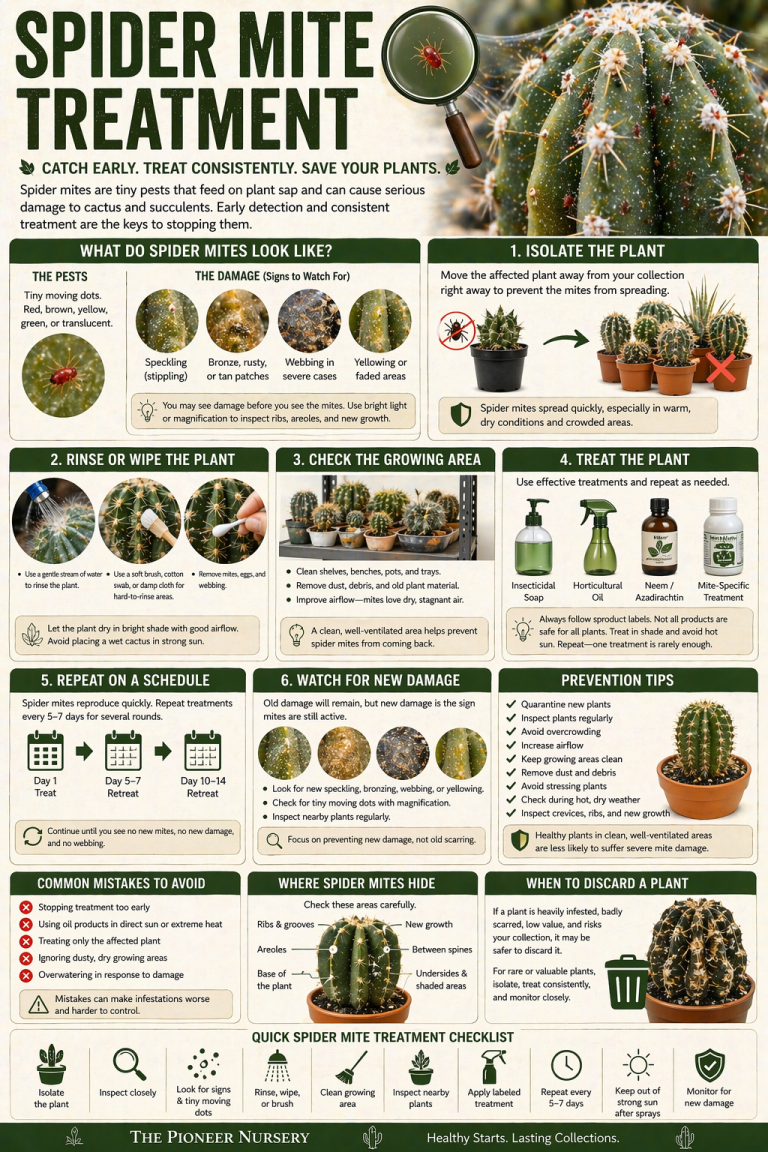
- Mealybugs: inspect both the plant and roots, as root mealybugs may occur.
- Scale insects: occasional infestations may occur.
- Shriveling: prolonged drought can cause it, although mild seasonal contraction may be normal.
Frequently Asked Questions
How often should I water Gymnocalycium ochoterenae ‘Vatteri Single Spine’?
Do not use a fixed schedule. During active growth, water thoroughly and wait until the substrate has dried completely. Adjust according to light, temperature, pot size, substrate, and airflow; keep it nearly dry in cool, low-light winter conditions.
Can this Gymnocalycium take direct sun?
Yes, several hours of gentle direct sun, such as morning sun, is appropriate. Acclimate gradually, and use filtered afternoon light in hotter climates or behind glass to reduce scorch risk.
Does the single-spine form come true from seed?
Not necessarily. Seed-grown plants may vary in spine number, so the single-spine phenotype should not be assumed to reproduce consistently from seed.
What kind of soil does it need?
Use a very porous, fast-draining cactus substrate with substantial mineral content and only a limited amount of organic material. Avoid dense, moisture-retentive mixes.
How should I care for it after shipping?
Inspect it, provide bright softened light, and increase exposure gradually. If it arrived bare-root or with substantial root disturbance, keep it dry until wounds have callused and water cautiously only once conditions are warm and actively growing.
Can it flower indoors?
Flowering may be supported by strong light, adequate summer growth, and a cooler, dry winter rest. Mature plants may produce white to pale funnel-shaped flowers with a pinkish or dull-red throat.
With bright but carefully acclimated light, fast drainage, condition-based watering, and a cool, mostly dry winter rest, Gymnocalycium ochoterenae — Vatteri Single Spine can maintain compact growth and develop its characteristic collector appeal. Watch the roots closely whenever temperatures are cool or the substrate is slow to dry.