Astrophytum asterias ‘Variegated’ Care Guide
Learn how to grow variegated Astrophytum asterias with bright light, mineral-rich drainage, careful watering, and a cool, dry winter rest.
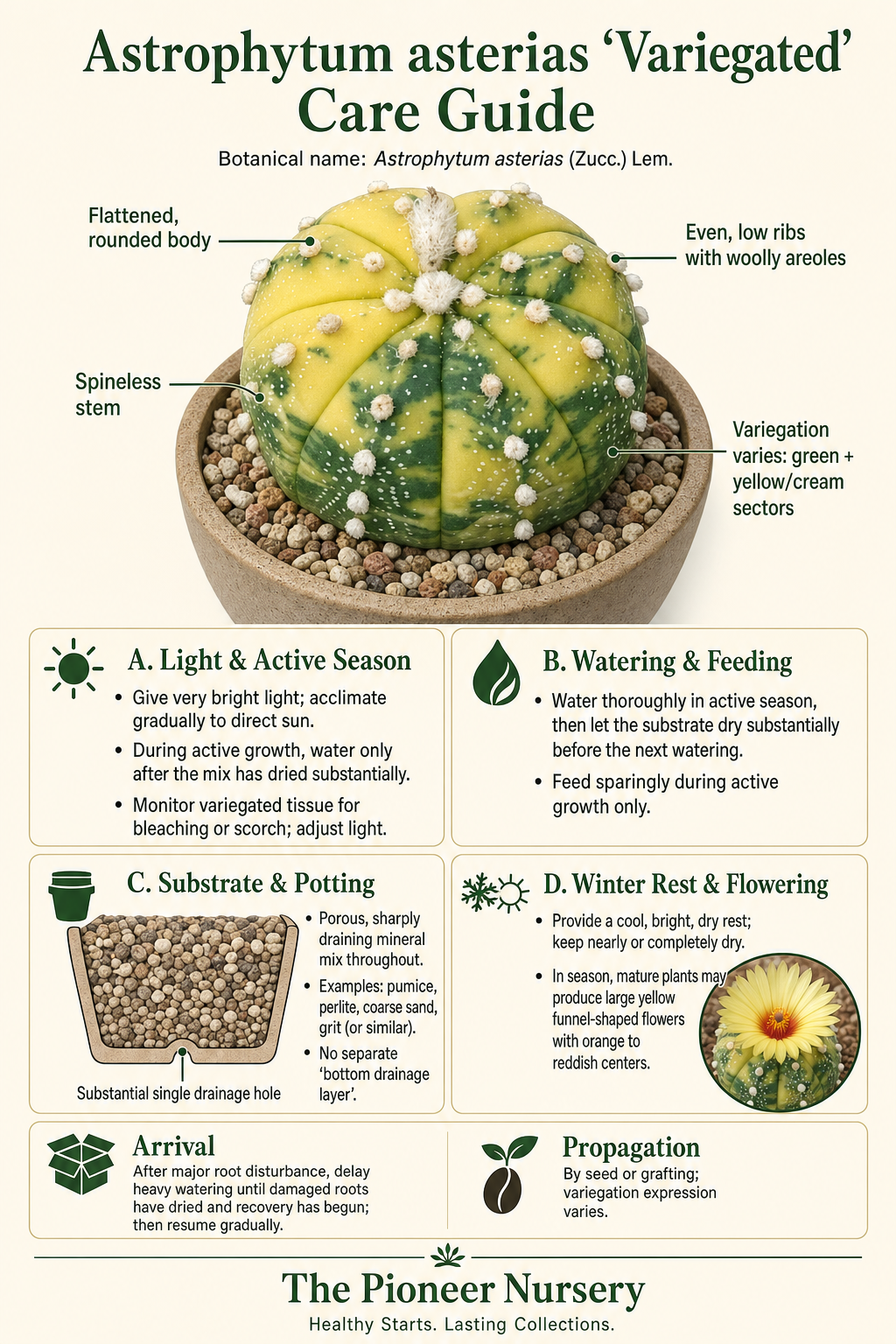
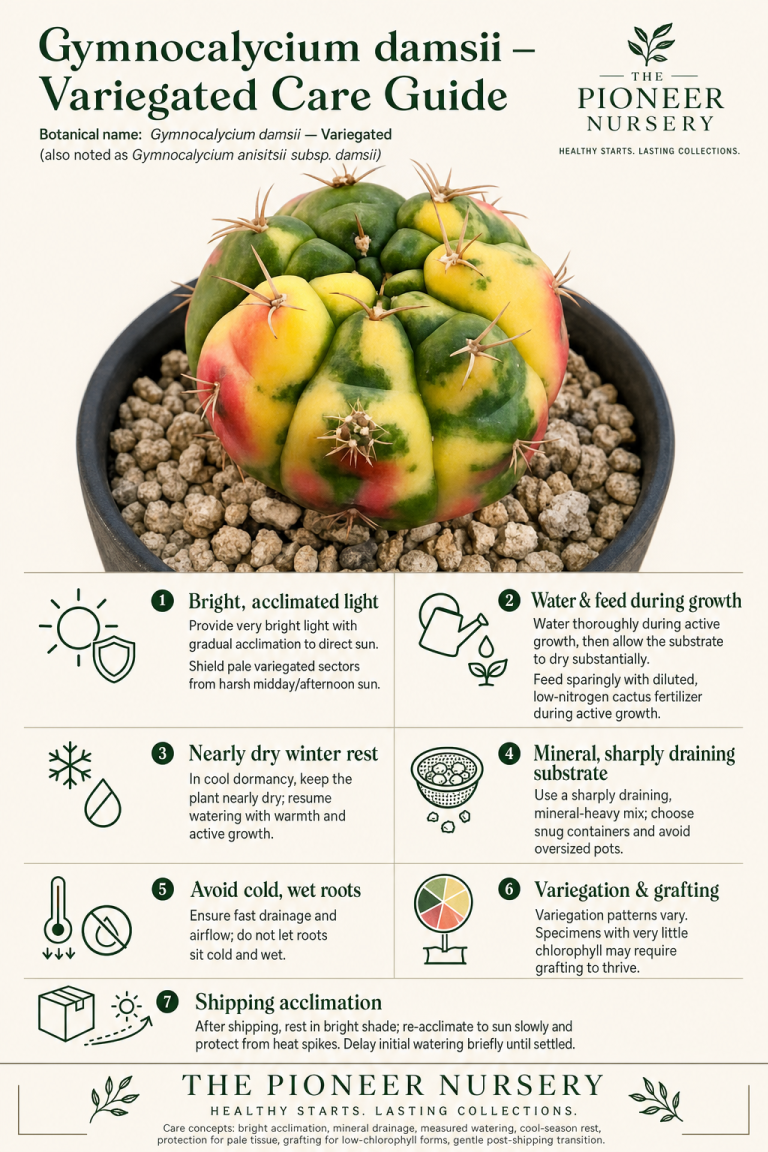
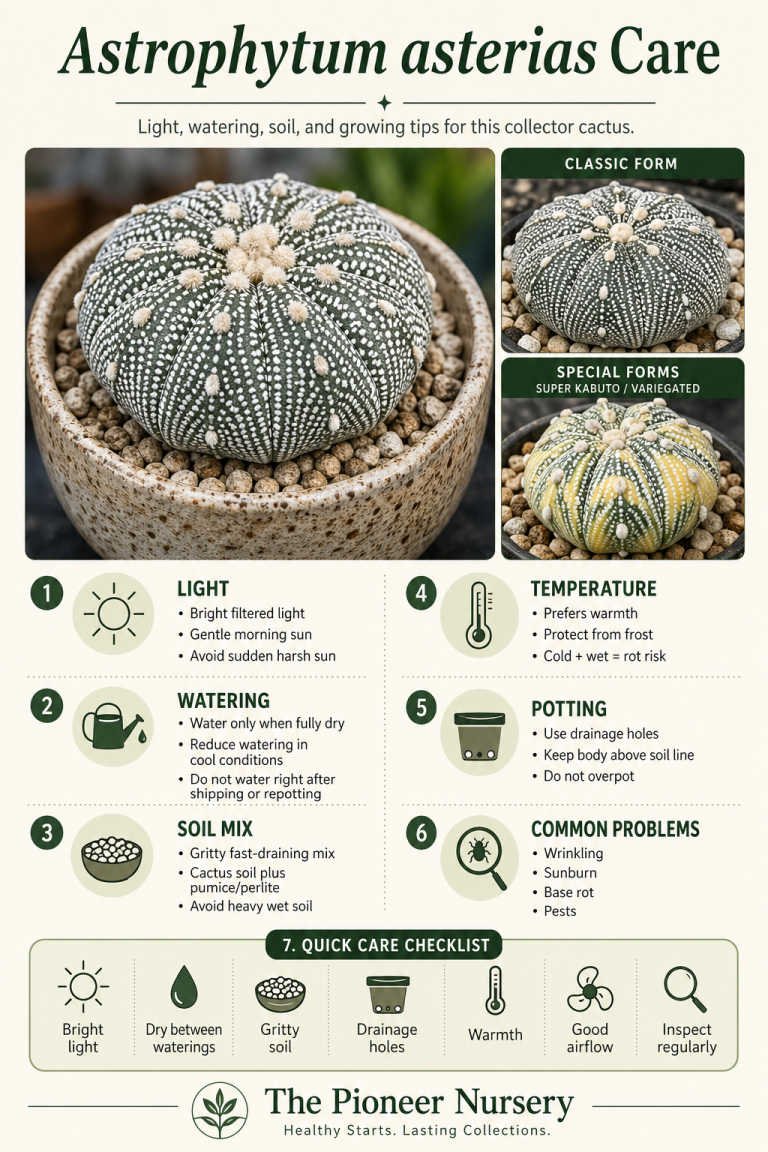
Astrophytum asterias, commonly called star cactus or sand dollar cactus, is a naturally flattened, spineless cactus with a rounded, ribbed form. Variegated plants show yellow, cream, or differently colored sectors or patches, and their vigor and light tolerance can vary according to how much green tissue they have. The main care priorities are very bright light with gradual acclimation, a sharply draining mineral substrate, thorough watering only during active growth, and a cool, dry winter rest.
Quick Care Summary
- Give it very bright light, with gradual acclimation to direct sun.
- Use a porous, sharply draining substrate with a high mineral component.
- Water thoroughly during active growth only after the substrate has dried substantially.
- Keep it nearly or completely dry during a cool winter rest.
- Monitor variegated growth for bleaching, scorch, or reduced vigor.
About Astrophytum asterias ‘Variegated’
The accepted species name is Astrophytum asterias (Zucc.) Lem. Here, “variegated” describes the plant’s coloration; it does not identify a formal variety or particular named cultivar. The species is commonly flattened and spineless, and may be partly embedded in its natural habitat. In cultivation, keep the stem uncovered and avoid creating a wet collar. Variegated plants can differ in pattern, vigor, and tolerance of strong light.
Light
Provide very bright light with several hours of direct sun or strong filtered sun. Acclimate gradually after shipping or whenever exposure changes to reduce scorch. Watch for bleaching, scorching, or reduced vigor; plants showing less green tissue may need more protection. Insufficient light can cause weak, elongated growth.
Watering
During active growth, water thoroughly only after the substrate has dried substantially, then let excess water drain completely. Reduce watering as growth slows and keep the plant nearly or completely dry during a cool winter rest. Cold, wet conditions create a significant rot risk.
Soil and substrate
Use a sharply draining, porous cactus mix with a high mineral component, such as pumice, perlite, coarse sand, or other aerated mineral material. Keep organic matter limited, and use a mix that dries reliably between waterings.
Potting and roots
Choose a container with an ample drainage hole and avoid oversized pots that stay wet too long. Astrophytum asterias may develop a somewhat thickened or slightly tuberous root system, so provide adequate room without using an unnecessarily deep or water-retentive container. Repot near the beginning of active growth when possible.
Temperature and winter rest
Keep the plant warm during active growth. Growth generally slows during the cooler, darker season, so provide a cool, dry winter rest when suitable. A dry rest around 5–15 °C (41–59 °F) is appropriate when the plant is fully dry and protected from frost. Avoid low temperatures with damp soil, and resume watering gradually when warmth, light, and active growth return.
Fertilizer and flowering
Feed sparingly during active growth with a dilute, low-nitrogen cactus fertilizer. Avoid heavy feeding, especially late in the season or during dormancy, because soft, lush growth is more vulnerable to damage and rot. Mature plants produce large, funnel-shaped yellow flowers, commonly with orange or reddish centers, from the stem apex during the warm season. Strong light, active-season growth, and a cool, dry winter rest can support flowering.
Propagation
Seed propagation is the standard species-level method and is reported to be relatively straightforward for Astrophytum asterias. Selected variegated material may also be maintained as clones or propagated by grafting. Results depend on the individual plant or clone, including the stability and vigor of its variegation.
Shipping and arrival care
Inspect the plant after arrival for physical damage, root disturbance, and signs of excessive moisture. Begin with bright but moderated light, then acclimate gradually to direct sun. Protect the plant from freezing temperatures, prolonged cold dampness, and further stem damage. If it experienced bare-root handling or substantial root disturbance, wait to water heavily until damaged roots have dried and recovery has begun. Use documented artificially propagated stock and follow applicable CITES and import or transport requirements.
Common Problems
- Root rot: Usually associated with overwatering, poor drainage, or cool wet conditions.
- Sun scorch: Can follow abrupt exposure to intense direct light, especially after shaded shipping.
- Pests: Monitor for mealybugs, scale, and spider mites.
- Weak growth: Heavily variegated plants with less green tissue may grow slowly or weakly.
- Etiolation: Insufficient light can produce weak, elongated growth.
- Post-repotting rot: After major root disturbance, delayed heavy watering helps protect vulnerable roots.
Frequently Asked Questions
How often should I water variegated Astrophytum asterias?
There is no fixed calendar. During active growth, water thoroughly after the substrate has dried substantially; reduce watering as growth slows and keep the plant nearly or completely dry during a cool winter rest.
Does a variegated plant need less light?
Provide very bright light, acclimate gradually, and monitor the plant. Individuals showing less green tissue may need more protection from intense sun to prevent bleaching or scorch.
What soil is best for Astrophytum asterias?
Use a sharply draining, porous cactus substrate with a high mineral component and limited organic matter. It should dry reliably between waterings.
Can I water after repotting?
After substantial root disturbance, delay heavy watering until damaged roots have dried and recovery has begun.
Will a variegated plant always keep the same pattern?
Not necessarily. Variegated plants can differ in pattern, vigor, and stability, and this name does not identify a particular clone or cultivar.
How is this plant propagated?
Seed is the standard species-level method. Selected variegated material may also be maintained as clones or propagated by grafting, with results depending on the individual plant or clone.
With bright, carefully acclimated light, mineral-rich drainage, restrained active-season watering, and a cool, dry winter rest, Astrophytum asterias ‘Variegated’ can be grown successfully while its individual variegation pattern and vigor are respected.