Echinocereus rigidissimus Care Guide
Learn how to grow Echinocereus rigidissimus, a solitary rainbow cactus that thrives in strong light, porous mineral soil, careful watering, and a cool, dry winter rest.
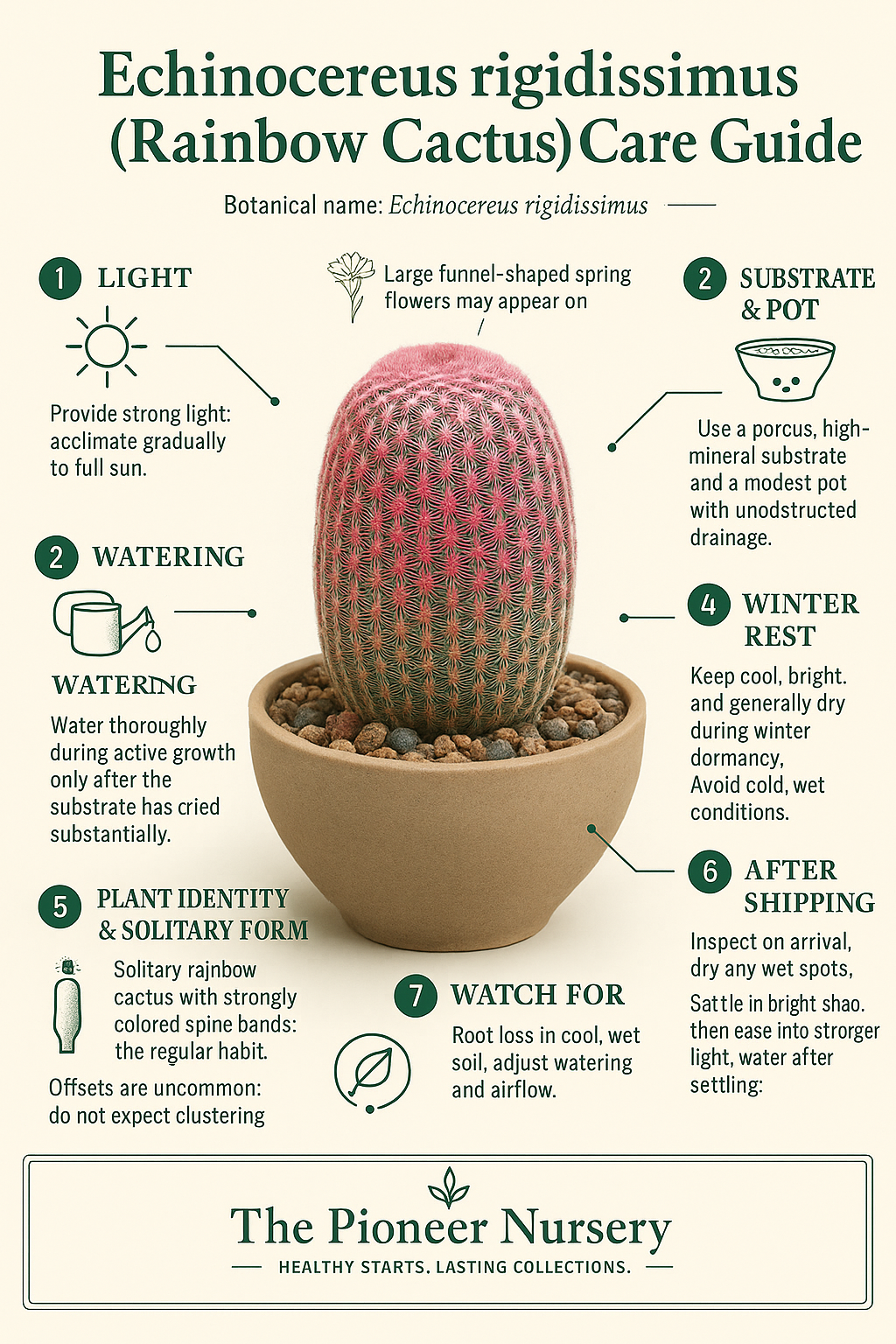
Echinocereus rigidissimus, commonly called rainbow cactus or Arizona rainbow cactus, is a solitary desert cactus known for colored spine bands and spring-associated funnel-shaped flowers. Give it high light, excellent drainage, careful active-season watering, and a cool, dry winter rest.
Quick Care Summary
- Provide strong light or full sun after gradual acclimation.
- Use a porous, high-mineral substrate and a modest pot with unobstructed drainage.
- Water thoroughly during active growth only after the substrate has dried substantially.
- Keep the plant cool, bright, and generally dry during winter dormancy.
- Fertilize lightly only during active growth.
- Watch for root loss in cool, wet soil and sunburn after abrupt exposure changes.
About the Plant
Echinocereus rigidissimus is a solitary cactus native to dry shrubland and desert regions of the southwestern United States and northern Mexico. Strong light helps maintain its colored spine bands and supports compact growth and flowering.
Light
Provide strong direct light or full sun once the plant is acclimated. High light supports compact growth, flowering, and the characteristic spine coloration. After shipping or indoor cultivation, begin with bright, filtered light and increase direct sun gradually; pale or scorched areas indicate that exposure changed too abruptly.
Watering
During active growth, water thoroughly only after the substrate has dried substantially, then let excess water drain completely. Water more sparingly in cool or overcast conditions. During the cool winter rest, keep the plant generally dry: wet soil combined with low temperatures can damage or eliminate roots. If growth stalls while conditions are cool, check moisture and drainage before watering again.
Soil and Substrate
Use a sharply draining, porous cactus mix with a high mineral component, such as pumice, grit, coarse sand, or perlite. A slightly acidic to neutral, low-lime substrate is appropriate, with a pH of approximately 5 to 7 and roughly 70–80% mineral drainage material. The mix should release excess water readily rather than remain wet around the roots.
Potting and Roots
Choose a modestly sized container with an unobstructed drainage hole; oversized pots may stay wet too long. When repotting during active growth, handle roots gently, remove damaged roots, and let disturbed roots and fresh substrate dry before cautious watering resumes. This dry interval is especially important when roots have been cut or disturbed.
Temperature and Dormancy
Warm, bright conditions suit the growing season. The plant can tolerate brief light frost when completely dry, but avoid cold, wet conditions. Provide a cool, bright, dry winter rest and protect container plants from prolonged freezing and severe temperature extremes. Growth is concentrated mainly in the warmer part of the year, and this rest supports compact growth and spring flowering.
Fertilizer
During active growth, apply a dilute, balanced cactus or low-nitrogen fertilizer sparingly, approximately two or three times over the growing season. Do not fertilize while the plant is dormant or has recently undergone root disturbance.
Flowering
Large, funnel-shaped flowers are associated with spring flowering. Strong light, mature plant size, and a cool, dry winter rest improve flowering potential. A plant that remains weak or stalled may need its light and seasonal rest reviewed before expecting flowers.
Propagation
Seed is the most dependable method because the species is generally solitary and does not reliably produce offsets. Cuttings or division apply only when suitable branching or damaged sections are present. Let cut surfaces callus fully before planting in dry, porous medium.
Shipping and Arrival Care
Inspect the plant on arrival for mechanical damage or rot. Keep it in bright, filtered light while it settles, then increase direct sun gradually. After bare-root handling or significant root disturbance, keep watering cautious until the roots and substrate have recovered.
Common Problems
Root rot or root loss usually follows frequent watering, poor drainage, or cool, wet conditions; allow the substrate to dry substantially and review drainage. Sunburn can follow an abrupt move into strong direct sun, so return to filtered light and reacclimate gradually. Monitor for mealybugs, scale insects, and aphids. Weak or stalled growth can indicate insufficient light or a missing winter dormancy.
Frequently Asked Questions
How can I tell whether this cactus is receiving enough light?
Strong light supports compact growth, flowering, and colored spine bands. If the plant has been indoors or shipped, increase direct exposure gradually rather than moving it abruptly into full sun.
What is the main winter watering mistake to avoid?
Do not keep the plant wet while temperatures are low; its winter rest should be cool, bright, and generally dry.
How can I reduce root problems after repotting?
Use a modest pot with an unobstructed drainage hole, handle the roots gently, and let disturbed roots and fresh substrate dry before cautious watering resumes.
What should I do if my plant arrives bare-root?
Inspect it for damage or rot, begin with bright but filtered light, and delay heavy watering while the roots and substrate recover.
For healthy Echinocereus rigidissimus, prioritize excellent drainage, gradual sun acclimation, and a cool, dry winter rest.