Mammillaria magnimamma ‘Erusamu’ Variegated Care Guide
Learn how to grow Mammillaria magnimamma ‘Erusamu’ Variegated with practical guidance on light, watering, substrate, winter rest, flowering, propagation, and arrival care.
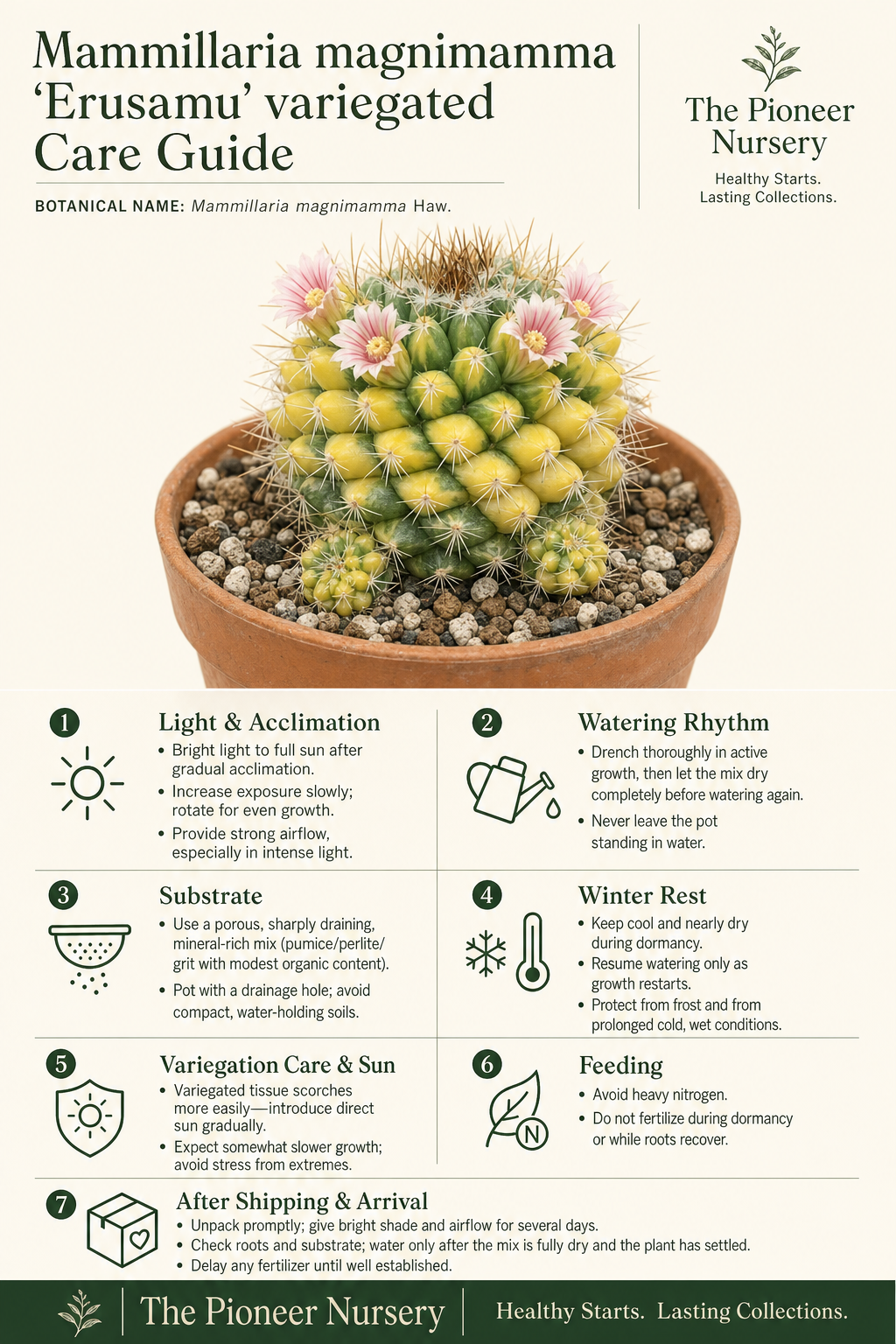
Mammillaria magnimamma ‘Erusamu’ Variegated is a selected variegated form of the Mexican pincushion cactus, valued for pale speckled or starburst-like patterns. Give it strong light, fast drainage, and complete drying between active-season waterings. Because variegated tissue may photosynthesize less efficiently, acclimate it carefully to intense light.
Quick Care Summary
- Bright light to full sun, with gradual acclimation after shipping or shade.
- Use a sharply draining, mineral-rich cactus substrate.
- Water thoroughly during active growth, then wait until the medium is completely dry.
- Keep nearly dry during cool, low-light winter conditions.
- Use a drainage hole and avoid oversized containers.
- Propagate offsets vegetatively when preserving variegation matters.
About the plant
Mammillaria magnimamma Haw. is the accepted species name. ‘Erusamu’ Variegated is a horticultural form sometimes labeled Mammillaria bucareliensis, a synonym of M. magnimamma. It may develop clustered or multiple-headed growth, and heavily variegated plants can grow more slowly than greener specimens.
Light
Provide bright light to full sun, acclimating gradually. After shipping or a move from shade, begin with bright filtered or indirect light and increase direct exposure over several weeks. In very intense summer sun, light afternoon filtering may help, especially for heavily variegated tissue. Abrupt exposure can cause sunscald.
Watering
During active growth, water thoroughly, then allow the medium to dry completely before watering again. Frequency depends on light, temperature, pot size, substrate, and airflow rather than a fixed calendar. Let runoff drain away. In cool, low-light winter conditions, keep the plant nearly dry and provide only enough water to prevent severe shriveling.
Soil and substrate
Use a porous, sharply draining cactus substrate with substantial mineral material such as pumice, perlite, lava rock, or coarse grit, plus a limited amount of organic cactus mix. The medium should release excess water quickly and remain aerated around the roots.
Potting and roots
Choose a container with an unobstructed drainage hole and avoid oversized pots, which retain moisture longer. Repot during active growth when the medium is compacted or the plant has outgrown its container. Handle the stem and spines carefully. After significant root disturbance, use dry or nearly dry substrate and delay watering until injured roots recover and renewed growth is visible.
Temperature and winter rest
Protect the plant from frost and prolonged cold combined with wet soil. RHS guidance gives approximately 5 °C as a minimum. In temperate climates, it can remain outdoors during warm, dry weather after gradual acclimation, but move it under cover before freezing conditions. A cool, bright, dry winter rest reduces water demand and rot risk and may support flowering the following season.
Fertilizer
Fertilize sparingly during active spring and summer growth, generally once or twice per year. Use cactus fertilizer or balanced fertilizer diluted to half strength. Avoid excessive nitrogen, dormancy feeding, and fertilizing immediately after repotting into fresh substrate.
Flowering
Small flowers form in a ring below the apex of each head. Reported colors range from light yellow to deep pink, sometimes with a darker central stripe; ‘Erusamu’ Variegated is commonly reported with pink to purple flowers. Mature growth, good light, and a cool, dry rest may encourage flowering.
Propagation
The species may be propagated from seed or carefully rooted offsets when available. To preserve the ‘Erusamu’ Variegated form, use offsets because seedlings will not reliably reproduce the parent’s variegation or selected traits. Allow separated offsets or cut roots to dry and callus before potting, then resume watering cautiously after establishment.
Shipping and arrival care
Bare-root shipment is commercially used for this cactus. Inspect the plant on arrival, pot it into dry porous substrate, and keep it initially shaded or in bright indirect light. Allow root injuries to callus, then acclimate it gradually to stronger light and resume watering cautiously as recovery and growth become apparent. Protect shipments from freezing temperatures.
Common problems
Root or basal rot is associated with poor drainage, excess irrigation, or cold wet conditions. Sunscald can follow abrupt exposure to intense direct sun, especially after shipping. Monitor for mealybugs, red spider mites, and other glasshouse pests. Weak, stretched growth indicates insufficient light. Age-related base scarring or corking should be distinguished from soft, spreading, discolored tissue associated with active rot.
Frequently Asked Questions
How often should I water Mammillaria magnimamma ‘Erusamu’ Variegated?
Water thoroughly during active growth only after the substrate has dried completely. Frequency depends on growing conditions rather than a fixed schedule. Keep it nearly dry in cool, low-light winter conditions.
Does this variegated cactus need full sun?
Bright light to full sun is appropriate, but increase direct exposure gradually. Begin with bright filtered or indirect light after shipping or shade; light afternoon filtering may help during very intense summer sun.
What soil should I use?
Use a porous, sharply draining cactus medium with substantial mineral content, combined with a limited amount of organic cactus mix.
Why should this cactus stay dry in winter?
Growth and water demand decline in cool, short-day conditions. A cool, bright, dry rest helps reduce rot risk and may support later flowering.
How can I preserve the ‘Erusamu’ Variegated pattern?
Propagate through offsets when available. Seedlings will not reliably reproduce the parent’s variegation or selected traits.
What should I do if my plant arrives bare-root?
Inspect it, pot it into dry porous substrate, and keep it initially in shaded or bright indirect light. Allow root injuries to callus, then acclimate gradually to stronger light and resume watering cautiously as recovery becomes apparent.
Mammillaria magnimamma ‘Erusamu’ Variegated does best with strong but acclimated light, fast drainage, complete drying between active-season waterings, and a cool, dry winter rest.