Gymnocalycium spegazzinii Care Guide
Learn how to grow Gymnocalycium spegazzinii with bright light, excellent drainage, careful summer watering, and a cool, predominantly dry winter rest.
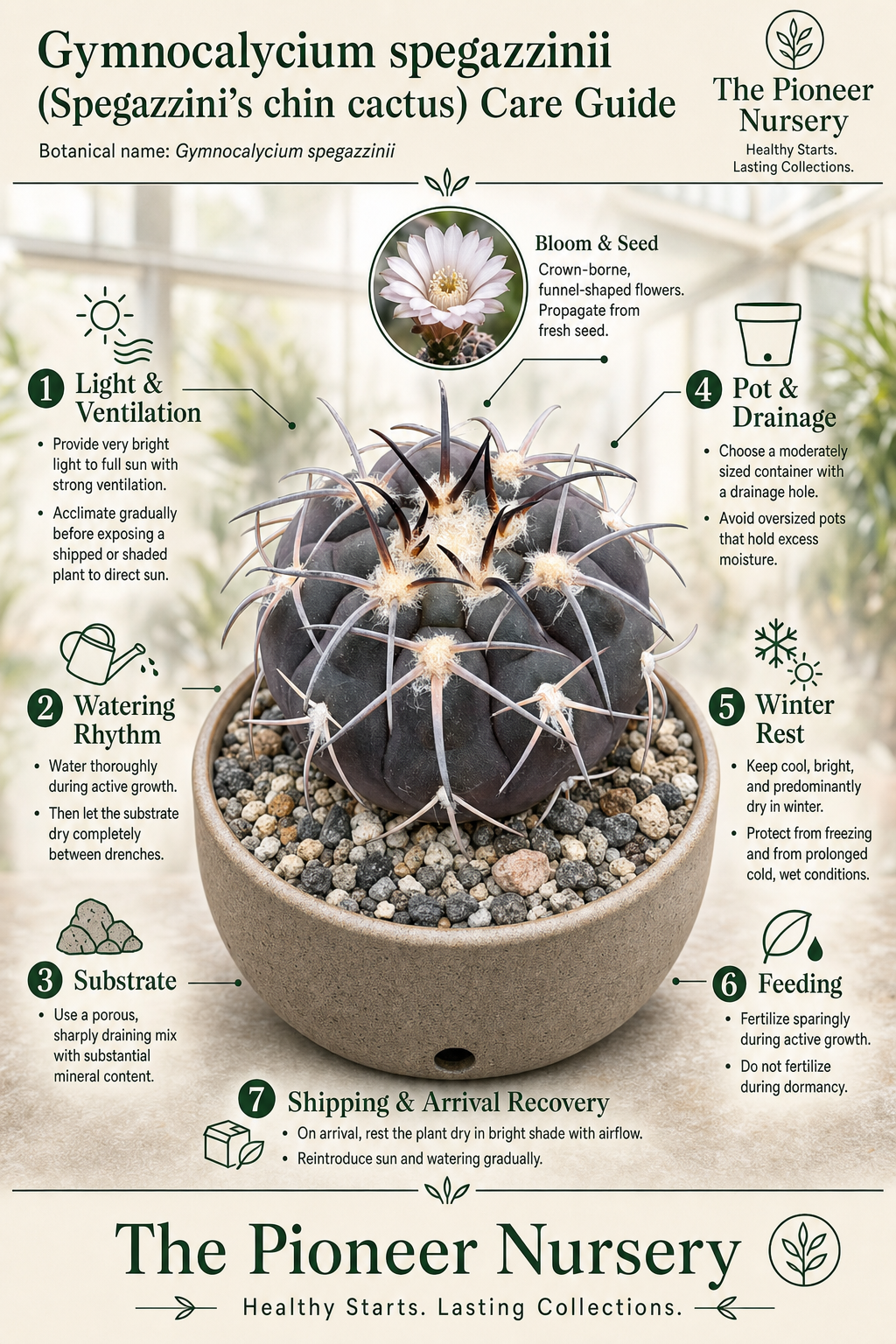
Gymnocalycium spegazzinii, commonly called Spegazzini's chin cactus, is a solitary globose cactus native to northwestern Argentina and Bolivia. Its main care priorities are strong light, an airy mineral-rich substrate, thorough watering during active growth, and a much drier winter rest. The species is accepted by Plants of the World Online; plants sold under the species name may represent different recognized infraspecific forms.
Quick Care Summary
- Provide very bright light to full sun with strong ventilation.
- Acclimate gradually before exposing a shipped or shaded plant to direct sun.
- Water thoroughly during active growth, then let the substrate dry completely.
- Use a porous, sharply draining substrate with substantial mineral content.
- Keep the plant nearly dry during a cool, bright winter rest.
- Protect it from freezing and from prolonged cold, wet conditions.
- Fertilize sparingly during active growth and not during dormancy.
About Gymnocalycium spegazzinii
This species is a globose, solitary cactus associated with high-elevation habitats. It does not require a specialized caudex or enlarged taproot setup. Gymnocalycium species produce funnel-shaped flowers, and mature plants can flower when provided with strong light, good summer growth, and a cool, dry winter rest.
Light
Provide very bright light to full sun along with strong ventilation. Acclimate gradually after shipping or when moving the plant from indoor or protected greenhouse conditions into direct sun. Abrupt exposure can cause sunscald. In very hot climates, light afternoon protection may be helpful if the plant shows stress.
Watering
During active growth, water thoroughly and then allow the substrate to dry completely before watering again. Avoid repeated shallow watering and never leave the pot standing in water. Reduce watering substantially during the cool, low-light winter rest; keep the plant nearly dry and water only if prolonged shriveling indicates a need. Cold, wet conditions create a significant rot risk.
Soil and substrate
Use a porous, sharply draining cactus mix with substantial mineral content, such as grit, pumice, perlite, or coarse sand combined with a modest amount of organic material. The medium should drain rapidly and retain air around the roots rather than remain wet.
Potting and roots
Choose a pot with an unobstructed drainage hole and make it only moderately larger than the root system. Repot during active growth when possible. Handle roots carefully. If roots are damaged, allow them to dry and callus, and delay thorough watering after significant disturbance until recovery has begun.
Temperature and winter rest
Protect the plant from freezing conditions and prolonged cold combined with moisture. Cool, dry winter conditions are preferable to warm, dim, wet conditions. Provide good day-night temperature variation where possible, and maintain a cool, bright, predominantly dry winter rest. Resume more regular watering as light and temperatures increase in spring.
Fertilizer
Fertilize sparingly during active growth, approximately once or twice in late spring or summer. Use a dilute cactus fertilizer or a half-strength fertilizer with relatively low nitrogen. Do not fertilize during winter dormancy.
Flowering
Gymnocalycium species generally produce funnel-shaped flowers during the warmer growing season. Strong light, mature plant size, adequate summer growth, and a cool, dry winter rest all support flowering.
Propagation
Propagation is primarily by seed. Sow fresh seed in a sterile, well-drained medium with warmth, moisture, and bright filtered light. Gradually increase ventilation as seedlings establish. Because this is a solitary species, offsets are not expected to be the normal propagation method.
Shipping and arrival care
Inspect the plant after arrival for mechanical damage and signs that roots or stem tissue were disturbed. Keep it protected from prolonged cold and wet exposure. Acclimate gradually to stronger light. If roots have been disturbed or the plant arrives cold, avoid immediate heavy watering. Allow damaged root or stem tissue to dry before returning to normal irrigation.
Common Problems
- Root or basal rot: Usually associated with poor drainage, dense substrate, overwatering, or cool wet conditions.
- Sunscald: Can follow abrupt exposure to intense direct sun after indoor or shaded conditions; acclimate gradually.
- Etiolation: Weak, stretched growth indicates insufficient light.
- Mealybugs and scale: Monitor the plant, although these pests are generally less common under good cultural conditions.
Frequently Asked Questions
How often should I water Gymnocalycium spegazzinii?
Water thoroughly during active growth, but wait until the substrate has dried completely before watering again. During cool, low-light winter rest, keep it nearly dry and water only if prolonged shriveling indicates a need.
Can Gymnocalycium spegazzinii take full sun?
Yes, it can be grown in very bright light to full sun with strong ventilation. Acclimate gradually after shipping or a period in shade to reduce the risk of sunscald.
Does it need a special caudex or deep pot?
No specialized enlarged taproot or caudex requirement was identified. Use a pot only moderately larger than the root system and provide an unobstructed drainage hole.
How can I encourage flowering?
Provide strong light, allow adequate summer growth, and give the plant a cool, dry winter rest. Flowering generally occurs during the warmer growing season.
How is this species propagated?
Propagation is primarily by seed. Use a sterile, well-drained medium, warmth, moisture, and bright filtered light, then increase ventilation gradually as seedlings establish.
Should I water immediately after the plant arrives?
Not necessarily. Inspect the plant first, and avoid immediate heavy watering if it is cold or its roots were disturbed. Allow damaged tissue to dry before returning to normal irrigation.
Gymnocalycium spegazzinii is best approached as a bright-light, sharply drained cactus with a clear seasonal rhythm: thorough watering during active growth and a cool, predominantly dry winter rest. Careful acclimation and avoiding cold, wet conditions will help protect its roots and surface from the most common problems.