
Start Here: New Plant Arrival Guide
Bringing home a new cactus or succulent is exciting, but the first few days after shipping are important. Your plant has just…
Bringing home a new cactus or succulent is exciting, but the first few days after shipping are important. Your plant has just spent time in a dark box, without airflow, without sunlight, and possibly without soil. Even healthy plants can look a little stressed when they arrive.
This guide will help you unpack your new plant, check its condition, and give it the best start in your collection.
First Things First: Don’t Panic
Cactus and succulents are tough plants, but shipping can temporarily change how they look. It is normal for a newly arrived plant to show minor signs of stress.
Your plant may arrive with:
- Slight wrinkling
- Minor root trimming
- Dry roots
- Loose soil
- A small amount of corking or scarring
- Slight color changes from being boxed
- Minor blemishes from handling or shipping
These are usually not serious. Most plants simply need time, airflow, and a careful adjustment period.
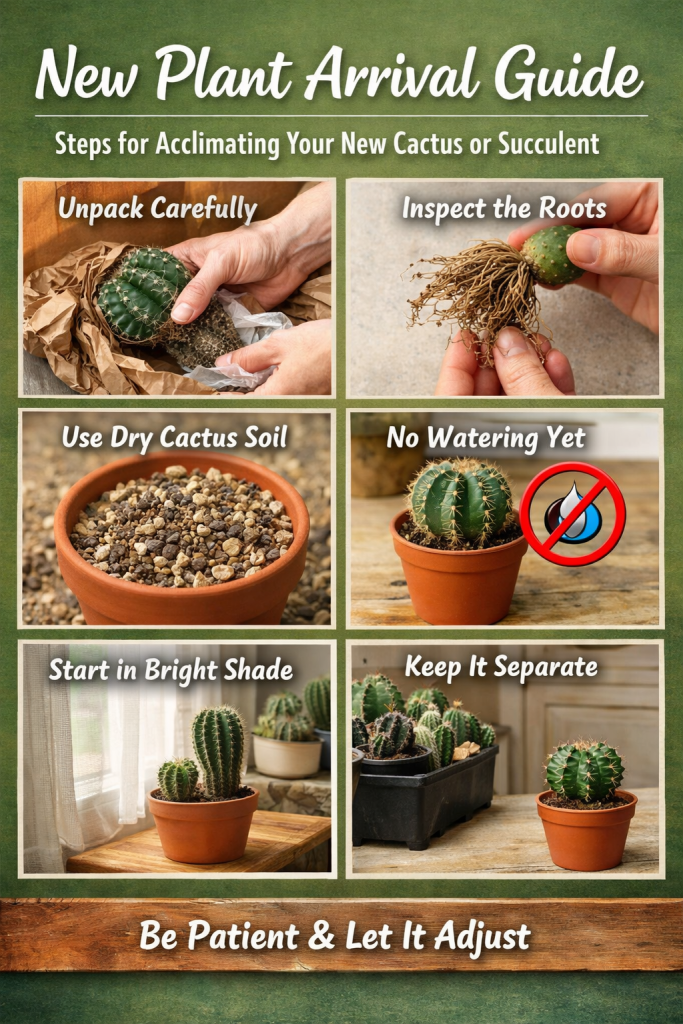
Step 1: Unpack Your Plant Carefully
Open your package as soon as possible after delivery. Remove the plant gently from the packing material and avoid pulling on the body, spines, leaves, or roots.
If your plant was shipped bare root, this means the soil was removed before shipping. Bare-root shipping helps reduce moisture, rot risk, mess, and damage during transit. It is normal for roots to look dry when the plant arrives.
If any packing material is stuck near the roots or spines, remove it carefully with tweezers or your fingers. Do not rinse the plant unless there is a specific problem that requires it.
Step 2: Inspect the Plant
Before potting, take a few minutes to look over the plant.
Check for:
- Firmness
- Healthy color
- Dry roots
- Any soft or mushy areas
- Major cuts or fresh damage
- Signs of pests
A healthy cactus should generally feel firm. Some wrinkles are normal, especially after shipping, but the plant should not feel mushy or smell rotten.
If you see a small dry scar, corking, or healed mark, that is usually cosmetic. If you see a wet, black, soft, or spreading area, keep the plant dry and separate from your other plants until you can evaluate it further.
Step 3: Let the Plant Rest Before Potting if Needed
If the roots look freshly trimmed, damaged, or slightly moist, let the plant sit in a dry, shaded, well-ventilated area for 1–3 days before potting.
This gives any small root wounds time to callus. Potting a cactus with fresh root cuts into damp soil can increase the risk of rot.
If the roots are dry and the plant looks healthy, it can usually be potted right away into dry soil.
Step 4: Use Dry, Well-Draining Soil
When potting a newly arrived cactus, use a dry, gritty, well-draining cactus mix. Avoid heavy potting soil that stays wet for too long.
A good cactus mix should drain quickly and contain plenty of mineral material such as pumice, perlite, lava rock, coarse sand, or similar gritty ingredients.
The goal is simple: the soil should support the plant without holding too much moisture around the roots.
Step 5: Do Not Water Right Away
This is one of the most important steps.
After potting a newly shipped cactus, wait before watering. For most cactus, we recommend waiting about 5–7 days before the first light watering. For more sensitive, rare, or slow-growing cactus, waiting 7–14 days may be safer.
This gives the plant time to settle, allows any small root damage to heal, and reduces the chance of rot.
If your plant arrived bare root, dry roots are normal. Do not try to “fix” shipping stress by watering immediately.
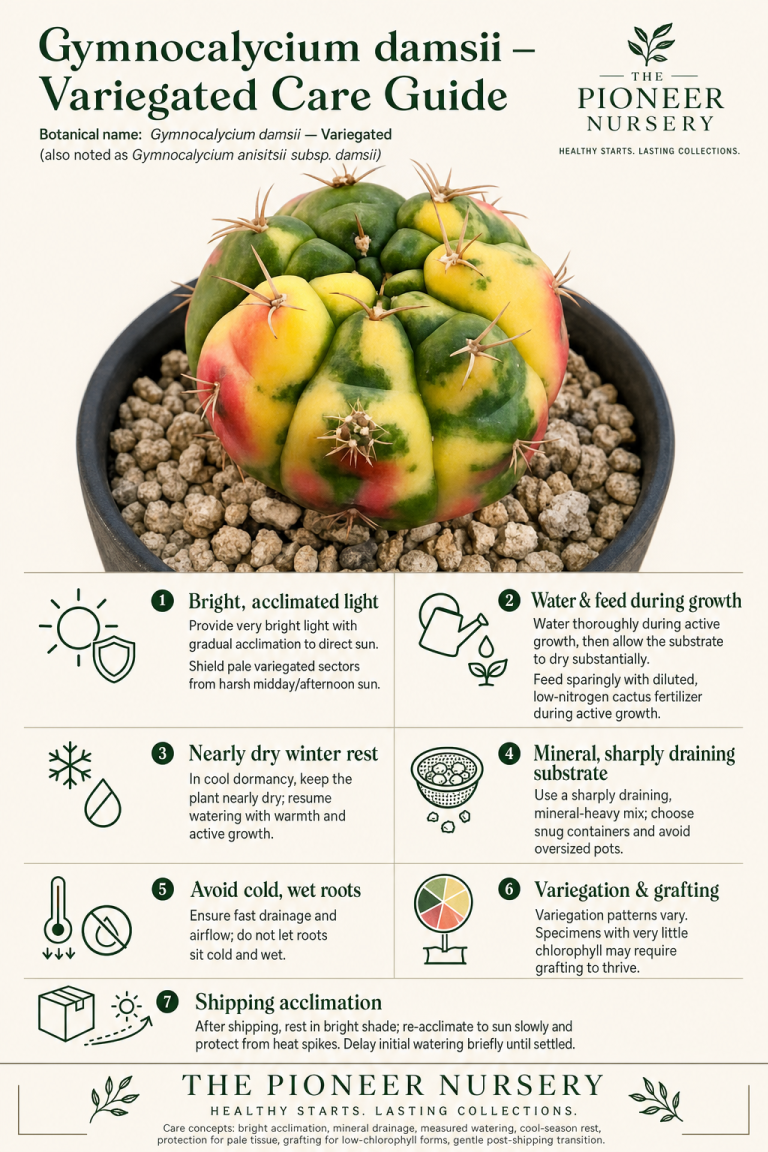
Step 6: Start With Bright Shade, Not Full Sun
Your plant has been in a dark box during shipping. Even cactus that love bright light can burn if they are placed directly into strong sun right after arrival.
Start the plant in:
- Bright shade
- Filtered light
- Morning sun only
- A grow light placed at a safe distance
Avoid harsh afternoon sun for the first week or two. Slowly increase light exposure as the plant adjusts.
If your cactus is variegated, colorful, grafted, or recently stressed, be even more careful. These plants can sunburn more easily.
Step 7: Keep It Separate From the Rest of Your Collection
It is a good habit to quarantine new plants for at least a few days, and ideally 1–2 weeks.
Keep the new plant away from your main collection while you watch for pests or stress. This is especially helpful if you have a large collection or rare plants.
Look for signs of:
- Mealybugs
- Spider mites
- Scale
- Soft spots
- Unusual discoloration
- Root issues
Catching problems early is much easier than treating an entire collection later.
Step 8: Be Patient While It Settles In
A newly shipped plant may not immediately plump up or start growing. That is normal. Some cactus take several weeks to fully settle after shipping, especially if they were shipped bare root.
During this time, avoid over-adjusting. Do not keep moving the plant, watering repeatedly, repotting again, or changing conditions every few days.
The best approach is usually:
- Dry soil at first
- Bright indirect light
- Good airflow
- A little patience
- Slow adjustment
When Should You Contact Us?
Please reach out if your plant arrives with serious shipping damage or if you are unsure about its condition.
Helpful photos include:
- The full plant
- Close-up of the area of concern
- The roots, if bare root
- The box and packaging, if shipping damage occurred
We are happy to help you figure out whether something is normal shipping stress or a problem that needs attention.
Quick Arrival Checklist
- Unpack the plant as soon as possible.
- Inspect it for softness, pests, or shipping damage.
- Let fresh root cuts dry before potting.
- Use dry, well-draining cactus soil.
- Wait before watering.
- Start in bright shade or filtered light.
- Keep it separate from your main collection at first.
- Give it time to adjust.
Final Thoughts
Your new plant has just completed a stressful trip, so the first few days should be calm and simple. Resist the urge to water immediately, avoid strong sun at first, and give the plant time to settle into its new home.
With dry soil, gentle light, and patience, most cactus and succulents adjust well after shipping and continue growing beautifully in your collection.
I did not receive the cactus soil!!!!
Hi there, did you purchase cactus soil? If so, where? did you message us in order details?