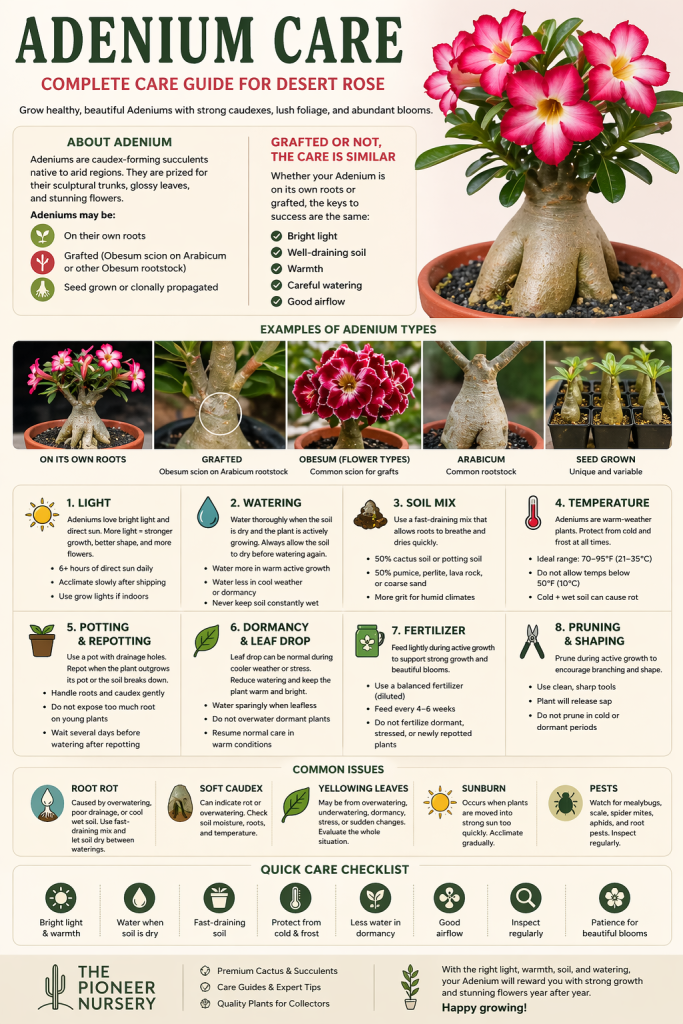
Adenium Care
Adenium, commonly known as Desert Rose, is a beautiful caudex-forming plant known for its swollen base, sculptural trunk, glossy leaves, and bright…
Adenium, commonly known as Desert Rose, is a beautiful caudex-forming plant known for its swollen base, sculptural trunk, glossy leaves, and bright trumpet-shaped flowers. It is popular with collectors because it combines the look of a small tree, a succulent, and a flowering tropical plant all in one.
Adeniums are fairly easy to grow when their basic needs are understood. They like warmth, bright light, fast-draining soil, and careful watering. The biggest risks are cold temperatures, wet soil, and watering too often when the plant is not actively growing.
Light Requirements
Adeniums love bright light. They usually grow best with strong light, direct sun, or a very bright indoor location. More light often encourages stronger growth, better shape, and more flowering.
Good light options include:
- Bright direct sun
- Morning sun
- A sunny patio
- A greenhouse bench
- A very bright window
- A strong grow light setup
If your Adenium was recently shipped, start it in bright shade or filtered light for a few days before moving it into stronger sun. Plants that have been boxed can sunburn if placed into intense light too quickly.
Watering
Adeniums need a careful wet-to-dry watering cycle. During warm active growth, they can handle more water than many cactus, but the soil still needs to dry between waterings.
Water thoroughly when the soil is dry and the plant is actively growing. Then allow the pot to drain completely and dry before watering again.
Water less when:
- Temperatures are cool
- Light is low
- The plant is dormant
- Leaves are dropping for the season
- The soil is still damp
- The plant was recently shipped or repotted
Do not keep Adeniums constantly wet. Their thick caudex stores water, and wet soil around the roots can lead to rot.
Soil Mix
Adeniums need a fast-draining soil mix. The soil should hold a little more moisture than an extremely gritty cactus mix, but it should still dry quickly and allow airflow around the roots.
A simple Adenium mix can include:
Cactus soil
Pumice or perlite
Lava rock or coarse sand
A small amount of organic material
A good starting mix is:
40% cactus soil or potting soil
60% pumice, perlite, lava rock, or other gritty material
For humid climates, indoor growing, or cooler conditions, use more mineral material so the soil dries faster.
Avoid heavy garden soil or dense potting mixes that stay wet for too long.
Potting and Repotting
Use a pot with drainage holes. Adeniums do not like standing water. A pot that is slightly larger than the root system is usually best.
When repotting, handle the caudex and roots carefully. You can plant Adeniums with the caudex slightly raised above the soil line if you want a more sculptural look, but avoid exposing too much root too quickly on a young plant.
After repotting, keep the plant dry for several days before watering. This gives any disturbed roots time to heal.
Temperature
Adeniums are warm-weather plants and should be protected from cold. They are not frost-tolerant.
They prefer warm conditions and are happiest when temperatures are consistently warm. Cold and wet soil is especially dangerous.
Protect Adeniums from:
- Frost
- Freezing temperatures
- Cold drafts
- Cold wet soil
- Overwatering during winter
If temperatures drop, reduce watering. If the plant is dormant or leafless, keep it much drier until warm conditions return.
Dormancy and Leaf Drop
Adeniums may drop leaves during cooler weather, after shipping, after stress, or when entering dormancy. Leaf drop does not always mean the plant is dying.
If the plant drops leaves but the caudex remains firm, it may simply be resting. During dormancy, reduce watering significantly. A dormant Adenium with no leaves uses much less water than one actively growing in warm sun.
Do not try to force growth with heavy watering during dormancy. Wait for warmth, light, and signs of active growth.
Fertilizer
During active growth, Adeniums can benefit from light feeding. Use a diluted fertilizer during the warm growing season.
Avoid fertilizing newly shipped, freshly repotted, stressed, dormant, or leafless plants. Fertilizer works best when the plant is actively growing and receiving enough light.
Too much fertilizer can cause weak growth or salt buildup in the soil.
Pruning and Shaping
Adeniums can be pruned to encourage branching and shape. Pruning is usually best during active growth when the plant can heal quickly.
Use clean tools and avoid pruning during cold or dormant periods. The plant may release sap when cut, so handle carefully and wash your hands afterward.
After pruning, keep the plant in good light and avoid letting water sit on fresh cuts.
Flowers
Adeniums are famous for their flowers, which can appear in shades of pink, red, white, purple, yellow, and multicolor forms depending on the variety.
Flowering is encouraged by:
- Strong light
- Warm temperatures
- A healthy root system
- Active growth
- Proper watering
- Time and maturity
A young Adenium may take time before it flowers consistently. Good light is one of the biggest factors.
Common Problems
Soft Caudex
A slightly flexible caudex can sometimes happen when the plant is thirsty, but a mushy or collapsing caudex may indicate rot. If the caudex is soft, check the soil moisture, temperature, and recent watering history.
Yellowing Leaves
Yellowing leaves can happen from overwatering, underwatering, dormancy, shipping stress, or sudden environmental changes. Look at the whole plant and growing conditions before reacting.
Root Rot
Root rot is usually caused by wet soil, poor drainage, cool temperatures, or watering too often. Use fast-draining soil and let the mix dry between waterings.
Sunburn
Adeniums like sun, but newly shipped or shade-grown plants should be acclimated gradually. Sunburn can appear as pale, tan, brown, or crispy damaged areas.
Pests
Adeniums can attract mealybugs, spider mites, scale, aphids, and root pests. Inspect leaves, stems, new growth, the caudex, and roots regularly.
After Shipping Care
When your Adenium arrives, unpack it carefully and inspect the plant. Some leaf drop or minor stress can happen after shipping.
Start with:
- Bright shade or filtered light
- Fast-draining soil
- A pot with drainage holes
- No immediate watering if roots were disturbed
- Good airflow
- A short adjustment period
If the plant was shipped bare root or recently repotted, wait several days before watering. Once it settles and conditions are warm, slowly return it to brighter light and a normal watering rhythm.
Quick Care Checklist
- Give Adeniums bright light and warmth.
- Acclimate slowly after shipping.
- Use fast-draining soil.
- Plant in a pot with drainage holes.
- Water when the soil is dry during active growth.
- Reduce watering during cool weather or dormancy.
- Protect from frost and cold wet soil.
- Do not overwater leafless or dormant plants.
- Fertilize lightly during active growth only.
- Inspect regularly for pests, rot, and soft spots.
- Prune during active growth if shaping is needed.
Final Thoughts
Adeniums are beautiful, sculptural plants that reward bright light, warmth, drainage, and patient watering. Their swollen caudex and colorful flowers make them stand out in any collection.
The most important rule is to match watering to the plant’s conditions. A warm, actively growing Adenium can use more water, while a cool, dormant, or leafless plant needs much less. With the right balance of light, warmth, soil, and water, Adeniums can grow into impressive flowering showpieces.