Gymnocalycium stenopleurum Care Guide
Learn how to grow Gymnocalycium stenopleurum with bright acclimated light, sharply draining soil, active-season watering, and a dry winter rest.
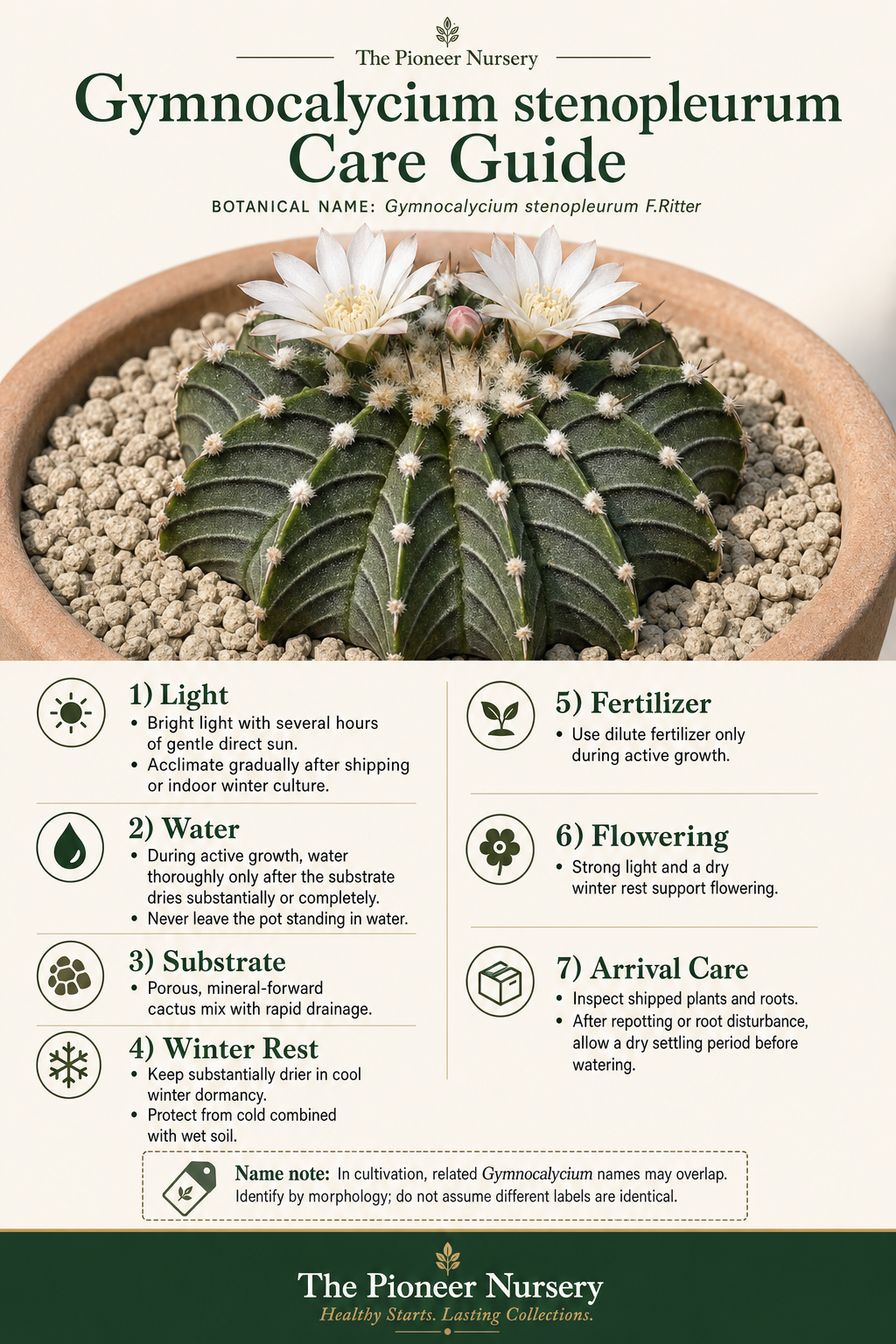
Gymnocalycium stenopleurum, commonly called a chin cactus, is a summer-growing cactus associated with dry Chaco vegetation in Bolivia and Paraguay. For reliable cultivation, provide bright light with gradual acclimation, a porous mineral-forward substrate, thorough watering only after the mix dries, and a substantially drier winter rest. Identification can be complicated by overlapping names involving Gymnocalycium friedrichii and Gymnocalycium mihanovichii, so specimen identity may require review.
Quick Care Summary
- Bright light with several hours of gentle direct sun.
- Acclimate gradually after shipping or indoor winter culture.
- Water thoroughly during active growth only after the substrate dries substantially or completely.
- Use a porous, mineral-forward cactus substrate with rapid drainage.
- Keep substantially drier during cool winter dormancy.
- Protect from cold combined with wet soil.
- Use dilute fertilizer only during active growth.
- Provide strong light and a dry winter rest to support flowering.
About Gymnocalycium stenopleurum
Plants sold under this name may also be labeled Gymnocalycium friedrichii or Gymnocalycium mihanovichii var. friedrichii. Gymnocalycium stenopleurum F.Ritter is accepted at species rank by Plants of the World Online, but related names and historical treatments overlap in cultivation. This guide follows the supplied species identification while preserving that uncertainty.
Light
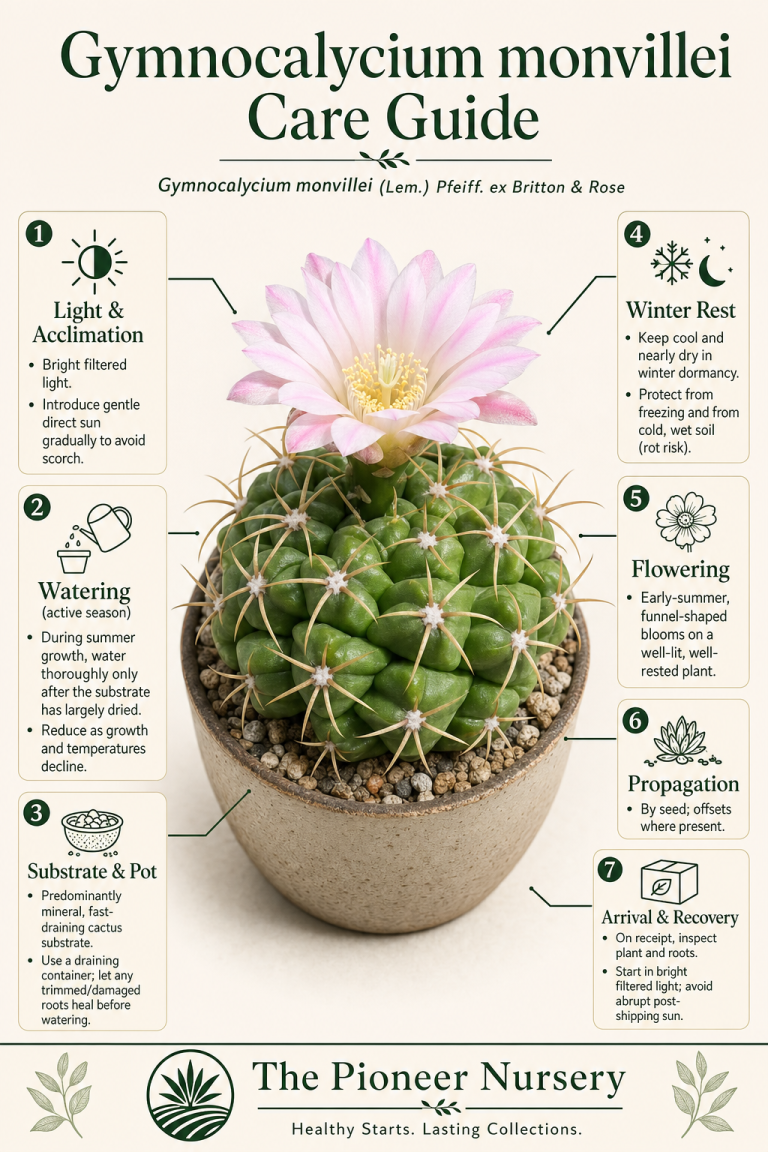
Provide bright light with several hours of gentle direct sun. Protect the plant from intense, unfiltered afternoon sun, especially after shipping or winter indoor culture. Acclimate gradually to stronger light. Sudden exposure can cause scorching or excessive bronzing, while insufficient light may produce weak growth and reduce flowering.
Watering
During active summer growth, water thoroughly only after the substrate has substantially or completely dried. Moderate to generous summer watering can be appropriate when drainage, ventilation, and drying are reliable. Do not keep the roots constantly wet. Reduce watering substantially during winter dormancy, particularly when conditions are cool.
Soil and substrate
Use a porous, sharply draining cactus mix with strong root aeration. A mineral-forward blend containing materials such as pumice, perlite, or coarse sand, combined with only a modest organic fraction, is appropriate. Avoid dense, water-retentive soil. Species-specific references caution that overly alkaline or limestone-rich substrates may inhibit growth, so a mildly acidic to near-neutral medium is preferable unless local water chemistry requires adjustment.
Potting and roots
Choose a container with an effective drainage hole and size it to the root system rather than using an excessively large pot. Repot about every two years or when the plant outgrows its container, preferably at the beginning of active growth. After repotting or significant root disturbance, allow damaged roots or wounds to dry and delay watering until recovery conditions are favorable.
Temperature and winter rest
Provide warm growing conditions during spring and summer. The plant can tolerate cool conditions when completely dry, but freezing temperatures should be avoided for dependable cultivation. Cold combined with wet soil substantially increases rot risk. A dry winter rest is recommended; resume irrigation gradually as spring temperatures, light, and active growth increase.
Fertilizer
During active growth, use a dilute, balanced or slightly potassium-forward cactus fertilizer at intervals suited to the growing environment. Do not fertilize dry, dormant, recently repotted, or stressed plants.
Flowering
A mature, well-lit plant may flower readily during the growing season. Flowers are typically white and fully opening, although pale to darker pink forms or reports occur within the broader complex. Bright light, a dry winter rest, and adequate seasonal growth support flowering. Inadequate light, missing the winter rest, and excessive winter moisture may prevent flowering.
Propagation
Propagation is primarily by seed. Germination is reported to be relatively rapid under warm, humid, shaded conditions, followed by gradual ventilation and light acclimation. Offsets are less typical than in clumping species, but a naturally produced offset may be removed, allowed to dry at the wound, and rooted in a dry, porous medium. Grafting may be used for selected or chlorophyll-deficient forms but is not required for normal green plants.
Common problems
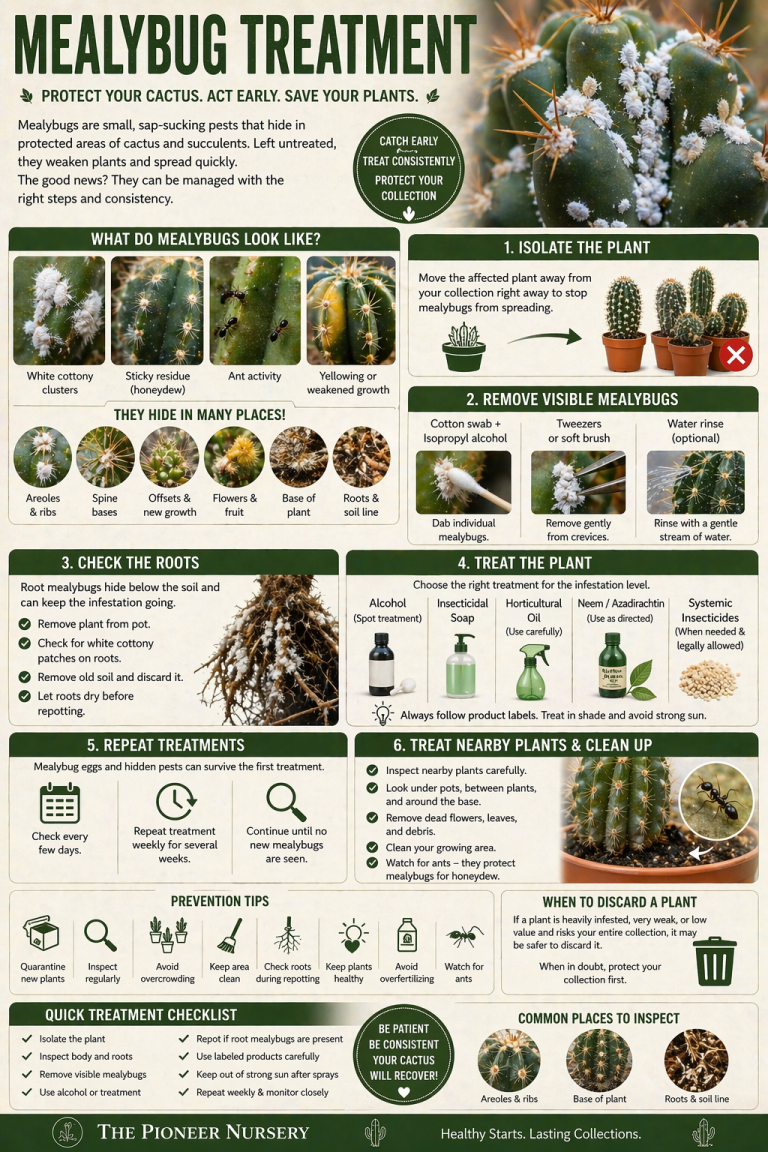
Root or stem rot is associated with wet, poorly aerated substrate, especially during cool weather or dormancy. Sunburn can follow sudden exposure to strong, unfiltered sunlight. Stretching or weak growth usually indicates insufficient light. Monitor for mealybugs, including root mealybugs, and occasional scale or spider mites. Flowering may fail when light is inadequate, winter rest is absent, or winter moisture is excessive. Commercial labels can also cause confusion among G. stenopleurum, G. friedrichii, and G. mihanovichii.
Shipping and arrival care
Receive and ship the plant dry whenever possible. After arrival, inspect for root or stem damage and allow disturbed roots or wounds to dry. Delay watering until the plant has stabilized, rather than watering immediately after transit. Reintroduce direct sun gradually to reduce scorch risk, and avoid prolonged cold, sealed humid packaging, and wet substrate during transit.
Frequently Asked Questions
How often should I water Gymnocalycium stenopleurum?
Water thoroughly during active growth only after the substrate has substantially or completely dried. Keep it substantially drier during winter, especially in cool conditions.
Can Gymnocalycium stenopleurum take direct sun?
Yes, several hours of gentle direct sun are appropriate. Protect it from intense afternoon sun and acclimate gradually after shipping or indoor culture.
Does this cactus need a winter dormancy?
A dry winter rest is recommended. Reduce or withhold water in cool winter conditions and resume gradually when spring light, temperatures, and growth increase.
What soil should I use?
Use a porous, sharply draining, mineral-forward cactus substrate with strong root aeration and only a modest organic fraction. Avoid dense, water-retentive, overly alkaline, or limestone-rich mixes.
How is Gymnocalycium stenopleurum propagated?
Propagation is primarily by seed. Naturally produced offsets may also be dried at the wound and rooted in a dry, porous medium; offsets are less typical than in clumping species.
Why might my plant not flower?
Insufficient light, excessive winter moisture, or lack of a dry winter rest can reduce flowering.
Gymnocalycium stenopleurum is best treated as a bright-light, summer-growing cactus that needs excellent drainage and a distinctly drier winter period. Let the substrate dry before watering, protect the plant from abrupt sun and cold wet conditions, and seek identification review when nursery labeling overlaps with related Gymnocalycium names.