Ariocarpus retusus ‘Maruibo’ Care Guide
Learn how to grow Ariocarpus retusus ‘Maruibo’, a slow-growing living rock cactus form requiring strong light, a deep pot, mineral soil, careful watering, and a dry winter rest.
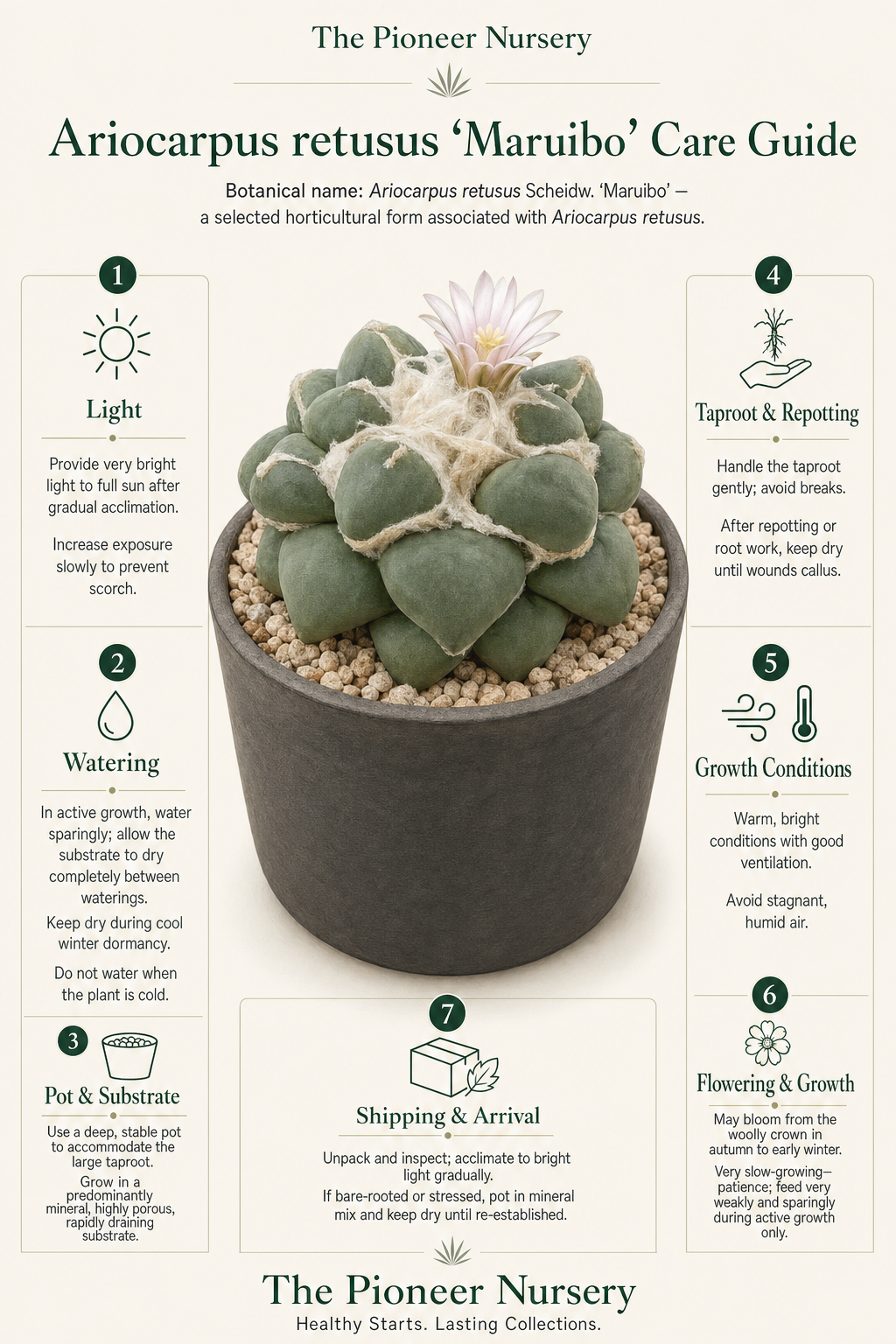
Ariocarpus retusus ‘Maruibo’ is a selected horticultural or collector form associated with the living rock cactus, Ariocarpus retusus. It is a slow-growing geophytic cactus with much of its plant mass below the soil surface and a large, sensitive taproot. The key to successful care is providing strong light after gradual acclimation, a deep and stable pot, highly mineral soil, conservative watering during active growth, and a dry winter rest. ‘Maruibo’ is not treated here as a separate botanical species; its name is used as a horticultural designation associated with A. retusus.
Quick Care Summary
- Provide very bright light to full sun after gradual acclimation.
- Use a deep, stable pot for the large taproot.
- Grow in a predominantly mineral, highly porous, rapidly draining substrate.
- Allow the substrate to dry completely between active-season waterings.
- Keep the plant dry during cool winter dormancy.
- Avoid watering when the plant is cold or roots are freshly damaged.
- Feed very weakly and sparingly during active growth.
About the Plant
Ariocarpus retusus ‘Maruibo’ is associated with Ariocarpus retusus Scheidw., an accepted species commonly called a living rock cactus or living stone cactus. ‘Maruibo’ is used by specialist and commercial growers for a selected phenotype, but its status as a formally registered cultivar, botanical variety, subspecies, or hybrid has not been verified. Plants may be grown on their own roots or grafted, and growth form and watering response can differ accordingly.
Light
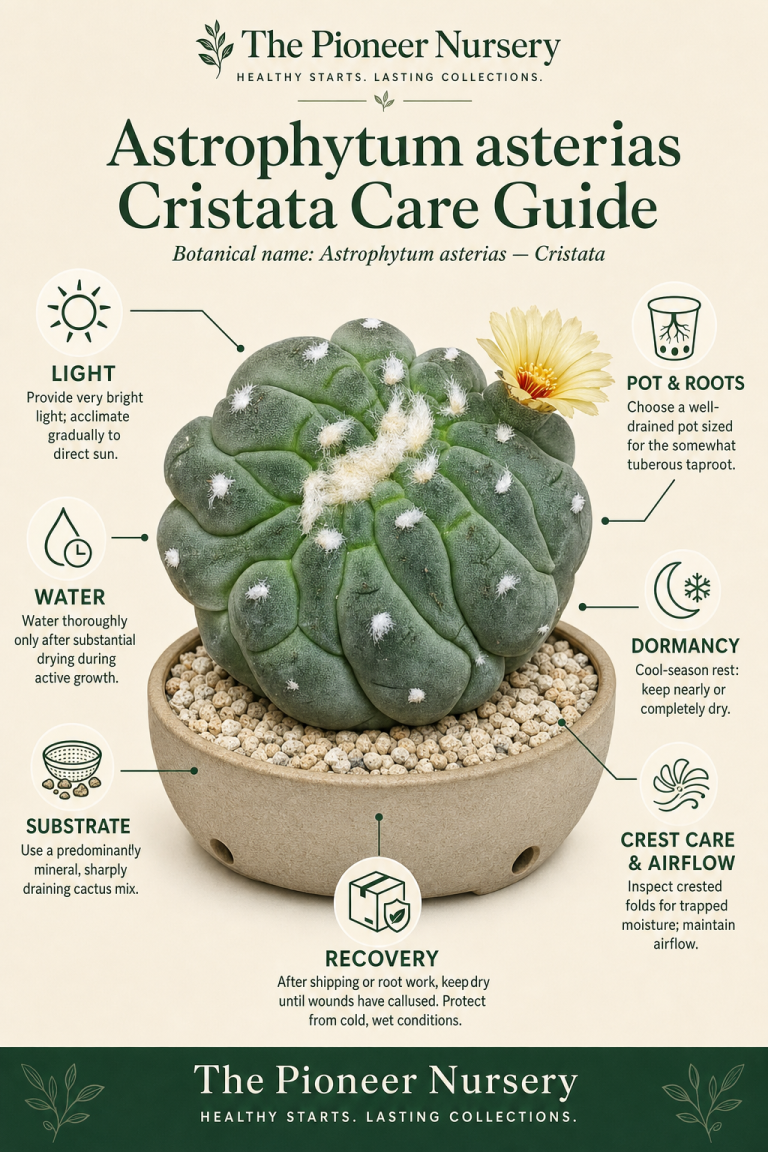
Provide very bright light to full sun once the plant is acclimated. Plants arriving from shaded greenhouse conditions or shipping darkness should be introduced to stronger light gradually. Avoid moving the plant abruptly into intense midday sun, which can cause sunburn. Inadequate light may lead to etiolated, weak growth.
Watering
Water sparingly during suitable active growth. Allow the mineral substrate to dry completely before watering again, then water thoroughly without keeping the plant constantly moist. As growth slows, reduce or stop watering and maintain a dry winter rest. Cold, wet conditions create a substantial rot risk, so do not water while the plant is cold or when the substrate cannot dry promptly.
Soil and Substrate
Use a rapidly draining, highly porous substrate made predominantly from mineral materials with minimal organic matter. Pumice, lava, and coarse grit are suitable components, with a modest amount of limestone or another calcium-bearing mineral where appropriate. The mix should be calcareous or slightly alkaline and must not remain wet around the taproot.
Potting and Roots
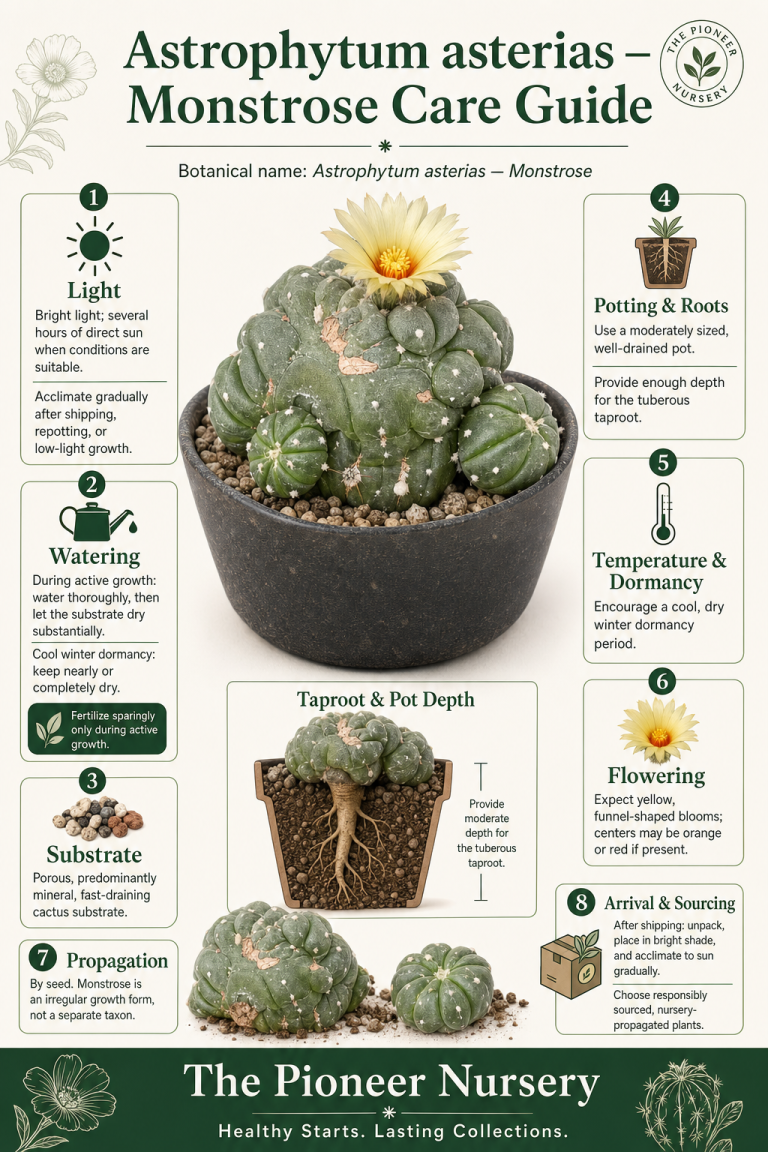
Choose a deep, stable pot that accommodates the enlarged tuberous taproot and drains freely. Repot only when necessary because root disturbance can delay recovery. Handle the taproot carefully. If roots are damaged, allow the wounds to dry and callus before watering, and delay watering after major root work until the plant has recovered and the wounds are dry.
Temperature and Ventilation
Provide warm growing conditions with strong ventilation during the active season. Protect the plant from frost and prolonged exposure to cold, saturated substrate. A cool, dry winter rest is safer than warm conditions combined with winter watering. Rain exposure is risky when the plant is cool, dormant, or planted in moisture-retentive soil.
Seasonal Growth and Dormancy
Growth generally slows during the cooler, darker part of the year. Maintain a dry winter rest and avoid routine moisture during this period. Only exceptional minimal moisture may be considered if the plant becomes severely dehydrated and conditions are warm enough for the substrate to dry safely.
Fertilizer
Feed very sparingly with a very weak, low-nitrogen fertilizer, preferably only once or twice during active growth. A calcium-supplying formulation may be useful when both irrigation water and substrate are calcium-poor. Avoid heavy feeding and nutrient-rich organic mixes.
Flowering
Flowers commonly emerge from the woolly crown, often in autumn into early winter. Strong light, mature age, a well-developed root system, and a pronounced dry rest support flowering. Slow growth is normal, particularly for seed-grown plants, so flowering may require patience.
Propagation
Propagation is primarily by seed and is slow. Seedlings may be grafted to accelerate growth. Mature plants may remain on their own roots or be grafted for particular horticultural purposes. Grafted and seed-grown plants can differ in growth form and watering response, so adjust care to the condition of the root system and stock.
Shipping and Arrival Care
Inspect the plant after arrival for root disturbance, crushing, bending, or retained moisture around the roots. If it has arrived bare-root or has substantial root damage, keep it dry while wounds heal and callus. Begin with shade or filtered light, then acclimate gradually to stronger light. Avoid immediate watering after major root disturbance or while the plant is cold.
Common Problems
Root or basal rot: Usually associated with overwatering, poorly aerated or organic soil, or cold wet conditions. Improve drainage and keep the plant dry during cool dormancy.
Sunburn: Can occur after sudden movement from shade or greenhouse conditions into full sun. Acclimate gradually.
Root damage: The enlarged taproot can be injured during repotting or shipping. Handle it carefully and allow damaged roots to dry before watering.
Etiolation: Weak, stretched growth indicates inadequate light. Increase light gradually to avoid sunburn.
Slow growth: Especially common in seed-grown plants and not necessarily a sign of poor health.
Delayed recovery: Watering before repotting or shipping wounds have dried can contribute to root loss and recovery problems.
Frequently Asked Questions
Is Ariocarpus retusus ‘Maruibo’ a separate species?
No. The research identifies ‘Maruibo’ as a horticultural or collector designation associated with Ariocarpus retusus, rather than a verified separate botanical species or formally established botanical variety.
How should I water this plant?
Water sparingly during active growth, allowing the mineral substrate to dry completely first. Reduce or stop watering during the cool winter rest, and avoid watering when the plant or substrate is cold and wet.
Does it need a deep pot?
Yes. Its large tuberous taproot makes a deep, stable pot with excellent drainage especially important.
Can it grow in full sun?
Yes, after gradual acclimation. Plants coming from shade or shipping darkness should not be moved suddenly into intense midday sun.
Why is my plant growing slowly?
Ariocarpus retusus is slow-growing, particularly from seed. Slow growth alone is not necessarily a sign of poor health.
When might it flower?
Flowers commonly emerge from the woolly crown, often in autumn into early winter. Strong light, maturity, a developed root system, and a pronounced dry rest support flowering.
Ariocarpus retusus ‘Maruibo’ rewards patience and restraint. Give the taproot room, keep the substrate porous and mineral, acclimate carefully to strong light, and let the plant remain dry whenever cool conditions make excess moisture risky.