Dorstenia horwoodii Care Guide
Learn how to grow Dorstenia horwoodii, a small Somali caudiciform with a specialized napiform root, seasonal dormancy, and a strong preference for warm, bright, dry conditions.
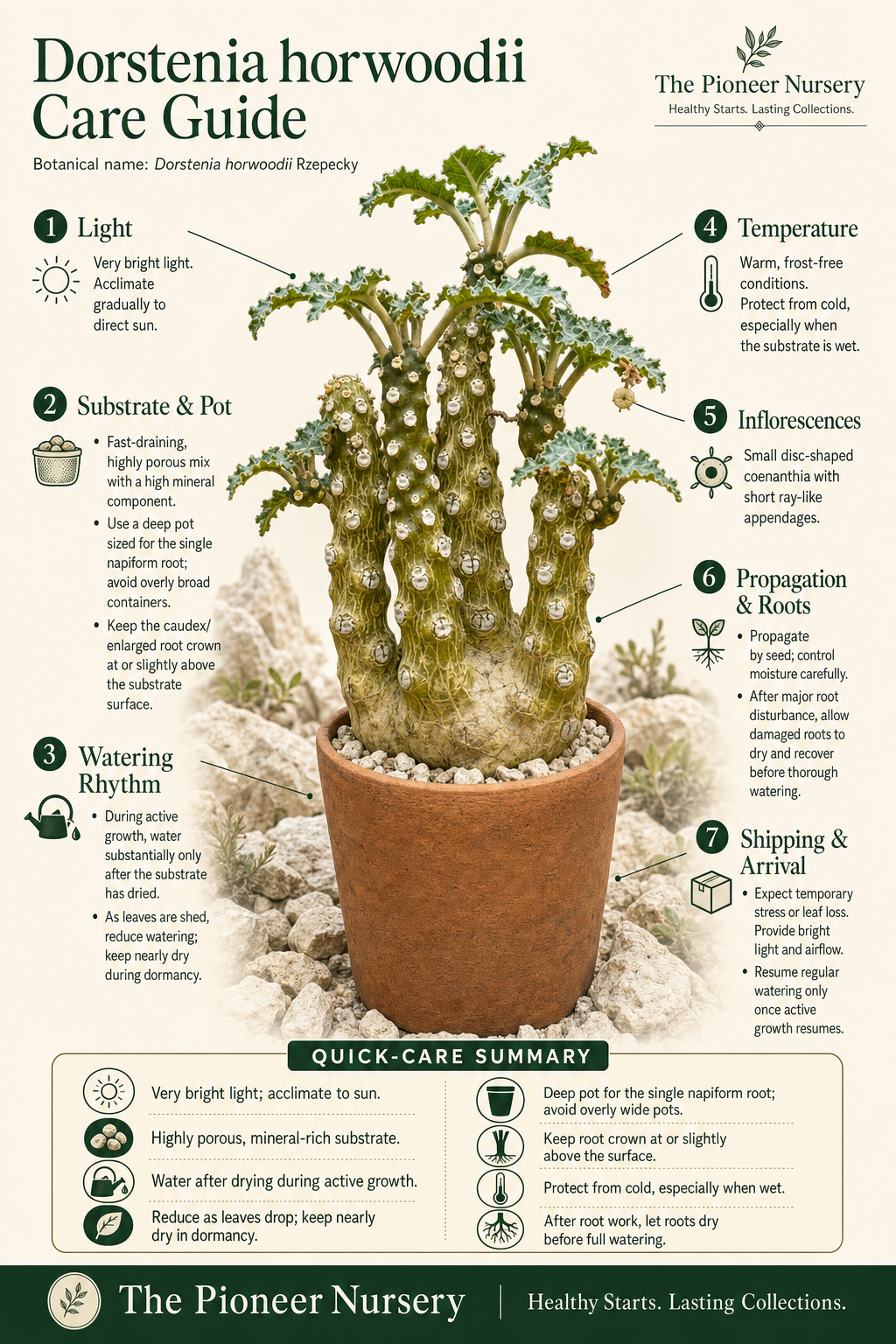
Dorstenia horwoodii is a small Somali caudiciform in the Moraceae family, known for its single napiform root and seasonal leaf loss. Its most important care requirements are bright light, a very porous mineral substrate, careful watering during active growth, and a nearly dry, warm dormancy. Because the enlarged root is particularly vulnerable to prolonged wetness and damage, pot depth, drainage, and post-shipping recovery deserve special attention.
Quick Care Summary
- Provide very bright light, with gradual acclimation to direct sun.
- Use a fast-draining, highly porous substrate with a high mineral component.
- Water substantially during active growth only after the substrate has dried.
- Reduce watering as leaves are shed and keep the plant nearly dry during dormancy.
- Use a deep pot suited to the single napiform root, without choosing an unnecessarily broad container.
- Keep the caudex or enlarged root crown at or slightly above the substrate surface.
- Protect from cold, especially when the substrate is wet.
- After major root disturbance, allow damaged roots to dry and recover before thorough watering.
About Dorstenia horwoodii
This species grows as a small caudiciform associated with limestone rock crevices. Its single napiform root forms the plant’s characteristic enlarged root structure, while the foliage may become sparse or disappear during seasonal dormancy. The species was formally described and validated in 2016 after circulating in cultivation for decades under an unpublished name. Dorstenia horwoodii is an accepted botanical species native to Somalia.
Light
Provide very bright light, including several hours of direct sun once the plant is acclimated. Introduce newly shipped or greenhouse-grown plants to stronger light gradually, beginning with bright filtered light and increasing exposure over time. Abrupt movement into intense sunlight can cause leaf scorch and stress. Insufficient light may result in weak, stretched growth.
Watering
Water when the plant is actively growing and has foliage, allowing the substrate to dry substantially between waterings. As leaves are shed, reduce watering significantly and keep the plant nearly dry during dormancy. Avoid continuously wet conditions around the napiform root, especially when temperatures are cool. During active growth, prolonged drought may also contribute to leaf loss.
Soil and substrate
Use a very porous, fast-draining mix with a high mineral component and limited organic matter. The substrate should hold enough moisture for active growth while draining rapidly and allowing good root aeration. Excessively moisture-retentive media increase the risk of root or caudex rot.
Potting and roots
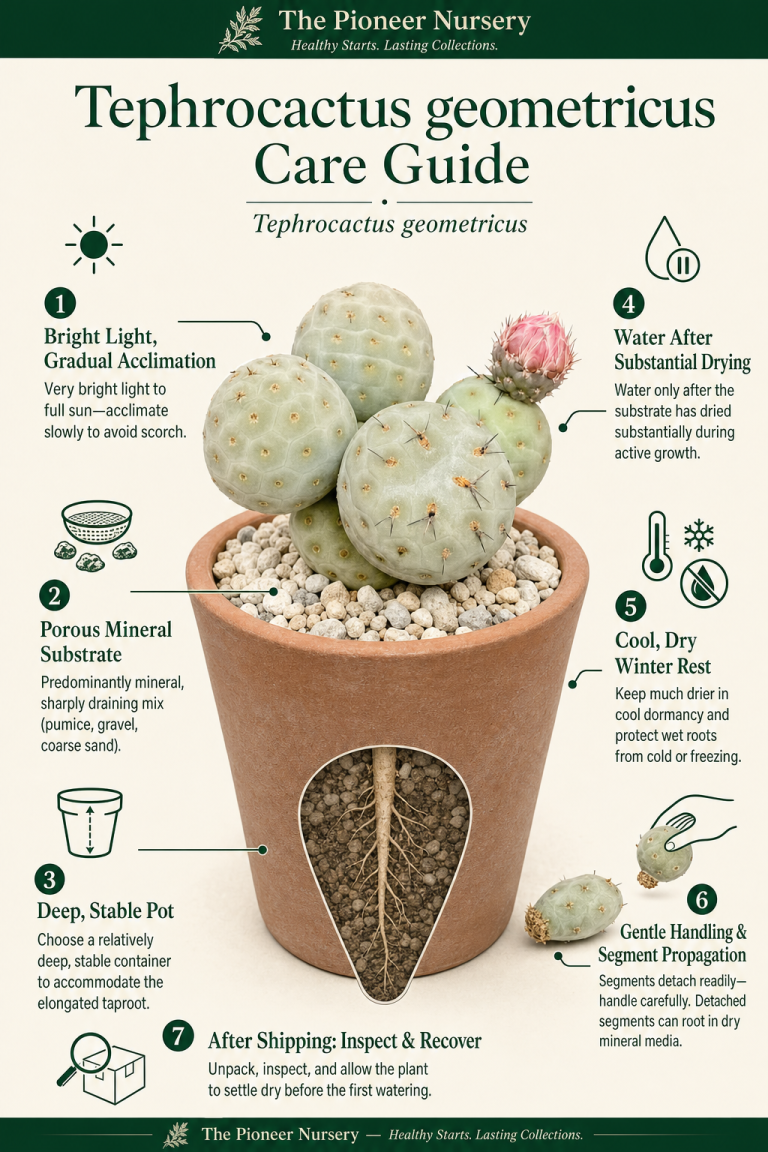
Choose a pot with enough depth for the single napiform root rather than an unnecessarily broad container. Keep the caudex or enlarged root crown at, or slightly above, the substrate surface. Repot only when necessary. After major root disturbance, do not water immediately; allow damaged roots to dry and begin recovering before thorough watering.
Temperature and dormancy
Maintain warm, frost-free conditions. Protect the plant from cold, particularly when the substrate is wet. Since precise species-specific minimum-temperature data are limited, conservative cultivation means avoiding prolonged exposure to near-freezing temperatures and prioritizing warm, dry winter storage. During dormancy, provide bright conditions, warmth, and very limited to no irrigation until active growth resumes.
Fertilizer
No robust species-specific fertilizer trials were identified. If you fertilize, use a dilute, balanced fertilizer only while the plant is actively growing. Do not feed dormant or recently repotted plants.
Flowering
Dorstenia horwoodii produces small, disc-shaped coenanthia, or inflorescences, with short ray-like appendages. Flowering is associated with active growth and may be followed by ballistic seed dispersal, a characteristic feature of Dorstenia.
Propagation
Seed propagation is the best-documented method for reproducing this species and for developing its characteristic napiform root. Sow fresh seed in a warm, porous medium and manage moisture carefully to reduce seedling losses. Poor ventilation and excessive wetness can cause damping-off. Reliable species-specific information on cuttings, offsets, and other vegetative methods is limited.
Shipping and arrival care
Receive and ship this plant warm and as dry as practical. Inspect the napiform root for crushing or breakage, and protect it from prolonged cold or wet conditions. After arrival, provide bright filtered light initially. If roots were disturbed or broken, allow them to dry and callus before watering thoroughly. Once the plant has acclimated and root wounds have recovered, gradually resume its normal bright-light and active-growth routine.
Taxonomic note
Dorstenia horwoodii Rzepecky is the accepted botanical name supported by Plants of the World Online and the International Plant Names Index. Historical herbarium material from the same general plant complex was associated with Dorstenia crispa and later treated under D. foetida, but those names should not be presented as confirmed synonyms of D. horwoodii without additional qualification.
Common Problems
- Root or caudex rot: Usually associated with wet substrate during dormancy or cool conditions.
- Sun scorch: Can occur when a protected plant is moved abruptly into intense direct sunlight.
- Leaf loss: Seasonal leaf shedding can be normal, but cold, root damage, or prolonged active-growth drought may also cause it.
- Weak, stretched growth: A sign that light may be inadequate.
- Seedling damping-off: Excessively wet, poorly ventilated propagation media can cause losses.
Frequently Asked Questions
How often should I water Dorstenia horwoodii?
Water according to growth and substrate dryness rather than a fixed calendar. Water during active growth after the substrate has dried substantially, then reduce watering as leaves are shed and keep the plant nearly dry during dormancy.
Does Dorstenia horwoodii need direct sun?
It benefits from very bright light and several hours of direct sun after gradual acclimation. Newly shipped or protected plants should first receive bright filtered light to reduce the risk of scorch.
Why is my Dorstenia horwoodii losing leaves?
Leaf loss may be part of its normal seasonal dormancy. It can also result from cold, root damage, or prolonged drought while the plant is actively growing.
What kind of pot does this species need?
Use a pot with sufficient depth for its single napiform root, rather than an unnecessarily broad container. Keep the enlarged root crown at or slightly above the substrate surface.
Can I propagate Dorstenia horwoodii from cuttings?
Seed propagation is the best-documented method. Reliable species-specific information on cuttings, offsets, and other vegetative methods is limited.
How should I care for a recently shipped plant?
Inspect the root, provide bright filtered light initially, and keep the plant warm and as dry as practical. If roots were damaged, allow them to dry and callus before thorough watering, then resume care gradually after acclimation.
Dorstenia horwoodii rewards careful growers who respect its specialized root and seasonal rhythm. Bright light, fast drainage, warm conditions, and a deliberately dry dormancy are the foundation of successful cultivation. When repotting or receiving a shipped plant, handle the napiform root gently and adjust watering to the plant’s growth and recovery stage.