Gymnocalycium damsii Care Guide
Learn how to grow Gymnocalycium damsii with bright filtered light, careful summer watering, porous soil, and a cool, dry winter rest.
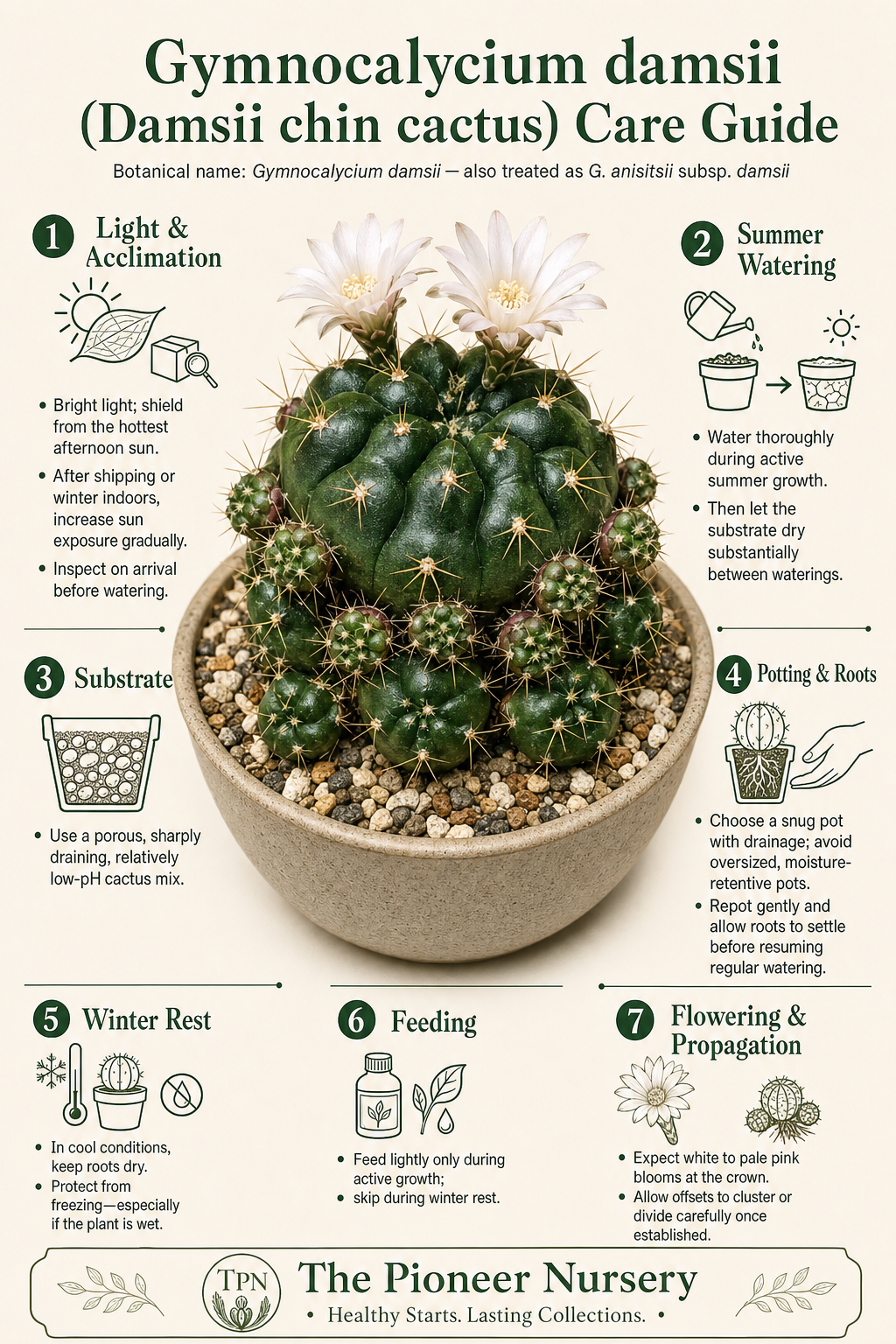
Gymnocalycium damsii, commonly called Damsii chin cactus or chin cactus, is a compact, summer-growing Gymnocalycium known for free flowering when mature and well established. Give it bright light with protection from the hottest afternoon sun, a sharply draining substrate, thorough watering during active growth, and a substantially drier winter rest. Gymnocalycium damsii is treated by Kew and the RHS as a synonym of Gymnocalycium anisitsii subsp. damsii; specialist references differ somewhat in how broadly they classify this group, so provenance and collection records can be valuable.
Quick Care Summary
- Bright light with protection from the hottest afternoon sun.
- Acclimate gradually after shipping or indoor winter protection.
- Water thoroughly during summer growth, then let the substrate dry substantially.
- Keep roots dry during cool winter conditions.
- Use a porous, sharply draining, relatively low-pH cactus substrate.
- Avoid oversized, moisture-retentive pots.
- Feed lightly only during active growth.
- Protect from freezing, especially when the plant is wet.
About the plant
Gymnocalycium damsii is associated with seasonally dry habitats in Mato Grosso do Sul, Brazil. It should be grown as a seasonally dry cactus rather than kept continuously moist. Plants in the Gymnocalycium anisitsii/damsii group can vary considerably in cultivation, and appearance alone may not confirm a precise identification.
Light
Provide bright light with protection from the hottest afternoon sun. Some direct sun supports compact growth and flowering, but acclimate gradually after shipping, indoor culture, or winter protection. Abrupt exposure can cause scorch. Strong light may also produce bronzing, while excessive summer exposure can stunt or burn the plant.
Watering
During active summer growth, water thoroughly and then allow the substrate to dry substantially before watering again. Avoid repeated moisture and constantly wet roots because the plant is prone to rot. In the cool winter rest, withhold or greatly minimize water according to temperature, light, and growing conditions. Cool conditions combined with moisture are especially risky.
Soil and substrate
Use a very porous, sharply draining cactus substrate with strong root aeration. Specialist cultivation references prefer a relatively low-pH mix. Avoid heavy, poorly drained, or limestone-rich substrates that remain wet around the roots.
Potting and roots
Choose a container with generous drainage and enough room for active root growth, but avoid oversized pots that hold excess moisture. Repot approximately every two years or when roots have filled the container. After repotting or substantial root disturbance, wait to water until damaged roots have dried and begun healing.
Temperature and seasonal growth
Gymnocalycium damsii benefits from warm conditions during active growth and is primarily a summer-growing cactus. It can tolerate cool conditions only when kept dry. Protect it from freezing, particularly when moisture is present. A conservative winter minimum is around 0°C/32°F in dry conditions, although brief lower temperatures are reported by specialist sources.
Fertilizer
Feed during active growth with a dilute cactus fertilizer or weak balanced fertilizer. A comparatively higher-potassium formulation may be used during the growing season. Avoid heavy feeding and do not fertilize plants that are dry, dormant, or recently repotted.
Flowering
This is a free-flowering Gymnocalycium that may bloom readily once mature and established. Flowers are commonly white to pale pink, with variation reported across the range and in cultivated plants. Bright but non-scorching light, warm active growth, and appropriate seasonal dryness support flowering.
Propagation
Propagation is possible from seed or by separating offsets when present. Sow fresh seed in a clean, porous, damp medium with warmth and high humidity, then gradually increase ventilation after germination. Allow offset wounds to dry before potting. Newly rooted or divided plants should remain drier than established specimens until their roots are functioning.
Shipping and arrival care
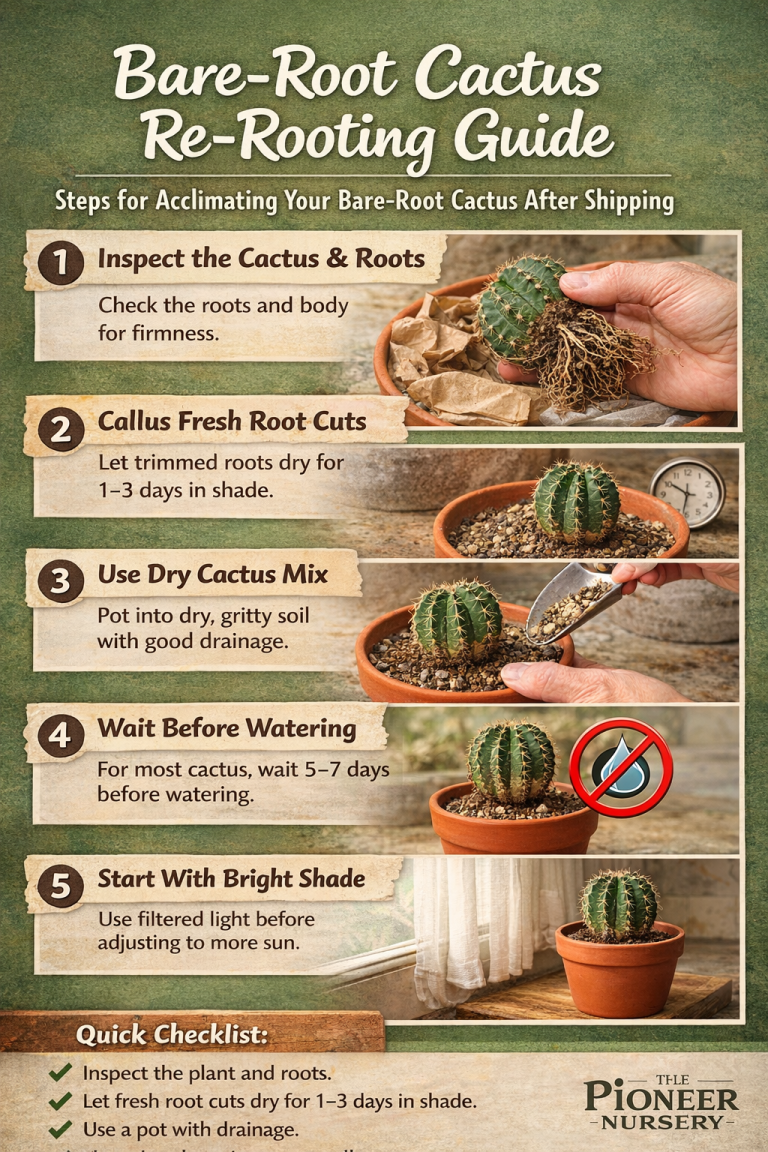
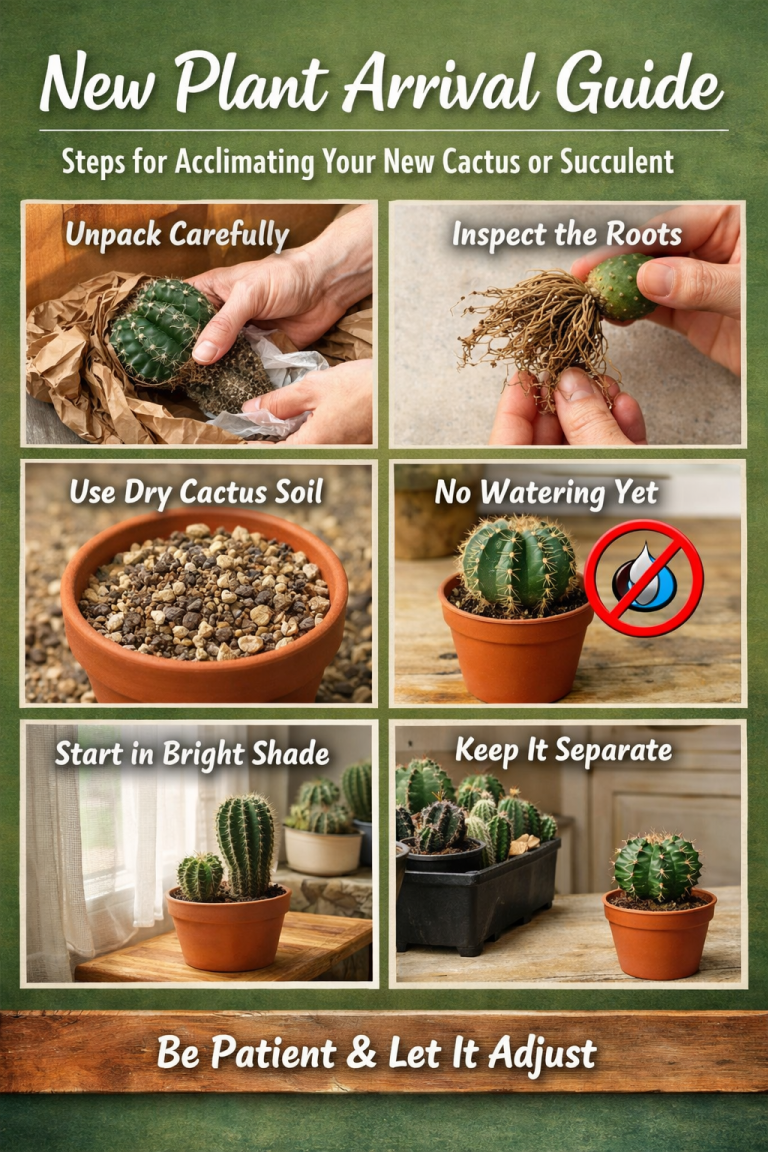
Receive and ship this cactus dry, especially during cool weather. On arrival, inspect the plant for rot or root damage and protect it from freezing temperatures and prolonged enclosure in wet packaging. If roots were disturbed or wounds are present, allow them to dry before watering. Acclimate gradually to brighter light, then resume normal active-season watering when the plant is settled and growing.
Common Problems
- Root or stem rot can result from wet, poorly aerated substrate or watering during cool conditions.
- Sun scorch may follow abrupt exposure to strong direct sun after shipping or indoor culture.
- Monitor for mealybugs, including root mealybugs, and occasional spider mites or scale insects.
- Bronzing or reddish-brown coloration may occur under strong light or seasonal stress; assess whether tissue is actually damaged.
- Cultivated plants can vary or be hybridized, so appearance alone may not confirm identity within the Gymnocalycium anisitsii/damsii group.
Frequently Asked Questions
How often should I water Gymnocalycium damsii?
Water thoroughly during active summer growth, then wait until the substrate has dried substantially. In cool winter conditions, withhold or greatly minimize water rather than following a fixed calendar.
Does Gymnocalycium damsii need direct sun?
Some direct sun is useful for compact growth and flowering, but provide protection from the hottest afternoon sun and acclimate gradually to prevent scorch.
How should I care for it in winter?
Treat winter as a cool, dry rest. Keep the plant dry or nearly dry according to its temperature and light, and protect it from freezing.
What soil should I use?
Use a very porous, sharply draining cactus mix with strong root aeration. A relatively low-pH substrate is preferred; avoid heavy or limestone-rich mixes that stay wet.
Can Gymnocalycium damsii flower?
Yes. It is considered free-flowering and may bloom readily when mature and established, especially with strong but non-scorching light, warm active growth, and suitable seasonal dryness.
What should I do if the plant arrives with disturbed roots?
Inspect it, keep disturbed roots or wounds dry until they have dried and begun healing, and acclimate the plant gradually to brighter light before returning to normal active-season watering.
Gymnocalycium damsii is best grown with a clear seasonal rhythm: bright, carefully acclimated light and thorough but controlled watering during warm growth, followed by a cool, dry winter rest. Excellent drainage and restraint around wet roots are the keys to keeping this flowering cactus healthy.