Mammillaria magnimamma Cristata Care Guide
Learn how to grow Mammillaria magnimamma Cristata with bright light, sharply draining soil, careful watering, and a dry cool-season rest.
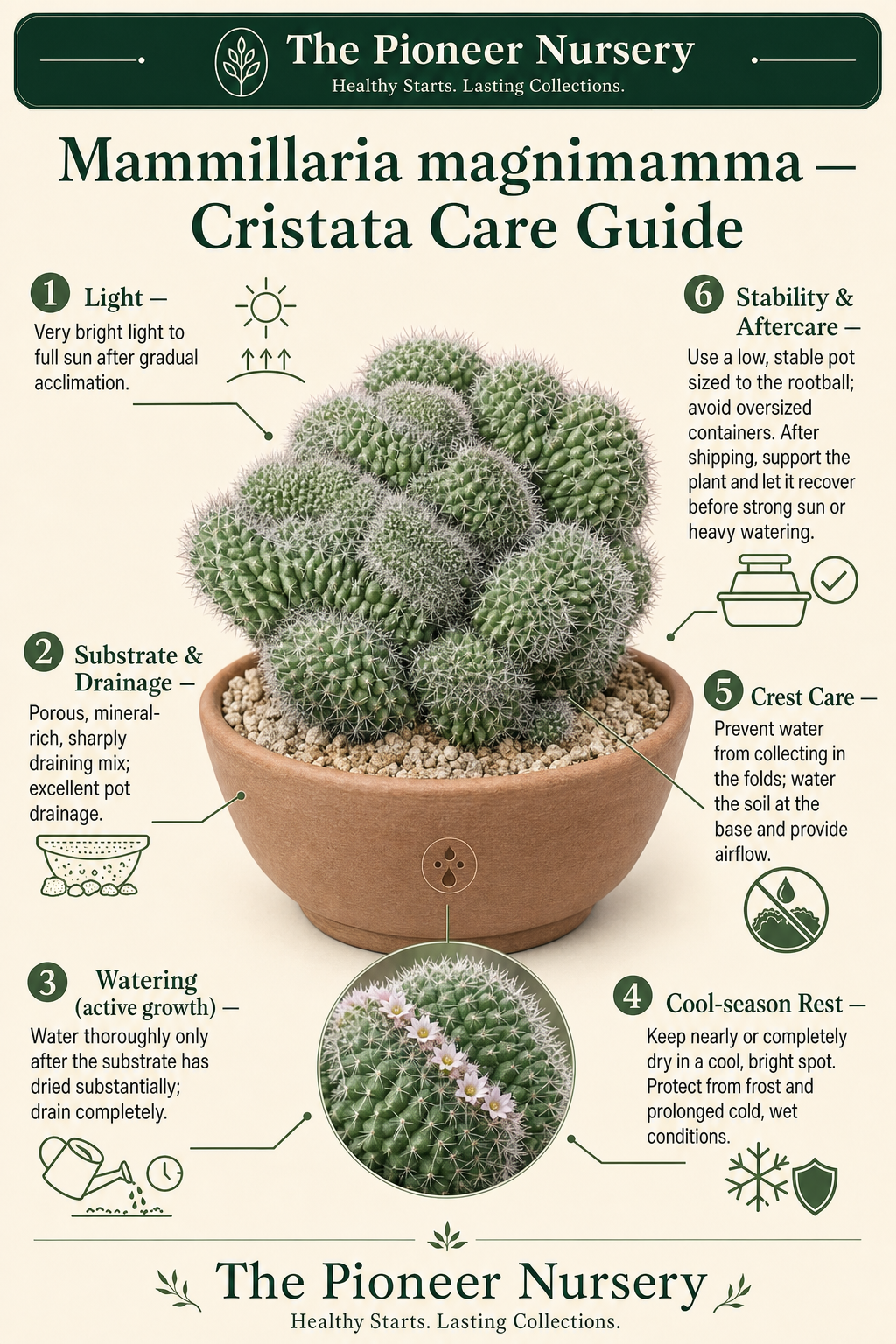
Mammillaria magnimamma — Cristata is the crested horticultural form of the Mexican pincushion, Mammillaria magnimamma Haw. Its irregular, spreading growth gives it a different profile from the usual rounded or clumping form, and the folds of the crest may dry more slowly. Successful care centers on strong light, excellent drainage, careful sun acclimation, and keeping the plant dry during cool winter conditions.
Quick Care Summary
- Provide very bright light to full sun after gradual acclimation.
- Use a porous, sharply draining substrate with substantial mineral content.
- Water thoroughly during active growth only after the substrate has dried substantially.
- Keep the plant nearly or completely dry during a cool winter rest.
- Prevent water from collecting in the folds of the crest.
- Use a stable pot with excellent drainage and avoid oversized containers.
- Protect from frost and prolonged cold, wet conditions.
About the plant
Mammillaria magnimamma is an accepted species that is initially solitary but commonly becomes clumping. “Cristata” describes its abnormal, fasciated crested growth rather than a separate species or formally established cultivar. The crest should receive the same basic care as the species, with extra attention to airflow and moisture trapped in its folds.
Light
Provide very bright light to full sun once the plant is acclimated. Increase direct-sun exposure gradually, especially after shipping or when moving a greenhouse-grown or shaded plant, because sudden intense light can cause scorch. Strong light supports compact growth and flowering; inadequate light may produce weak, elongated growth and fewer flowers. Good airflow is especially helpful around the irregular crest.
Watering
During active growth, water thoroughly only after the substrate has dried substantially, then let excess water drain completely. Adjust watering to temperature, light, pot size, substrate, and airflow rather than following a fixed calendar. Reduce watering sharply in cool or dim conditions and keep the plant nearly or completely dry during winter dormancy. Avoid allowing water to remain in the folds of the crest, where prolonged moisture can encourage rot.
Soil and substrate
Use a porous, sharply draining cactus mix with a substantial mineral component such as pumice, perlite, coarse grit, or lava rock. The medium should provide enough moisture for active growth but dry quickly and remain well aerated around the roots.
Potting and roots
Choose a pot with an unobstructed drainage hole and avoid oversized containers. A pot should fit the root system without leaving a large volume of persistently wet substrate. Because the crest can spread irregularly and become top-heavy, a stable container is useful. Repot during active growth only when necessary. After repotting or significant root disturbance, allow damaged roots to dry and callus before cautious watering.
Temperature and winter care
Protect the plant from frost and prolonged cold, wet conditions. Keep it frost-free, particularly during winter, and keep the substrate dry as temperatures fall. Growth generally slows or stops during the cool, low-light season. Provide maximum available light, good ventilation, and a dry or nearly dry winter rest. Resume watering gradually when light and temperatures support active growth.
Fertilizer
Feed sparingly during active spring and summer growth with a dilute, low-nitrogen cactus fertilizer. Do not fertilize a dormant, stressed, recently repotted, or poorly lit plant.
Flowering
Flowers form in a ring near the crown, typically in spring and sometimes later under favorable cultivation. Colors may range from pink or reddish tones to cream or pale yellow, often with darker midveins. Strong light, a cool dry rest, and healthy active-season growth support flowering.
Propagation
The species can be propagated from seed or offsets. Remove offsets only when sufficiently developed, and allow the wound to dry before planting. The cristate growth mutation is not expected to reproduce reliably from seed, so vegetative propagation is the more appropriate method for maintaining a particular crested clone when offsets or suitable cuttings are available.
Shipping and arrival care
Inspect the plant after arrival, including the folds of the crest, for hidden wounds or trapped packing material. The uneven growth can be damaged by pressure, so handle it carefully. Begin with bright indirect or filtered light and acclimate gradually to direct sun. After bare-root shipping or major root disturbance, do not water immediately; allow damaged roots to dry and let the plant recover from transit before watering cautiously.
Common Problems
- Root or stem rot from wet, poorly aerated substrate, especially in cool weather.
- Localized rot when moisture remains in the folds of the crest.
- Sun scorch after abrupt exposure to intense direct sun.
- Mealybugs, red spider mites, and other glasshouse pests.
- Corking or older scars, which should be distinguished from soft, dark, spreading rot.
- Weak, stretched growth caused by inadequate light.
Frequently Asked Questions
How often should I water Mammillaria magnimamma Cristata?
Do not use a fixed schedule. During active growth, water thoroughly after the substrate has dried substantially, then drain completely. Water much less in cool or dim conditions and keep the plant nearly or completely dry during winter dormancy.
Does the crested form need different care from regular Mammillaria magnimamma?
Its basic requirements are the same, but the irregular crest may dry more slowly and retain moisture in its folds. Provide good airflow and take extra care that water does not collect there.
Can this plant grow in full sun?
Yes, very bright light to full sun is appropriate once acclimated. Increase exposure gradually after shipping or a period in shade to reduce scorch risk.
How can I encourage flowering?
Strong light, a cool dry rest, and healthy growth during the active season support flowering. Flowers typically form in a ring near the crown.
Can the crested form be grown from seed?
The species can be grown from seed, but the cristate mutation is not expected to reproduce reliably that way. Offsets or suitable cuttings are more appropriate for maintaining a particular crested clone.
Should I water immediately after the plant arrives?
Not after bare-root shipping or major root disturbance. Allow damaged roots to dry and let the plant recover from transit before watering cautiously.
Mammillaria magnimamma — Cristata is best kept bright, dry between waterings, and protected from cold wet conditions. The main extra consideration is the crest itself: provide airflow and monitor its folds so trapped moisture does not remain long enough to cause rot.