Gymnocalycium bruchii Care Guide
Learn how to grow Gymnocalycium bruchii, a small clump-forming cactus that thrives in bright light, sharply draining soil, controlled summer watering, and a cool, mostly dry winter rest.
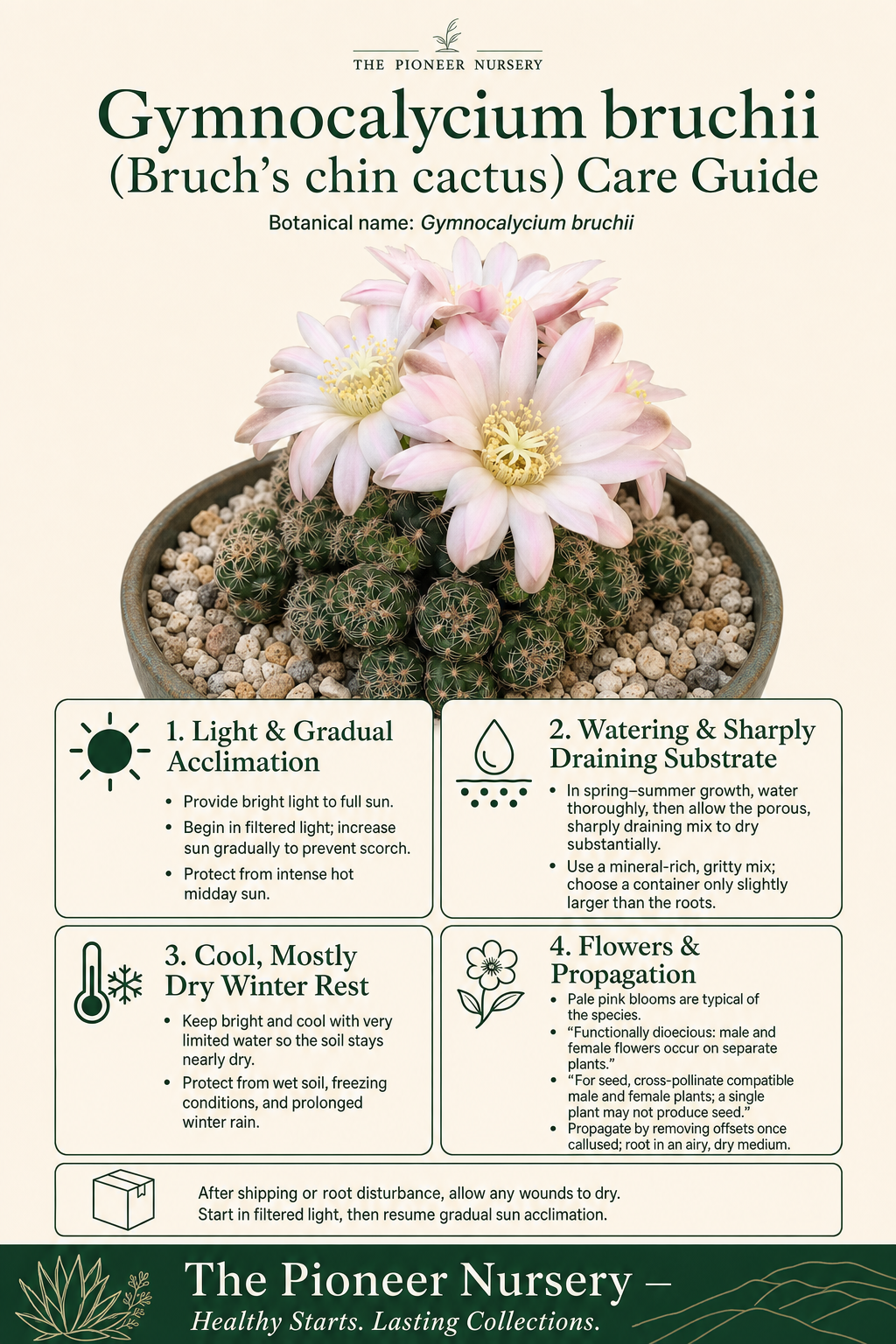
Gymnocalycium bruchii, commonly called Bruch’s chin cactus, is a small, naturally clump-forming cactus from Argentina. Its relatively large pink to pale-pink flowers appear in spring or early summer. For reliable growth, provide bright light with gradual acclimation, use a porous mineral-rich substrate, water thoroughly during active growth while allowing the medium to dry substantially, and keep the plant nearly dry during its cool winter rest.
Quick Care Summary
- Provide bright light to full sun, with gradual acclimation and protection from intense hot sun.
- Water thoroughly during active spring and summer growth, allowing the sharply draining substrate to dry substantially afterward.
- Use a mineral-rich, sharply draining mix and a container only slightly larger than the root system.
- Keep the plant bright, cool, and nearly dry during winter rest; protect it from wet soil, freezing conditions, and prolonged winter rain.
- After shipping or root disturbance, allow wounds to dry and begin in filtered light before gradual sun acclimation.
About the plant
Gymnocalycium bruchii is an accepted botanical species. It is naturally clump-forming and may produce offsets readily. Older literature and cultivated plants may use historical varietal, form, or subspecific names, but many of these names are currently treated as synonyms of the species.
Light
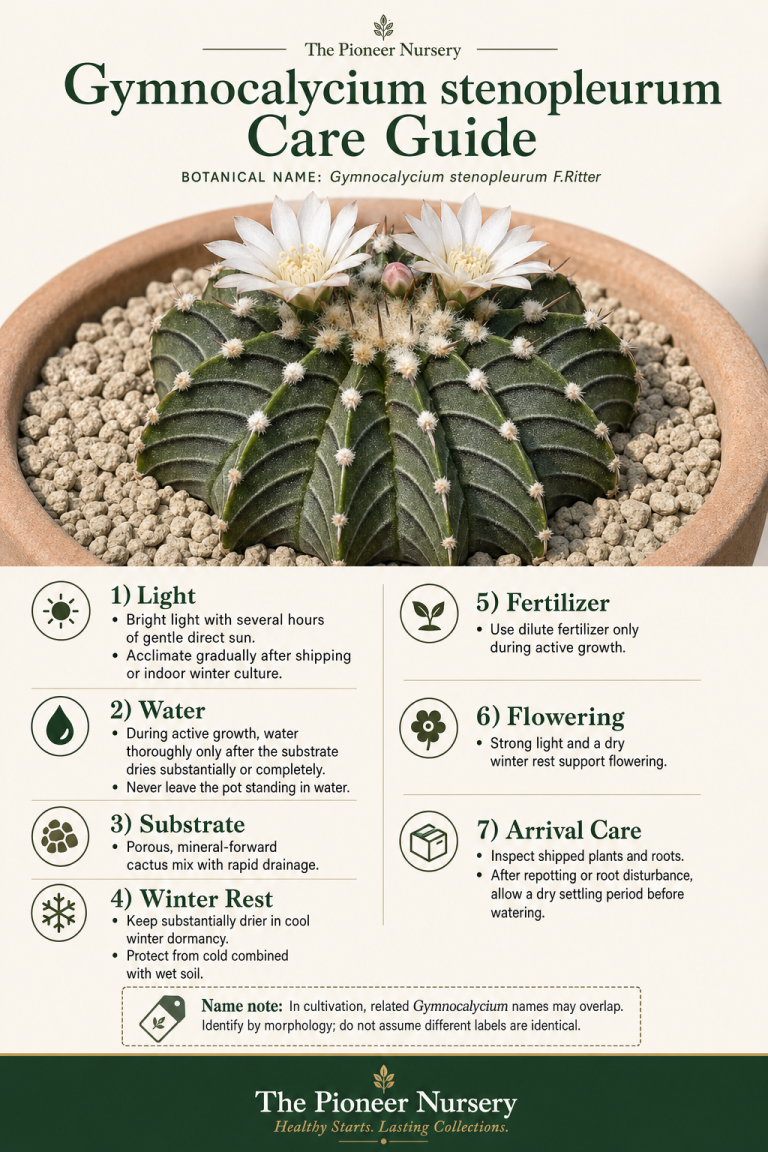
Provide bright light to full sun, with protection from intense, hot midday or afternoon sun. Direct light supports compact growth and flowering, but acclimate gradually to unfiltered sun, especially after shipment or a transition from lower light. Abrupt exposure can cause sunburn.
Watering
Water thoroughly during active spring and summer growth, then allow the substrate to dry substantially before watering again. Reduce watering as temperatures fall and keep the plant nearly dry during a cool winter rest. Avoid constantly wet roots, particularly when conditions are cool.
Soil and substrate
Use a porous, sharply draining cactus mix with substantial mineral content, such as pumice, perlite, coarse sand, or grit. The substrate should hold limited moisture while maintaining strong aeration around the roots.
Potting and roots
Choose a container only slightly larger than the root system and make sure it has an effective drainage hole. Because this species is clump-forming, it does not require an unusually deep pot. Repot during active growth or just before growth begins, inspecting the roots and removing dead or compromised tissue.
Temperature and winter rest
Warm conditions support growth during the growing season. Gymnocalycium bruchii tolerates cool winter conditions when kept dry, and horticultural sources indicate greater cold tolerance than many commonly grown cacti. However, cold hardiness does not mean tolerance of wet, frozen soil. Protect the plant from prolonged frost and winter rain in exposed cultivation. During cool, darker months, provide a bright, cool, dry rest and resume watering gradually in spring as light and temperatures increase.
Fertilizer
During active growth, apply a dilute, low-nitrogen cactus fertilizer periodically, such as approximately monthly while the plant is growing. Do not fertilize during winter dormancy or immediately after major root disturbance.
Flowering and pollination
Flowers are relatively large compared with the small plant body and are generally pink to pale pink, appearing in spring or early summer. Recent reproductive research indicates that Gymnocalycium bruchii is functionally dioecious: male and female flowers occur on separate plants. Seed production may therefore require compatible male and female plants and cross-pollination.
Propagation
Propagate from fresh seed or offsets. For seed, sow at approximately 19–24°C in late winter or early spring and keep the medium evenly moist but not waterlogged during germination. For offsets, remove them in spring or during active growth, allow cut surfaces to dry and callus, then place them in a dry, porous medium before beginning cautious watering.
Shipping and arrival care
Inspect the plant after arrival. After bare-root shipping or significant root disturbance, allow damaged roots and wounds to dry before potting or watering. Once potted, provide bright but filtered light initially and gradually acclimate the plant to stronger sun. Wait until the plant is settled and the medium is suitable before cautious rehydration.
Common Problems
- Root or stem rot: Improve drainage, avoid excessive irrigation, and keep the substrate dry in cold conditions.
- Sunburn: Acclimate gradually after shipment or greenhouse shade rather than moving the plant abruptly into intense sun.
- Mealybugs: Inspect the areoles and roots regularly.
- Weak, elongated growth and reduced flowering: Review light levels and provide stronger suitable light.
- No seed production: A single plant, or plants of only one reproductive sex, may not provide compatible flowers.
Frequently Asked Questions
How often should I water Gymnocalycium bruchii?
Water thoroughly during active spring and summer growth, then wait for the substrate to dry substantially before watering again. Water less as temperatures fall and keep the plant nearly dry during cool winter rest.
Can Gymnocalycium bruchii grow in full sun?
Yes, but protect it from intense hot midday or afternoon sun and acclimate gradually, especially after shipping or low-light conditions.
Does this cactus need a deep pot?
No. It is clump-forming and does not require an unusually deep container. Use a pot only slightly larger than the root system with effective drainage.
Why is my plant not producing seeds?
Gymnocalycium bruchii is functionally dioecious, with male and female flowers on separate plants. Seed production may require compatible plants and cross-pollination.
How should I handle a newly shipped plant?
Inspect it and allow damaged roots or wounds to dry before potting or watering. Begin in bright filtered light, then acclimate gradually to stronger sun.
Can I propagate it from offsets?
Yes. Remove offsets during spring or active growth, let the cut surfaces dry and callus, then root them in a dry, porous medium before cautious watering.
Gymnocalycium bruchii is well suited to growers who can provide strong light, excellent drainage, and a distinct cool, dry winter rest. Its clumping habit makes offset propagation practical, while successful seed production may require more than one compatible plant.