Mammillaria elongata Care Guide: Growing Ladyfinger Cactus
Learn how to grow Mammillaria elongata, a clumping cactus with cylindrical stems and dense golden spines. This guide covers light, watering, soil, winter rest, flowering, propagation, and shipping recovery.
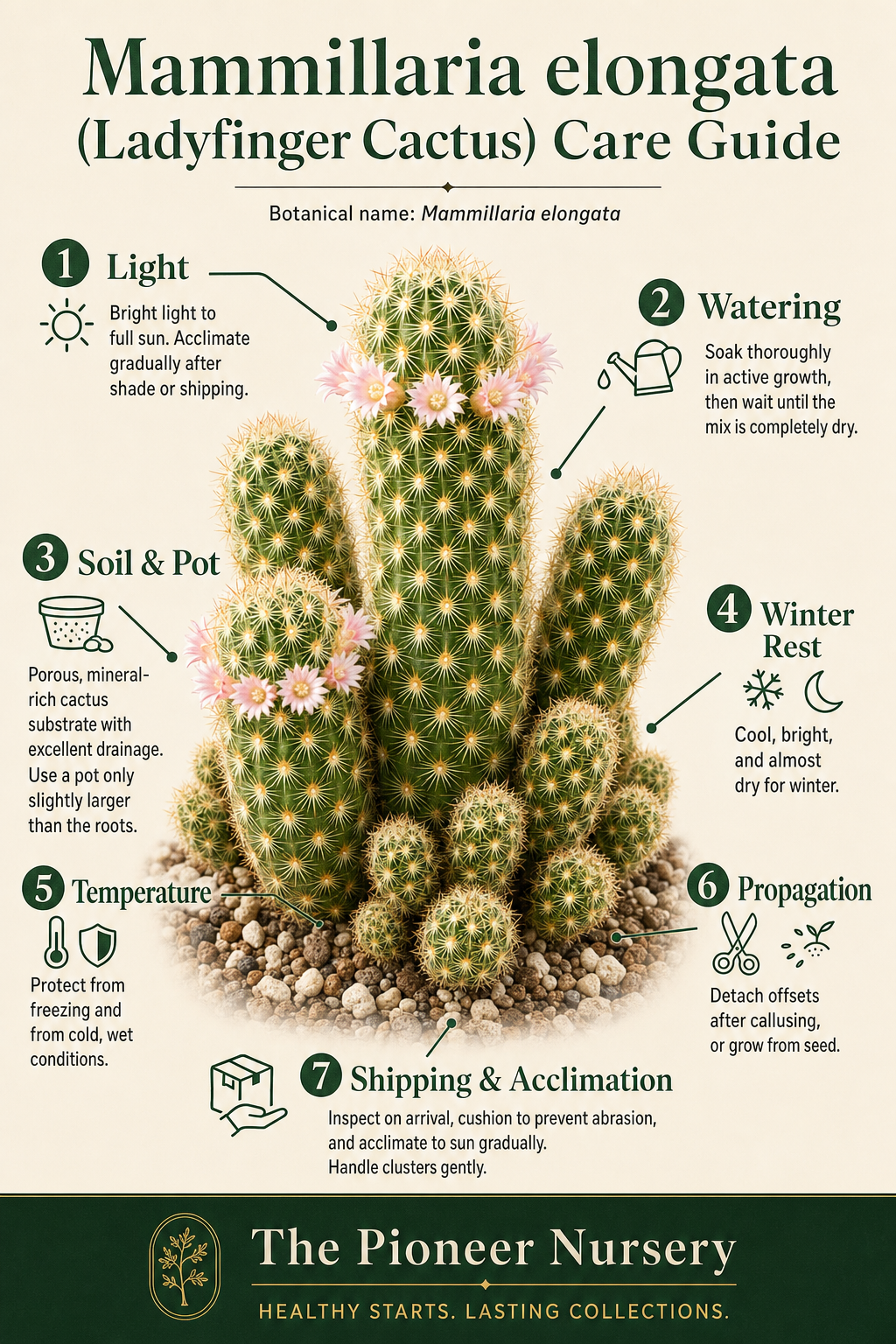
Mammillaria elongata, commonly called ladyfinger cactus or gold lace cactus, is a clump-forming species with cylindrical stems covered in dense yellow, cream, or brown spines. It is relatively easy to cultivate when given strong light, a porous mineral-rich substrate, thorough watering followed by complete drying, and a cool, nearly dry winter rest. Its drought tolerance does not mean it can tolerate persistently wet soil.
Quick Care Summary
- Provide bright light to full sun, with gradual acclimation after shade or shipping.
- Use a porous, mineral-rich cactus substrate with excellent drainage.
- Water thoroughly during active growth, then wait until the substrate is completely dry.
- Keep the plant almost dry during a cool winter rest.
- Protect it from freezing and cold, wet conditions.
- Use a pot only moderately larger than the root system.
- Handle the clustered stems carefully during potting and shipping.
About Mammillaria elongata
Mammillaria elongata is an accepted botanical species name, with Mammillaria elongata DC. as the accepted name and author citation. Historical combinations such as Chilita elongata, Krainzia elongata, Leptocladia elongata, and Neomammillaria elongata do not change its current identity. The plant forms clusters of cylindrical stems with closely arranged yellow, cream, or brown spines.
Light
Provide bright light to full sun, with strong direct light where possible. Acclimate gradually after shipping or a period in shade to reduce the risk of sun-scorch. In very hot outdoor conditions, some afternoon protection may be helpful. Indoors, place the plant in the brightest suitable location available.
Watering
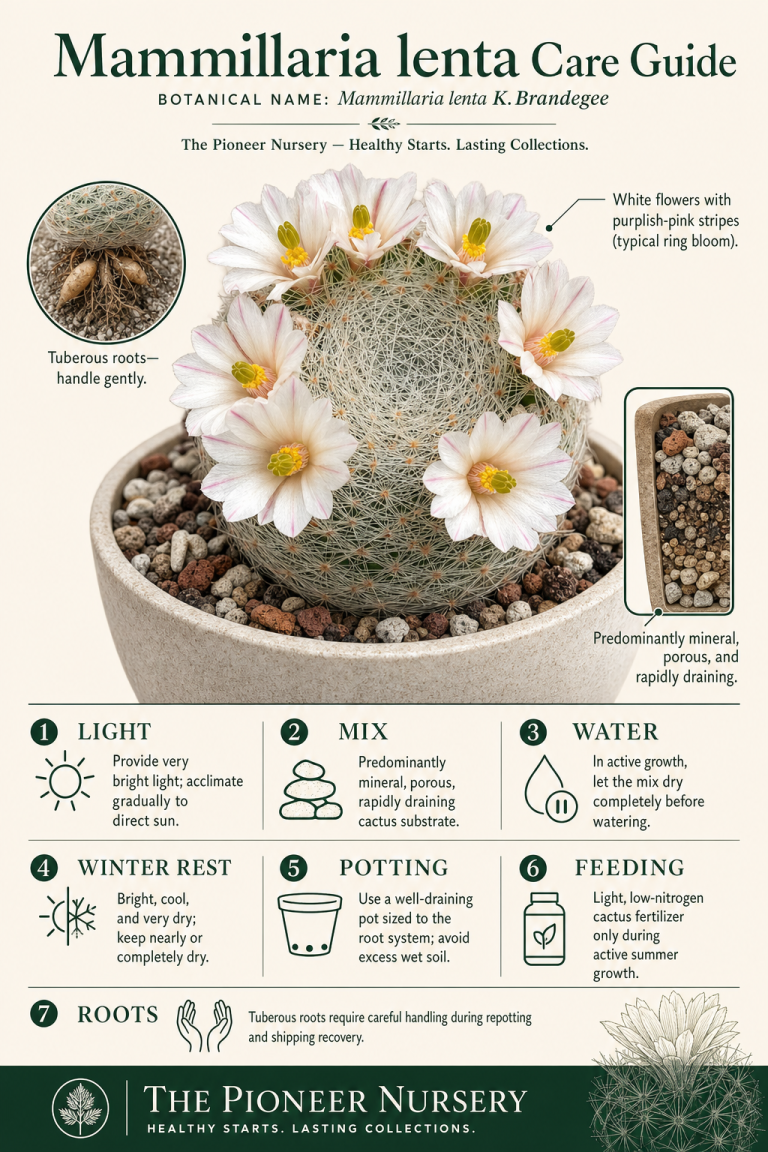
During active growth, water thoroughly and then allow the substrate to dry completely before watering again. Avoid frequent small sips and never leave the roots continuously wet. Reduce watering substantially during winter dormancy, keeping the plant almost dry, especially in cool conditions. Resume watering gradually when temperatures, light, and active growth increase.
Soil and substrate
Use a porous, well-drained cactus mix with substantial mineral content, such as pumice, perlite, coarse sand, or fine grit. Avoid dense mixtures that hold water or compact around the roots. Good drainage is especially important because cold, wet conditions can lead to rot.
Potting and roots
Choose a container with an effective drainage hole and only moderately more space than the root system requires. Repot during active growth or the warmer part of the growing season, handling the clustered stems carefully. If repotting causes significant root damage, allow damaged roots to dry and recover before returning to cautious watering.
Temperature and winter rest
Grow the plant warm during active growth; approximately 70–80°F (21–27°C) is suitable according to the supplied cultivation guidance. When possible, provide a cool, bright, dry winter rest at approximately 45–55°F (7–13°C). Protect Mammillaria elongata from freezing and from cold, wet conditions, which substantially increase rot risk. Outdoor cultivation is best limited to warm, sheltered, frost-free conditions unless reliable winter protection is available.
Seasonal growth and dormancy
Mammillaria elongata benefits from active growth in brighter, warmer conditions and a cooler, nearly dry winter rest. Keep the plant much drier during dormancy, then increase watering gradually as spring conditions bring stronger light, warmer temperatures, and renewed growth.
Fertilizer
Feed lightly during active growth with a balanced liquid fertilizer or cactus fertilizer. The supplied RHS guidance recommends feeding every two or three weeks during growth; use a diluted application. Do not fertilize a dry, dormant, stressed, or recently repotted plant.
Flowering
Mature plants may produce a ring of small pale-yellow to whitish or pink-tinged flowers, approximately 1–1.5 cm across or long, generally in spring or as the plant transitions from winter rest into active growth. Strong light, a cool dry rest, and healthy growth support flowering potential.
Propagation
Offsets can be detached for propagation. Allow detached offsets or cut surfaces to callus before planting. Seed propagation is also suitable; the supplied RHS guidance gives 19–24°C as a suitable germination temperature for seed sown in early spring.
Shipping and arrival care
Inspect the plant after arrival for rot, abrasion, crushed stems, or damaged spines. Because the stems and spines are densely clustered, handle it carefully. Provide bright but initially filtered light, then acclimate gradually to stronger sun. If the plant arrived bare-rooted, chilled, recently potted, or with root damage, delay watering until the roots have had an opportunity to recover. Avoid cold, wet shipping conditions when possible.
Common Problems
- Root or stem rot: Usually associated with overwatering, poor drainage, or cold, wet conditions.
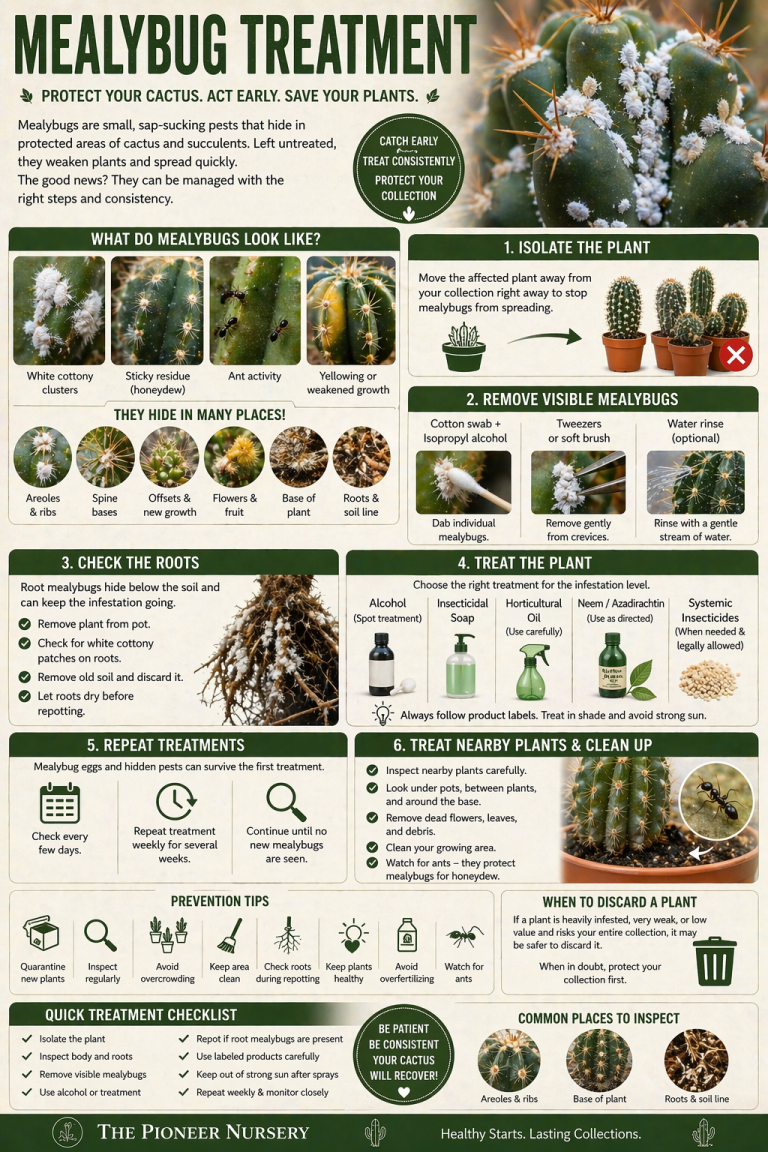
- Mealybugs: Check dense clusters and the root zone regularly.
- Stretching: Inadequate light can produce weak, less compact growth.
- Sun-scorch: Abrupt movement from shade or indoors into intense sun can damage the plant.
- Shipping damage: Dense stems and spines may be bruised, crushed, or abraded during handling.
Frequently Asked Questions
How often should I water Mammillaria elongata?
Water thoroughly during active growth, then allow the substrate to dry completely before watering again. Water much less during the cool winter rest, when the plant should remain almost dry.
Can Mammillaria elongata grow in full sun?
Yes. Bright light to full sun is appropriate, but acclimate gradually after shipping or shade to reduce sun-scorch risk. Some afternoon protection may help in very hot outdoor conditions.
Does ladyfinger cactus need a winter dormancy?
A cool, bright, nearly dry winter rest is recommended. Resume watering gradually as light, temperature, and active growth increase.
What soil should I use?
Use a porous cactus substrate with substantial mineral content, such as pumice, perlite, coarse sand, or fine grit. Avoid dense, water-retentive mixes.
How can I propagate Mammillaria elongata?
Propagate it from offsets after allowing detached offsets or cut surfaces to callus before planting. Seed propagation is also suitable, with 19–24°C given as a suitable germination temperature in the supplied guidance.
Will Mammillaria elongata flower?
Mature plants may produce a ring of small pale-yellow to whitish or pink-tinged flowers, generally in spring or around the transition from winter rest into active growth.
Mammillaria elongata is a rewarding clumping cactus when its two main needs are respected: strong light and fast-drying soil. Keep watering tied to active growth and substrate dryness, provide a cool dry winter rest, and acclimate gradually whenever the plant moves from shade or shipping into brighter conditions.