Mammillaria hahniana Care Guide: Growing Old Lady Cactus
Learn how to grow Mammillaria hahniana, including light, watering, soil, winter rest, feeding, flowering, propagation, and arrival care.
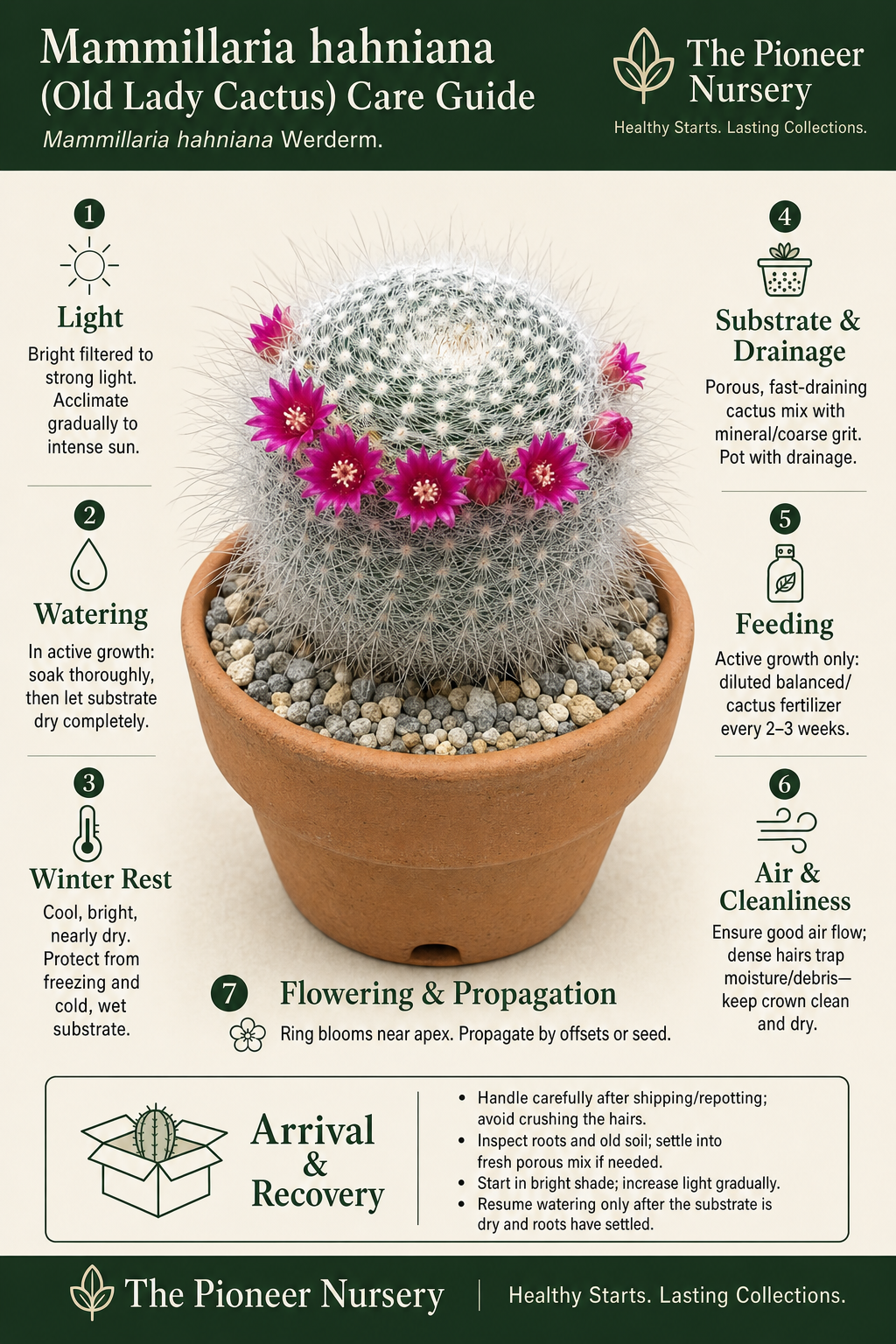
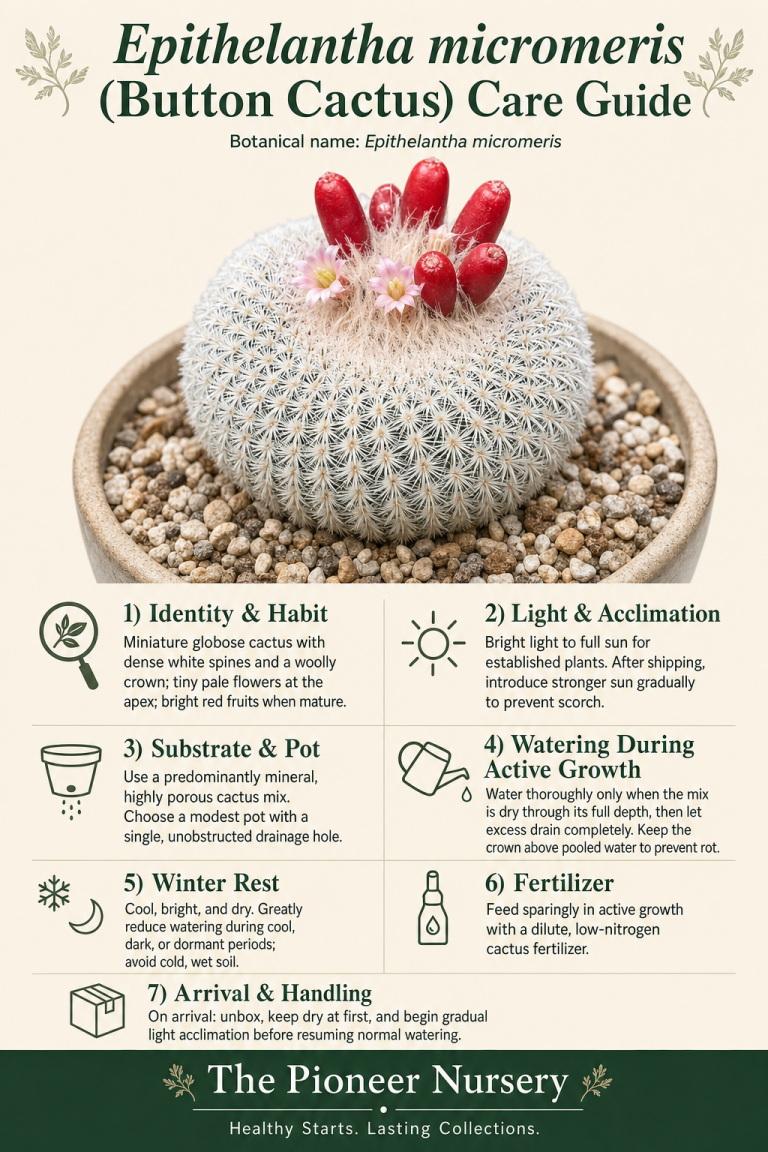
Mammillaria hahniana, commonly called old lady cactus or old lady pincushion, is recognized for its dense white hairs and bristles, with small rose-red to reddish flowers forming a ring near the apex. Its main care priorities are strong but gradually introduced light, a porous mineral-rich substrate, thorough watering followed by complete drying during active growth, and a cool, bright, nearly dry winter rest.
Quick Care Summary
- Provide bright filtered light to strong light, with gradual acclimation to intense sun.
- Use a porous, fast-draining cactus substrate with substantial mineral or coarse-grit content.
- During active growth, water thoroughly and allow the substrate to dry fully before watering again.
- Keep the plant nearly dry during its cool, bright winter rest.
- Protect it from freezing temperatures and cold, wet substrate.
- Feed every two to three weeks during active growth with diluted balanced or cactus fertilizer.
- Maintain good air circulation because the dense hairs and bristles can trap moisture and debris.
- Handle the plant carefully during repotting or shipping recovery.
About Mammillaria hahniana
Mammillaria hahniana Werderm. is an accepted botanical species. Neomammillaria hahniana is documented as a homotypic synonym, but Mammillaria hahniana remains the accepted name used here. The dense white hairs and bristles are attractive but can trap moisture and debris, so good air circulation and careful watering are important.
Light
Provide bright filtered light to strong light. Greenhouse-grown or recently shipped plants should be acclimated gradually before exposure to intense direct sun, which can cause scorch. Inadequate light may lead to weak, elongated growth and reduced flowering.
Watering
During active growth, water thoroughly enough to wet the root ball, then allow the substrate to dry fully before watering again. Reduce watering substantially during the cool winter rest and keep the plant almost dry. Avoid repeatedly wet or poorly aerated conditions, particularly when temperatures are low. Avoid prolonged overhead wetting when the air is cool or poorly ventilated.
Soil and substrate
Use a fast-draining, porous cactus substrate containing substantial mineral or coarse-grit material. Standard cactus compost is suitable. Avoid compacted or water-retentive mixes that remain wet for extended periods.
Potting and roots
Choose a container with an unobstructed drainage hole and avoid oversized pots. Handle the roots carefully. Repot only when necessary, preferably as active growth resumes. If roots are damaged or substantially disturbed, allow them to dry before resuming normal irrigation.
Temperature and winter rest
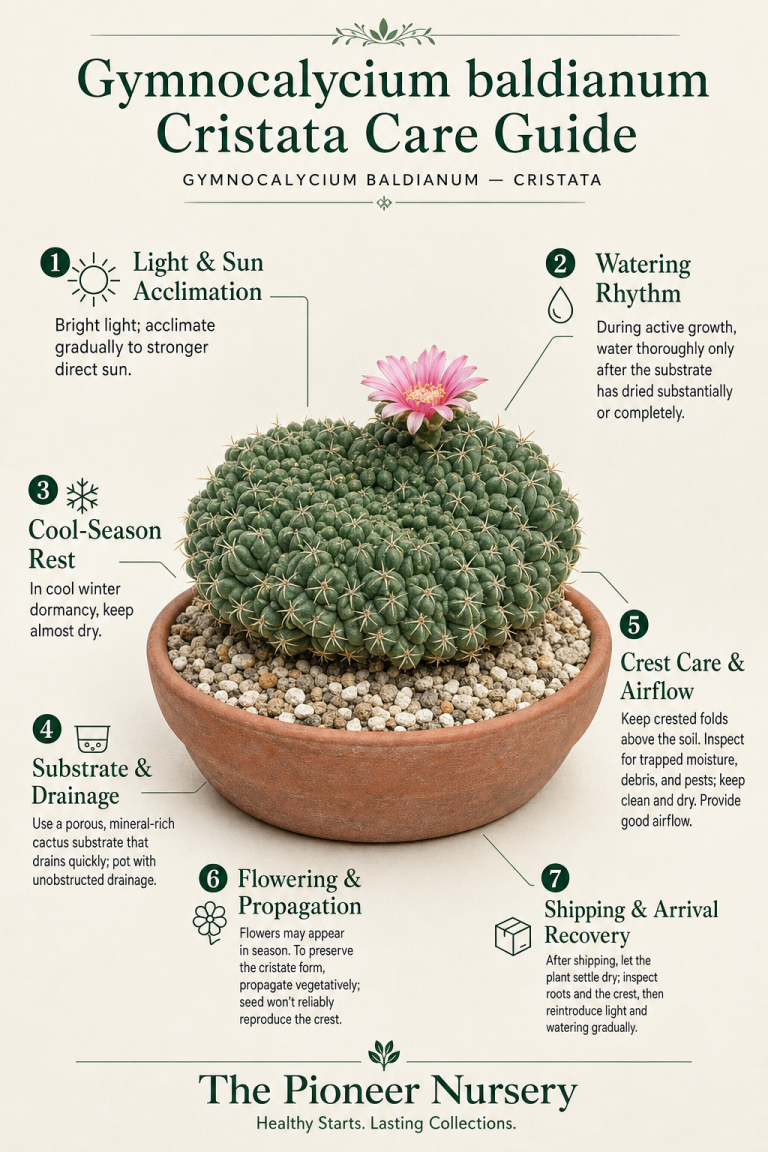
Grow Mammillaria hahniana frost-free under glass or indoors in temperate climates. It can tolerate cool conditions when kept dry, but freezing temperatures should be avoided. A cool, bright, low-water winter rest is appropriate. Keep the substrate nearly dry during the coolest part of the year and increase watering only as temperatures and growth increase. Cold combined with wet substrate greatly increases rot risk.
Fertilizer
During active growth, feed every two to three weeks with a diluted balanced liquid fertilizer or a suitable cactus fertilizer. Do not fertilize during the winter rest or while the plant is being kept dry for dormancy.
Flowering
Mature plants can produce small rose-red to reddish flowers, typically arranged in a ring near the apex. Adequate light, mature growth, and a cooler dry winter rest support flowering.
Propagation
Propagation is possible from seed or offsets when available. Seeds are traditionally sown in early spring at approximately 19–24 °C. Allow separated offsets or root-disturbed material to callus and dry before planting and watering.
Shipping and arrival care
Inspect the plant after arrival and protect its dense hairs and bristles from compression and abrasion. After bare-root shipping or major root disturbance, keep the plant dry while wounds stabilize, then reintroduce water cautiously. Acclimate it gradually to stronger light. Avoid immediate watering if the plant or roots are cold, damaged, or visibly stressed.
Common Problems
- Root or stem rot can result from excessive watering, poor drainage, or cold wet conditions.
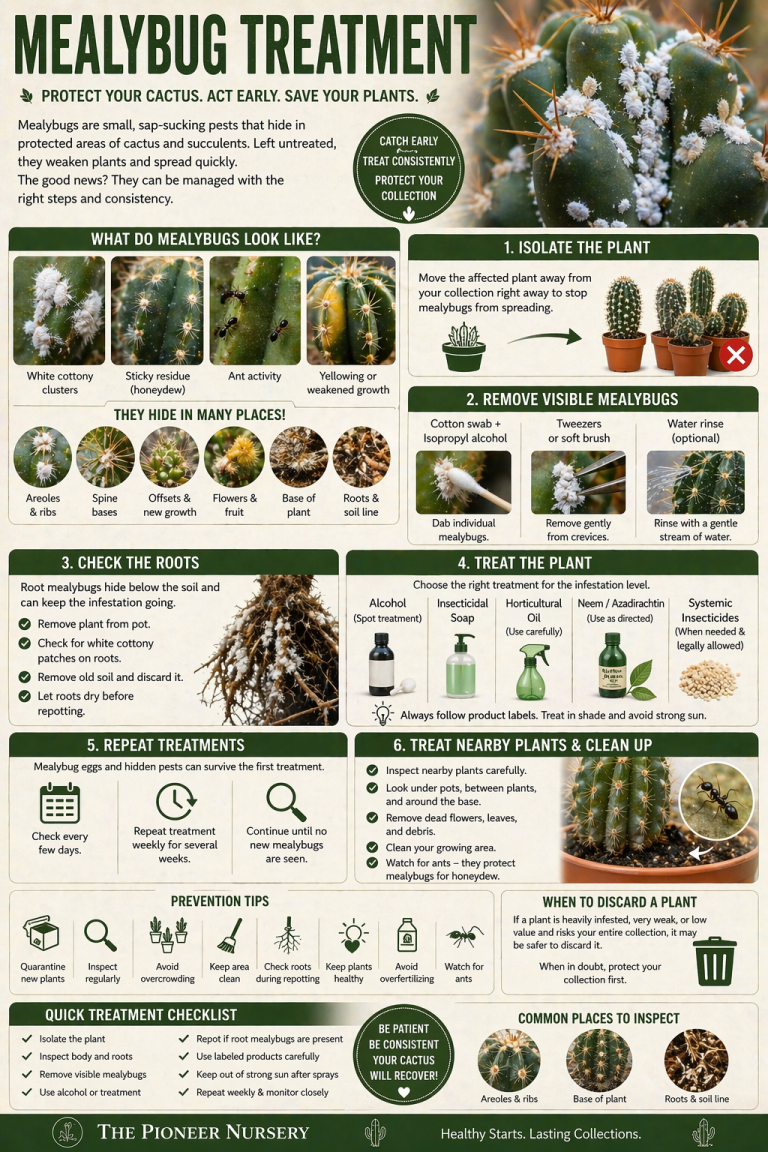
- Mealybugs may occur, especially in protected greenhouse or indoor environments.
- Sun scorch can follow an abrupt move from filtered light to intense direct sun.
- Weak, elongated growth and reduced flowering indicate inadequate light.
- Moisture or debris trapped among the dense hairs and bristles can be reduced with good air circulation and by avoiding prolonged overhead wetting in cool conditions.
Frequently Asked Questions
How often should I water Mammillaria hahniana?
During active growth, water thoroughly and then wait until the substrate has dried fully before watering again. Keep it almost dry during the cool winter rest rather than following a fixed calendar.
Can Mammillaria hahniana grow in direct sun?
It can receive strong light, but greenhouse-grown or shipped plants should be acclimated gradually before intense direct sun to reduce scorch risk.
What soil is best for old lady cactus?
Use a porous, fast-draining cactus substrate with substantial mineral or coarse-grit content, and avoid mixes that remain wet for long periods.
Why might my Mammillaria hahniana not flower?
Insufficient light can reduce flowering. Flowering is also associated with mature growth and a cooler, dry winter rest.
How should I care for a shipped plant?
Inspect it on arrival, protect the hairs and bristles from abrasion, acclimate it gradually to stronger light, and avoid immediate watering if it or its roots are cold, damaged, or visibly stressed.
Mammillaria hahniana does best when its watering follows its growth cycle: thorough moisture during active growth, complete drying between waterings, and a cool, bright, nearly dry winter rest. Combine that rhythm with strong light, excellent drainage, and careful handling to support healthy growth and flowering.