Mammillaria longimamma Care Guide
Learn how to grow Mammillaria longimamma, a long-tubercled Mexican cactus with a fleshy taproot, bright yellow flowers, and a preference for strong light, excellent drainage, and a cool, dry winter rest.
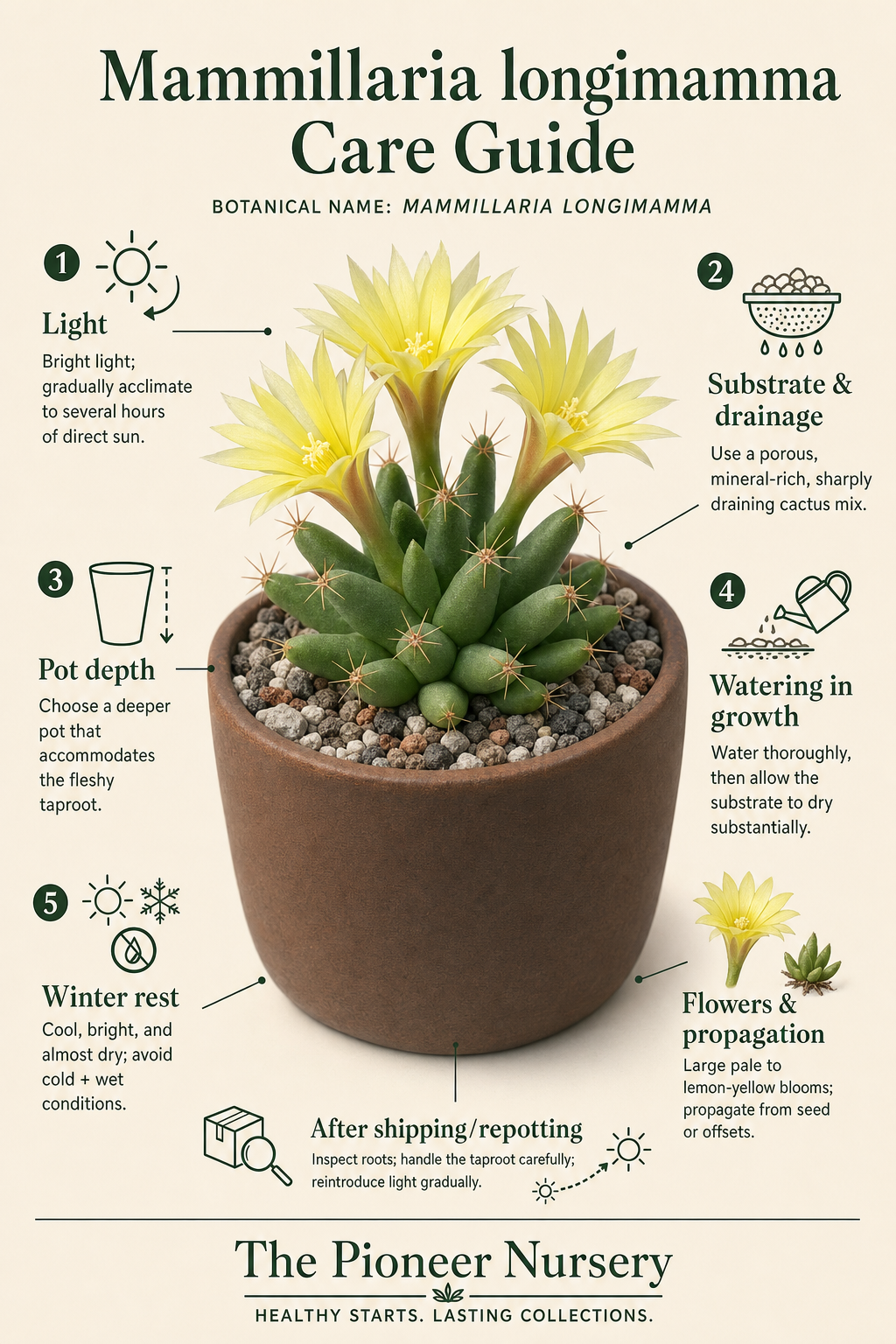
Mammillaria longimamma is a distinctive Mexican cactus known for its elongated, relatively soft tubercles and large pale to lemon-yellow flowers. It may remain solitary when young and form clumps with age. The most important care considerations are gradual acclimation to strong light, a porous mineral substrate, careful watering during active growth, and a deeper pot that accommodates its fleshy taproot. Mammillaria longimamma DC. is the accepted botanical name; historical names such as Dolichothele longimamma and Mammillaria uberiformis refer to the same cultivation identity.
Quick Care Summary
- Provide bright light with several hours of direct sun after gradual acclimation.
- Use a porous, mineral-rich, sharply draining cactus substrate.
- Choose a deeper pot that accommodates the fleshy taproot.
- Water thoroughly during active growth, then let the substrate dry substantially.
- Keep the plant nearly dry during cool winter dormancy.
- Avoid cold, wet conditions because they increase rot risk.
- Handle the taproot carefully during repotting and shipping recovery.
About the Plant
This Mammillaria has prominent elongated tubercles and a specialized fleshy root system. Its root structure makes air space, drainage, and careful repotting especially important. With maturity, plants may produce offsets and become clumping specimens.
Light
Provide bright light with several hours of direct sun once the plant is acclimated. Newly shipped or greenhouse-grown plants should be introduced to stronger sunlight gradually. In very hot climates or during intense summer afternoon exposure, light afternoon shade can help reduce scorching.
Watering
Water thoroughly during active spring and summer growth, then allow the substrate to dry substantially before watering again. Reduce watering during cool winter dormancy and keep the plant nearly dry when temperatures are low. Prolonged wetness is especially risky because of the fleshy root system.
Soil and Substrate
Use a porous, sharply draining cactus mix with a substantial mineral component and plenty of air space. Avoid dense, water-retentive substrates. Avoid sharp-edged particles that could damage the fleshy root.
Potting and Roots
Choose a pot deeper than a shallow dish so it can accommodate the relatively large fleshy taproot, while keeping the pot appropriately sized for the root system. Drainage holes are essential. Handle the root carefully during repotting. If roots are damaged, remove damaged material if necessary and keep the plant dry until injuries have dried and callused before resuming normal watering.
Temperature and Winter Rest
Grow the plant warm during active growth and provide a cool, bright, dry winter rest. General Mammillaria guidance places winter rest around 45–55°F (7–13°C). Avoid combining cold conditions with wet soil. Reports of brief light-frost exposure should not be treated as a recommendation for prolonged freezing or wet conditions.
Seasonal Growth and Dormancy
A cool, dry winter rest may support spring flowering. As temperatures and light increase and active growth begins, resume watering gradually rather than moving immediately to a heavy watering routine.
Fertilizer
During active growth, use a dilute, low-nitrogen cactus fertilizer occasionally instead of frequent heavy feeding. A diluted high-potassium fertilizer has been reported for plants in bud, but use this conservatively and only when the plant is actively growing and well rooted.
Flowering
Mammillaria longimamma produces large pale to lemon-yellow flowers reported to reach approximately 6 cm across. Flowers may be sweetly or citrus scented. Strong light, mature growth, adequate active-season watering, and a cool, dry winter rest can favor flowering.
Propagation
Propagation is primarily from seed or offsets. Older plants may form clumps. Detached tubercles are also described as a propagation method; allow detached material to dry and callus before planting it in a porous medium.
Shipping and Arrival Care
Inspect the plant after arrival, paying particular attention to the fleshy root. Keep shipped plants dry, especially in cool weather or after bare-root transport. Pot into a well-drained substrate and begin in bright indirect light, then acclimate gradually to stronger sun. If roots were disturbed or damaged, delay watering until the wounds have dried and callused.
Common Problems
Root or stem rot: Usually associated with dense substrate, poor drainage, prolonged wetness, or watering during cool conditions.
Sunburn: Can occur when a plant is moved abruptly from shade or greenhouse conditions into strong direct sun.
Root damage: The fleshy taproot can be injured during repotting, so handle it carefully and allow injuries to callus before watering.
Spider mites and other cactus pests: These may become more problematic in hot, dry, stagnant conditions; inspect the plant regularly.
Frequently Asked Questions
How often should I water Mammillaria longimamma?
Water thoroughly during active spring and summer growth, then allow the substrate to dry substantially before watering again. Water less during cool winter dormancy and keep the plant nearly dry when temperatures are low.
Does Mammillaria longimamma need direct sun?
It benefits from bright light and several hours of direct sun once acclimated. Introduce newly shipped or greenhouse-grown plants gradually, using light afternoon shade during very intense summer exposure if needed.
What kind of pot does this cactus need?
Use a pot deeper than a shallow dish to accommodate its relatively large fleshy taproot. The pot should remain appropriately sized for the root system and must have drainage holes.
How can I encourage flowering?
Strong light, mature growth, adequate active-season watering, and a cool, dry winter rest can support flowering. The flowers are pale to lemon-yellow and may be sweetly or citrus scented.
Should I water immediately after repotting or shipping?
Not if the roots were disturbed or damaged. Keep the plant dry until injuries have dried and callused, then resume watering carefully in suitable active-growth conditions.
Can Mammillaria longimamma be propagated from offsets?
Yes. It can be propagated from seed or offsets, and older plants may form clumps. Detached tubercles are also described; allow them to dry and callus before planting in porous medium.
Mammillaria longimamma rewards careful growers with unusual long tubercles and striking yellow flowers. Give its fleshy taproot room, keep the substrate porous and well drained, provide strong acclimated light, and maintain a cool, dry winter rest for a sound foundation for growth and flowering.