Mammillaria huitzilopochtli Care Guide
Learn how to grow Mammillaria huitzilopochtli, a cliff-dwelling Mexican cactus that needs intense light, fast drainage, careful watering, and a cool, dry winter rest.
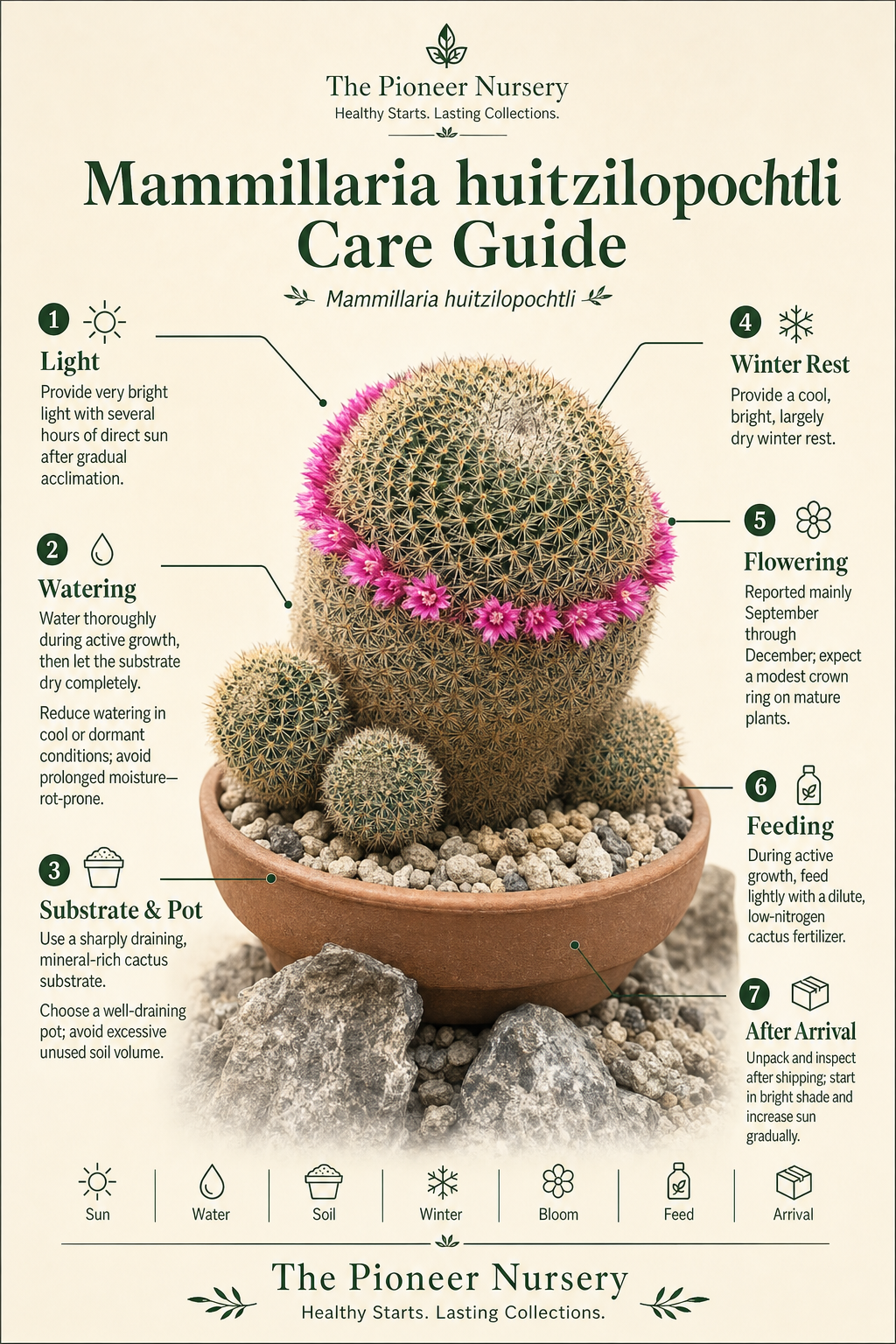
Mammillaria huitzilopochtli is a small, cliff-dwelling cactus endemic to Oaxaca, Mexico, where it grows in semiarid rupicolous habitats. In cultivation, its most important needs are very bright light, a sharply draining mineral-rich substrate, thorough watering only during active growth, and a largely dry winter rest. Because it is prone to rot, prolonged moisture is a greater risk than moderate dryness.
Quick Care Summary
- Provide very bright light with several hours of direct sun after gradual acclimation.
- Use a sharply draining, mineral-rich cactus substrate.
- Water thoroughly during active growth, then let the substrate dry completely.
- Keep watering reduced during cool or dormant conditions.
- Avoid prolonged moisture because the plant is prone to rot.
- Use a well-draining pot without excessive unused soil volume.
- Provide a cool, bright, largely dry winter rest.
- Feed lightly with a dilute, low-nitrogen cactus fertilizer during active growth.
About the Plant
Mammillaria huitzilopochtli is also known as the Biznaga del dios sol y guerra or Huitzilopochtli biznaga. It is associated with vertical cliff habitats in the Tehuacán-Cuicatlán region. Plants sold at species level may not be identifiable to one of the two recognized subspecies without provenance or morphological confirmation. Conservation-sensitive sourcing and legally propagated material are recommended.
Light
Provide very bright light with several hours of direct sun once the plant is acclimated. Outdoor plants may do well in full sun or with afternoon shade, especially in very hot climates. After shipping or a period in shade, increase light gradually to reduce the risk of sunburn. Insufficient light can cause weak, elongated growth.
Watering
During active growth, water thoroughly and then allow the substrate to dry completely before watering again. Reduce watering in cool or dormant conditions. The plant’s cliff habitat suggests rapid drainage and brief wetting rather than persistently damp roots. Avoid prolonged moisture, particularly when temperatures are cool, because this species is prone to rot.
Soil and Substrate
Use a very porous, sharply draining cactus mix with substantial mineral content. Suitable components include pumice, lava rock, coarse sand, or similar inert aggregate, combined with a limited amount of organic material. The finished substrate should dry rapidly and remain well aerated.
Potting and Roots
Choose a container with an unobstructed drainage hole and avoid oversized pots that hold moisture. The available habitat evidence does not indicate a notably enlarged taproot, so an unusually deep pot is not specifically needed. Handle roots carefully during repotting. If roots are damaged, allow the wounds to dry and callus before watering.
Temperature and Winter Rest
Keep the plant warm during active growth. Specialist cultivation references report tolerance near -5 °C when completely dry, but this should not be treated as a general outdoor recommendation. Protect the plant from freezing conditions combined with wet soil, which greatly increases rot risk. During winter, provide a cool, bright, largely dry rest, then resume watering cautiously as temperatures and daylight increase and active growth becomes evident.
Fertilizer
Feed only during active growth, using a dilute, low-nitrogen cactus fertilizer. Specialist cultivation literature reports the use of a higher-potassium formulation. Avoid heavy feeding and excessive nitrogen, which can produce weak, overly lush growth.
Flowering
Flowering has been reported mainly from September through December in habitat and under cultivation. The flowers are diurnal and may remain open for several days. Good light, mature growth, and a distinct dry rest may support flowering.
Propagation
Seed is the primary propagation method. Use a well-drained, mineral-leaning medium, warmth, and controlled moisture during germination, followed by careful ventilation. Specialist cultivation references also report offsets and division in some cultivated plants, although scientific literature emphasizes sexual reproduction and does not establish vegetative propagation as a dependable natural strategy.
Common Problems
Root or stem rot usually results from wet, poorly aerated substrate, especially during cool weather or dormancy. Sunburn can occur after abrupt exposure to intense direct light following shipping or indoor cultivation. Insufficient light may cause etiolation and weak growth. Monitor sheltered greenhouse plants for mealybugs or scale. Excessive organic matter or fertilizer can produce soft growth and increase disease susceptibility.
Shipping and Arrival Care
Inspect the plant after arrival for damage or rot. Provide bright indirect light initially, then acclimate gradually to direct sun. Keep the plant as dry as practical during shipping and recovery. If roots were disturbed or the plant arrived bare-root, allow wounds to dry before potting and delay watering until recovery has begun; the appropriate timing depends on root condition, temperature, and substrate dryness.
Frequently Asked Questions
How often should I water Mammillaria huitzilopochtli?
Do not use a fixed calendar. During active growth, water thoroughly and wait until the substrate has dried completely before watering again. Use much less water during cool or dormant conditions.
Can Mammillaria huitzilopochtli grow in full sun?
It may perform well in full sun once acclimated, although afternoon shade can be helpful in very hot climates. Increase light gradually after shipping or shade to prevent sunburn.
Does this cactus need a deep pot?
An unusually deep pot is not specifically indicated by the available habitat evidence. Use a container with excellent drainage and avoid oversized pots that retain moisture.
How should I care for it in winter?
Keep it cool, bright, and largely dry. Resume watering cautiously as temperatures and daylight increase and active growth becomes evident. Avoid freezing conditions while the soil is wet.
Can Mammillaria huitzilopochtli be propagated from offsets?
Seed is the primary propagation method. Offsets and division have been reported in some cultivated plants, but vegetative propagation is not established as a dependable natural strategy.
When might it flower?
Flowering has been reported mainly from September through December. Good light, mature growth, and a distinct dry rest may support flowering.
Mammillaria huitzilopochtli rewards growers who reproduce the fast-draining conditions of its cliff habitat. Give it strong light, let the substrate dry fully between active-season waterings, and keep it substantially drier during cool periods. Careful acclimation and conservative watering are the best safeguards against sunburn and rot.