Ariocarpus lloydii Care Guide: Growing the Living Rock Cactus
Learn how to grow Ariocarpus lloydii, a very slow-growing living rock cactus that needs bright light, a deep mineral substrate, careful seasonal watering, and excellent drainage.
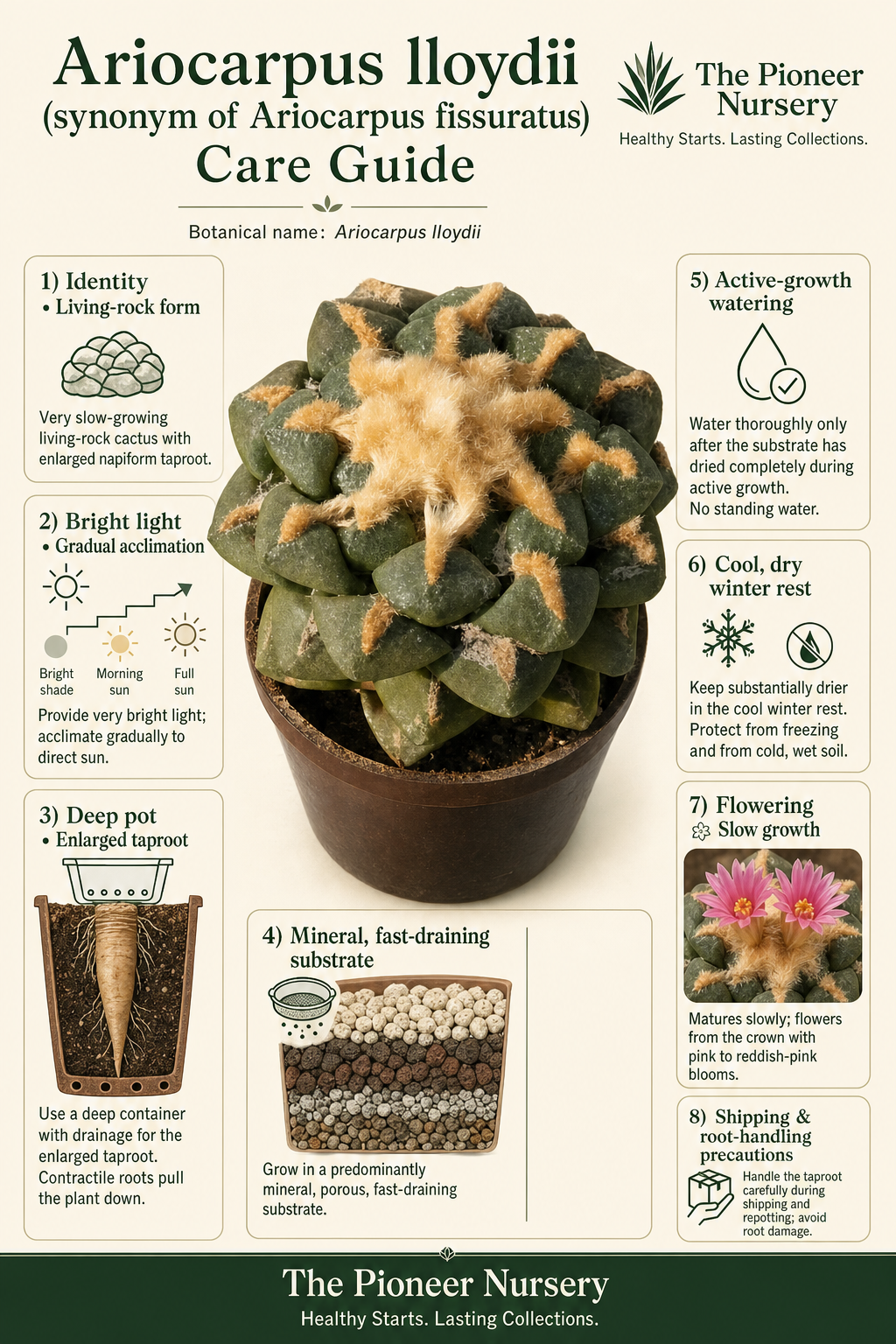
Ariocarpus lloydii is a documented synonym and historical horticultural name for Ariocarpus fissuratus, commonly called the living rock cactus or star cactus. This exceptionally slow-growing plant develops an enlarged, carrot-like taproot and contractile roots, making deep potting, careful handling, and rapid drainage especially important. Provide very bright light, water only during active growth after the substrate dries completely, and keep the plant substantially drier during its winter rest.
Quick Care Summary
- Provide very bright light and acclimate gradually to direct sun.
- Use a deep pot with drainage holes for the enlarged taproot.
- Grow in a predominantly mineral, porous, fast-draining substrate.
- Water thoroughly only after the substrate has dried completely during active growth.
- Keep substantially drier during the cool winter rest.
- Protect the plant from freezing temperatures and cold, wet soil.
- Handle the taproot carefully during shipping and repotting.
About Ariocarpus lloydii
This living rock cactus is adapted to rocky, limestone-associated conditions and grows very slowly. Its enlarged root system and contractile roots can gradually draw it deeper into the substrate or make it appear flatter during dry conditions. Ariocarpus lloydii is treated by Plants of the World Online as a synonym of Ariocarpus fissuratus; the submitted name remains a useful documented horticultural identity.
Light
Provide very bright light with several hours of direct sun when climate and greenhouse conditions permit. Acclimate gradually after shipping, repotting, or a period in shade. Abrupt exposure to strong sunlight can cause scorch, so begin with bright filtered light and increase direct exposure over time.
Watering
Water thoroughly only when the substrate has dried completely and the plant is actively growing. Let excess water drain freely and never leave the pot standing in water. Because the enlarged root is vulnerable to rot, avoid frequent watering schedules. During winter dormancy, reduce or withhold water according to temperature, light, and growing conditions, and resume cautiously when active growth is evident.
Soil and substrate
Use a predominantly mineral cactus substrate that is very porous, fast draining, and well aerated. A modest limestone or other calcareous mineral component is appropriate for this limestone-associated cactus. Avoid compacted organic mixes and any substrate that stays wet for extended periods.
Potting and roots
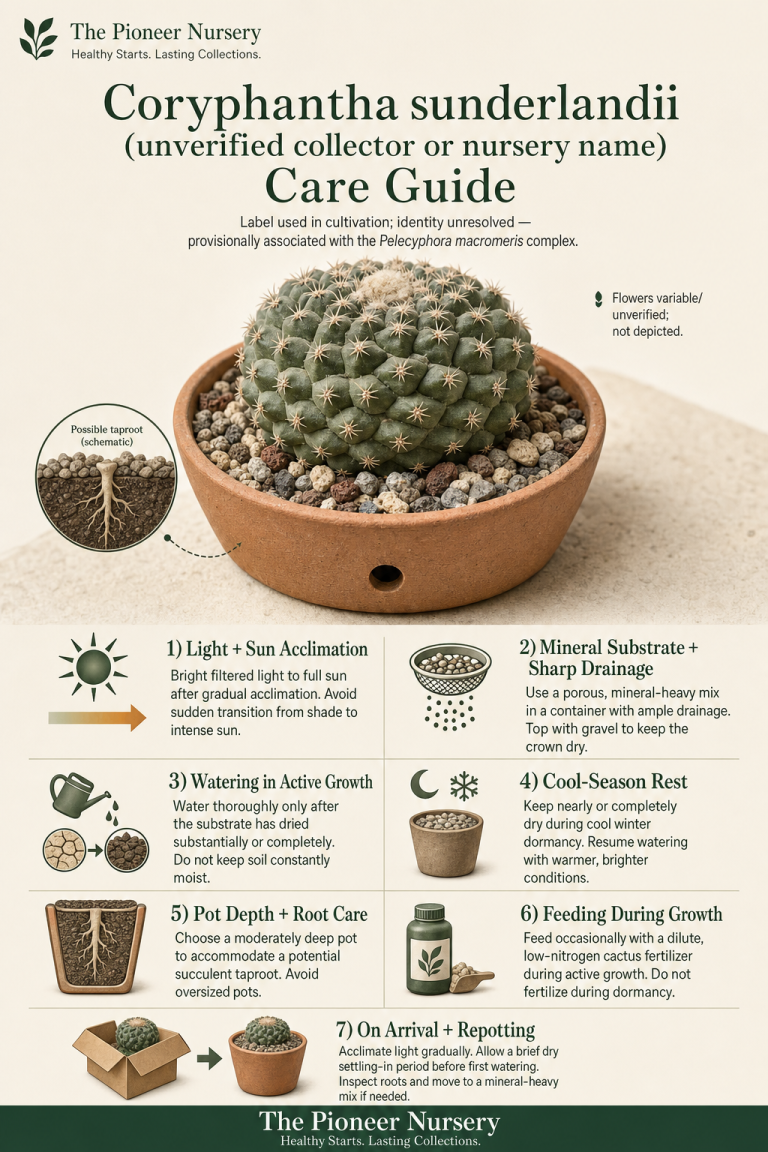
Choose a deep container with drainage holes so the large napiform, or carrot-like, taproot has room to develop. Handle the taproot and fine roots carefully during repotting. After major root disturbance, allow damaged roots to dry and avoid immediate heavy watering; reintroduce moisture gradually once the roots have recovered.
Temperature and seasonal rest
Grow the plant warm during its active season. Protect it from freezing temperatures, especially when the plant or substrate is wet. Cool, dry winter conditions are preferable to cold, damp conditions. A pronounced dry seasonal rest, particularly in winter cultivation, is normal.
Fertilizer
Feed sparingly during active growth with a dilute, low-nitrogen cactus fertilizer. Avoid heavy feeding, especially in rich organic soil. This is an extremely slow-growing cactus adapted to nutrient-poor mineral conditions.
Flowering
Mature plants produce showy pink to reddish-pink flowers, generally from late summer through autumn. Flowering may take many years from seed because the plant grows very slowly.
Propagation
Ariocarpus lloydii is primarily propagated from seed. Grafting may be used to accelerate growth or preserve selected plants, but grafting is a horticultural technique and does not define the plant's botanical identity. Use nursery-propagated and legally sourced material, since the plant is conservation-sensitive across parts of its range.
Shipping and arrival care
This root-sensitive cactus may recover slowly after shipping, especially when bare-root or when its taproot has been disturbed. Provide bright but filtered light initially, then acclimate gradually to stronger sun. If roots were disturbed or damaged, keep them dry until wounds have callused and reintroduce water gradually. Recovery can be slow, so avoid treating delayed growth as an immediate sign of decline.
Common Problems
- Root or taproot rot: Usually associated with poorly draining soil, overwatering, or cold, wet conditions.
- Root damage and delayed recovery: Rough shipping or repotting can injure the sensitive root system.
- Sun scorch: Abrupt exposure to strong direct light can damage previously shaded plants.
- Mistaken decline: Very slow growth and seasonal dormancy can appear inactive without indicating a problem.
Frequently Asked Questions
How often should I water Ariocarpus lloydii?
Do not use a fixed calendar. Water thoroughly only when the substrate has dried completely and the plant is actively growing. Keep it substantially drier during winter dormancy.
Does Ariocarpus lloydii need direct sun?
It needs very bright light and can receive several hours of direct sun when conditions permit. Acclimate gradually after shipping, repotting, or shade to reduce scorch.
Why does this cactus need a deep pot?
Its enlarged, carrot-like taproot needs vertical room. Use a deep container with drainage holes and avoid compacted mixes.
Why is my Ariocarpus growing so slowly?
This is an extremely slow-growing cactus, and seasonal dormancy can make it appear inactive. Slow growth alone is not necessarily a sign of decline.
Can Ariocarpus lloydii be grafted?
Yes. Grafting may accelerate growth or help preserve selected plants, but it is a horticultural method rather than a taxonomic distinction.
Ariocarpus lloydii rewards patience and careful moisture management. Give its taproot room, use a highly mineral substrate, provide strong light gradually, and let the plant follow its natural dry seasonal rhythm. With time, mature plants can produce distinctive pink to reddish-pink flowers.