Pachypodium Care Guide
Learn how to grow Pachypodiums with bright light, sharply draining soil, careful seasonal watering, and protection from cold and wet conditions. Because the genus includes very different forms, species-specific needs matter.
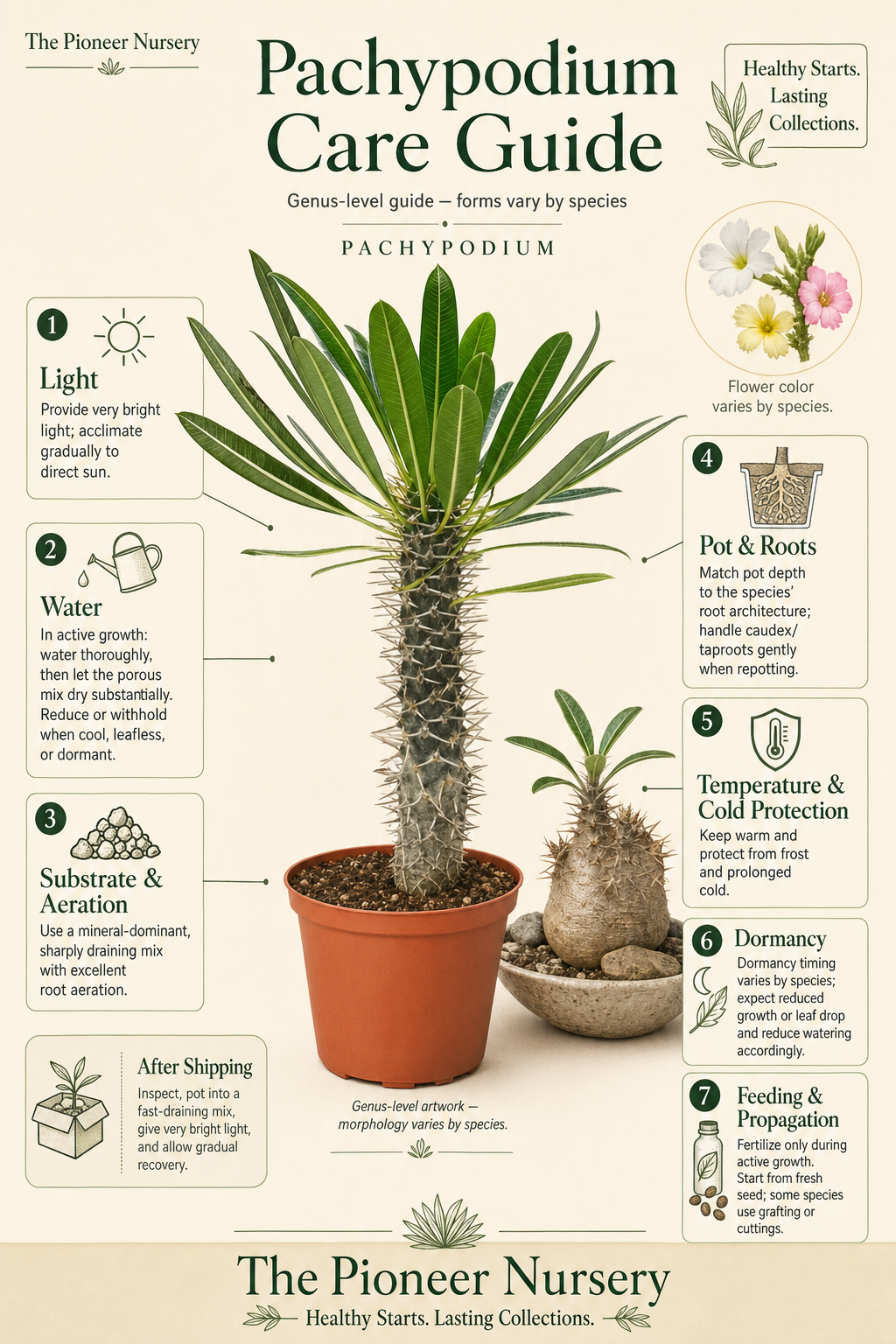
Pachypodium is an accepted genus in the Apocynaceae family that includes tree-like, shrubby, geophytic, tuberous, and dwarf lithophytic plants. Many develop swollen trunks, stems, or underground caudexes and carry spines, but their care is not identical. Across the genus, prioritize very bright light, porous drainage, warm conditions, and substantially reduced watering during cool or dormant periods. Always account for species-level differences in growth season, root structure, cold tolerance, size, and difficulty.
Quick Care Summary
- Provide very bright light, usually full sun after gradual acclimation.
- Water thoroughly during active growth, then let the porous substrate dry substantially.
- Reduce or withhold water during cool, leafless, or dormant periods.
- Use a mineral-dominant, sharply draining mix with good root aeration.
- Keep plants warm and protect them from frost and prolonged cold.
- Match pot depth to the species' root architecture, especially for tuberous forms.
- Fertilize only during active growth and avoid feeding stressed or recently repotted plants.
- Treat species-specific growth seasons, cold tolerance, and difficulty as meaningful differences.
About Pachypodium
Pachypodiums range from vigorous tree-like plants to slow-growing dwarf and rock-dwelling forms. Their swollen stems or caudexes store water, but that does not mean the substrate should remain constantly dry during active growth or constantly wet during dormancy. Species such as Pachypodium lamerei should not be used as a care model for more sensitive or slower-growing species such as P. brevicaule or P. namaquanum.
Light
Provide very bright light, generally full sun once the plant is acclimated. Strong light supports compact growth, healthy caudex development, and flowering. Introduce plants gradually to intense sun after shaded shipping or greenhouse conditions to reduce sunburn. Some species tolerate partial shade, but reduced light can weaken growth and discourage flowering.
Watering
During active growth, water thoroughly, then allow the porous substrate to dry substantially before watering again. Do not follow a fixed calendar; adjust watering for species, temperature, light, pot size, substrate, and ventilation. Reduce or withhold water during cool, leafless, or otherwise dormant periods. Cold conditions combined with wet soil greatly increase rot risk. Larger tree-like forms may use considerably more water in active growth than dwarf or difficult species.
Soil and substrate
Use a porous, sharply draining substrate with abundant air space and little tendency to remain saturated. A mineral-dominant cactus or succulent mix amended with pumice, perlite, coarse sand, or similar drainage material is appropriate. Although species occupy different habitats, rapid drainage and good root aeration are the common requirements.
Potting and roots
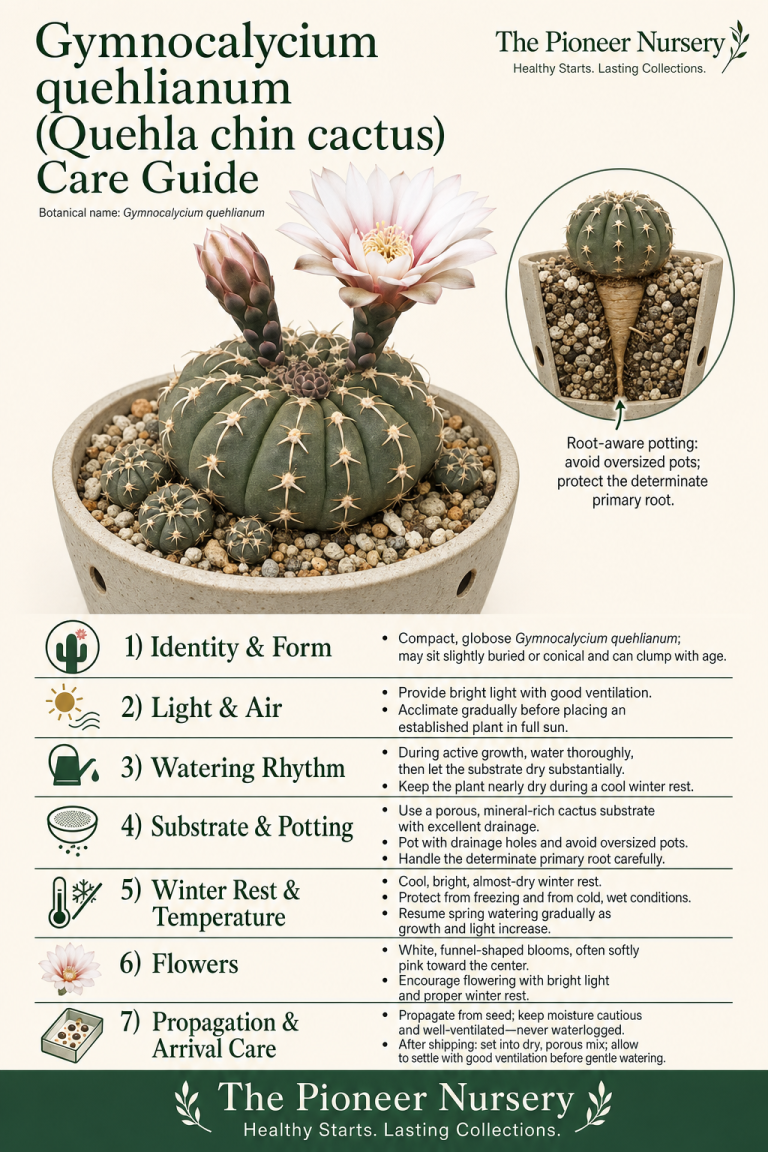
Use a container with drainage holes. Match pot depth to the plant's root architecture: ordinary containers suit many species, while tuberous or taprooted forms benefit from adequate depth without compressing or bending their specialized roots. Handle fleshy roots carefully because they can be brittle. After major root disturbance, remove damaged tissue cleanly, allow wounds to dry and heal, and delay heavy watering until recovery has begun.
Temperature and seasonal growth
Keep Pachypodiums warm and protect them from frost and prolonged cold, especially when the substrate is wet. Cold tolerance varies considerably. Pachypodium bispinosum and P. succulentum are reported to tolerate sub-zero conditions in their native habitats, but this should not be generalized to container-grown Pachypodiums. Sensitive species such as P. brevicaule require especially careful protection from cold and damp conditions. Dormancy also varies: many plants become partially or fully leafless during a cool or dry season and should then be kept much drier. In warm, bright conditions above approximately 60°F (16°C), some may continue growing. P. namaquanum is a notable exception with a different reported seasonal rhythm.
Fertilizer
Fertilize only during active growth. Use a dilute, balanced fertilizer or one formulated for cacti and succulents. Do not feed dry, dormant, recently repotted, or root-damaged plants. Excessive fertility can produce weak, overly soft growth and cannot compensate for insufficient light or poor drainage.
Flowering
Many Pachypodium species produce conspicuous terminal flowers, but color, season, size, and flowering age vary widely. Flowers may be white, pink, purple, yellow, or combinations of these colors. Strong light, adequate warmth, a pronounced active-growth period, and mature plant size generally support flowering. These traits should be evaluated at the species level rather than treated as universal genus characteristics.
Propagation
Fresh seed is the primary propagation method. Seeds lose viability relatively quickly and generally need warmth, moisture, and humidity for germination; approximately 27–35°C (81–95°F) is reported for rapid germination. Seed production may require pollen from two genetically distinct plants because Apocynaceae are often self-incompatible. Stem or root cuttings can work for some species, particularly P. bispinosum and P. succulentum, but are not reliable across the genus. Grafting is a legitimate technique for difficult or slow-growing species and is often performed using P. lamerei as stock, but it is species- and grower-dependent.
Shipping and arrival care
Inspect the plant after arrival for bruising, breakage, soft tissue, discoloration, and root damage. Spines can injure neighboring plants or packaging, while swollen stems and fleshy roots are vulnerable during transit. Protect the plant from cold, prolonged darkness, and moisture. If it arrived bare-root or with disturbed roots, allow damaged areas to heal before heavy watering and acclimate it gradually to brighter light. Recovery needs vary with the plant's species and condition.
Common problems and safety
Root or stem rot is associated with wet substrate, poor drainage, low ventilation, or cold conditions. Sunburn can follow an abrupt move from shade or shipping conditions into intense light. Spider mites may affect stressed plants or those kept in dry indoor environments. Insufficient light or excessive moisture can produce soft growth and poor flowering. Repotting can damage brittle fleshy roots, and cold exposure may cause slow recovery or loss in sensitive species. Pachypodiums are associated with poisonous compounds; do not ingest sap and handle the plant carefully. Source plants responsibly because several species have conservation concerns and CITES restrictions.
Frequently Asked Questions
How often should I water a Pachypodium?
There is no reliable genus-wide calendar. During active growth, water thoroughly and allow the porous substrate to dry substantially before watering again. Water less or not at all during cool, leafless, or dormant periods, with adjustments for species and growing conditions.
Does every Pachypodium need full sun?
Very bright light is the general goal, and many can take full sun once acclimated. Some species tolerate partial shade, but lower light may weaken growth and reduce flowering. Acclimate plants gradually after shipping or shade.
Should I water a leafless Pachypodium?
Many species become leafless during dormancy and should then be kept much drier. Dormancy varies, however, and some plants continue growing in warm, bright conditions.
What kind of pot does Pachypodium need?
Use a container with drainage holes. Pot depth should match the plant's root structure; tuberous or taprooted forms need enough depth to accommodate fleshy roots without bending or compression.
Can Pachypodiums be grown from cuttings?
Cuttings work for some species, especially P. bispinosum and P. succulentum, but this method is not reliable across the genus. Fresh seed is the primary propagation method, while grafting may help with certain difficult or slow-growing species.
Why is my Pachypodium not flowering?
Insufficient light, excessive moisture, inadequate warmth, or an immature plant may limit flowering. Species also differ substantially in flowering season, color, and flowering age.
Pachypodium care becomes much easier when bright light, fast drainage, warm conditions, and seasonal watering are treated as a coordinated system. Because this genus includes such diverse plants, identify the species whenever possible and adjust care for its growth rhythm, root structure, and cold sensitivity.