Astrophytum asterias Fukuryu Care Guide
Learn how to grow Astrophytum asterias ‘Fukuryu’, including light, careful watering, mineral soil, root care, winter dormancy, flowering, and shipping recovery.
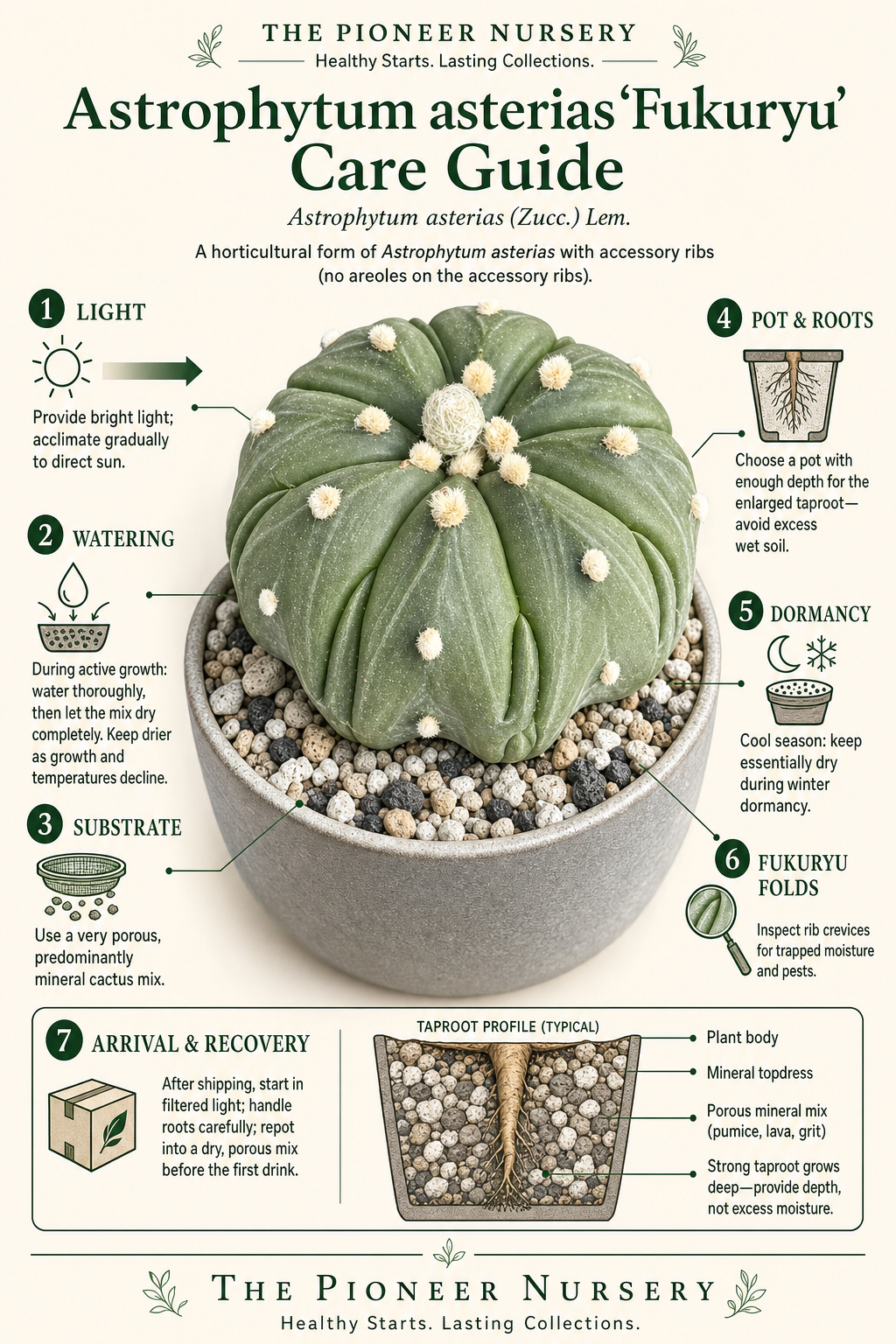
Astrophytum asterias ‘Fukuryu’ is a slow-growing, root-sensitive cactus known for its star-like form and additional partial ribs or rib-like projections that lack areoles. Fukuryu is a horticultural or collector designation, not a separate species, and individual plants may vary in the prominence of these accessory ribs. Successful care centers on bright light, excellent drainage, cautious watering, and a cool, dry winter rest.
Quick Care Summary
- Provide bright light with gradual acclimation to direct sun.
- Use a predominantly mineral, very porous cactus substrate.
- Water thoroughly during active growth, then let the substrate dry completely.
- Keep substantially drier as growth and temperatures decline.
- Maintain the plant essentially dry during cool winter dormancy.
- Use a pot deep enough for the enlarged taproot without excess wet soil.
- Check Fukuryu rib folds for overlooked moisture or pests.
About the plant
Astrophytum asterias is also called sand dollar cactus, star cactus, or sea urchin cactus. The Fukuryu form develops accessory or partial ribs between the true ribs, creating extra folds and crevices. It is a slow-growing cactus with a somewhat tuberous or enlarged taproot, so drainage and careful root handling are especially important. Nursery-propagated plants are preferred, and wild collection should be avoided because the species has a restricted range and conservation concern.
Light
Provide bright light with several hours of direct sun when possible. Partial shade is suitable in very hot climates or behind glass. Acclimate gradually after shipping or whenever moving the plant from shade into stronger sun, since abrupt exposure can cause sunburn. Persistently low light may result in weak, elongated growth.
Watering
Water thoroughly during active growth, then allow the substrate to dry completely before watering again. Do not follow a fixed calendar; consider substrate dryness, temperature, light, and visible growth. Use a restrained approach because this species is susceptible to root rot. As temperatures and growth decline, reduce watering, keeping the plant essentially dry during cool winter dormancy.
Soil and substrate
Use a very porous, fast-draining, predominantly mineral cactus mix with excellent root aeration. Pumice, coarse grit, lava, or similar mineral materials are appropriate. A modest amount of organic material is acceptable, but the finished mix should not remain wet after irrigation.
Potting and roots
Choose a stable pot with enough depth for the somewhat tuberous taproot, but avoid an oversized container that stays wet too long. Repot at the beginning of active growth when necessary. Handle roots carefully. If roots are damaged, allow them to dry and callus, then delay watering after major disturbance until recovery has begun.
Temperature and winter dormancy
Keep the plant warm during active growth and protect it from frost. Cool, dry winter conditions around 41–59°F (5–15°C) are suitable for dormancy when the plant is fully dry. Cold combined with wet substrate is a significant rot risk. Provide good ventilation during the cool, low-light period and resume watering gradually as warmth, light, and visible growth return.
Fertilizer
During active growth, apply a dilute, low-nitrogen cactus fertilizer sparingly. Fertilize only when the plant is actively growing and the substrate is already appropriately moist. Do not fertilize a dormant, stressed, recently repotted, or root-damaged plant.
Flowering
Mature plants produce daytime yellow flowers, typically with reddish coloration toward the center. Strong light, a pronounced dry winter rest, and healthy growth during the active season support flowering. Astrophytum species generally flower during the warmer growing season.
Propagation
Propagation is primarily by seed. Grafting is also used for slow-growing, valuable, or difficult-to-establish forms, but it is not required for ordinary cultivation. Seed-grown plants may not reproduce the exact Fukuryu appearance unless parentage and selection are controlled.
Shipping and arrival care
Inspect the plant after arrival for damage, especially if it was shipped bare-root. Protect it from crushing and prolonged cold or wet transit. After bare-root shipping, allow injured roots to dry before potting and avoid immediate heavy watering. Provide bright but filtered light initially, then acclimate gradually to direct sun. Keep the plant dry while it recovers from significant root disturbance.
Common Problems
- Root rot: commonly linked to dense substrate, poor drainage, overwatering, or cold wet conditions.
- Sunburn: may follow abrupt exposure to strong direct sun after shipping or shade.
- Etiolation: weak, elongated growth indicates inadequate light.
- Mealybugs or other pests: inspect woolly areoles, rib folds, and Fukuryu crevices.
- Scarring or collapse: may follow prolonged cold and wet conditions or severe root damage.
Frequently Asked Questions
How often should I water Astrophytum asterias ‘Fukuryu’?
Do not use a fixed schedule. During active growth, water thoroughly and wait until the substrate has dried completely before watering again. Reduce watering as growth and temperatures decline, and keep the plant essentially dry during cool winter dormancy.
Does Fukuryu need different care from regular Astrophytum asterias?
Its species-level cultivation requirements are essentially the same. The additional partial ribs create extra crevices, so inspect carefully for trapped moisture and concealed pests.
Can this cactus take direct sun?
Yes, bright light and several hours of direct sun are suitable when possible. Acclimate gradually after shipping or a move from shade to reduce sunburn risk.
What type of pot does it need?
Use a stable container with adequate depth for its somewhat tuberous taproot, but avoid an oversized pot that retains moisture for too long.
How is the Fukuryu form propagated?
Propagation is primarily by seed, while grafting is also used for some slow-growing or difficult forms. Seed-grown plants may not reproduce the exact Fukuryu appearance unless parentage and selection are controlled.
Astrophytum asterias ‘Fukuryu’ rewards a conservative routine: strong light, fast drainage, thorough drying between active-season waterings, and a genuinely dry winter rest. Give the root system time to recover after shipping or repotting, and pay special attention to the additional rib folds where moisture or pests can hide.