Adenium somalense Care Guide | Adenium obesum
Learn Adenium somalense care, including bright light, fast drainage, seasonal watering, caudex care, dormancy, flowering, and shipping recovery.
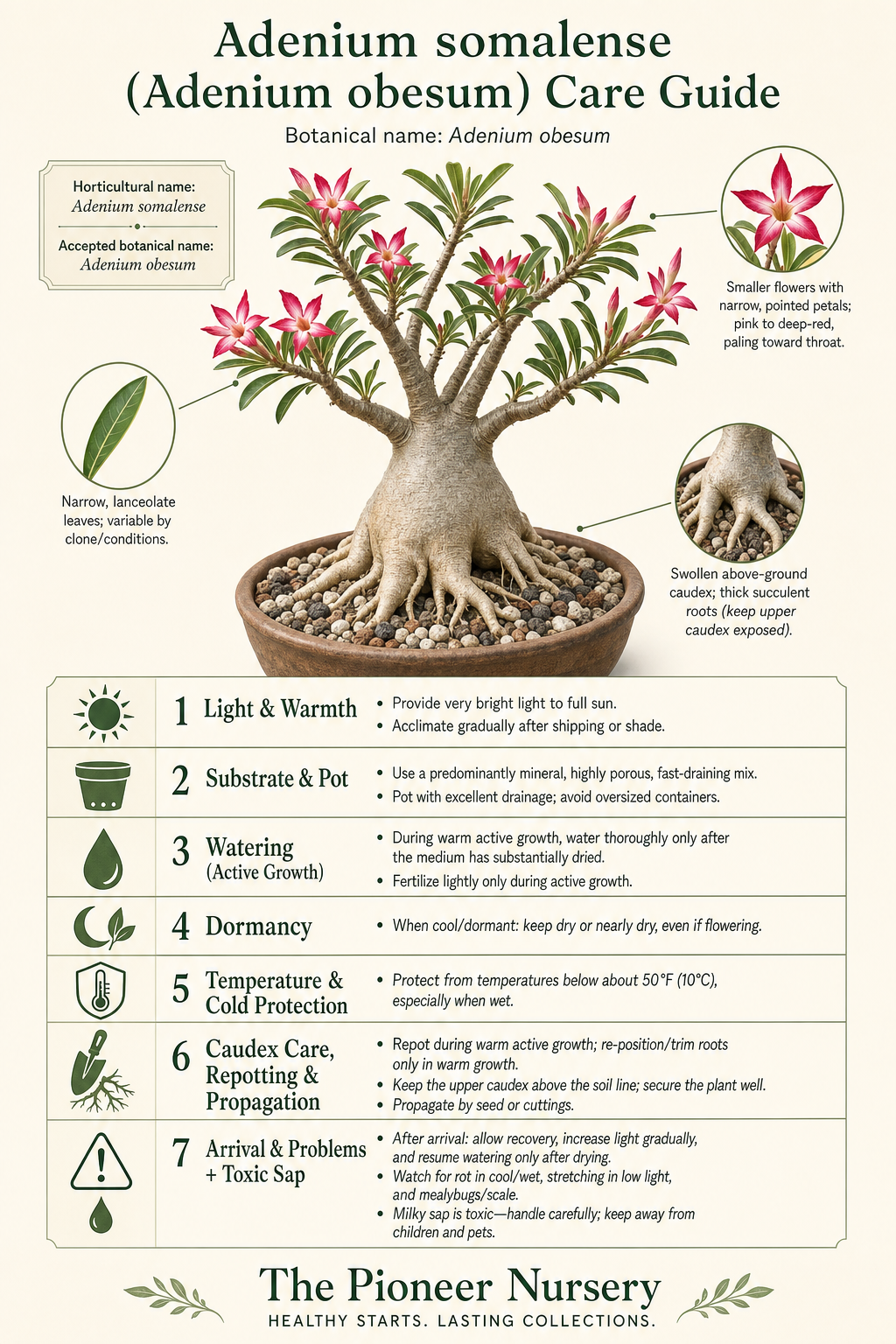
Adenium somalense is a widely used specialist horticultural name associated with variable East African plants treated taxonomically as Adenium obesum. Plants sold under this name may vary in form and provenance. For cultivation, focus on intense light, warmth, rapid drainage, careful active-season watering, and dry conditions during cool dormancy.
Quick Care Summary
- Provide very bright light to full sun, with gradual acclimation after shipping or shade.
- Use a predominantly mineral, highly porous, fast-draining substrate.
- Water thoroughly during warm active growth after the medium has substantially dried.
- Keep cool dormant plants dry or nearly dry, even if they flower.
- Protect from temperatures below approximately 50°F (10°C), especially when wet.
- Repot during warm active growth and avoid oversized containers.
- Fertilize lightly only during active growth.
- Handle the toxic milky sap carefully and keep the plant away from children and pets.
About the plant
The commonly cultivated form has an above-ground swollen caudex and thick succulent roots, with growth ranging from arborescent to shrubby. Leaves are often narrow, and flowers are generally smaller than those of many cultivated Adenium obesum selections. Individual plants may vary or represent intergrades with Adenium obesum. Do not assume a plant labeled Adenium somalense is the dwarf, subterranean-caudex form associated with the historical var. crispum concept.
Light
Provide very bright light to full sun during active growth. Acclimate gradually after shipping or lower-light conditions to reduce sunburn. Light shade may help during extreme heat, but excessive shade can produce weak, elongated growth, poorer form, and reduced flowering.
Watering
During warm active growth, water thoroughly when the fast-draining medium has substantially dried, allowing excess water to drain freely. Adjust frequency for temperature, light, pot size, substrate, and root occupancy rather than a fixed calendar. During cool or winter dormancy, keep the plant dry or nearly dry. Resume watering gradually when warmth and new growth return.
Soil and substrate
Use a very porous, fast-draining, predominantly mineral substrate with strong root aeration. Pumice, perlite, coarse sand, gravel, and limited coir or other organic material may be used. Avoid heavy, moisture-retentive mixes and ordinary rich potting soil as the main component.
Potting and caudex care
Choose a container with multiple unobstructed drainage holes and avoid oversized pots. Terra-cotta or another breathable container can improve drying. Gradual elevation of the caudex or upper roots is possible, but excessive exposure should be avoided. Repot during warm active growth. After significant root damage, keep the plant dry until wounds have begun to heal; if roots were not materially damaged, watering after repotting may be tolerated in warm, ventilated conditions.
Temperature
Keep this heat-loving succulent warm during growth. Protect it from temperatures below approximately 50°F (10°C), especially when the substrate is wet. Freezing temperatures can cause severe or fatal damage. Move container plants indoors or under reliable cover before cold weather.
Seasonal growth and dormancy
Cool, dry, or short-day conditions may be associated with reduced growth or dormancy, sometimes with leaf drop. Plants associated with this horticultural concept may flower while leafless or dormant, but cool dormant plants should remain dry. Warmth, bright light, and renewed leaf growth should guide the gradual return to regular watering.
Fertilizer
Feed only during active growth with a dilute, balanced or relatively low-nitrogen fertilizer. A formulation with comparatively moderate phosphorus and higher potassium may support flowering and compact growth. Apply at one-quarter to one-half label strength. Do not fertilize dry, dormant, cold-stressed, or recently root-disturbed plants.
Flowering
Flowers are often smaller than those of many cultivated Adenium obesum selections, with narrow pointed petals and pink to deep-red coloration fading toward the throat. Nectar guides may extend from the throat onto the petals. Flowering varies with warmth, light, water, and dormancy.
Propagation
Fresh seed is preferred for preserving variation and caudex development, but seedlings are variable. Adeniums generally require pollen exchange between compatible plants for seed production. Cuttings and air-layering are possible, although cuttings may develop a different caudex form from seed-grown plants. Grafting is a legitimate propagation method and does not make a plant a hybrid.
Common problems and safety
**Rot:** Cold, wet conditions, poor drainage, oversized pots, or watering during dormancy can cause root or caudex rot. Keep the medium highly draining and dormant plants dry.
**Sunburn:** Abrupt movement from shade or shipping conditions into intense sun can scorch the plant. Acclimate gradually.
**Pests:** Spider mites, aphids, mealybugs, and root mealybugs may affect stressed or indoor-grown plants.
**Cold injury:** Temperatures below approximately 50°F (10°C) may cause stem-tip dieback; freezing can cause severe or fatal damage.
**Possible viral symptoms:** Mottled leaves, broken flower coloration, or distorted growth may indicate viral symptoms. Contaminated pruning tools can spread infection.
**Toxic sap:** The milky sap should not contact eyes, mouth, or open wounds. Keep the plant away from children and pets.
Shipping and arrival care
Receive and ship during warm weather whenever possible, protecting the plant from cold exposure and prolonged moisture. Inspect newly arrived plants for damaged, soft, or rotting tissue. Pot bare-root or recently disturbed plants into highly draining medium and allow damaged areas to dry and heal where necessary. After arrival, begin with bright, filtered light and acclimate gradually to full sun.
Frequently Asked Questions
How should I water Adenium somalense?
During warm active growth, water thoroughly after the fast-draining medium has substantially dried. During cool dormancy, keep the plant dry or nearly dry and resume gradually when warmth and new growth return.
Can this plant grow in full sun?
Yes. Very bright light to full sun is suitable during active growth. Acclimate gradually after shipping or lower-light conditions to reduce sunburn.
Why is my plant losing its leaves?
Leaf drop may occur during seasonal dormancy or reduced growth caused by cool, dry, or short-day conditions. Keep the plant dry while it is cool and dormant.
Can it flower while dormant?
Yes. Plants associated with this horticultural concept may flower while leafless or dormant. Cool dormant flowering is not, by itself, a reason to water.
Is seed or cutting propagation better?
Fresh seed is preferred for preserving variation and caudex development, but seedlings are variable. Cuttings and air-layering are possible, though cuttings may develop a different caudex form.
What name should I use for this plant?
Plants of the World Online treats Adenium somalense as a synonym of Adenium obesum, while specialist growers continue to use Adenium somalense for distinctive East African plants. Consider the plant’s label and provenance when documenting it.
Give this desert rose intense light, warm conditions, and a sharply draining root environment. Water with active growth and keep a cool dormant plant dry. Retain the plant’s provenance and morphology when documenting a specimen sold as Adenium somalense.