Gymnocalycium ferox Care Guide
Learn how to grow Gymnocalycium ferox, a strongly spined chin cactus associated with Gymnocalycium castellanosii. Provide bright light, sharply draining soil, careful summer watering, and a largely dry winter rest.
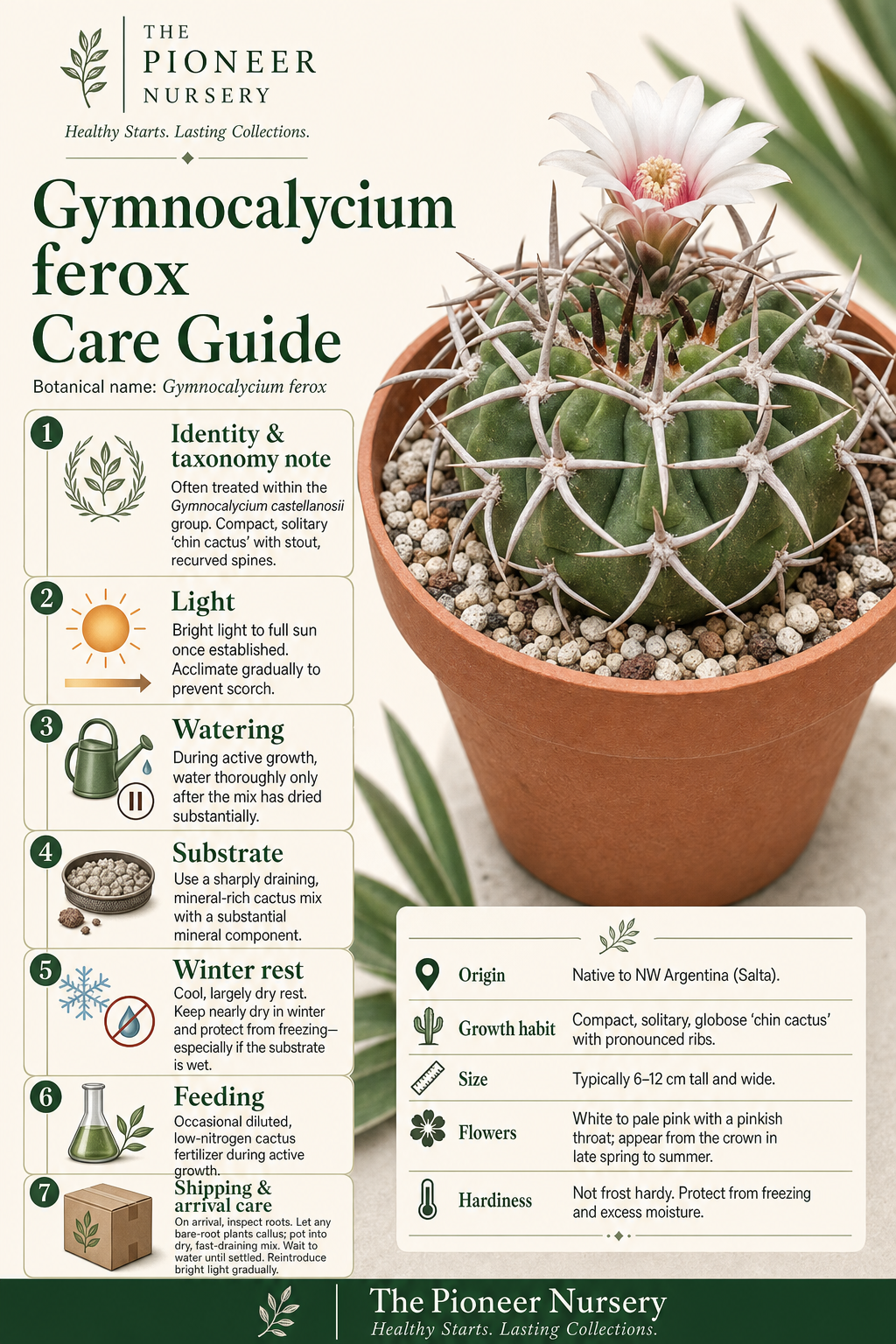
Gymnocalycium ferox is a legacy name associated with Gymnocalycium castellanosii and is known in cultivation for its stout, often recurved spines. Treat it as a summer-growing cactus: provide bright light after gradual acclimation, use a sharply draining mineral-rich substrate, water thoroughly only after the mix has dried substantially, and keep it nearly dry during cool winter rest. Current taxonomy places the retained content identity under Gymnocalycium castellanosii subsp. castellanosii, although specialist references have also connected ferox material with subsp. ferocius.
Quick Care Summary
- Bright light to full sun for established plants, with gradual acclimation.
- Use sharply draining soil containing a substantial mineral component.
- Water thoroughly during active growth only after the substrate has dried substantially.
- Keep nearly dry during cool winter dormancy.
- Protect the plant from freezing, especially when the substrate is wet.
- Use diluted, low-nitrogen cactus fertilizer occasionally during active growth.
About the Plant
Gymnocalycium ferox, commonly called a chin cactus, is maintained here as the primary content identity for an established legacy name associated with Gymnocalycium castellanosii. The ferox name is linked with strongly armed forms bearing thick, often recurved spines, but that appearance should not be treated as proof of a separately accepted species. Its practical cultivation needs are those of a summer-growing Gymnocalycium-type cactus with a cool-season rest.
Light
Give established plants bright light to full sun. After shipping, repotting, or a period in lower light, increase exposure gradually to reduce sun scorch. In very hot greenhouse or outdoor conditions, light shade may help during extreme heat. Insufficient light can lead to elongation and weaker spination.
Watering
During active growth, water thoroughly once the substrate has dried substantially, then allow excess water to drain completely. Adjust watering to light, temperature, season, and root condition rather than following a fixed calendar. Reduce watering greatly during winter dormancy and keep the plant nearly dry when conditions are cool. Cold, wet conditions increase rot risk.
Soil and Substrate
Use a sharply draining, well-aerated cactus mix with a substantial mineral component, such as pumice, grit, coarse sand, or another porous aggregate. Avoid dense or water-retentive substrates that remain wet around the roots.
Potting and Roots
Choose a container with a drainage hole and avoid an unnecessarily oversized pot. Repot when the substrate has degraded or the plant has outgrown its container. Handle the stout spines carefully. If roots are disturbed or tissue is damaged during potting, allow the affected areas to dry before watering.
Temperature and Winter Rest
Provide warm growing conditions through spring and summer. During winter rest, keep the plant cool only while protected from freezing and kept dry. Winter cultivation should be bright, cool to moderate, and largely dry. Avoid prolonged exposure to freezing temperatures, especially when the substrate is wet.
Fertilizer
Feed occasionally during active growth with a diluted, low-nitrogen cactus fertilizer. Do not fertilize during winter dormancy or while roots are dry, damaged, or recently disturbed.
Flowering
Mature plants can produce white to pale pink flowers, often with a pinkish or reddish throat. Strong light and a dry winter rest support flowering. The flowering season varies with hemisphere and growing conditions.
Propagation
Propagation is primarily by seed. The plant is usually solitary and produces offsets infrequently. Sow seed in a clean, very well-drained medium and keep it evenly, but not excessively, moist during germination. As seedlings establish, provide gradual drying and ventilation.
Shipping and Arrival Care
Receive and ship the plant dry whenever possible. Protect its stout recurved spines from abrasion, provide ventilation, and avoid prolonged cold and moisture during transit. After arrival, acclimate it gradually to stronger light and avoid immediate heavy watering if roots were disturbed or the plant arrived bare-root.
Common Problems
- Root or basal rot can result from prolonged moisture, poor drainage, or cool wet conditions.
- Sun scorch may occur after an abrupt move from shade, greenhouse conditions, or shipping into strong sun.
- Insufficient light can cause elongation and weaker spination.
- Monitor for mealybugs, scale, and other common cactus pests, particularly in enclosed growing areas.
Frequently Asked Questions
What should I do if the plant arrives bare-root or its roots were disturbed?
Keep it protected from prolonged cold and moisture, acclimate it gradually to stronger light, and avoid immediate heavy watering. Allow disturbed roots or damaged tissue to dry before watering.
How can I avoid sun scorch after shipping?
Increase exposure gradually rather than moving the plant directly into strong sun. Established plants can ultimately take bright light to full sun.
How do I know when to water?
During active growth, water thoroughly only after the substrate has dried substantially, then let excess water drain completely. In cool winter conditions, keep the plant nearly dry.
What soil and pot are suitable?
Use a sharply draining, well-aerated cactus substrate with substantial mineral material and a container with a drainage hole. Avoid dense mixes and unnecessarily oversized pots.
How does Gymnocalycium ferox flower?
Mature plants can produce white to pale pink flowers, often with a pinkish or reddish throat. Strong light and a dry winter rest support flowering.
Is propagation usually done with offsets?
Propagation is primarily by seed because the plant is usually solitary and offsets infrequently. Seedlings need careful moisture management, gradual drying, and ventilation as they establish.
Gymnocalycium ferox is best grown with strong light after acclimation, fast-draining soil, responsive watering during active growth, and a cool, mostly dry winter rest. Handle its distinctive spines carefully during shipping and repotting.