Mammillaria painteri Care Guide
Learn how to grow Mammillaria painteri, a small Mexican Mammillaria that prefers bright light, fast-draining mineral soil, careful active-season watering, and a cool, dry winter rest.
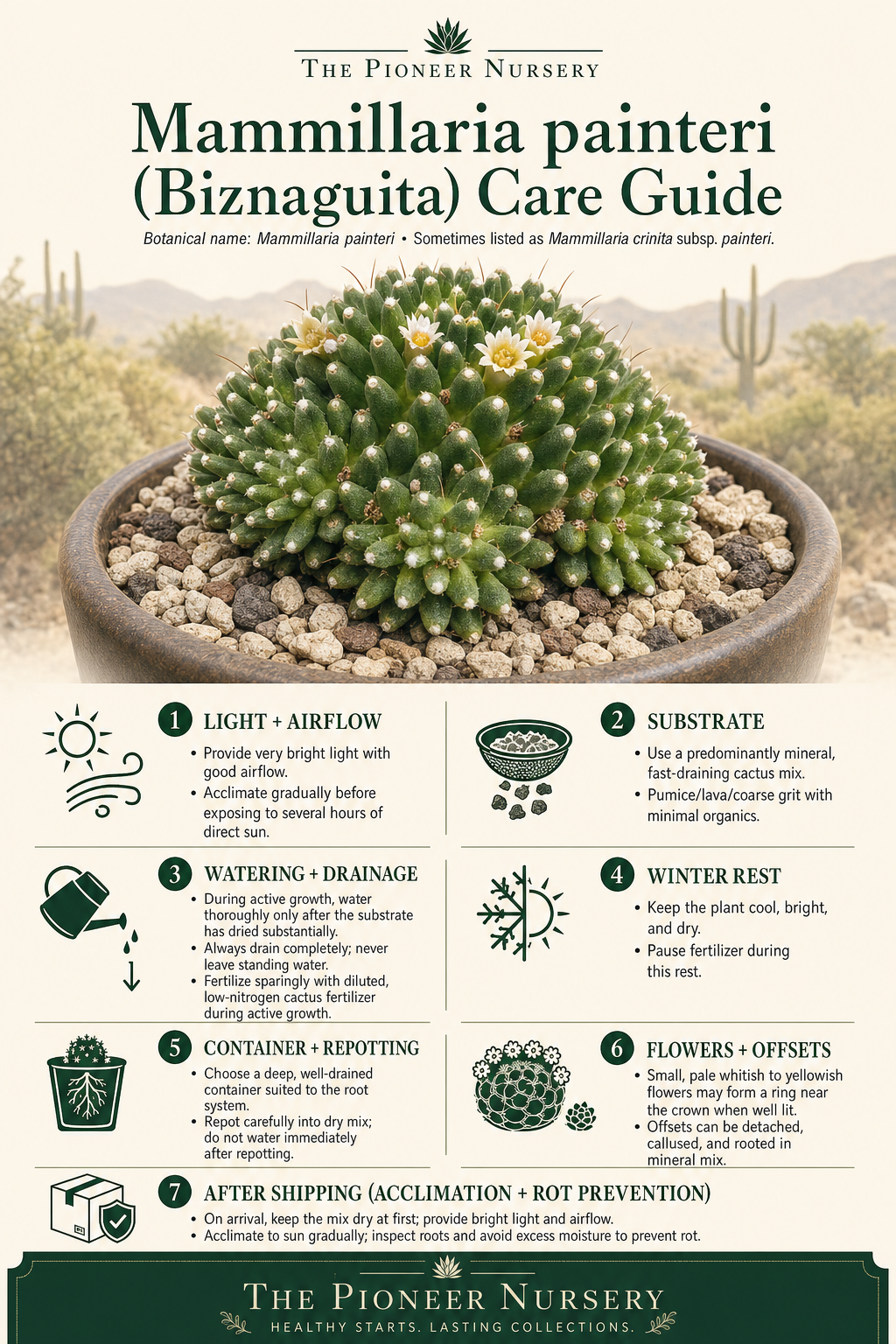
Mammillaria painteri, commonly called Biznaguita, is a small Mexican Mammillaria associated with dry shrubland in Querétaro. It is valued for its compact growth, pale flowers, and ability to form clumps through offsets. Its specialized root system is sensitive to prolonged wetness, so the most important care priorities are very bright light, excellent drainage, careful watering during active growth, and a cool, bright, dry winter rest. Plants of the World Online currently treats Mammillaria painteri as a homotypic synonym of Mammillaria crinita subsp. painteri (Rose) U.Guzmán, while some specialist sources continue to use the species-rank name.
Quick Care Summary
- Provide very bright light with good airflow.
- Acclimate gradually before exposing the plant to several hours of direct sun.
- Use a predominantly mineral, fast-draining cactus substrate.
- Water thoroughly during active growth only after the substrate has dried substantially.
- Keep the plant cool, bright, and dry during winter rest.
- Use a well-drained container with sufficient depth for the root system.
- Fertilize sparingly with diluted, low-nitrogen cactus fertilizer during active growth.
About the plant
Mammillaria painteri is a small cactus with a succulent, root-sensitive system. Mature plants may produce offsets and develop into clumps. Its dry-shrubland origin supports a bright, seasonally dry cultivation cycle rather than conditions that keep the root zone damp.
Light
Provide very bright light with good airflow. The plant can receive several hours of direct sun after gradual acclimation. Protect it from abrupt exposure to intense summer sun, especially after shipping or a period of indoor cultivation, because sudden exposure can cause sun scorch.
Watering
During active growth, water thoroughly only after the substrate has dried substantially, and allow excess water to drain completely. Avoid repeated light watering and never keep the root zone constantly damp. Reduce or withhold water during the cool winter rest, particularly when temperatures and light levels are low. Cold, wet conditions increase the risk of root loss and rot.
Soil and substrate
Use a very porous, fast-draining cactus substrate with little organic matter and strong root aeration. A predominantly mineral mix is appropriate because Mammillaria painteri is sensitive to prolonged wetness and root loss.
Potting and roots
Choose a container with excellent drainage and enough depth for the plant's specialized succulent root system. Avoid an oversized pot that stays wet too long. Repot approximately every 2–3 years, or sooner if the substrate has degraded, and handle the roots carefully. After repotting, avoid immediate heavy watering; allow disturbed roots and any wounds to dry before resuming irrigation when conditions support active growth.
Temperature and winter rest
Keep the plant warm during active growth. It typically benefits from a cool, bright, dry winter rest with strong light and good ventilation. Dry, frost-free protection is the safer nursery standard because cold-tolerance reports vary. Specialist cultivation reports describe brief tolerance of temperatures around -5 °C when completely dry, but cold, wet roots should not be exposed to freezing conditions.
Fertilizer
During active growth, apply a diluted, low-nitrogen cactus fertilizer sparingly. A higher-potassium formulation may be used during the growing season. Avoid heavy feeding and do not fertilize dry, dormant, or recently disturbed roots.
Flowering
Mammillaria painteri is a small, readily flowering Mammillaria. It may produce pale yellowish or whitish flowers in a ring around the upper portion of the stem. Mature plants may also form clumps through offsets.
Propagation
Propagation is primarily by offsets when available. Allow separated offsets or cut surfaces to dry and callus before planting. Seed propagation is also appropriate, but seedlings require careful moisture management and bright light.
Shipping and arrival care
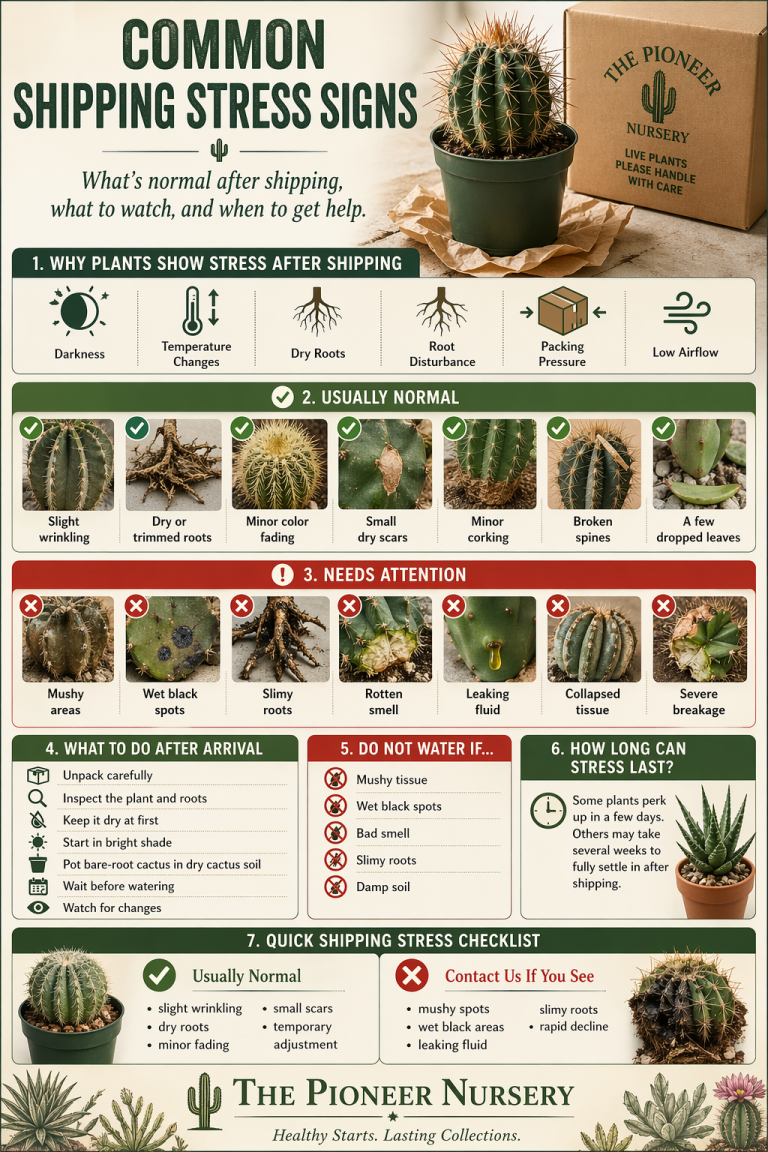
Receive and handle the plant as dry as practical, and inspect it for crushing or root disturbance. After shipping, acclimate it gradually to stronger light. Bare-root or recently repotted plants should not receive immediate heavy watering, particularly if roots have been disturbed or damaged. Resume irrigation only after wounds have dried and conditions support active growth.
Common Problems
- Root rot: Usually linked to dense substrate, poor drainage, or watering during cool, low-light conditions.
- Extended root loss: Damp potting medium over a prolonged period can damage the root system.
- Sun scorch: Abrupt exposure to intense direct sun can burn previously shaded plants.
- Red spider mites: Monitor plants, particularly in hot, dry conditions.
- Etiolation: Weak or stretched growth indicates insufficient light.
Frequently Asked Questions
How often should I water Mammillaria painteri?
Water thoroughly during active growth after the substrate has dried substantially, then allow complete drainage. Do not rely on a fixed calendar, and reduce or withhold water during the cool winter rest.
Can Mammillaria painteri grow in direct sun?
Yes, it can receive several hours of direct sun after gradual acclimation. Protect plants from abrupt exposure, especially after shipping or indoor cultivation.
Does it need a winter dormancy?
It typically takes a cool, bright, dry winter rest. Maintain strong light and ventilation while withholding routine irrigation.
What type of pot does it need?
Use a container with excellent drainage and sufficient depth for its specialized succulent root system. Avoid oversized pots that remain wet too long.
How can I propagate it?
Use offsets when available, allowing separated offsets or cut surfaces to dry and callus before planting. Seed propagation is also possible with careful moisture management and bright light.
Mammillaria painteri is best grown as a bright-light, fast-draining, seasonally dry cactus. Keep its root system especially well aerated, water only when active growth and substrate dryness support it, and provide a cool, bright, dry winter rest for dependable cultivation.