Coryphantha sunderlandii Collector Form Care Guide (Unverified Name)
Learn how to care for Coryphantha sunderlandii, an unverified collector or nursery name associated with the Pelecyphora macromeris complex. Provide strong light, mineral soil, careful active-season watering, and a cool, dry winter rest.
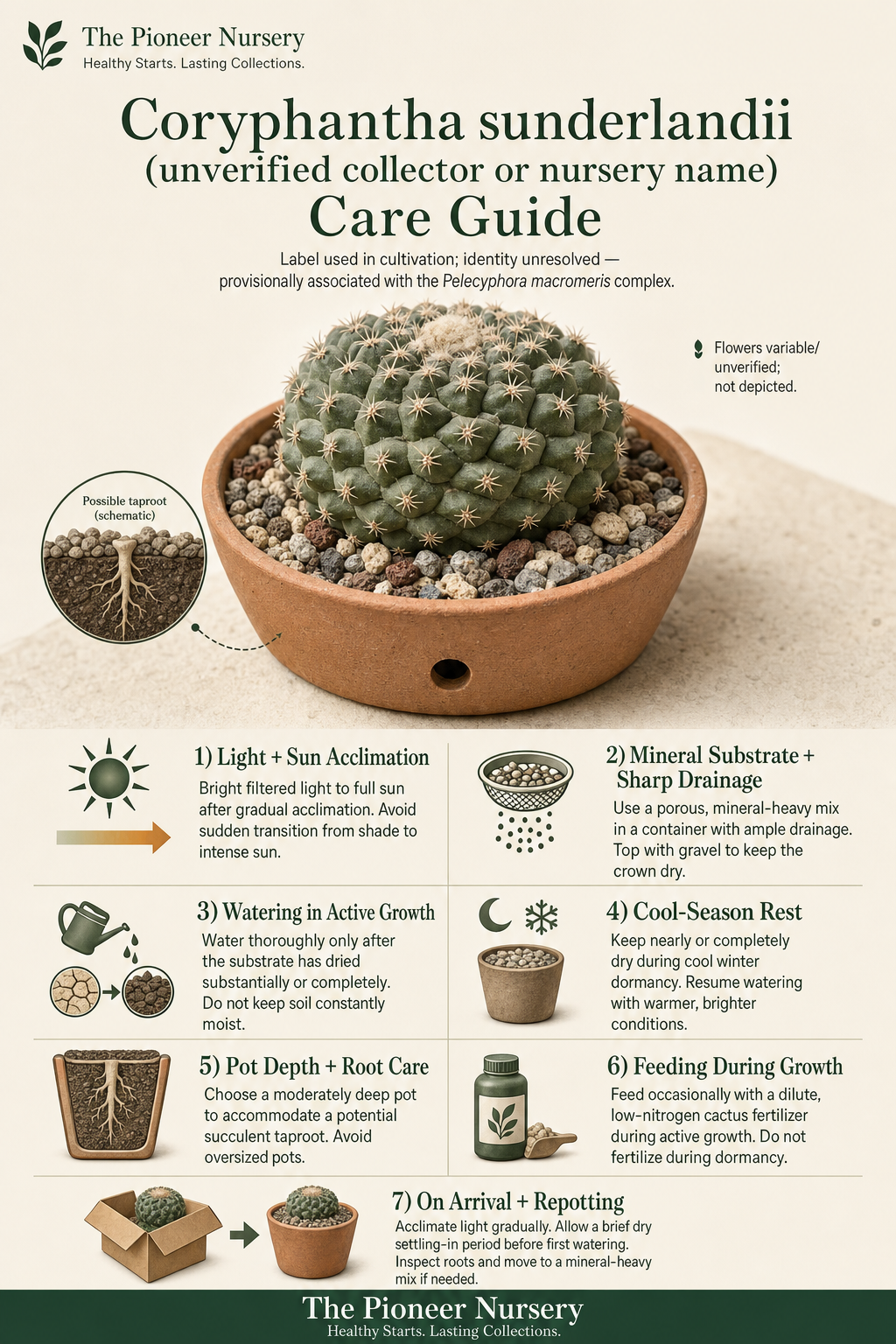
Coryphantha sunderlandii is an unverified collector or nursery name associated with the Pelecyphora macromeris complex, rather than a verified species or formally documented cultivar. This practical, provisional guide covers strong light, sharply draining mineral soil, careful active-season watering, and a cool, dry winter rest.
Quick Care Summary
- Bright filtered light to full sun after gradual acclimation.
- Use a porous, mineral-heavy substrate and a well-drained container.
- Water thoroughly during active growth only after the substrate has dried substantially or completely.
- Keep the plant nearly or completely dry during cool winter dormancy.
- Feed occasionally with dilute, low-nitrogen cactus fertilizer during active growth.
About the plant
The name Coryphantha sunderlandii appears in specialist and commercial use as Coryphantha sp. Sunderlandii and Coryphantha macromeris 'sunderlandii'. Its exact relationship to Pelecyphora macromeris, its subspecies, or a possible hybrid remains unresolved, so treat it as an unidentified collector form.
Light
Provide bright filtered light to full sun after gradual acclimation. Plants coming from greenhouse or indoor conditions can develop sunscald if moved abruptly into intense direct light, so increase exposure progressively.
Watering
During active growth, water thoroughly only after the substrate has dried substantially or completely, then allow excess water to drain away. Reduce watering when the plant is cool or seasonally inactive, and keep it nearly or completely dry during winter dormancy. Avoid calendar-based watering and prolonged root wetness.
Soil and substrate
Use a sharply draining, porous cactus mix with substantial mineral content and good root aeration. Pumice, lava, coarse sand, or similar mineral components can form the base, with only a limited organic fraction. Avoid moisture-retentive media.
Potting and roots
Use a container with ample drainage and avoid oversized pots that stay wet for extended periods. The probable macromeris identity is associated with a substantial, succulent taproot, so a moderately deep container may be preferable to a shallow one. Handle roots carefully during necessary repotting, and allow damaged roots to dry before watering again.
Temperature and winter rest
Provide warm conditions during active growth. The macromeris complex may tolerate substantial cold when kept dry, but hardiness varies by clone. Protect the plant from freezing temperatures, especially when soil is wet. A bright, cooler, dry winter rest is appropriate; avoid abrupt transitions from warm, wet conditions to cold conditions.
Fertilizer
During active growth, apply a dilute, low-nitrogen cactus fertilizer occasionally rather than feeding heavily or frequently. Do not fertilize dry, dormant, recently repotted, or root-damaged plants.
Flowering
The probable macromeris complex produces apical or near-apical flowers. Flower color for 'sunderlandii' is not established: reports include pink to magenta flowers and yellow flowers with a reddish throat.
Propagation
Seed and offsets are appropriate conventional methods when available. Allow offset wounds to callus fully before planting, and keep newly rooted material drier until roots are established. Seedlings from Sunderlandii material may not preserve a suspected hybrid or selected phenotype.
Shipping and arrival care
Inspect the plant after arrival for damage. Begin with bright but initially filtered light and acclimate gradually. If roots were disturbed or damaged, delay watering and allow damaged roots to dry before watering again. Avoid unnecessary bare-root disturbance during packing and handling.
Common Problems
- Root or basal rot: Avoid prolonged wetness, especially in cool conditions.
- Sunburn: Acclimate gradually to intense light.
- Mealybugs and other sap-feeding pests: Monitor plants in greenhouse or collection conditions.
- Damping-off or fungal loss: Keep seedlings and recently rooted material from remaining excessively wet.
- Mislabeling or phenotype confusion: Retain the collector name and do not treat it as a confirmed species, cultivar, or hybrid.
Frequently Asked Questions
Is Coryphantha sunderlandii a verified species?
No accepted species-level record was located for this name. It is used in specialist and commercial contexts, with its relationship to Pelecyphora macromeris, a subspecies, or a possible hybrid unresolved.
How do I know when to water it?
Check the substrate rather than the calendar: during active growth, water thoroughly after it has dried substantially or completely, then let excess drain. Keep the plant nearly or completely dry during cool winter dormancy.
Can it go into full sun?
Yes, after gradual acclimation. Start plants from indoor or greenhouse conditions in bright filtered light and increase exposure progressively.
What should I do if it arrives cold, wet, or root-disturbed?
Inspect it, keep it in bright filtered light, and delay watering if roots were disturbed or the plant arrived cold and wet.
What color flowers should I expect?
Flower color is not established for the Sunderlandii material. Reports include pink to magenta flowers and yellow flowers with a reddish throat.
Can it be propagated from seed or offsets?
Seed and offsets are appropriate when available. Allow offset wounds to callus fully before planting, and keep newly rooted material drier until roots are established. Seedlings may not preserve a suspected hybrid or selected form.
Focus on strong light, fast drainage, careful active-season watering, and a dry winter rest. The Sunderlandii name identifies unresolved collector or nursery material, so keep expectations flexible about its exact form and flowering.