Coryphantha runyonii Care Guide
Learn how to grow Coryphantha runyonii, a clumping cactus with a thick taproot, bright-light needs, fast drainage requirements, and a cool, dry winter rest.
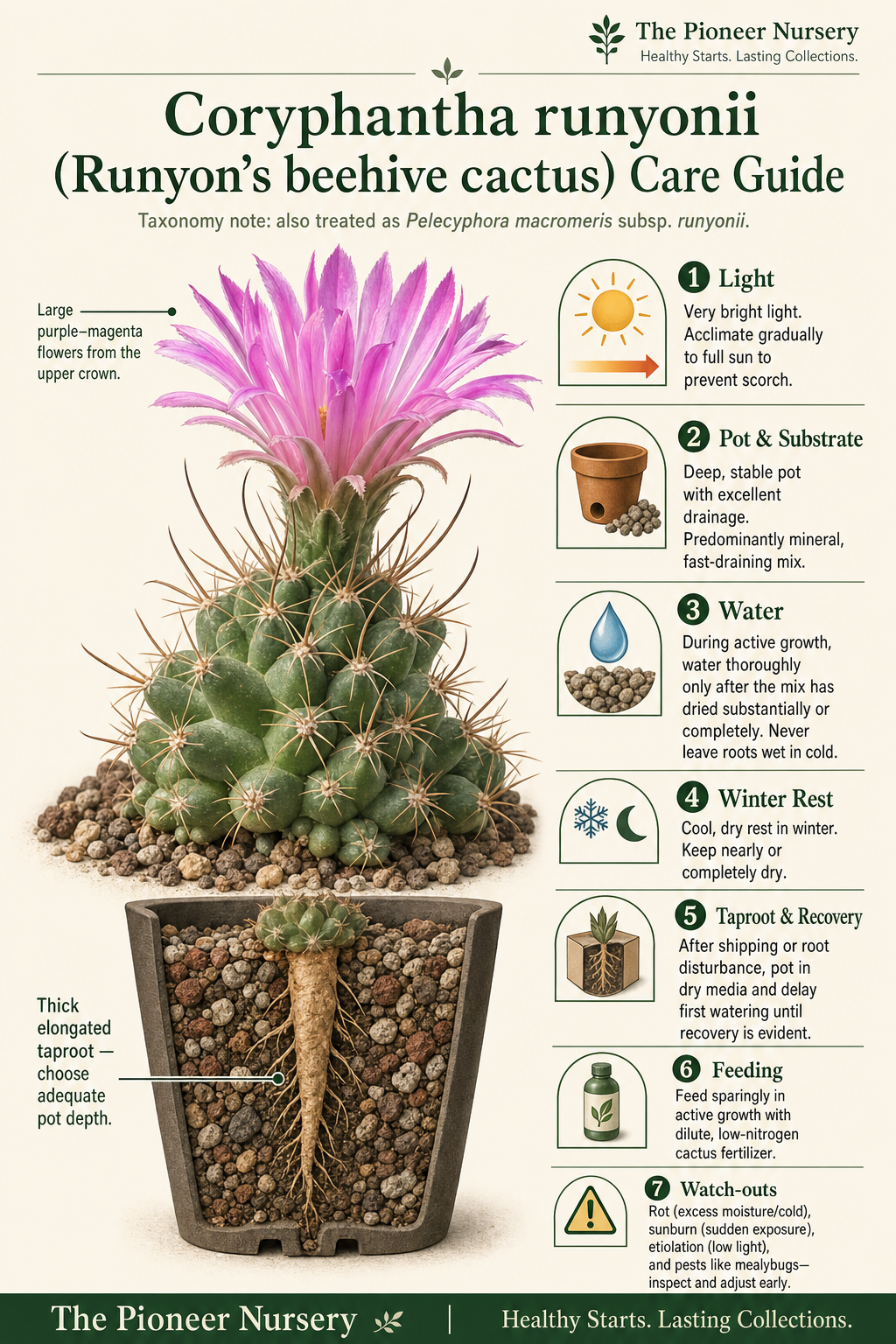
Coryphantha runyonii, commonly called Runyon’s beehive cactus, is a clumping cactus with a thick, elongated taproot and large purple to magenta flowers. It is currently accepted botanically as Pelecyphora macromeris subsp. runyonii, although Coryphantha runyonii is a botanical synonym that may still appear on nursery and collection labels. For successful cultivation, focus on intense light, a deep and highly porous potting mix, careful watering, and a cool, dry winter rest.
Quick Care Summary
- Provide very bright light and acclimate gradually to full sun.
- Use a deep, stable pot with excellent drainage for the elongated taproot.
- Choose a predominantly mineral, fast-draining substrate.
- Water thoroughly during active growth only after the mix has dried substantially or completely.
- Keep the plant nearly or completely dry during cool winter rest.
- Avoid wet roots in cold conditions.
- Feed sparingly with dilute, low-nitrogen cactus fertilizer during active growth.
- After shipping or root disturbance, use dry media and delay watering until recovery is established.
About the plant
Coryphantha runyonii is associated with southern Texas and northeastern Mexico. Its thick, elongated taproot is especially important in cultivation: the plant needs excellent drainage, adequate pot depth, and careful handling during repotting or shipping. Older plants may form clumps.
Light
Provide very bright light to full sun after gradual acclimation. Newly shipped or greenhouse-grown plants can sunburn if moved abruptly into intense direct sun, particularly during hot weather. Increase exposure gradually and provide strong ventilation.
Watering
During active growth, water thoroughly only after the substrate has dried substantially or completely. Let excess water drain freely, and never keep the root zone continuously wet. Reduce watering as growth slows, then keep the plant nearly or completely dry during its cool winter rest. Do not follow a fixed calendar; watering depends on light, temperature, substrate, pot size, ventilation, and growth activity.
Soil and substrate
Use a predominantly mineral cactus mix containing materials such as pumice, coarse sand, gravel, or lava rock, with only a limited organic component. The mix should drain rapidly and re-aerate quickly after watering. Poorly aerated, water-retentive soil increases the risk of root and stem rot.
Potting and roots
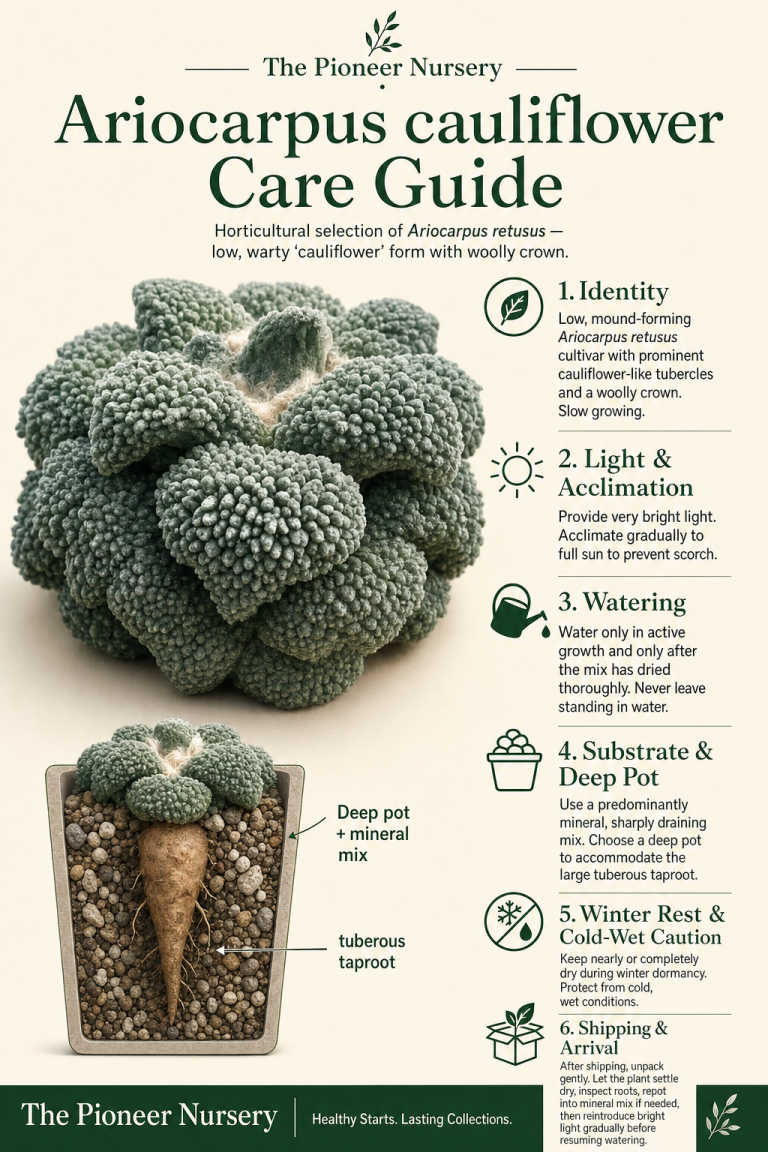
Because the plant develops a thick, elongated taproot, choose a stable container with adequate depth and excellent drainage rather than a shallow, water-retentive pot. Repot only when necessary and minimize root disturbance. After root damage, keep the plant in dry, porous media until the affected roots have dried and healed.
Temperature and seasonal rest
Maintain warm conditions during active growth with strong ventilation. A cool, dry winter rest is appropriate; specialist cultivation information commonly places resting temperatures around 8–10 °C. Avoid exposing wet roots to cold conditions, and protect the plant from freezing unless its provenance and acclimation are known. Resume watering gradually when sustained warmth and new growth indicate active growth has returned.
Fertilizer
Feed sparingly during active growth with a dilute, low-nitrogen cactus fertilizer. Do not fertilize during winter dormancy, immediately after repotting, or while a recently shipped plant is recovering. Wait until healthy growth has resumed.
Flowering
Mature, well-lit plants can produce large purple to magenta flowers from the upper portion of the plant. A distinct seasonal rest supports flowering, although timing can vary with climate and greenhouse conditions.
Propagation
Propagation is primarily by seed. Older plants may form clumps and can sometimes be divided or propagated from offsets, but root disturbance should be minimized. Any separated material should be allowed to dry and heal before being placed in dry, porous media.
Shipping and arrival care
Inspect the plant after arrival for damage and signs of root disturbance. Because of its elongated taproot and susceptibility to rot after disturbance, the root zone may need to remain dry during shipping and recovery. If roots are broken or disturbed, allow them to dry and heal, pot the plant into dry mineral substrate, and delay watering until recovery and root healing are reasonably established. Acclimate gradually to stronger light rather than placing the plant immediately in intense sun.
Common Problems
- Root and stem rot: usually associated with wet, poorly aerated substrate, especially during cool weather or dormancy.
- Sunburn: can follow an abrupt move from shade or greenhouse conditions into intense direct sun.
- Etiolated growth: weak, stretched growth indicates inadequate light.
- Pests: monitor for mealybugs, root mealybugs, scale, and mites, particularly where inspection or ventilation is poor.
- Post-shipping or repotting decline: watering too soon after root disturbance can delay recovery or encourage rot.
Frequently Asked Questions
How often should I water Coryphantha runyonii?
Do not use a fixed schedule. During active growth, water thoroughly after the substrate has dried substantially or completely. Reduce watering as growth slows and keep the plant nearly or completely dry during cool winter rest.
Does Coryphantha runyonii need full sun?
It benefits from very bright light to full sun, but acclimate gradually. Plants moved suddenly from greenhouse or shaded conditions can suffer sunburn.
What kind of pot does its taproot need?
Use a stable, well-drained pot with adequate depth for the thick, elongated taproot. Avoid shallow containers that hold water around the roots.
How should I handle the plant after shipping?
Inspect it, pot disturbed roots into dry mineral substrate, allow damaged roots to heal, and delay watering until recovery is reasonably established. Increase light gradually.
Can Coryphantha runyonii flower indoors or in a collection?
Mature, well-lit plants can produce large purple to magenta flowers. A distinct seasonal rest is associated with flowering, though timing varies with growing conditions.
How is Coryphantha runyonii propagated?
Propagation is primarily by seed. Older clumping plants may sometimes be divided or propagated from offsets, which should be allowed to dry and heal before planting in dry, porous media.
Coryphantha runyonii rewards growers who respect its taproot and seasonal rhythm. Give it strong light, fast drainage, careful watering during active growth, and a cool, dry winter rest, while taking extra care after shipping or repotting.