Mammillaria longimamma — Cristata Care Guide
Learn how to grow crested Mammillaria longimamma with bright light, porous soil, careful watering, and a cool, dry winter rest.
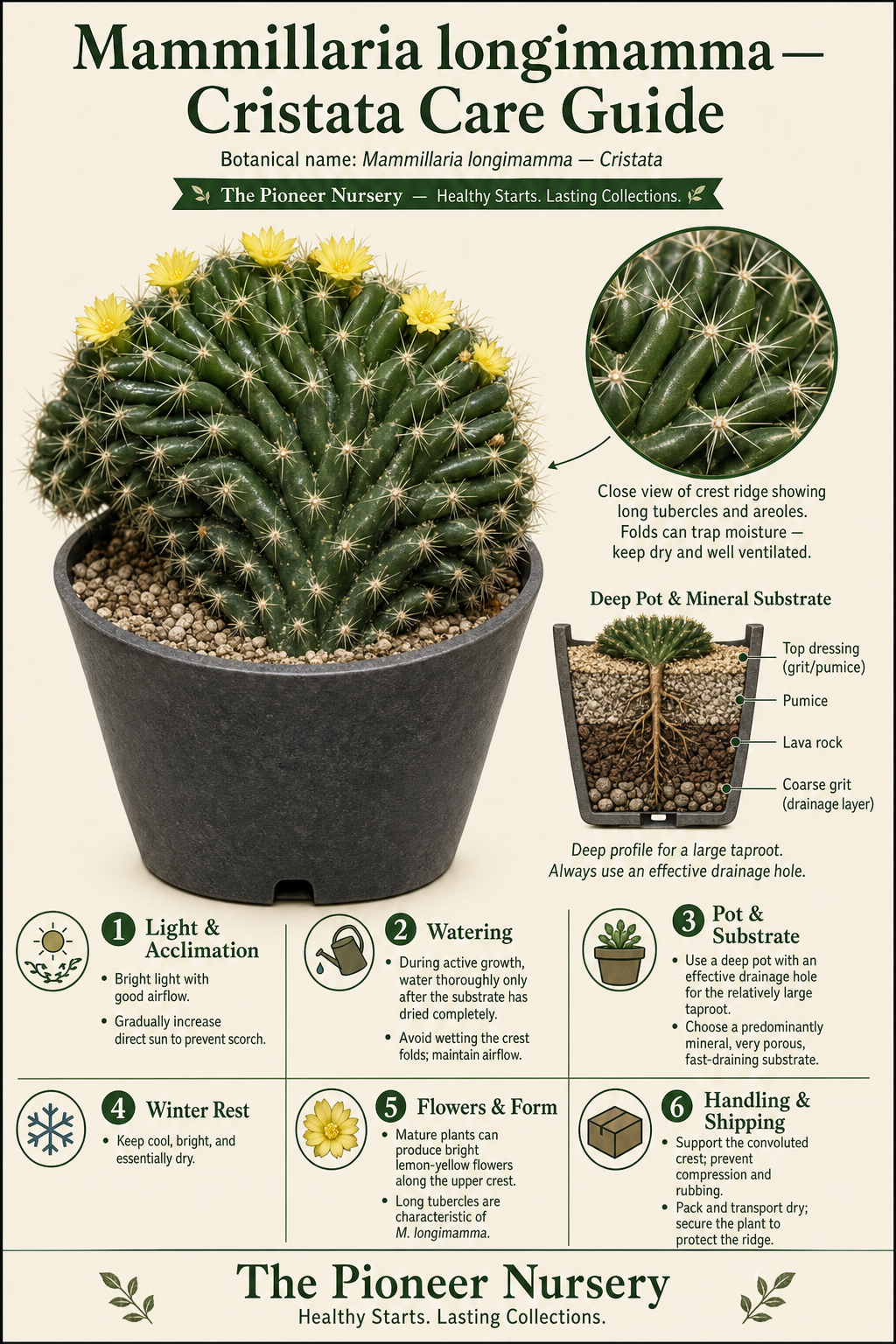
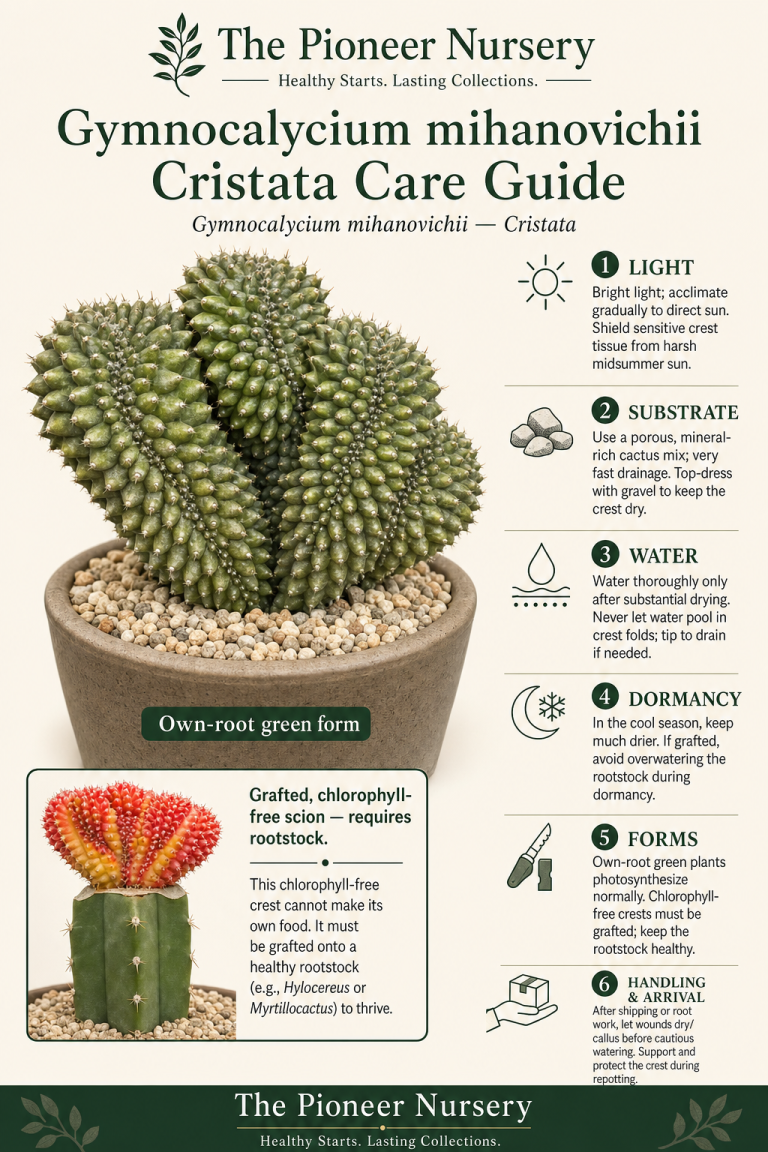
Mammillaria longimamma — Cristata is the crested horticultural form of Mammillaria longimamma, a cactus known for unusually long tubercles and large lemon-yellow flowers. Its flattened, convoluted crest needs careful handling, while the underlying species requires a deep, very porous substrate for its relatively large taproot. The main priorities are bright acclimated light, thorough watering only during active growth, and a substantially drier winter rest.
Quick Care Summary
- Bright light with good airflow and gradual acclimation to direct sun.
- Use a deep pot with an effective drainage hole for the relatively large taproot.
- Choose a predominantly mineral, very porous, fast-draining substrate.
- Water thoroughly only after the substrate has dried completely during active growth.
- Keep the plant essentially dry during its cool winter rest.
- Avoid wetting the folds of the crest unnecessarily and maintain airflow.
- Handle the convoluted crest carefully during shipping and repotting.
About the Plant
The accepted species is Mammillaria longimamma DC.; “Cristata” describes a horticultural growth form in which the growing point develops as a flattened, convoluted ridge rather than a normal central apex. It is not a separate species, subspecies, or botanical variety. Plants may form large clumps with age, and mature specimens can produce large bright lemon-yellow flowers in a ring near the upper stem.
Light
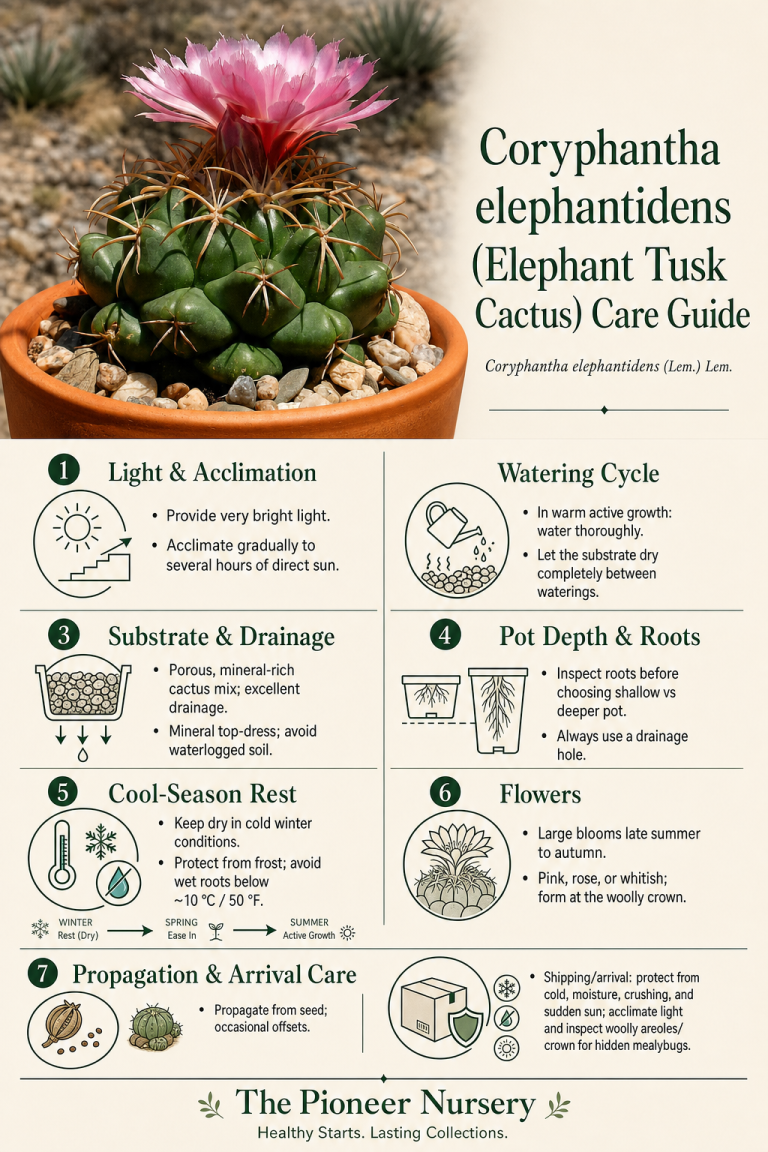
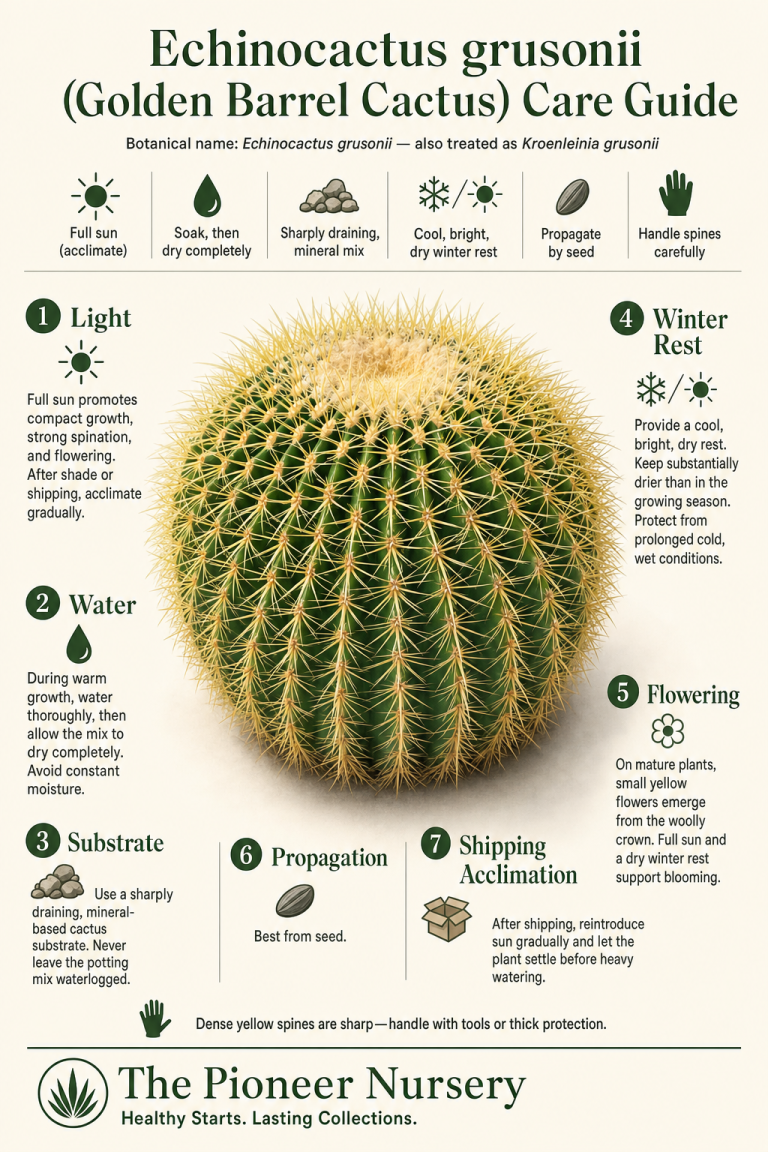
Provide bright light with good airflow. Gentle direct sun or bright filtered light is suitable, but acclimate gradually after shipping or lower-light indoor conditions to reduce sunburn. Recently shipped or indoor-grown plants may benefit from protection from intense afternoon heat while they adjust.
Watering
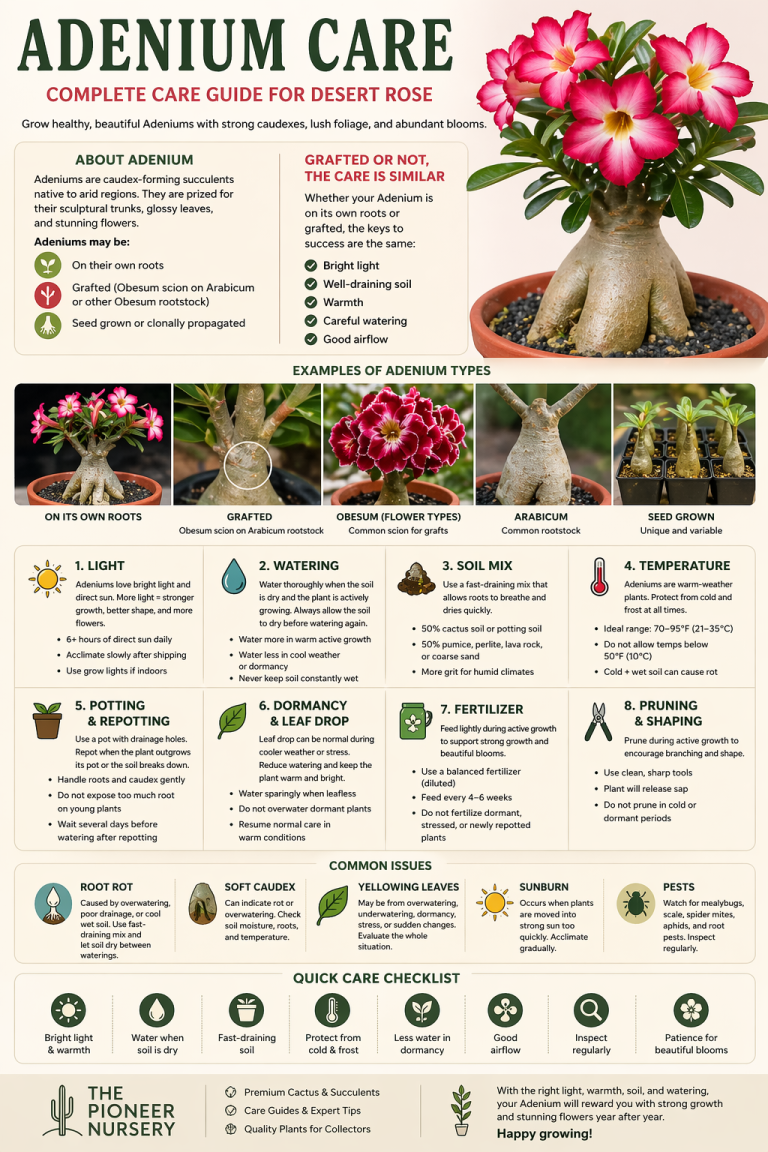
During active growth, water thoroughly only after the substrate has dried completely. Frequency depends on temperature, light, pot size, substrate, and airflow, so avoid a fixed calendar. Do not repeatedly give small amounts of water, and never keep the root zone constantly wet. Reduce watering sharply during the cool winter rest and keep the plant essentially dry in low temperatures. Its substantial succulent root system is sensitive to rot when kept damp.
Soil and Substrate
Use a very porous, fast-draining medium with a predominantly mineral component and limited organic matter. The substrate should drain rapidly and keep roots aerated while still allowing thorough wetting during active growth.
Potting and Roots
Mammillaria longimamma develops a relatively large taproot, so choose a pot deeper than one used for a shallow-rooted Mammillaria. An effective drainage hole is essential. Avoid an excessively oversized container that remains wet for too long. Repot during active growth or just before it, handle the root system carefully, and allow disturbed or damaged roots to dry before resuming cautious watering.
Temperature and Winter Rest
Protect the plant from frost and prolonged cold, wet conditions. A cool winter rest is beneficial when the plant is kept dry; approximately 5–10 °C (41–50 °F) may be used cautiously in a dry, well-ventilated setting. Growth is strongest in spring and summer, followed by a cooler, much drier winter period. Returning moisture and active growth after this rest is generally associated with flowering.
Fertilizer
Feed only during active growth with diluted cactus fertilizer or a low-nitrogen fertilizer. A modest spring application or occasional feeding while buds are forming is preferable to heavy fertilization. Do not fertilize dry, dormant, recently repotted, or stressed plants.
Flowering
Mature plants can produce bright lemon-yellow flowers, often about 5–6 cm across, arranged in a ring around the upper part of the stem. Flowering is generally associated with renewed moisture and active growth after a cool, dry rest.
Propagation
Propagation is possible from seed and, where available, offsets or detached tubercles. Vegetative material from a crested plant is the more appropriate choice when trying to preserve the crested growth habit; seedlings should not be assumed to remain crested. Allow detached tubercles to callus before placing them on a dry, porous medium.
Shipping and Arrival Care
Receive and ship the plant dry, especially in cool conditions. Inspect the plant on arrival for damage or rot, and protect the convoluted crest from compression because it can be vulnerable to bruising or breakage. Allow disturbed roots or wounds to dry, provide bright but gradually increased light, and delay substantial watering until the plant has acclimated and its roots are ready to resume growth.
Common Problems
- Root or stem rot: usually associated with dense substrate, poor drainage, or watering during cool conditions.
- Sunburn: possible after abrupt exposure to intense direct sun, especially after indoor growth or shipping.
- Etiolation: weak, poorly formed growth caused by insufficient light.
- Mealybugs, scale, or spider mites: more likely on stressed or poorly ventilated plants.
- Localized crest rot: moisture retained in the folds can increase risk, so maintain airflow and avoid unnecessary wetting.
Frequently Asked Questions
How often should I water Mammillaria longimamma — Cristata?
Do not use a fixed schedule. During active growth, water thoroughly only after the substrate has dried completely, adjusting for temperature, light, pot size, substrate, and airflow. Keep it essentially dry during cool winter rest.
Does the crested form need different care from regular Mammillaria longimamma?
Its basic care is the same, but the crest requires careful handling and can retain moisture in its folds. The species’ relatively large taproot and sensitivity to prolonged dampness remain important considerations.
What type of pot should I use?
Use a deeper-than-average pot with an effective drainage hole to accommodate the taproot. Avoid an excessively large container that stays wet too long.
Can this plant remain crested when grown from seed?
Not necessarily. Seed-grown offspring should not be assumed to retain the crested growth habit. Vegetative material is more appropriate when attempting to preserve that form.
How should I handle the plant after shipping?
Inspect it for damage or rot, protect the crest from compression, acclimate it gradually to bright light, and allow disturbed roots or wounds to dry. Delay substantial watering until the plant has acclimated and is ready to resume growth.
With bright light, excellent drainage, careful handling, and a cool, dry winter rest, Mammillaria longimamma — Cristata can maintain its distinctive crest and reward mature growth with large yellow flowers.