Mammillaria schiedeana giselae Care Guide
Learn how to grow Mammillaria schiedeana giselae with bright light, sharply draining soil, careful watering, and a cool, dry winter rest.
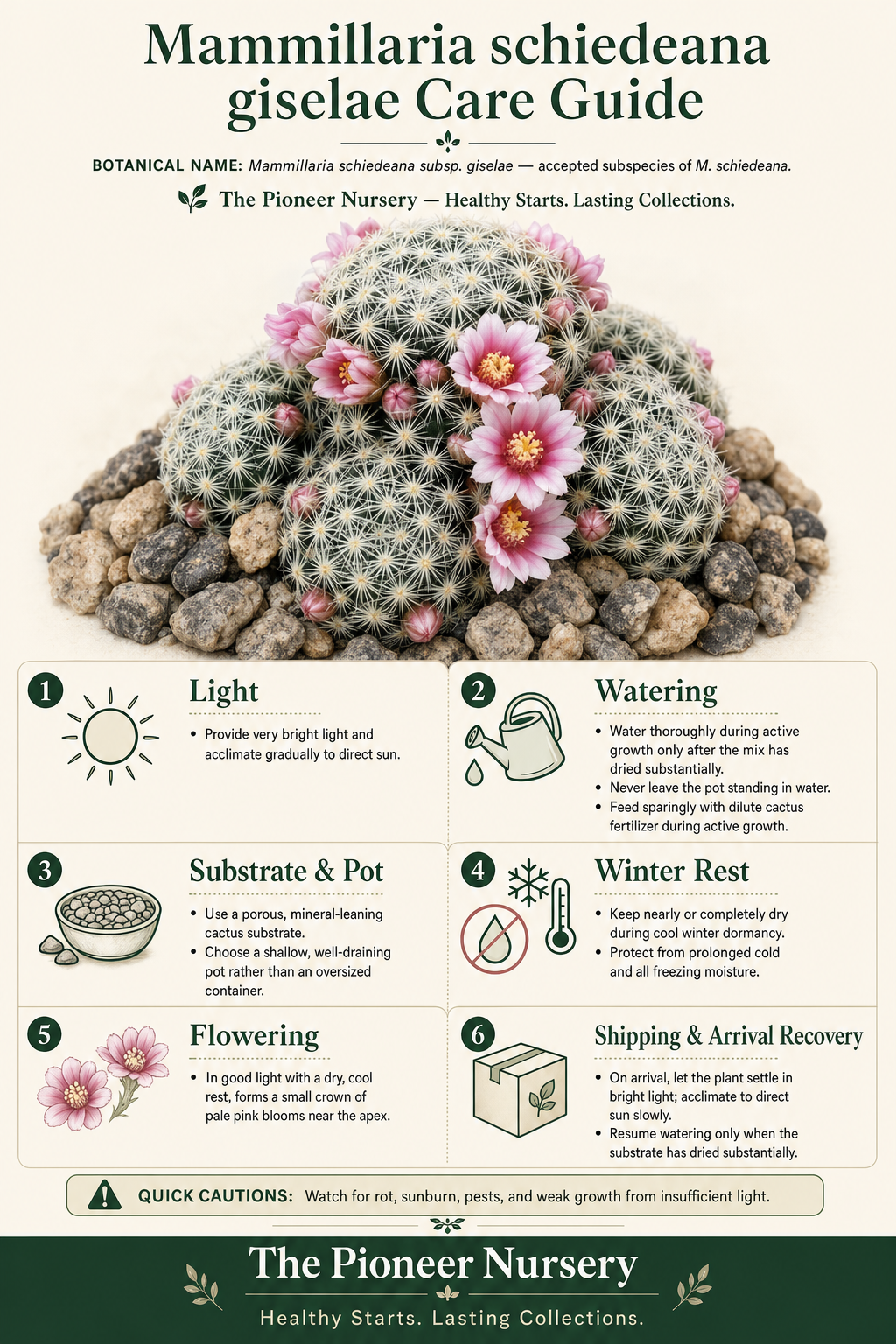
Mammillaria schiedeana giselae is a small, slow-growing Mammillaria from rocky, calcareous habitats in Tamaulipas, Mexico. It can form a compact cluster over time and is valued for its delicate spines and small pale pink to pink flowers. The main care priorities are strong light, excellent drainage, cautious watering during active growth, and a nearly dry winter rest.
Quick Care Summary
- Provide very bright light and acclimate gradually to direct sun.
- Use a porous, mineral-leaning cactus substrate.
- Water thoroughly during active growth only after the mix has dried substantially.
- Keep nearly or completely dry during cool winter dormancy.
- Use a shallow, well-draining pot rather than an oversized container.
- Protect from prolonged cold and all freezing moisture.
- Feed sparingly with dilute cactus fertilizer during active growth.
- Watch for rot, sunburn, pests, and weak growth from insufficient light.
About the plant
The submitted name, Mammillaria schiedeana giselae, is commonly used horticultural shorthand for the accepted subspecies name Mammillaria schiedeana subsp. giselae. Mammillaria giselae is a documented synonym or former treatment, not a separate current species identity. This small cactus is slow-growing and may gradually form a compact cluster.
Light
Provide very bright light with several hours of direct sun once the plant is acclimated. Increase exposure gradually after shipping or when moving it from shade or greenhouse protection to prevent sunburn. In hot climates, protect it from intense late-afternoon summer sun while maintaining strong morning or filtered light.
Watering
During active growth, water thoroughly only after the substrate has dried substantially, and let all excess water drain away. This taxon is prone to root rot from excess moisture. Keep it nearly or completely dry during cool winter dormancy. Avoid watering when the plant is cool and dormant, as this can contribute to splitting, tissue damage, or rot.
Soil and substrate
Use a very porous, fast-draining cactus mix with substantial mineral content and good root aeration. A modest limestone or other calcareous component may suit its rocky, limestone-associated habitat, but the mix should not remain water-retentive. Although the plant is associated with soils containing organic material in habitat, container culture should remain sharply draining rather than heavily organic.
Potting and roots
Choose a container with drainage holes and avoid oversized pots. A relatively shallow pot suits this plant's small, clustering root system. Repot in spring when necessary, preferably as active growth begins. After bare-root handling or major root disturbance, allow damaged roots to callus and delay watering until the plant has been re-established in well-drained substrate and recovery conditions are favorable.
Temperature and winter dormancy
Growth slows or stops during the cool, darker winter period. Provide strong light, good ventilation, and a dry winter rest, then resume watering gradually when temperature and light support active growth. Protect the plant from prolonged cold and all freezing moisture. Mature plants may tolerate brief temperatures near -5 °C / 23 °F when completely dry, but conservative container cultivation is safer above freezing.
Fertilizer
Feed sparingly during active growth with a dilute cactus fertilizer. Specialist cultivation guidance supports a relatively high-potassium formulation. Do not fertilize during winter dormancy, while the plant is severely stressed, or soon after repotting.
Flowering
Mammillaria schiedeana giselae usually flowers toward the end of winter or in early spring. Small pale pink to pink flowers form a ring or crown near the apex. Strong light and a cool, dry winter rest support flowering.
Propagation
Propagation is primarily from seed. Established clumps may also be divided by removing sufficiently developed offsets. Allow detached offsets or any cut surfaces to dry and callus before planting.
Shipping and arrival care
Receive and ship the plant dry whenever possible. Inspect it for pests or root damage, and protect its fine, delicate spines from crushing. Give it gradual light acclimation after arrival. Do not water immediately after bare-root shipping or significant root disturbance; wait until roots have dried and the plant has been re-established in a well-drained substrate.
Common Problems
- Root rot: Usually linked to frequent watering, poor drainage, or cool wet conditions.
- Sunburn: Can follow abrupt exposure to strong direct light; acclimate gradually.
- Etiolation and weak spines: Insufficient light can produce weak, stretched growth and poor spine development.
- Mealybugs, scale, or spider mites: Monitor stressed plants and those grown in poorly ventilated areas.
- Splitting or tissue damage: Watering while the plant is cool or dormant can cause damage.
Frequently Asked Questions
How often should I water Mammillaria schiedeana giselae?
Do not follow a fixed calendar. During active growth, water thoroughly after the substrate has dried substantially, then let excess water drain completely. Keep the plant nearly or completely dry during cool winter dormancy.
Can this Mammillaria take direct sun?
Yes, once acclimated. Provide very bright light with several hours of direct sun, increasing exposure gradually after shipping or shade. In hot climates, protect it from intense late-afternoon summer sun.
What type of pot and soil does it need?
Use a shallow pot with drainage holes and a very porous, fast-draining cactus substrate containing substantial mineral material. Avoid oversized containers and mixes that remain wet.
Does it need a winter rest?
Yes. Growth slows or stops during the cool, darker winter period. Maintain strong light, ventilation, and a nearly dry or completely dry rest, then resume watering gradually when conditions support active growth.
How does Mammillaria schiedeana giselae flower?
It usually flowers toward the end of winter or in early spring, producing small pale pink to pink flowers in a ring or crown near the apex. Strong light and a cool, dry winter rest support flowering.
Can it be propagated from offsets?
Yes. Seed is the primary propagation method, but established clumps may be divided by removing sufficiently developed offsets. Let detached offsets or cut surfaces dry and callus before planting.
Mammillaria schiedeana giselae rewards patience and careful moisture control. Give it bright, gradually acclimated light, an airy mineral substrate, thorough watering only during suitable active growth, and a dry winter rest to help protect its roots and encourage flowering.