Gymnocalycium pflanzii Care Guide
Learn how to grow Gymnocalycium pflanzii with bright light, sharply draining soil, careful seasonal watering, and a cool, dry winter rest.
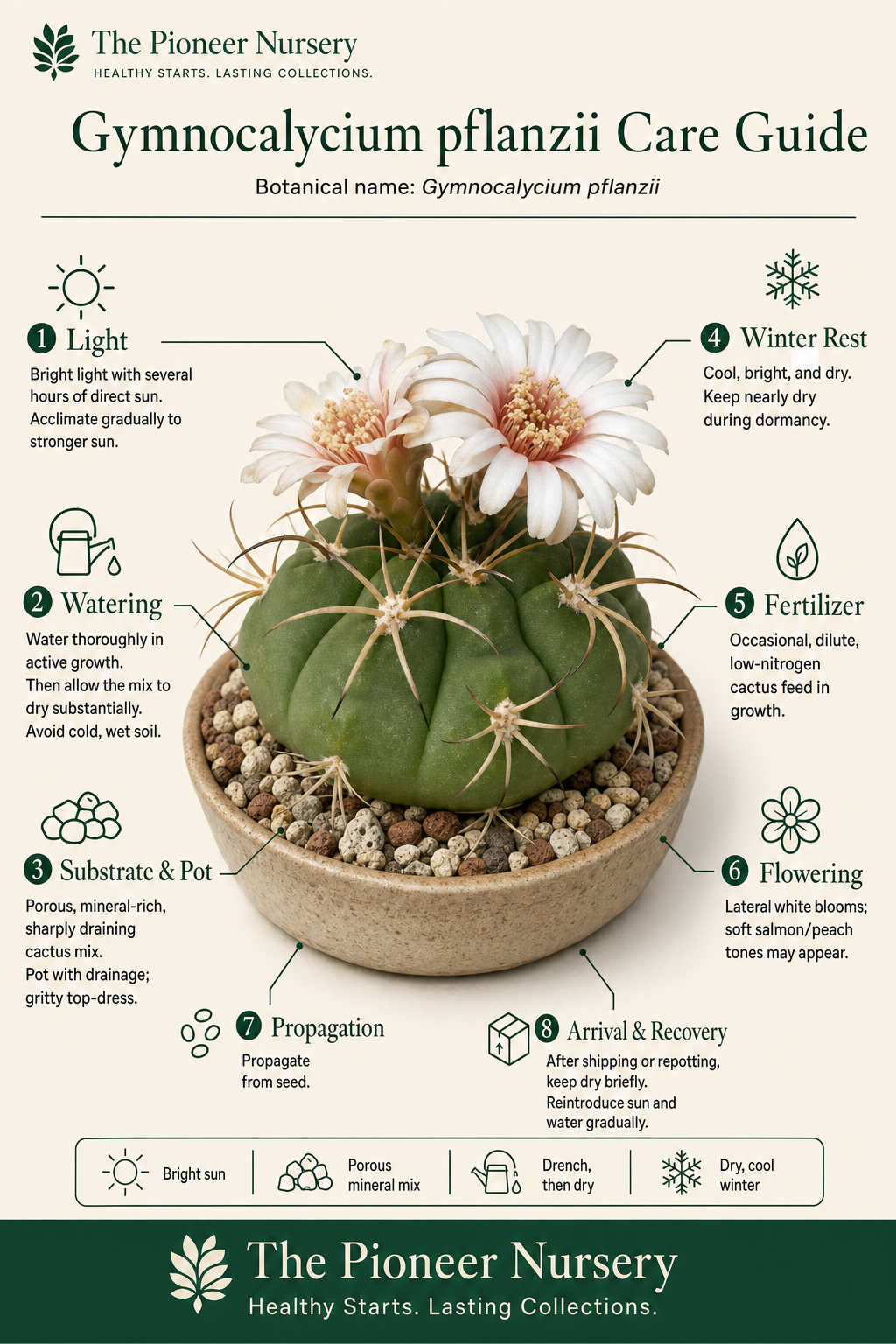
Gymnocalycium pflanzii, sometimes called chin cactus, is a flowering cactus that responds well to bright light, excellent drainage, and a pronounced cool, dry winter rest. During active growth, water thoroughly but allow the substrate to dry substantially before watering again. The species is especially vulnerable to rot when kept cold and wet. Acclimate gradually to stronger sunlight after greenhouse, indoor, or shaded conditions.
Quick Care Summary
- Provide bright light with several hours of direct sun.
- Acclimate gradually before exposing the plant to intense sunlight.
- Use a porous, mineral-rich, sharply draining cactus substrate.
- Water thoroughly during active growth, then allow the substrate to dry substantially.
- Keep the plant nearly dry during cool winter dormancy.
- Avoid cold, wet soil, which creates a significant rot risk.
- Feed occasionally with a dilute, low-nitrogen cactus fertilizer during active growth.
About Gymnocalycium pflanzii
Gymnocalycium pflanzii is an accepted species in the genus Gymnocalycium, native from northwestern Argentina through Bolivia to Paraguay. It occurs in sandy soils, rocky habitats, and dry subtropical vegetation. Its root system is fasciculate rather than an enlarged taproot, so extreme taproot-specific potting practices are unnecessary. The older name Echinocactus pflanzii is a synonym for the same plant, not a separate species.
Light
Provide bright light with several hours of direct sun. Acclimate gradually when moving the plant from a greenhouse, indoors, or shade into stronger sunlight. In very hot climates, light afternoon protection can help reduce scorching while preserving compact growth.
Watering
During active growth, water thoroughly and then allow the substrate to dry substantially before watering again. Never leave the pot standing in water. Reduce watering as growth slows, and keep the plant nearly dry during cool winter dormancy. If severe shriveling occurs in dormancy, water only sparingly. Cold, wet conditions create a significant rot risk.
Soil and substrate
Use a porous, sharply draining cactus substrate with substantial mineral content and good root aeration. A moderately fertile mix is suitable, but avoid heavy, moisture-retentive soil. Specialist cultivation references advise avoiding strongly calcareous or limestone-rich media for this species.
Potting and roots
Choose a container with an effective drainage hole and enough room for the plant's fasciculate root system. Repot when the substrate has deteriorated or the roots have filled the container, generally about every two or three years under active cultivation. After repotting or major root disturbance, allow damaged roots to dry and callus before resuming irrigation.
Temperature and winter rest
Keep the plant warm during active growth and provide a cool, bright winter rest. Dormant plants should remain dry and be protected from frost and prolonged temperatures at or below freezing. Good ventilation is helpful in warm, humid conditions. Resume more regular watering gradually when warmer conditions and visible spring growth return.
Fertilizer
Feed occasionally during active growth with a dilute, low-nitrogen cactus fertilizer. Avoid heavy feeding, and do not fertilize during winter dormancy.
Flowering
Gymnocalycium pflanzii is generally a readily flowering species when mature and well cultivated. Its flowers arise laterally and are commonly white, although salmon or peach tones are also reported. Adequate light, active-season growth, and a cool, dry winter rest support flowering.
Propagation
Propagation is primarily by seed. Fresh seed and careful moisture management improve germination. Young seedlings should remain evenly but not excessively moist during establishment, while avoiding waterlogged conditions. Fruits in the pflanzii group are reported to open horizontally at maturity, a useful specialized characteristic for seed production and identification.
Shipping and arrival care
Receive and ship the plant as dry as practical, particularly during cool weather. Inspect it after arrival and protect it from freezing temperatures and prolonged enclosure humidity. Begin with bright but initially filtered light, then acclimate gradually. If the plant arrived bare-root or its roots were damaged, allow them to dry and recover before watering; avoid immediate irrigation after significant root disturbance.
Common Problems
- Root and stem rot can result from heavy soil, poor drainage, or watering while the plant is cold and dormant.
- Sunburn may occur after sudden exposure to intense direct sunlight.
- Etiolation, or stretched growth, can develop in insufficient light, especially when the plant is warm and watered indoors during winter.
- Rough repotting or shipping disturbance may cause root loss and delayed recovery.
- Mealybugs, scale, and spider mites may occur, particularly in enclosed greenhouse or indoor collections.
Frequently Asked Questions
How often should I water Gymnocalycium pflanzii?
There is no fixed calendar. Water thoroughly during active growth, then wait until the substrate has dried substantially. Reduce watering as growth slows and keep the plant nearly dry during cool winter dormancy.
Can Gymnocalycium pflanzii take direct sun?
Yes, several hours of direct sun are appropriate, but acclimate the plant gradually after indoor, greenhouse, or shaded conditions. Light afternoon protection can help in very hot climates.
Does Gymnocalycium pflanzii need a winter dormancy?
The species benefits from a cool, bright, dry winter rest. This supports flowering and reduces the risk of root rot. Increase watering gradually when warmer conditions and visible spring growth return.
What soil should I use?
Use a porous, sharply draining cactus mix with substantial mineral content and good root aeration. Avoid heavy, moisture-retentive soil and strongly calcareous or limestone-rich media.
How should I handle the plant after bare-root shipping?
Provide bright but initially filtered light and acclimate gradually. If roots were exposed or damaged, allow them to dry and recover before watering, avoiding immediate irrigation after significant root disturbance.
How is Gymnocalycium pflanzii propagated?
Propagation is primarily by seed. Fresh seed and careful moisture management support germination, and young seedlings should be kept evenly but not excessively moist without becoming waterlogged.
With bright light, mineral, fast-draining soil, thoughtful watering, and a cool, dry winter rest, Gymnocalycium pflanzii can remain a rewarding flowering cactus. The key is to match watering to active growth and temperature rather than following a fixed calendar.