Pachypodium densicaule ‘Ebisu Daikoku’ Care Guide
Learn how to grow Pachypodium densicaule, a variable horticultural hybrid valued for its swollen caudex, bright-light requirements, and seasonal growth cycle.
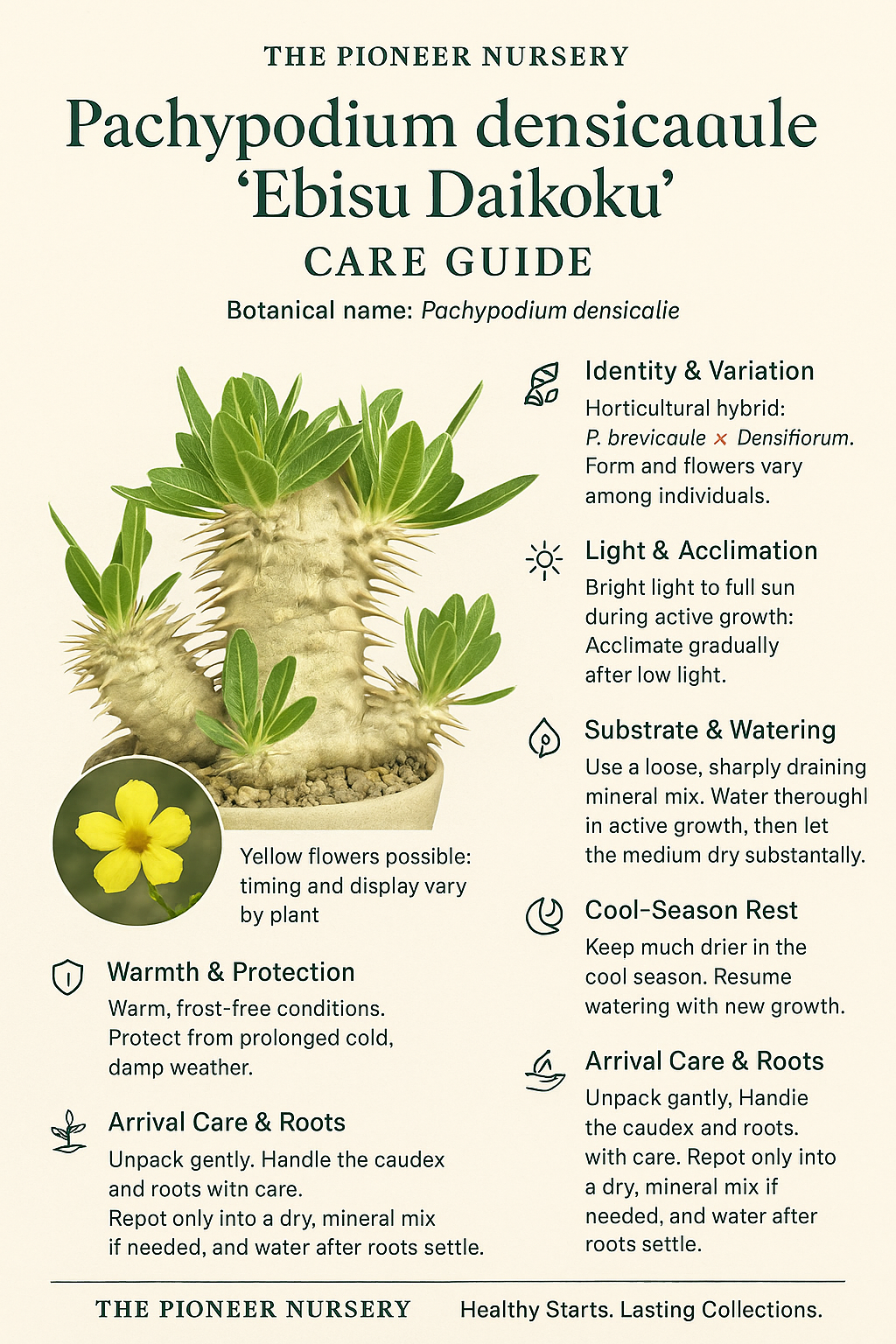
Pachypodium densicaule ‘Ebisu Daikoku’ is best grown in bright light, sharply draining soil, and warm, frost-free conditions. Water thoroughly during active growth, allow the medium to dry substantially, and keep the plant much drier during cool, darker conditions. Plants sold under this name can vary in caudex shape, growth, dormancy, and flowering, so adjust care to the plant’s current growth and root condition.
Quick Care Summary
- Bright light to full sun during active growth; acclimate gradually after low-light conditions.
- Use a loose, sharply draining substrate with substantial mineral content.
- Water thoroughly during active growth, then let the medium dry substantially.
- Keep the plant much drier during cool-season dormancy.
- Protect from frost and prolonged cold, damp conditions.
- Expect variation among plants sold as ‘densicaule’.
About Pachypodium densicaule
‘Densicaule’ is a horticultural name associated with plants derived from Pachypodium brevicaule × Pachypodium densiflorum and the trade name ‘Ebisu Daikoku’. The name does not represent a verified uniform cultivar, so individual plants may differ. The accepted botanical treatment for this hybrid combination is Pachypodium × rauhii. Do not confuse the trade name with Pachypodium densiflorum var. brevicalyx or Pachypodium brevicalyx.
Light
Provide bright light to full sun during active growth, with strong ventilation in greenhouse conditions. After shipping, repotting, or time in low light, increase exposure gradually to reduce sun scorch. Insufficient light can produce weak, elongated growth.
Watering
Water thoroughly during active growth, then allow the growing medium to dry substantially before watering again. Do not keep the roots constantly wet. Reduce watering sharply during cool-season dormancy, especially when the plant is leafless or inactive. Cold combined with wet substrate is a major rot risk; resume more regular watering only when warmth, light, and active growth return.
Soil and substrate
Use a loose, sharply draining, well-aerated substrate with a substantial mineral component such as pumice, lava rock, coarse sand, or other stable grit. Avoid dense garden soil and mixes that remain wet for extended periods. The hybrid’s exact preferred pH was not verified, so drainage and root aeration should take priority over an unverified numerical target.
Potting and roots
Choose a container with excellent drainage and avoid an unnecessarily oversized pot. The swollen caudex and fleshy roots should not sit in compacted, water-retentive media. Repot during active growth when possible. Pachypodium roots are fleshy and brittle; remove only clearly dead or rotting tissue, allow damaged cuts to dry and heal, and delay watering after major root disturbance until the plant and wounds are settled.
Temperature and dormancy
Keep Pachypodium densicaule warm and frost-free. Protect it from freezing temperatures and prolonged cold, damp conditions. It is generally treated as a warm-season-growing hybrid, with reduced growth and possible leaf drop during the cooler, darker season. A cooler winter rest may be used only when the plant is kept relatively dry and protected. Exact minimum temperatures for this hybrid were not reliably established, so conservative frost protection is recommended.
Fertilizer
No cultivar-specific fertilizer program was verified. During active growth, a conservative, dilute fertilizer program may be used after the plant is well rooted and growing. Avoid heavy feeding and do not fertilize dry, dormant, recently shipped, or recently repotted plants.
Flowering
Yellow flowers are consistent with the Pachypodium densiflorum parent and are commonly reported for plants sold as ‘densicaule’. Flower size, timing, abundance, and exact form can vary because the trade name does not represent one uniform cultivar. Strong light, mature growth, adequate active-season watering, and a cool but dry rest may support flowering.
Propagation
Pachypodiums are commonly propagated from seed. Seedlings of this hybrid may vary and should not be assumed to reproduce a uniform named form. Do not describe seed-grown offspring as identical clones of the parent; the breeding behavior and true-to-type stability of plants sold as ‘densicaule’ were not verified.
Shipping and arrival care
Inspect the plant after arrival and handle the caudex and fleshy, brittle roots carefully. After bare-root shipping, allow damaged areas to dry and heal, and avoid immediate heavy watering if roots were disturbed. Reintroduce bright light gradually after transport. Keep a cold plant out of wet media and protect it from freezing temperatures during transit.
Common Problems
- Root or caudex rot from cold, wet conditions or poorly aerated substrate.
- Sun scorch after rapid exposure to intense light following low-light conditions.
- Weak, elongated growth caused by insufficient light.
- Delayed recovery after shipping or repotting because of root damage.
- Natural cool-season leaf drop, which may not indicate decline if the caudex remains firm and the plant is kept appropriately dry.
Frequently Asked Questions
Is Pachypodium densicaule a true species?
It is best treated as a horticultural hybrid name for plants derived from Pachypodium brevicaule × Pachypodium densiflorum. The accepted botanical treatment for that hybrid combination is Pachypodium × rauhii, while ‘Pachypodium densicaule’ remains the appropriate trade identity.
How should I water Pachypodium densicaule?
Water thoroughly during active growth, then allow the substrate to dry substantially. Reduce watering sharply during cool-season dormancy, especially when the plant is cold, leafless, or inactive.
Why is my plant losing leaves?
Leaf drop can occur during the cooler, darker season as the plant enters a reduced-growth rest. If the caudex remains firm, keep the plant appropriately dry and resume more regular watering when warmth, light, and active growth return.
Can Pachypodium densicaule tolerate full sun?
It can receive bright light to full sun during active growth, but acclimate gradually after shipping, repotting, or low-light conditions to reduce sun scorch.
Will seedlings remain identical to the parent plant?
No. Plants sold as ‘densicaule’ are not a verified uniform cultivar, and seed-grown offspring may vary in caudex shape, branching, growth, dormancy, and flowering.
Pachypodium densicaule is best grown as a bright, warm, sharply drained caudex plant with a clear difference between active-season watering and cool-season rest. Focus on the plant’s current growth, root condition, light, and temperature rather than a fixed calendar.