Euphorbia stellata Care Guide
Learn how to grow Euphorbia stellata, a South African caudiciform with a water-storing tuberous root, radiating branches, and a strong preference for bright light, porous soil, seasonal dryness, and winter warmth.
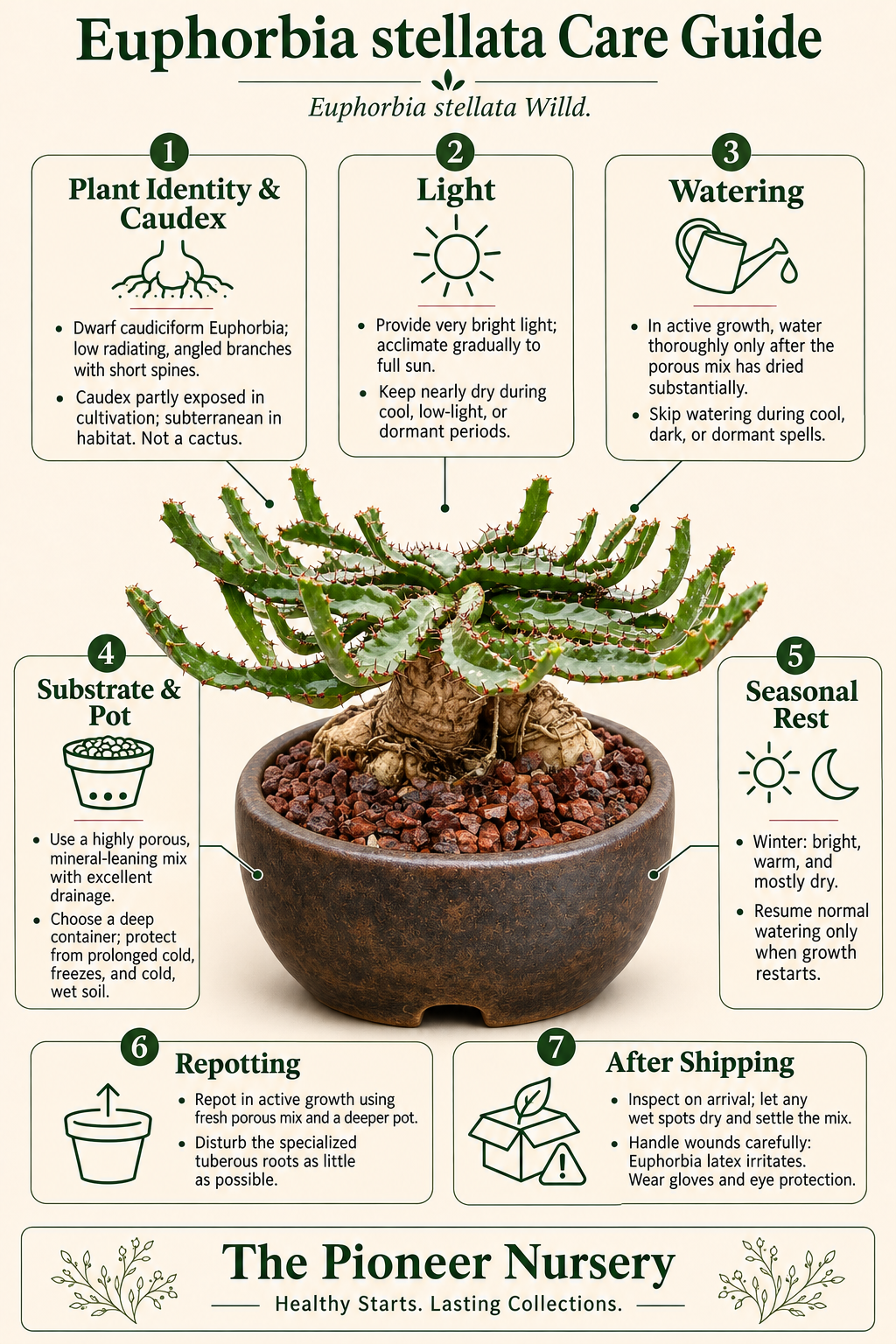
Euphorbia stellata, also called star euphorbia or melkdoring, is a dwarf South African caudiciform Euphorbia with a swollen subterranean tuberous root and low, radiating branches. Its water-storing root makes it especially sensitive to prolonged wetness, so successful cultivation depends on strong light, excellent drainage, careful active-season watering, and pronounced dryness during cool or low-light periods. Although it has a spiny, cactus-like appearance, it is not a cactus and produces irritating milky latex when wounded.
Quick Care Summary
- Bright light to full sun after gradual acclimation; partial shade is tolerated.
- Water thoroughly during active growth only after the porous substrate has dried substantially or completely.
- Keep nearly dry during cool, low-light, or dormant periods.
- Use a deep container and highly porous, mineral-leaning substrate with excellent drainage.
- Protect the plant from prolonged cold, freezing temperatures, and cold wet soil.
- Repot during active growth and minimize disturbance to the specialized tuberous roots.
- Feed sparingly with dilute cactus or succulent fertilizer during active growth only.
- Wear gloves and eye protection when handling wounded tissue because the milky latex is irritating.
About Euphorbia stellata
This species grows from a specialized tuberous root or caudex, with flattened to angled branches radiating from the base. In habitat, the swollen root is subterranean. Growers sometimes gradually expose the caudex for display, but keeping more of it covered generally supports stronger growth and reduces exposure-related stress. The plant is naturally low-growing, with small cyathia produced among the branch growth rather than large showy flowers.
Light
Provide bright light to full sun once the plant is acclimated. Partial shade is tolerated, but strong light helps maintain compact branching and supports flowering. A recently shipped or greenhouse-grown plant should be moved into stronger sunlight gradually; an abrupt change can cause sunburn and stress. Weak, elongated growth is a sign that available light is inadequate.
Watering
Water thoroughly during active growth only after the fast-draining substrate has dried substantially or completely, then let excess water drain away. The tuberous root stores water, so frequent watering or persistently damp soil can quickly create rot conditions. Reduce watering sharply during cool, low-light, or dormant periods, keeping the plant nearly dry when it is not actively growing. Cold conditions combined with wet substrate are particularly dangerous. After shipping, bare-root handling, or root damage, do not water until the plant has acclimated and fresh wounds have dried.
Soil and substrate
Use a very porous, rapidly draining, mineral-leaning mix containing substantial pumice, lava, coarse grit, or similar aerating material, with only a limited organic component. The goal is a substrate that lets water pass through quickly and allows air around the tuberous root. Dense potting soil and mixes that remain wet around the caudex increase the risk of rot.
Potting and roots
Choose a container with an unobstructed drainage hole and enough depth for the tuberous root system rather than an unusually shallow bonsai-style pot. Repot during active growth and disturb the specialized roots as little as practical. If significant root damage occurs, allow wounds to dry and callus before watering. Damage to this root system can delay recovery and create infection sites, so avoid unnecessary handling.
Temperature and winter care
Provide warm growing conditions and protect Euphorbia stellata from prolonged cold, freezing temperatures, and cold wet substrate. Winter warmth is important. During winter, a bright, dry, frost-free location with good ventilation is preferable. Avoid cold drafts and unheated, damp conditions, especially if the plant is receiving water.
Seasonal growth and dormancy
Growth may slow or stop during cool or low-light periods. During dormancy, maintain bright conditions and provide good ventilation while watering very sparingly or not at all, depending on temperature and the plant's visible condition. Resume more regular watering only when active growth returns and the substrate can dry rapidly between waterings. Seasonal dryness is more useful than following a fixed calendar schedule.
Fertilizer
Feed sparingly during active growth with a dilute cactus or succulent fertilizer, preferably one that supplies micronutrients without excessive nitrogen. Do not fertilize a dormant, recently repotted, or stressed plant. Avoid excessive feeding and prioritize adequate light and drainage.
Flowering
Euphorbia stellata produces small cyathia among its branch growth rather than large, showy blooms. Flowering is recorded in the native range approximately from September through December, but cultivated plants may flower at different times depending on hemisphere, temperature, light, and growth cycle. Strong light and healthy compact growth support flowering.
Propagation
Propagation may be carried out from fresh seed or healthy top-growth and branch cuttings. Allow cuttings to callus thoroughly before placing them in a dry, porous medium, then water cautiously until roots are established. Seed propagation preserves a tuberous-rooted species-level plant more reliably than vegetative propagation; cuttings may differ in caudex development and growth habit. Wear protective gloves and eye protection when making cuts because the milky latex is irritating.
Shipping and arrival care
Inspect the plant on arrival for soft tissue, crushed areas, or fresh wounds. Protect the tuberous root from further damage and provide bright but initially filtered light, increasing exposure gradually. If the plant arrived bare-rooted or has significant root disturbance, keep it dry while damaged tissue dries and calluses; do not water immediately. Keep the plant warm during transit and recovery, since cold combined with moisture increases rot risk. Recovery timing depends on the extent of root disturbance and the plant's condition.
Common problems and safety
Root or caudex rot is usually associated with wet substrate, poor drainage, cool temperatures, or watering during dormancy. Sunburn can follow an abrupt move from shade or greenhouse conditions into intense direct sun. Inadequate light may produce weak, elongated branches. Mealybugs and other sap-feeding pests may occur, particularly in sheltered indoor or greenhouse settings. Handle wounded tissue carefully: Euphorbia latex can irritate skin and eyes, so wear gloves and eye protection and keep the plant away from children and pets.
Frequently Asked Questions
How often should I water Euphorbia stellata?
Do not use a fixed calendar. During active growth, water thoroughly only after the fast-draining substrate has dried substantially or completely. Water much less during cool, low-light, or dormant periods, and keep the plant nearly dry when conditions are cold.
Can Euphorbia stellata grow in full sun?
Yes, once acclimated. Bright light to full sun supports compact branching and flowering, but recently shipped or greenhouse-grown plants should be transitioned gradually to avoid sunburn.
Does Euphorbia stellata need a shallow bonsai pot?
No. Use a container with good drainage and enough depth for its tuberous root system. The swollen root is subterranean in habitat, and keeping more of it covered generally supports stronger growth.
Why should I keep this plant warm and dry in winter?
Cool conditions slow or stop growth, reducing the plant's ability to use water. Cold, wet substrate substantially increases the risk of root or caudex rot, so winter care should emphasize warmth, bright light, ventilation, and very limited watering.
Can Euphorbia stellata be grown from cuttings?
Healthy top-growth and branch cuttings may be used. Let them callus thoroughly before planting in a dry, porous medium, then water cautiously until rooting is established. Cuttings may not develop the same caudex form as seed-grown plants.
Is Euphorbia stellata a cactus?
No. It is a caudiciform Euphorbia. Its spiny appearance is cactus-like, but its tuberous root, seasonal growth pattern, and irritating milky latex are important features of its Euphorbia identity.
Euphorbia stellata rewards a patient, seasonal approach: give it strong light, keep its root zone airy, water only when active growth and dry conditions support it, and provide warmth and dryness through cool periods. Handle the plant and its latex carefully, and prioritize protection of the specialized tuberous root during potting and shipping recovery.