Epithelantha micromeris Care Guide: Growing the Button Cactus
Learn how to grow Epithelantha micromeris, a miniature, slow-growing cactus that needs strong light, excellent drainage, careful watering, and a cool, dry winter rest.
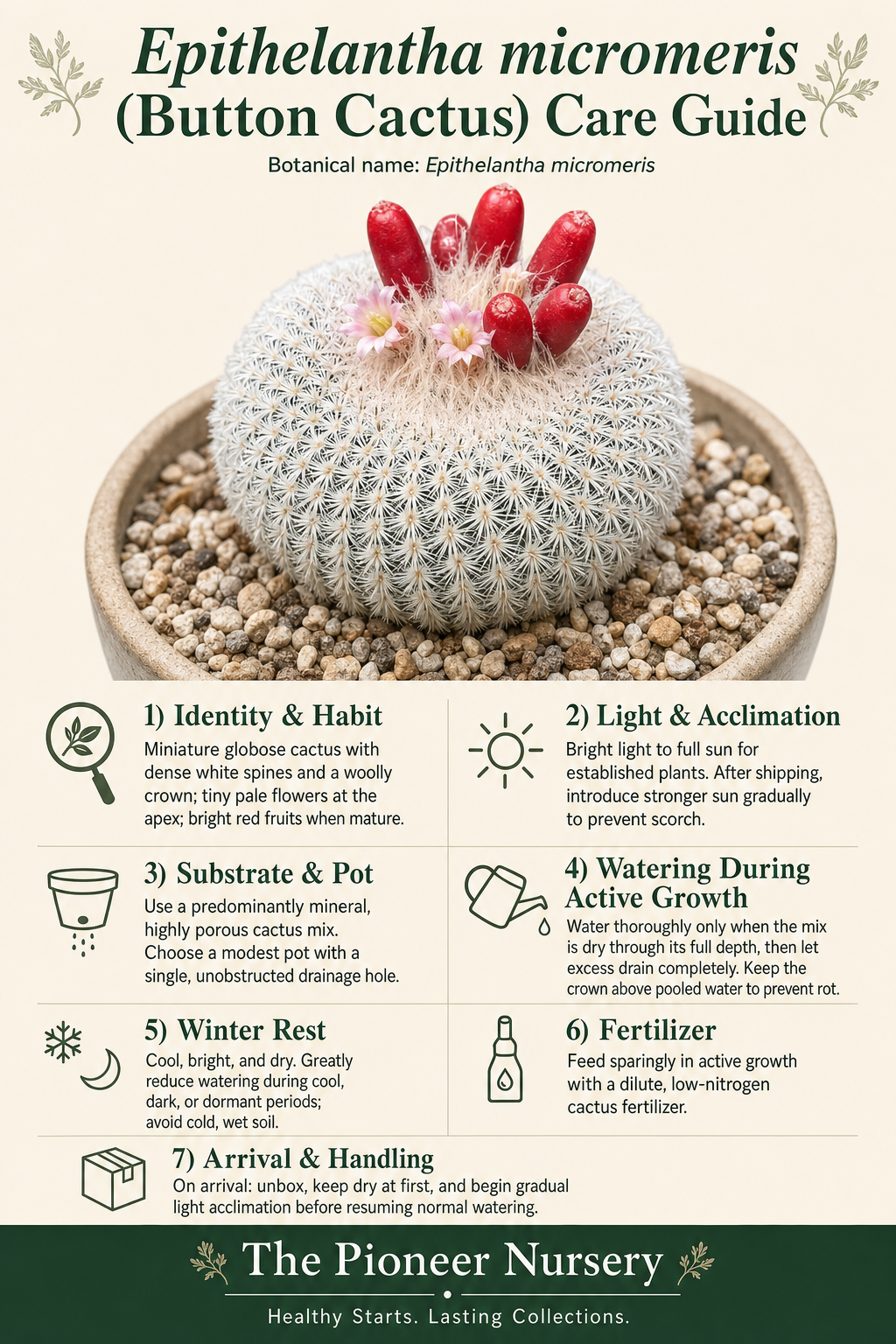
Epithelantha micromeris, commonly called button cactus, is a miniature, slow-growing cactus from the Chihuahuan Desert region of the southwestern United States and northeastern Mexico. Its dense white spination can largely hide the green stem, while small pinkish to pale flowers may appear near the woolly growing point. The main priorities are very bright light, a highly porous mineral substrate, and careful watering that avoids prolonged moisture around the roots or plant body.
Quick Care Summary
- Bright light to full sun for established plants, with gradual acclimation after shipping.
- Use a predominantly mineral, highly porous cactus substrate and a modest pot with an unobstructed drainage hole.
- Water thoroughly during active growth when the substrate is dry through its full depth, then let excess drain.
- Reduce watering substantially during cool, dark, or dormant conditions; avoid cold, wet soil.
- Fertilize sparingly with a dilute, low-nitrogen cactus fertilizer.
About Epithelantha micromeris
Epithelantha micromeris is an accepted species in the genus Epithelantha. The name Mammillaria micromeris is an earlier synonym, not the current placement. This small, slow-growing desert cactus is associated with shallow soils, limestone, and alkaline conditions. Its dense white spines give it a woolly appearance and can obscure the green stem.
Light
Provide bright light to full sun for established plants. After shipping or a move from lower light, acclimate gradually to stronger direct sun to reduce sunburn risk. Inadequate light can cause elongated, weaker, less compact growth.
Watering
During active growth, water thoroughly when the substrate is dry through its full depth, then allow excess water to drain away. Avoid frequent light watering and never keep the roots constantly wet. Use substantially less water in cool, dark, or dormant conditions, and withhold water during prolonged cold periods. Cold combined with wet soil is a major rot risk. Avoid repeatedly wetting the woolly growing point or plant body with overhead watering.
Soil and substrate
Use a very porous, fast-draining, predominantly mineral cactus substrate with good root aeration. A calcareous or limestone-containing component is reasonable for this species. Avoid dense, peat-heavy, or poorly aerated mixes that remain wet too long.
Potting and roots
Choose a container with an unobstructed drainage hole and only moderately more volume than the root system requires. Because Epithelantha micromeris is slow-growing and associated with shallow desert soils, an oversized pot can prolong wetness. Repot during active growth when possible and disturb the roots as little as practical. After major root damage, allow wounds to dry before watering and provide favorable recovery conditions. Severe root disturbance may be followed by slow recovery.
Temperature and ventilation
Provide warm growing conditions with strong light and excellent ventilation. Protect container plants from prolonged freezing, especially when the substrate is moist. Exact cold tolerance can vary among populations and cultivated forms, so avoid relying on an unqualified minimum temperature.
Seasonal growth and winter rest
A cool, bright, dry winter rest is appropriate. Reduce growth and watering as temperatures and light levels fall, using substantially less water during cool or dark conditions. Resume watering gradually when warmth and active growth return.
Fertilizer
Fertilize sparingly during active growth with a dilute, low-nitrogen cactus fertilizer. Avoid heavy feeding, which can produce soft or elongated growth and is particularly unsuitable for this slow-growing cactus.
Flowering and fruit
Small pinkish to pale flowers may appear near the woolly growing point, commonly in late spring or early summer when light and seasonal conditions are suitable. Flowers may be followed by conspicuous red fruits.
Propagation
Propagation is primarily by seed and, where available, offsets. Specialist sources report that Epithelantha micromeris is self-fertile or autogamous, so a single plant may produce viable seed. Seed propagation is slow but practical. Species-specific micropropagation and acclimatization have also been studied, although that is not an ordinary home propagation method.
Shipping and arrival care
Receive and handle the plant dry, protected from crushing and prolonged temperature extremes. Inspect it for rot or root damage after arrival. Begin with bright but initially filtered light, then acclimate gradually to stronger sun. If the plant arrives bare-root or has been repotted, allow damaged roots to dry before watering and avoid immediate heavy irrigation.
Common Problems
- Root or stem rot: Usually associated with dense substrate, poor drainage, repeated watering, or cool wet conditions.
- Etiolation: Inadequate light can cause elongated, weaker, less compact growth.
- Sunburn: Sudden exposure to intense direct sun after shipping or indoor cultivation can damage the plant.
- Moisture retention: Repeated overhead watering can leave moisture in the woolly apical area or around the plant body.
- Slow recovery: Severe root disturbance may require extended recovery because this species grows slowly.
Frequently Asked Questions
How can I tell when button cactus needs water?
During active growth, water when the substrate is dry through its full depth, then let excess drain. In cool, dark, or dormant conditions, use substantially less water.
Can Epithelantha micromeris grow in full sun?
Established plants can grow in bright light to full sun. Acclimate gradually after shipping or a move from lower light to help prevent sunburn.
What pot and soil should I use?
Use a very porous, predominantly mineral cactus mix and a modestly sized container with an unobstructed drainage hole. Avoid dense mixes and oversized pots that stay wet too long.
Does Epithelantha micromeris need a winter rest?
A cool, bright, dry winter rest is appropriate. Reduce watering as temperatures and light levels fall, then resume gradually when warmth and active growth return.
Can one plant produce seed?
Specialist sources report that the species is self-fertile or autogamous, so a single plant may produce viable seed. Seed-grown plants develop slowly.
Epithelantha micromeris rewards patience and restraint. Give it strong light, an airy mineral substrate, careful active-season watering, and a cool, dry winter rest, while treating prolonged moisture as the primary risk.