Thelocactus setispinus Care Guide
Learn how to grow Thelocactus setispinus, a miniature barrel cactus valued for its hooked central spine, strong-light requirements, yellow flowers, and red throats.
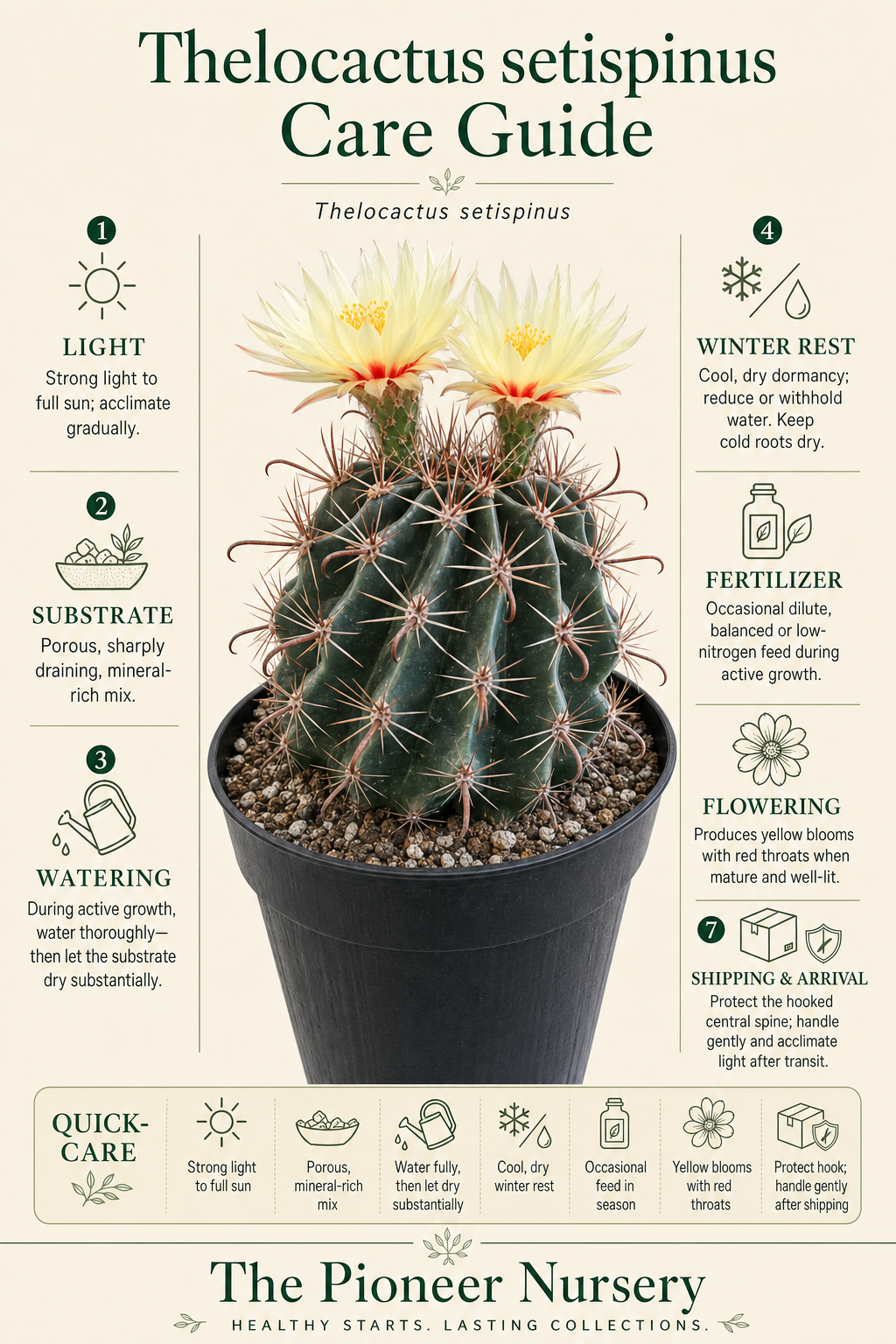
Thelocactus setispinus, also called miniature barrel cactus, hedgehog cactus, or twisted rib, is a cactus from southern Texas to northeastern Mexico. Its distinctive hooked central spine and yellow flowers with red throats make it a rewarding collector plant. Successful cultivation depends on strong light, sharply draining mineral soil, careful watering during active growth, and a cool, dry winter rest.
Quick Care Summary
- Provide strong light to full sun with gradual acclimation.
- Use a porous, sharply draining substrate with substantial mineral content.
- Water thoroughly during active growth, then let the substrate dry substantially.
- Reduce or withhold water during cool winter dormancy.
- Keep cold roots dry to reduce rot risk.
- Use dilute, balanced or low-nitrogen fertilizer occasionally during active growth.
- Protect the hooked central spine during shipping and handling.
About Thelocactus setispinus
This species is currently accepted in the genus Thelocactus. Historical combinations include Echinocactus setispinus, Hamatocactus setispinus, and Ferocactus setispinus. It is generally manageable in cultivation when given strong light, porous soil, and appropriate seasonal watering. Spine expression and growth habit can vary among cultivated plants.
Light
Provide strong light to full sun, but acclimate the plant gradually after shipping or any change in growing conditions. An abrupt move into intense direct sun can cause sunburn or tissue damage. In very hot climates, light afternoon shade may reduce heat and sun stress while still supporting compact growth and flowering.
Watering
During active growth, water thoroughly and then allow the substrate to dry substantially before watering again. Avoid repeated moisture retention around the roots. In cool winter conditions, especially when light is limited, reduce or withhold water. Resume watering gradually when warmth, light, and active growth return.
Soil and substrate
Use a porous, sharply draining cactus mix with substantial mineral content and limited organic matter. Heavy or water-retentive soil increases the risk of root and stem rot, particularly when temperatures are cool.
Potting and roots
Choose a container with an effective drainage hole and a gritty, aerated mix. Repot only when needed and handle the root ball carefully. If roots are damaged or significantly disturbed, allow them to dry and heal before resuming normal watering. This research does not identify a need for unusually deep pots or specialized taproot treatment.
Temperature and winter rest
Provide warm conditions during the growing season. For winter rest, use a cool, dry environment; specialist cultivation references support approximately 5–8 °C, provided the plant is not exposed to cold combined with wet roots. Hardiness can vary with provenance and growing conditions, so avoid treating this range as a universal outdoor minimum.
Seasonal growth and dormancy
Growth and watering should follow conditions rather than a fixed calendar. When winter is cool and growth has stopped, provide markedly reduced or no irrigation. Keep the plant dry until warmth, light, and active growth return.
Fertilizer
During active growth, apply a dilute, balanced or low-nitrogen cactus fertilizer occasionally. Do not fertilize during winter dormancy, or when the plant is dry, cold, recently repotted, or recovering from root damage.
Flowering
Mature plants can produce yellow flowers with red throats and may flower repeatedly during the warm growing season.
Propagation
Propagation is primarily by seed. Seed-grown plants are reported to be relatively straightforward. The research also documents occasional offsets or stem pieces being rooted after the cut surface has fully callused.
Shipping and arrival care
Inspect the plant after arrival for rot or pests, and protect the hooked central spine and surrounding areoles from crushing during handling. Provide gradual light acclimation rather than placing a recently shipped plant immediately in intense direct sun. If it arrives bare-root or with disturbed roots, avoid immediate heavy watering and allow damaged roots time to dry and heal before returning to normal care.
Common Problems
- Root or stem rot: Usually associated with poorly draining soil, prolonged wetness, or cold-and-wet conditions.
- Sunburn: Can occur when a plant is moved abruptly from protected conditions into strong direct sun.
- Etiolation: Weak, stretched growth indicates insufficient light.
- Pests: Monitor stressed or crowded plants for mealybugs, scale, and other common cactus pests.
Frequently Asked Questions
How often should I water Thelocactus setispinus?
There is no reliable fixed schedule. Water thoroughly during active growth, then wait until the substrate has dried substantially. Water much less, or not at all, during cool winter dormancy.
Can Thelocactus setispinus grow in full sun?
Yes, strong light to full sun is appropriate, but acclimate gradually after shipping or a change in conditions. Light afternoon shade can help in very hot climates.
What soil does this cactus need?
Use a gritty, porous cactus substrate with substantial mineral content, limited organic matter, and excellent drainage.
How should I care for it in winter?
Provide a cool, dry rest and markedly reduce or withhold irrigation while growth has stopped. Resume watering gradually when warmth, light, and active growth return.
How is Thelocactus setispinus propagated?
Propagation is primarily by seed. Occasional offsets or stem pieces may be rooted after the cut surface has fully callused.
What should I do if my plant arrives bare-root?
Inspect it, pot it into a gritty draining mix, acclimate it gradually to light, and avoid immediate heavy watering if roots were disturbed or damaged.
Thelocactus setispinus is a distinctive cactus that responds well to a simple seasonal rhythm: strong light, mineral soil, thorough watering during active growth, and a cool, dry winter rest. Careful acclimation and dry handling around damaged roots will help it establish successfully.