Astrophytum ornatum Care Guide | The Pioneer Nursery
Learn how to grow Astrophytum ornatum with bright acclimated light, porous mineral soil, careful active-season watering, and a dry winter rest.
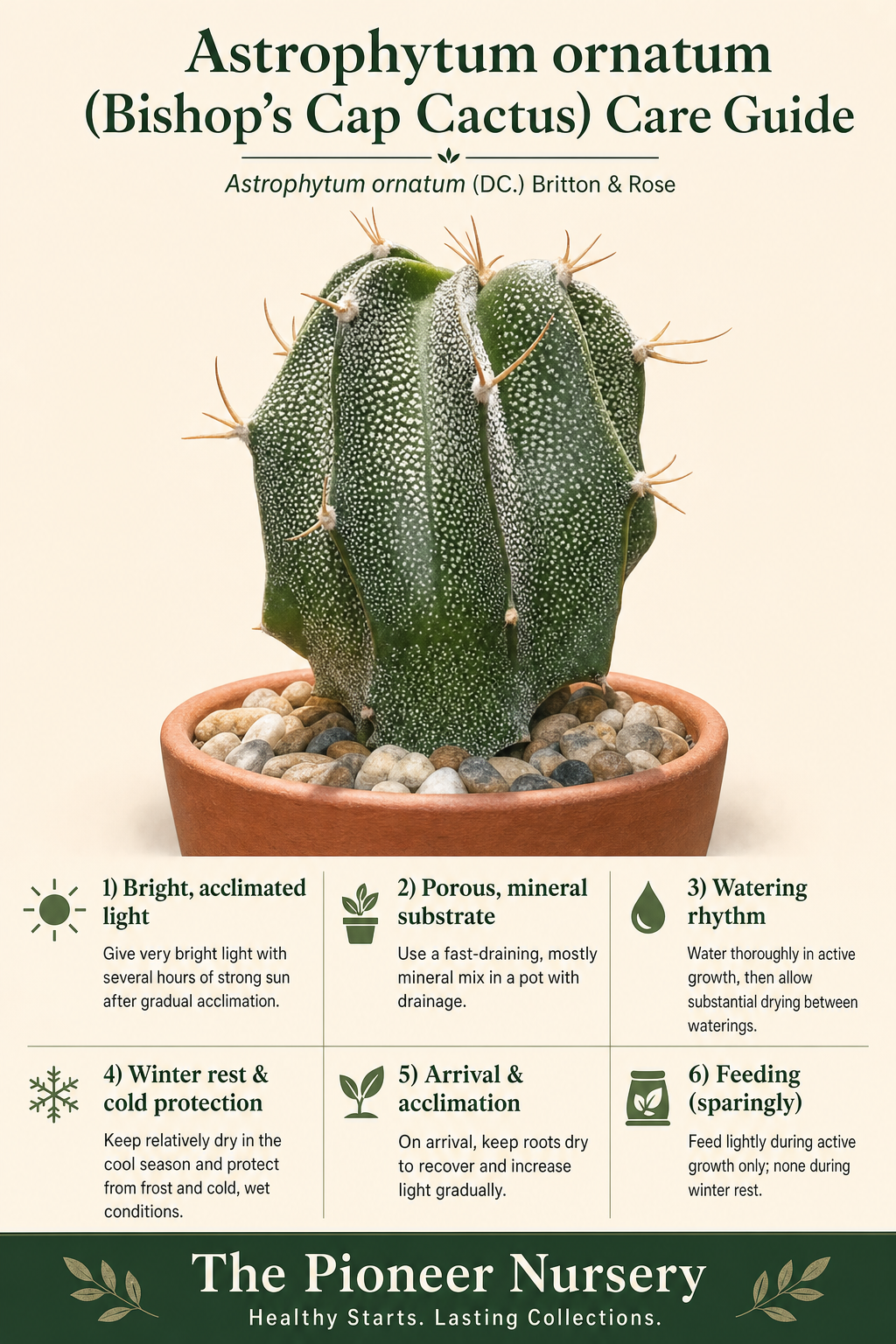
Astrophytum ornatum, commonly called Bishop’s cap cactus, is a ribbed, spiny cactus with often-visible white woolly scales. It typically begins relatively globular and can become more columnar with age. Successful cultivation depends on strong but acclimated light, rapid drainage, thorough watering during active growth, and a substantially drier winter rest.
Quick Care Summary
- Give bright light and several hours of strong sun after gradual acclimation.
- Use a porous, mineral, fast-draining substrate in a container with drainage.
- Water thoroughly during active growth, allowing substantial drying between waterings.
- Keep it relatively dry during the cool winter rest and protect it from frost and cold wet conditions.
- Feed sparingly during active growth only.
About Astrophytum ornatum
This accepted species is a solitary, ribbed cactus native to northeastern Mexico. Its spines, ribs, and white woolly scales or trichomes can vary among plants; these differences do not automatically indicate a formal cultivar or botanical variety.
Light
Provide bright light with several hours of strong sun once the plant is acclimated. Introduce newly shipped or greenhouse-grown plants gradually. In very intense climates, moderated sun or light afternoon protection may be appropriate.
Watering
During active growth, water thoroughly and allow the substrate to dry substantially before watering again. Reduce watering during the cool winter rest, and avoid watering when conditions are cold, poorly ventilated, or persistently damp.
Soil and substrate
Use a very porous, fast-draining cactus mix with substantial mineral material such as pumice, gravel, or lava rock. A small amount of organic material may provide limited moisture retention, but avoid dense soil.
Potting and roots
Choose a container with an effective drainage hole and a substrate that provides root aeration. Repot when necessary rather than routinely disturbing the roots. After repotting or significant root damage, allow disturbed roots to dry and recover before careful watering resumes.
Temperature and winter rest
Grow the plant warm during the active season and protect it from frost, freezing temperatures, and cold wet conditions. Growth normally slows during the cool, darker part of the year; keep the plant relatively dry and well ventilated. Exact minimum temperatures depend on plant condition, acclimation, and exposure duration.
Fertilizer
Feed sparingly during active growth with a dilute, low-nitrogen or balanced cactus fertilizer. Do not fertilize during the cool winter rest or while the plant is stressed, recently shipped, or recovering from root disturbance.
Flowering
Mature plants generally flower during the warm growing season. The funnel-shaped flowers may range from white to yellow, with color and markings varying among plants.
Propagation
Seed is the primary and most reliable propagation method for maintaining the species. Seedlings need careful management of moisture, ventilation, and light. Offsets are not normally the principal method because plants are generally solitary.
Shipping and arrival care
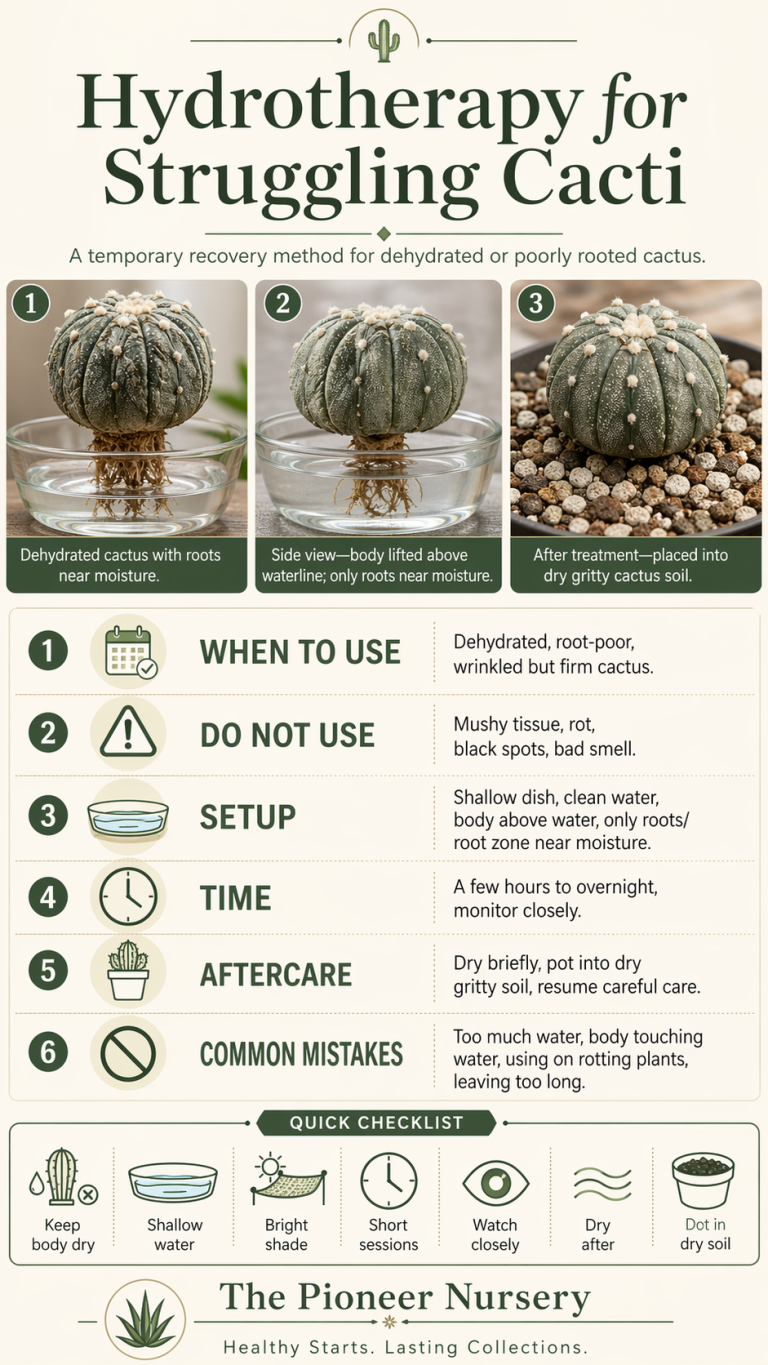
Receive the plant dry and protected from cold and damp packing material. After arrival, inspect it for damage or rot, let disturbed or broken roots dry, and introduce it gradually to stronger light before normal watering.
Grafted and own-root plants
Grafted and own-root plants may respond differently to watering because rootstock, root volume, and growing conditions affect water use. Base watering on the plant’s drying rate and root condition rather than a fixed calendar.
Common Problems
- Root rot: Move to the supported porous-substrate and drying-between-waterings routine; avoid cold or persistently damp conditions.
- Sunburn: Gradually acclimate plants from indoor, greenhouse, or shipping conditions to stronger light.
- Stretching: Review the Light section and provide brighter conditions gradually.
- Cold injury: Protect the plant from freezing temperatures and wet winter conditions.
- Mealybugs and other pests: Inspect plants regularly, especially in protected collections.
Frequently Asked Questions
How often should I water Astrophytum ornatum?
There is no universal calendar. Water thoroughly during active growth, then wait until the porous substrate has dried substantially. Water less during the cool winter rest and avoid cold, poorly ventilated, or persistently damp conditions.
Can Astrophytum ornatum take full sun?
It can receive several hours of strong sun when acclimated. Introduce newly shipped or greenhouse-grown plants gradually; moderated sun or light afternoon protection may help in very intense climates.
How should I care for it in winter?
Keep it relatively dry and well ventilated during the cool, darker part of the year. Protect it from frost, freezing temperatures, and cold wet conditions.
What soil should I use?
Use a very porous cactus substrate containing substantial mineral material such as pumice, gravel, or lava rock. Avoid dense, moisture-retentive soil.
How is Astrophytum ornatum propagated?
Seed is the primary and most reliable method. Seedlings require careful management of moisture, ventilation, and light; offsets are not normally the principal method because the species is generally solitary.
What should I do when a plant arrives by mail?
Inspect it for damage or rot, let disturbed roots dry and recover, and gradually acclimate the plant to stronger light before resuming normal watering.
Give Astrophytum ornatum strong acclimated light, rapid drainage, and a seasonal shift toward dryness in winter. Attention to root drying and cold-weather conditions will help preserve this ribbed, spiny cactus as it matures.