Jatropha podagrica Care Guide: Growing the Buddha Belly Plant
Learn how to grow Jatropha podagrica, a warm-loving, deciduous caudex shrub with a swollen water-storing stem and bright orange-red flowers.
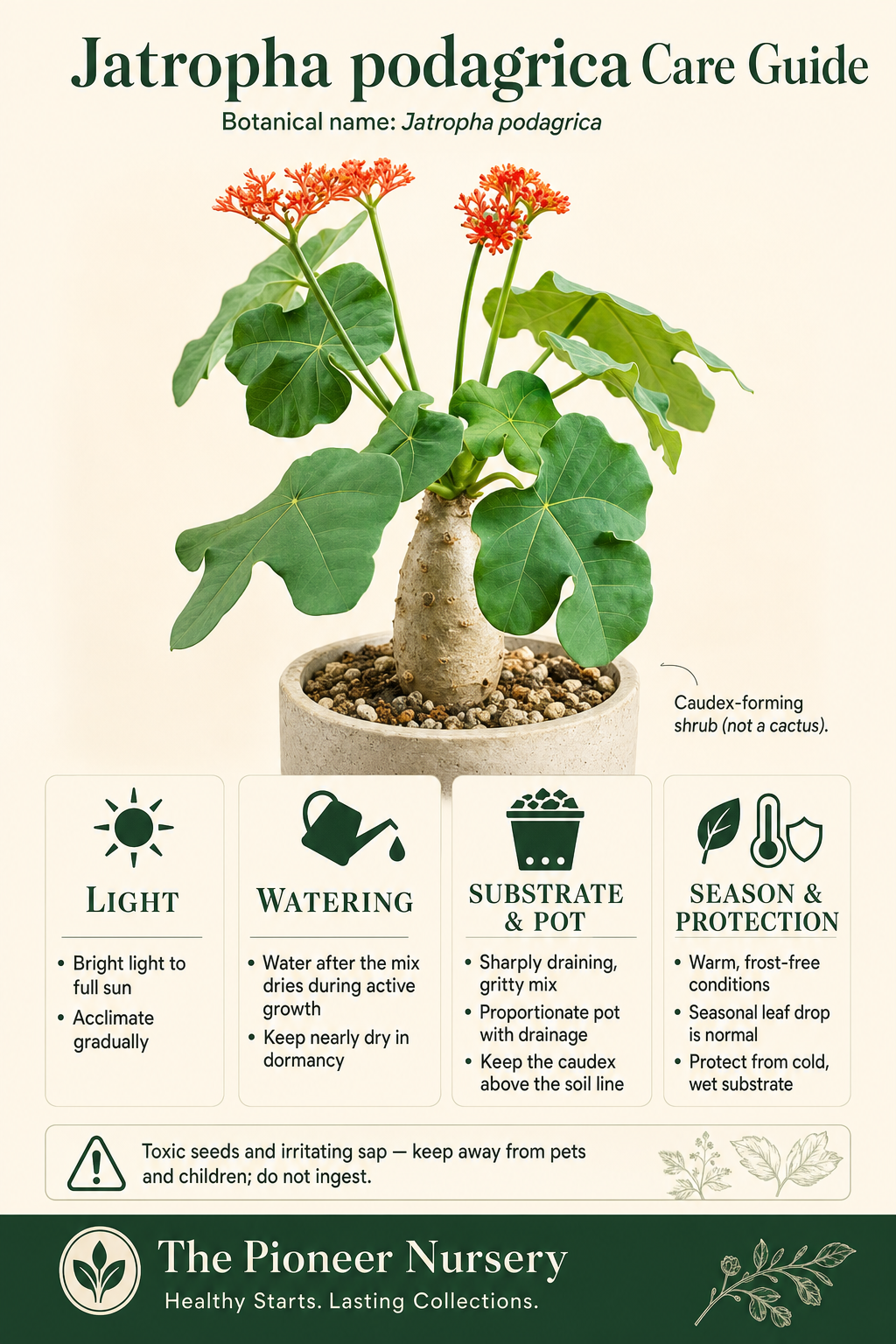
Jatropha podagrica, commonly called the Buddha belly plant or bottle plant, is a warm-growing caudex shrub rather than a true cactus. Its swollen stem stores water, and its leaves may yellow and drop during winter dormancy. The main care priorities are bright light, sharply draining soil, careful active-season watering, and protection from frost and cold, wet conditions. Its sap may irritate skin and eyes, so handle it thoughtfully.
Quick Care Summary
- Bright light to full sun after gradual acclimation.
- Use sharply draining substrate and a proportionate pot.
- Water after the mix dries during active growth; keep dormant plants nearly dry.
- Protect from frost and cold, wet substrate.
- Keep the caudex above the soil line where practical.
About Jatropha podagrica
Jatropha podagrica is a caudex-forming shrub in the Euphorbiaceae family, native from southern Mexico to Nicaragua. Its swollen stem is a water-storage structure, giving the plant its bottle-like appearance. Small orange-red to scarlet flowers appear in terminal branched clusters. The species is deciduous or seasonally dormant, so autumn leaf drop can be normal.
Light
Provide bright light to full sun. Full sun is suitable after gradual acclimation, especially following shipping or a major change in location. Where containers may overheat under intense hot sun, provide partial shade or protection. Increase exposure gradually.
Watering and seasonal dormancy
During active growth, water thoroughly after the substrate has dried, then let excess water drain away. As leaves yellow and drop in autumn, reduce watering substantially. Keep the plant nearly dry during winter dormancy, particularly in cool conditions.
Soil and potting
Use a sharply draining, aerated mix based on mineral grit, pumice, coarse sand, or similar material with a modest organic component. Choose a container with several drainage holes and a size proportionate to the caudex and root system. Keep the swollen caudex above the soil line where practical, and avoid compacted or moisture-retentive media. Repot during active growth only when necessary. If repotting has disturbed the roots or caused damage, keep the plant warm and avoid immediate heavy watering.
Temperature
Jatropha podagrica requires warm, frost-free conditions and is generally grown as a container or houseplant outside warm subtropical and tropical climates. Protect it from freezing temperatures and cold, wet substrate.
Fertilizer
Feed only during active leaf and flower production, using a conservative, diluted balanced fertilizer. Stop or greatly reduce feeding during dormancy.
Flowering and propagation
Small orange-red to scarlet flowers are produced in terminal branched clusters or cymes. Flowering may occur through much of the growing season and can continue into winter under suitable conditions. Seed propagation is the best-supported method in the supplied research. Sow fresh seed in containers during spring or summer at approximately 24°C/75°F, using a warm, free-draining medium.
Safety and handling
The seeds are toxic if eaten and may cause gastrointestinal illness. Sap can irritate skin and eyes and may cause contact dermatitis. Keep the plant and fallen seed away from children and pets, and wear gloves when pruning, repotting, or handling damaged tissue.
Shipping and arrival care
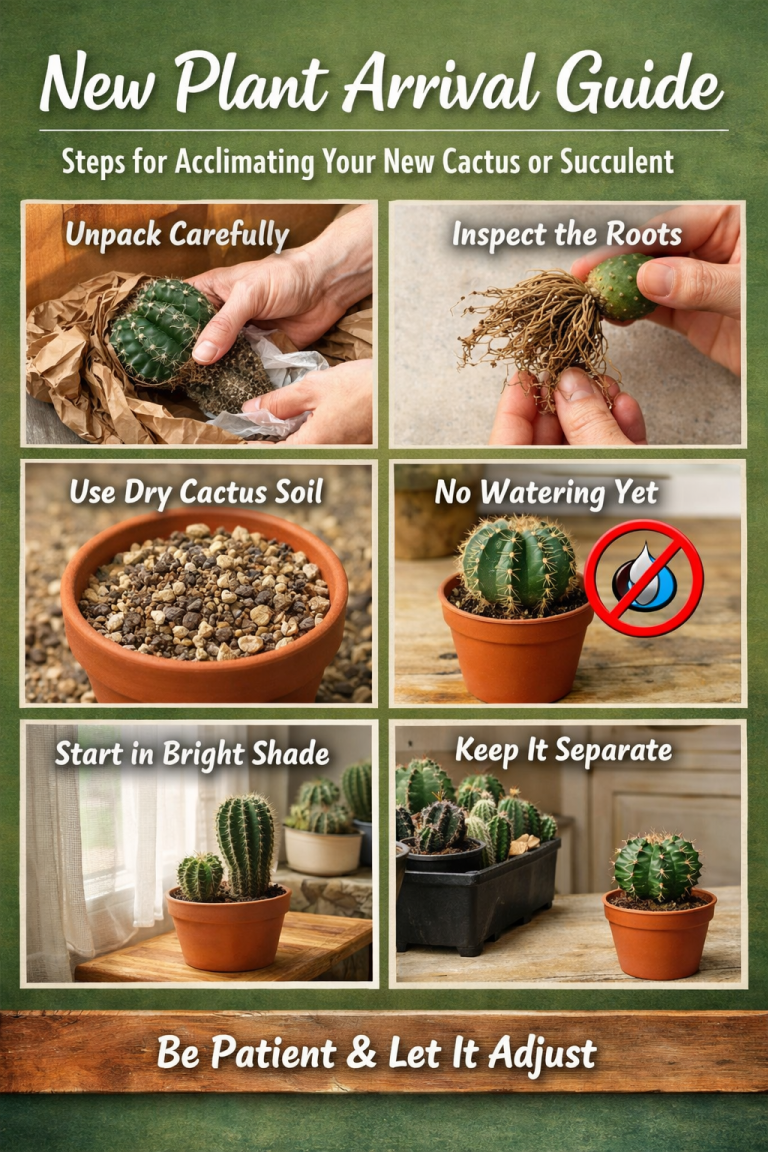
The plant may arrive leafless because of dormancy, which alone does not indicate failure. Keep it warm, acclimate it gradually to brighter light, and avoid saturating the substrate while it is dormant.
Common Problems
- Root or caudex rot: Often associated with poor drainage, excess moisture, or cool wet conditions.
- Seasonal leaf drop: Yellowing and leaf loss in autumn can be normal dormancy.
- Soft caudex with sudden leaf loss: May indicate rot or cold injury.
- Mealybugs: These may occur, particularly under protected cultivation.
- Sap or seed exposure: Avoid contact with sap and keep seeds away from children and pets.
Frequently Asked Questions
Does Jatropha podagrica lose its leaves in winter?
It can. Leaves commonly yellow and drop in autumn as the plant enters seasonal dormancy.
How much sun does the Buddha belly plant need?
Provide bright light to full sun after gradual acclimation. In very hot conditions where containers may overheat, use partial shade or protection from intense sun.
How should I water a dormant Jatropha podagrica?
Reduce watering substantially as leaves drop and keep the plant nearly dry during winter dormancy, especially when temperatures are cool.
What soil is best for Jatropha podagrica?
Use a sharply draining, aerated substrate based on mineral grit, pumice, coarse sand, or similar material with a modest organic component.
Is Jatropha podagrica safe around pets and children?
Keep it away from children and pets because the seeds are toxic if eaten and the sap may irritate skin and eyes.
With warmth, bright light, excellent drainage, and a drier winter rest, Jatropha podagrica can develop its characteristic swollen caudex and seasonal flower clusters. Let the plant’s growth and leaf cycle guide watering, and handle it carefully.