Ceropegia bosseri Care Guide (Black Dragon)
Learn how to grow Ceropegia bosseri, a trailing or climbing succulent from southwestern Madagascar, with guidance on light, watering, substrate, temperature, propagation, and shipping recovery.
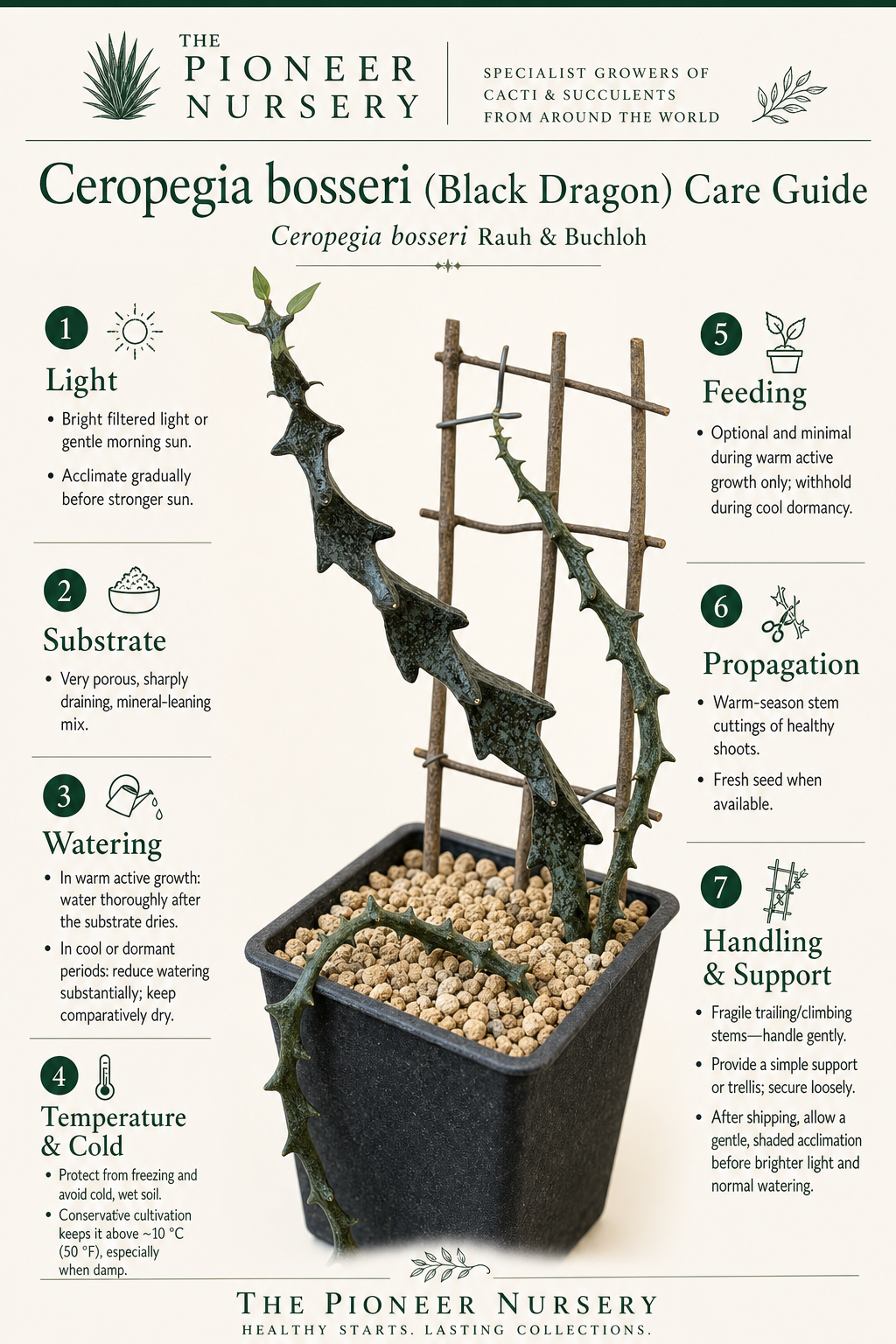
Ceropegia bosseri Rauh & Buchloh is a trailing or climbing succulent from the dry regions of southwestern Madagascar. Its long, pencil-like shoots may benefit from a support or trellis, while its succulent growth requires excellent drainage and careful seasonal watering. Provide bright, acclimated light, keep the plant drier during cool conditions, and take extra care with its fragile stems during handling and repotting.
Quick Care Summary
- Bright filtered light or gentle morning sun with gradual acclimation.
- Use a very porous, sharply draining mineral-leaning substrate.
- Water thoroughly during warm active growth after the substrate dries.
- Reduce watering substantially during cool or dormant periods.
- Keep cool plants comparatively dry because cold, wet conditions encourage rot.
- Protect from freezing; conservative cultivation keeps the plant above approximately 10 °C (50 °F), especially when damp.
- Handle the fragile trailing or climbing stems carefully and provide support if needed.
About Ceropegia bosseri
Ceropegia bosseri is an accepted species in the genus Ceropegia. “Black Dragon” is a horticultural or collector common name, not a verified formal cultivar name. The species is associated with desert or dry-shrubland habitats in southwestern Madagascar and grows as a trailing or climbing succulent with long, pencil-like shoots.
Light
Provide bright light with strong air movement. Filtered sun, bright half-shade, or gentle morning sun are suitable. Acclimate the plant gradually before exposing it to intense direct summer sun, which can cause scorching or excessive bronzing. Inadequate light may contribute to weak, elongated growth.
Watering
During warm active growth, water thoroughly once the porous substrate has dried, then allow excess water to drain completely. Avoid both prolonged saturation and severe repeated dehydration. Reduce watering substantially during cool or dormant periods. Cold, wet conditions create a significant risk of rot, so do not keep the plant wet when temperatures are low.
Soil and substrate
Use a very porous, sharply draining, mineral-leaning cactus or succulent substrate with substantial aeration. Avoid heavy, moisture-retentive, or overly rich compost-based soil. The substrate should support thorough watering during active growth while drying efficiently afterward.
Potting, roots, and support
Choose a container with an effective drainage hole and enough room for the root system. Handle the roots and trailing or climbing stems carefully because the shoots can be fragile. A support, trellis, or similar structure may help manage the long growth. Repot during warm active growth rather than cool dormancy. After major root disturbance, delay heavy watering until damaged roots have begun to recover.
Temperature and dormancy
Protect Ceropegia bosseri from freezing temperatures. Because available recommendations for lower temperature tolerance are inconsistent, conservative cultivation should keep it above approximately 10 °C (50 °F), particularly when the substrate is damp. Growth may slow or stop during cool winter conditions. Maintain a comparatively dry rest period with reduced watering and good ventilation, avoiding cool temperatures combined with wet soil.
Fertilizer
If fertilizing, use a dilute, balanced or relatively potassium-forward succulent fertilizer during active growth only. Avoid heavy feeding and nitrogen-rich fertilizer, which may encourage weak, elongated growth.
Flowering
Mature plants can produce unusual Ceropegia flowers during the warm growing season. Strong light, adequate warmth, and active seasonal growth may support flowering, but species-specific flowering information is limited. Avoid treating flowering timing as fixed.
Propagation
Propagation is reported by fresh seed and stem cuttings. Take cuttings during warm active growth, allow the cut surface to dry briefly, and place them in a very porous medium. Keep cuttings relatively dry until roots begin forming. Fresh seed is reported to germinate readily under warm conditions.
Common problems
Root or basal rot usually reflects poor drainage, excessive watering, or cool wet conditions. Sun scorch can follow an abrupt move into intense direct sun. Inadequate light or overly rich substrate may produce weak, elongated growth. Stems can break during shipping, training, repotting, or handling. The milky sap may cause irritation; handle cut material carefully and avoid contact with eyes or ingestion.
Shipping and arrival care
Ship and receive this plant in warm conditions whenever possible, avoiding freezing temperatures and prolonged enclosure in wet packing material. After arrival, provide bright but initially filtered light and good ventilation. If the plant arrives bare-root or its roots have been disturbed, allow damaged surfaces to dry and give the plant time to acclimate before resuming cautious watering. Recovery needs depend on the plant’s root condition and shipping stress.
Frequently Asked Questions
How often should I water Ceropegia bosseri?
Do not follow a fixed calendar. During warm active growth, water thoroughly after the porous substrate has dried and let excess water drain. Water much less during cool or dormant conditions.
Can Ceropegia bosseri grow in direct sun?
It can receive gentle morning sun, but use filtered light or bright half-shade and acclimate gradually before stronger direct summer sun to reduce scorching and excessive bronzing.
What temperature is safest in winter?
Protect it from freezing. Because published cultivation recommendations differ, conservative care keeps the plant above approximately 10 °C (50 °F), especially when the substrate is damp.
Does it need a trellis?
Its long, pencil-like shoots may trail or climb, so a support, trellis, or other structure can help manage the growth. Handle the stems gently because they are fragile.
Can I propagate it from cuttings?
Yes, propagation is reported from stem cuttings and fresh seed. Take cuttings during warm active growth, let the cut surface dry briefly, and keep the cutting relatively dry in a porous medium until roots begin forming.
How should I care for a shipped plant?
Give it bright but initially filtered light, good ventilation, and protection from cold. If it arrived bare-root or with disturbed roots, allow damaged surfaces to dry and resume watering cautiously after acclimation.
Ceropegia bosseri performs best when its dry-habitat origins guide the routine: bright acclimated light, an airy mineral-leaning substrate, thorough but controlled watering during warm growth, and a much drier cool rest. Keep it warm, protect its delicate stems, and adjust care to the plant’s actual growth and root condition.